
The Complicated Relationship Between Cats and Dairy
There is something almost iconic about the image of a cat lapping contentedly from a saucer of milk. Popular culture has cemented this image so thoroughly that many people assume dairy products are a natural and safe part of a cat's diet. The reality is considerably more complicated. Cheese, like most dairy foods, sits in an awkward middle ground for cats — not acutely toxic, but not without risks either.
Why Most Cats Are Lactose Intolerant
To understand the cheese question, it helps to understand how cat digestion changes after kittenhood. Like virtually all mammals, kittens produce an enzyme called lactase, which breaks down lactose — the sugar found in milk. This makes perfect biological sense, as kittens depend on their mother's milk for early nutrition.
As kittens are weaned and transition to solid food, their bodies naturally reduce lactase production. By the time most cats reach adulthood, they produce very little of this enzyme. When they consume dairy products containing significant amounts of lactose, that sugar passes through the digestive system largely undigested, where it is fermented by gut bacteria. The result is the familiar cluster of symptoms associated with lactose intolerance: bloating, gas, loose stools, and sometimes vomiting.
The degree of intolerance varies between individual cats. Some tolerate small amounts of dairy without visible distress, while others react strongly to even a tiny quantity. There is no reliable way to predict which category a given cat falls into without observation.
Does Cheese Contain Less Lactose Than Milk?
This is where cheese becomes marginally more interesting than plain milk or cream. During the cheesemaking process, much of the lactose from the original milk is removed along with the whey. Aged and hard cheeses — think cheddar, parmesan, gouda, or gruyere — undergo extended ageing that further reduces lactose content through bacterial fermentation. These cheeses can contain as little as zero to two percent lactose, compared to cow's milk which typically contains around four to five percent.
Soft, fresh cheeses such as ricotta, cream cheese, brie, and cottage cheese retain considerably more lactose because they have not undergone extended ageing. These varieties are more likely to provoke digestive reactions in lactose-sensitive cats.
From a pure lactose standpoint, a very small amount of hard aged cheese carries a lower risk of gastrointestinal upset than an equivalent amount of fresh cheese or milk. However, lactose is not the only concern.
Other Reasons to Limit Cheese
Beyond lactose, cheese is high in fat and salt — neither of which suits cats well in large quantities. The fat content in cheese can contribute to weight gain and, in cats already prone to pancreatitis, may trigger a painful episode of inflammation. High sodium intake is also a concern for cats with heart disease or kidney issues, both of which are common in middle-aged and older cats.
Certain flavoured cheeses pose additional hazards. Cheeses containing garlic, onion, chives, or herbs from the allium family are genuinely toxic to cats, as these plants damage red blood cells and can cause haemolytic anaemia even in relatively small amounts. Blue cheeses are also best avoided; they can contain roquefortine C, a compound produced by the moulds used in their production, which has been associated with neurological symptoms in some pets.
Is There Any Benefit to Feeding Cats Cheese?
Cheese does provide protein and some fat-soluble vitamins, but cats eating a complete and balanced commercial diet do not need these from cheese. The nutritional contribution of a small amount of cheese is minimal, and it does not offer anything a well-formulated cat food does not already supply.
Where cheese does have practical value is as a vehicle for medication. Hiding a pill in a small piece of soft cheese is a time-honoured method for getting reluctant cats to take their medication. In this context, the occasional tiny amount of cheese serves a genuinely useful purpose, and the risks from such a small quantity are minimal for otherwise healthy cats.
How Much Cheese Is Safe?
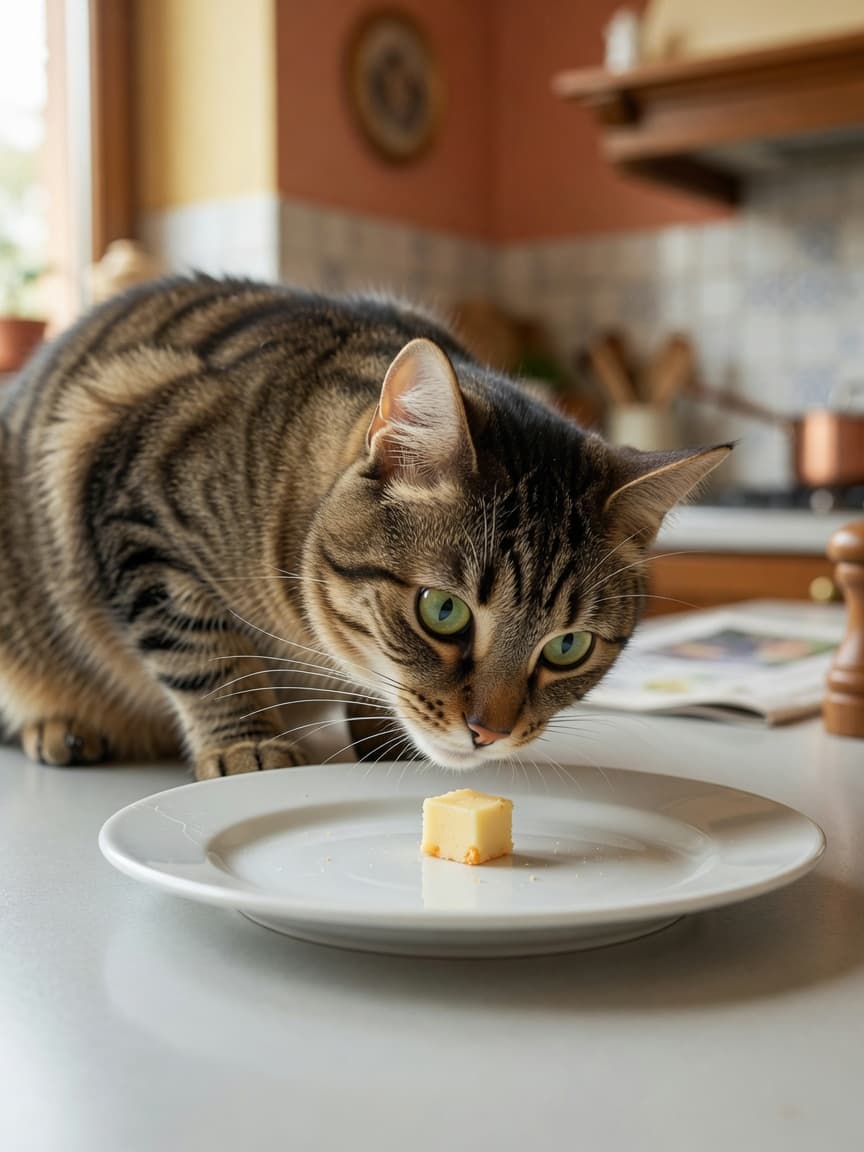
If you do offer cheese to your cat, keep it infrequent and portions very small. A cube roughly the size of a pea — around half a gram to one gram — is sufficient. Hard aged varieties such as cheddar or parmesan are preferable to soft fresh cheeses due to their lower lactose content. Unflavoured and unseasoned are non-negotiable requirements.
Treats of any kind, including cheese, should not account for more than ten percent of a cat's daily caloric intake. Most cats require between 150 and 200 calories per day depending on their size and activity level. Even a small cube of cheddar contains approximately four to five calories, which adds up quickly in the context of a small cat's overall diet.
Signs That Your Cat Has Reacted Badly to Cheese
After offering cheese for the first time, watch for signs of digestive upset over the following twelve to twenty-four hours. Loose or watery stools, vomiting, excessive flatulence, or stomach gurgling all suggest that your cat's digestive system has not handled the lactose well. If these symptoms occur, cheese should be removed from the menu entirely.
Repeated exposure to foods that cause digestive upset is not advisable, even if individual episodes seem mild. Chronic low-grade digestive inflammation is not in your cat's best interest, regardless of how much they may seem to enjoy the food causing it.
The Verdict on Cats and Cheese
Cheese is not toxic to cats in the way that onions or chocolate are, but it is far from an ideal food for feline digestion. Most adult cats are at least partially lactose intolerant, and the fat and salt content of cheese adds further reasons for caution. Hard aged cheeses in very small quantities are the safest choice if you do want to offer dairy, but for the majority of cats, cheese is best reserved for the occasional pill-hiding emergency rather than a regular treat.