
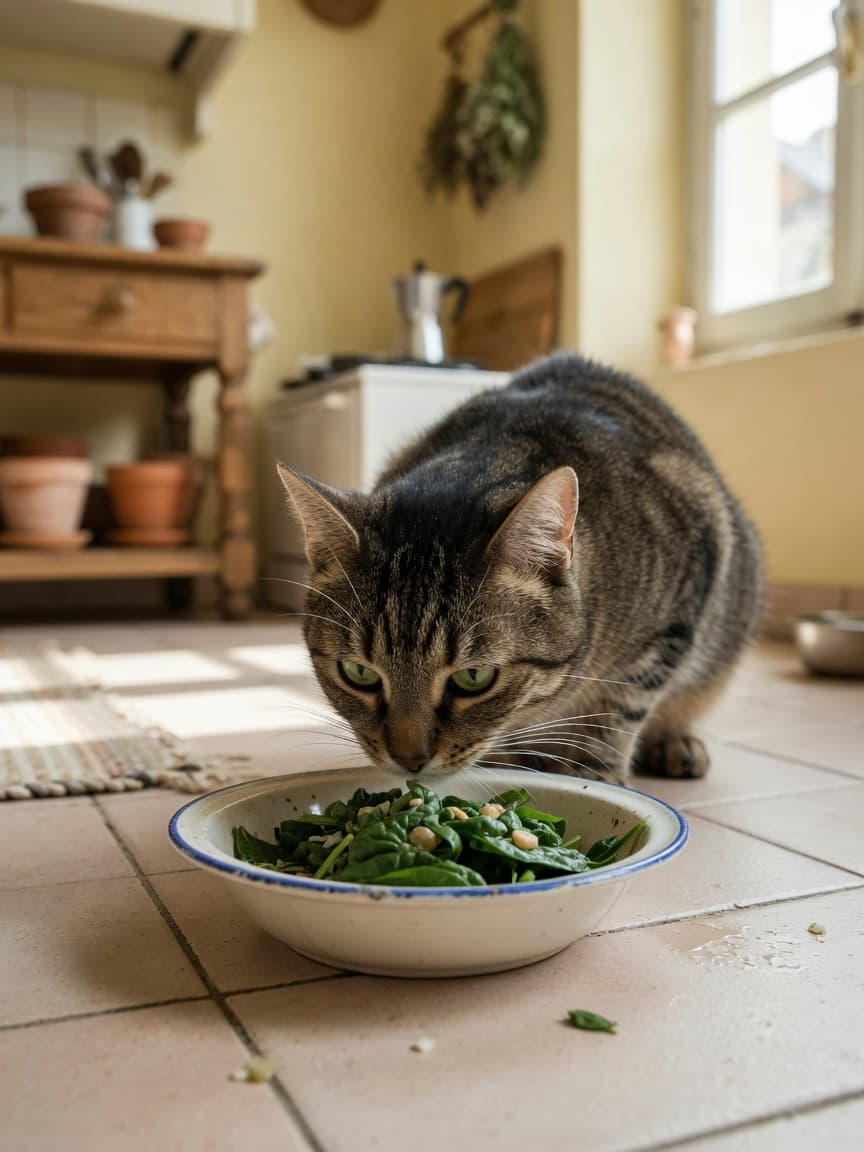
Spinach for Cats: When a Healthy Human Food Becomes a Feline Concern
Spinach is one of those foods that sits comfortably at the top of human nutritional guidance. Rich in iron, folate, vitamins K and A, and a range of antioxidants, it is a genuinely impressive leafy green. For cats, however, the picture is considerably more nuanced. Spinach contains compounds that are largely irrelevant to healthy humans but carry meaningful implications for a significant portion of the cat population.
The Oxalate Problem
Spinach is among the highest-oxalate foods in the plant kingdom. Oxalates, also called oxalic acid, are naturally occurring compounds found in many plants where they serve as a defence mechanism against herbivores. In humans, moderate oxalate intake from spinach is generally manageable, and the risks are primarily relevant to those prone to kidney stones or with existing renal conditions.
In cats, oxalates present a more specific and serious concern. When oxalic acid enters the body, it can bind with calcium to form calcium oxalate crystals. In cats with normal kidney function and adequate hydration, small amounts of these crystals may pass without incident. In cats with compromised kidneys, reduced urinary output, or a genetic predisposition to urinary crystal formation, however, calcium oxalate crystals can accumulate in the urinary tract or kidneys, contributing to uroliths (urinary stones) or accelerating existing renal damage.
Kidney disease is strikingly common in cats. Research suggests that approximately one in three cats over the age of ten will develop chronic kidney disease (CKD), and many cats carry early-stage renal impairment without showing obvious clinical signs. Feeding oxalate-rich foods to a cat with subclinical kidney disease — one whose condition has not yet been detected — is a genuine risk.
Calcium Oxalate Uroliths in Cats
Calcium oxalate stones are one of the two most common types of urinary crystals found in cats, alongside struvite. Unlike struvite crystals, which can often be dissolved through dietary modification, calcium oxalate uroliths typically require surgical or minimally invasive removal once they are established. They are painful, recurrent, and associated with ongoing urinary tract inflammation.
Male cats face a higher mechanical risk from urinary crystals because their urethra is narrower than that of females, making blockages more likely. A urethral obstruction from crystal formation is a veterinary emergency. Dietary factors that increase urinary oxalate concentration — including regular consumption of high-oxalate foods like spinach — are among the modifiable risk factors for this condition.
What About the Nutritional Benefits of Spinach for Cats?
Spinach does contain vitamins and minerals. However, it is important to contextualise these within what cats actually need and how well they absorb plant-derived nutrients.
The iron in spinach is non-haem iron, the form found in plant sources. Cats absorb non-haem iron less efficiently than haem iron, which comes from meat. The vitamin K in spinach is phylloquinone (vitamin K1), which plants produce, but cats also utilise menaquinone (vitamin K2) found in animal tissue. The folate content is relevant, but cats eating a complete and balanced commercial diet already receive adequate folate. Vitamin A from spinach exists as beta-carotene, which cats convert to retinol far less efficiently than humans or dogs — another consequence of their obligate carnivore metabolism.
The nutritional case for spinach in cats is therefore quite weak, and it must be weighed against the genuine kidney and urinary risks for a significant subset of the cat population.
Can Healthy Young Cats Eat Small Amounts of Spinach?
A young, healthy cat with no history of urinary problems, confirmed good renal function, and a diet that supports adequate hydration is at lower risk from occasional very small amounts of spinach. In this narrow context, a tiny leaf or two is unlikely to cause immediate harm.
That said, the precautionary argument is strong. Because kidney disease in cats often develops silently and progressively, and because many cats show no symptoms until they have lost a significant proportion of kidney function, the risk of unknowingly feeding oxalate-rich food to a cat with early renal impairment is a real concern. Spinach provides no benefit that cannot be obtained from safer foods, which makes it difficult to justify the risk even in apparently healthy cats.
Cats Who Should Absolutely Avoid Spinach
Spinach should be strictly avoided in cats with:
- Diagnosed chronic kidney disease at any stage
- A history of calcium oxalate urinary crystals or stones
- Recurrent lower urinary tract disease
- Low urine output or chronic dehydration issues
- Confirmed elevated kidney markers on blood or urine tests
For these cats, even occasional small amounts carry enough risk to make avoidance the appropriate choice. Dietary management of feline kidney disease is already complex, and adding an oxalate-rich vegetable introduces an unnecessary variable.
Safer Vegetable Alternatives
If you want to incorporate small amounts of plant matter into your cat's diet — perhaps because they show interest in grass or greenery — there are lower-risk alternatives. Small amounts of cooked pumpkin are well tolerated and provide soluble fibre that can help with digestive regularity. Cooked courgette is low in oxalates and generally harmless. Cucumber is high in water content and palatable to some cats. Cat grass (wheatgrass or barley grass) satisfies the instinct to chew on greens without the oxalate burden of spinach.
None of these should form a significant part of a cat's diet, but they offer a safer way to accommodate a cat's occasional interest in plant material.
The Overall Assessment
Spinach is not acutely poisonous to cats in the way that lilies or onions are, but it carries a specific risk profile that makes it poorly suited to feline diets. The oxalate content is a legitimate concern for urinary health and kidney function, and given that cats are prone to both kidney disease and calcium oxalate crystal formation, the combination of low nutritional benefit and meaningful risk makes spinach a food that responsible cat owners are best advised to avoid. When safer alternatives exist for every purpose spinach might serve, it is difficult to make a case for including it in your cat's diet at all.