
Can Cats Eat Chicken?
Chicken is one of the most natural foods you could offer a cat. As obligate carnivores, cats depend on animal protein to survive and thrive, and chicken ticks nearly every box: high protein content, a complete amino acid profile including taurine, and a flavour most cats find irresistible. The short answer is yes, cats can eat chicken — but the details around preparation, portion, and whether it is raw or cooked matter quite a lot.
Why Chicken Is a Good Choice for Cats
Chicken is lean, highly digestible, and packed with nutrients cats genuinely need. A 100g serving of cooked chicken breast contains roughly 31g of protein with minimal fat, making it suitable even for cats managing their weight. It provides niacin, phosphorus, selenium, and vitamin B6 — all essential for feline metabolic function.
Taurine deserves a special mention. Unlike dogs, cats cannot synthesise sufficient taurine from other amino acids and must obtain it from their diet. Chicken, particularly chicken heart, is a reasonable source. Chronic taurine deficiency leads to dilated cardiomyopathy and retinal degeneration, so any diet that includes chicken as a meaningful protein source contributes to this critical requirement.
Cooked Chicken: The Safer Everyday Option

For most cat owners, plain cooked chicken is the most practical and safest way to introduce this protein. The cooking process eliminates bacterial pathogens such as Salmonella and Campylobacter, which pose genuine risks both to your cat and to your household, particularly if there are immunocompromised individuals or young children present.
- Poach or grill the chicken without seasonings, oils, or marinades
- Avoid garlic, onion, and chives entirely — all are toxic to cats
- Remove all bones before serving, particularly cooked bones, which splinter and can cause internal damage
- Allow it to cool to room temperature before offering it
- Skin should be removed, as it is high in fat and may cause digestive upset
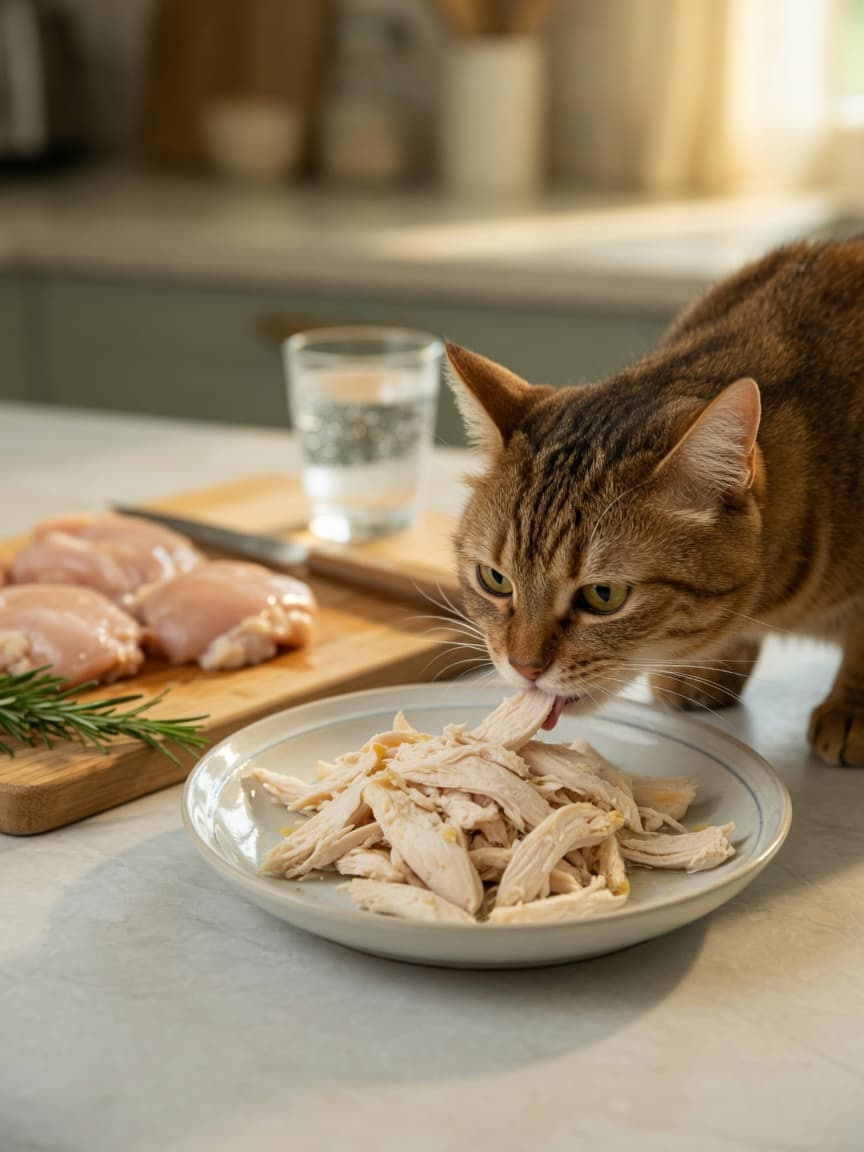
Shredded poached breast or thigh meat served as a topper on regular food, or as an occasional treat, is an excellent way to boost protein intake and palatability for fussy eaters. Keep portions to around 10–15% of daily caloric intake to avoid displacing a nutritionally balanced diet.
Raw Chicken: What You Need to Know
Raw feeding is a topic that divides veterinary opinion, and for understandable reasons. Proponents argue that raw chicken more closely mirrors a cat's ancestral diet, with intact enzymes, higher moisture content, and a texture that encourages natural chewing behaviour. Some raw feeders also report improvements in coat quality and stool consistency, though large-scale clinical data remains limited.
The concerns, however, are significant. Raw chicken frequently carries Salmonella, Listeria, and Campylobacter. While cats have a shorter digestive tract and more acidic stomach environment than humans — which does offer some natural protection — they are not immune to these pathogens. Research published in veterinary journals has documented bacterial shedding in cats fed raw diets, raising questions about household contamination.
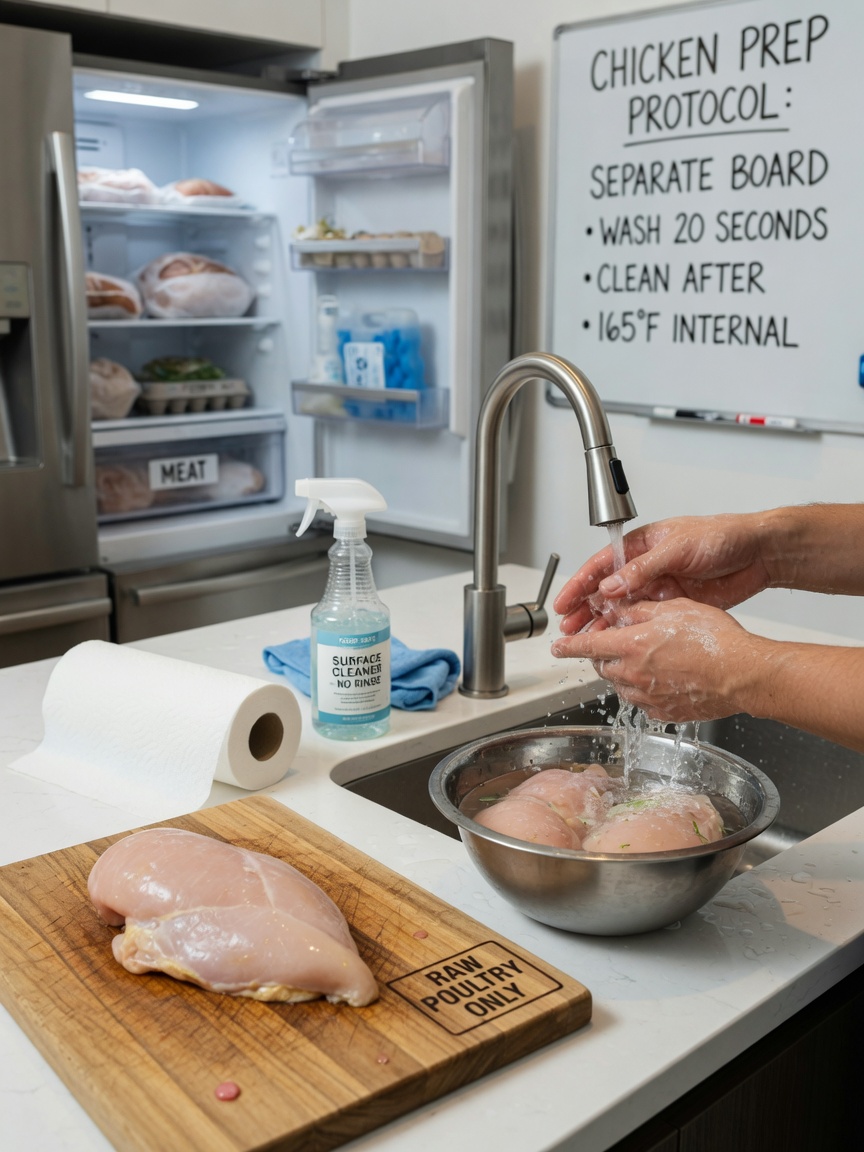
If you choose to feed raw chicken, these precautions are non-negotiable:
- Source from high-quality, human-grade suppliers
- Keep raw chicken refrigerated and prepare it on separate surfaces
- Wash hands thoroughly after handling
- Raw bones (never cooked) may be offered under supervision — they are more pliable and less likely to splinter
- Freeze chicken for at least 72 hours before feeding to reduce parasite risk
- Consult your vet before transitioning to a raw diet, especially for senior cats, kittens, or immunocompromised animals
Commercial raw diets that are HPP (high-pressure processed) represent a middle ground worth exploring — they neutralise many pathogens while retaining the nutritional profile of raw meat.
Chicken Bones: A Clear Line
The rule here is straightforward: cooked bones are never safe, raw bones carry risk but are manageable under supervision. When chicken bones are cooked, they dry out and become brittle, splintering into sharp fragments that can puncture the oesophagus, stomach, or intestines. This is a genuine emergency. Raw bones retain moisture and flexibility, allowing cats to gnaw them more safely. A raw chicken wing or neck, offered while you supervise, can also support dental health by mechanically removing plaque.
That said, not every cat chews carefully. If your cat tends to gulp food whole or has a history of digestive issues, skip bones entirely and stick to boneless meat.
How Much Chicken Can Cats Eat?
Chicken alone does not constitute a complete feline diet. While it provides excellent protein, it is low in calcium (especially boneless meat), lacks vitamin E, and does not supply sufficient omega-3 fatty acids. Cats fed only chicken over time can develop nutritional deficiencies — a condition historically seen in cats fed exclusively on muscle meat.
As a supplement or treat, chicken is ideal. As a diet component within a raw or home-cooked regime, it must be balanced with organ meats, calcium sources (such as bone meal or crushed eggshell), and appropriate supplements. A veterinary nutritionist can help formulate a complete recipe if you are considering this route.
For most cats eating commercial food, a tablespoon or two of plain cooked chicken several times per week is a perfectly reasonable addition. It adds variety, boosts hydration if poached in water, and keeps even the pickiest eaters interested in their meals.
Signs Your Cat Is Reacting Well — or Poorly
Most cats tolerate chicken extremely well. Positive signs include enthusiasm at mealtime, a shiny coat, and firm, well-formed stools. If your cat develops vomiting, diarrhoea, lethargy, or skin irritation after eating chicken, a sensitivity or allergy may be at play — though true chicken allergies are relatively uncommon compared to beef or fish. Introduce any new food gradually over several days and monitor closely.
Chicken deserves its place as a staple in feline nutrition. Prepared thoughtfully, it is one of the most beneficial proteins you can offer your cat.