ForPetsHealthcare
Cats

Can Cats Eat Dog Food Dangerous

By Julia WrenfieldUpdated August 4, 20263 min read
Evidence-based · Sources checked
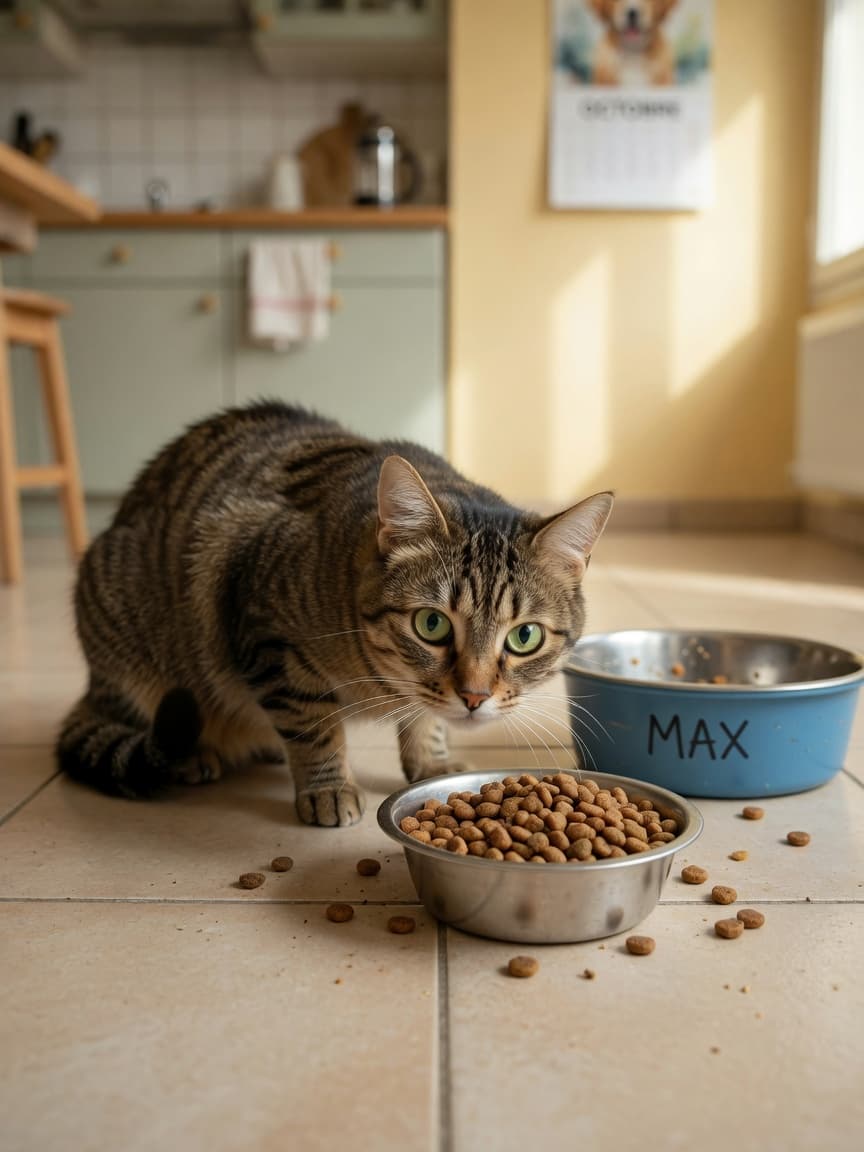
{"en": "Cat and dog eating from separate food bowls, illustrating multi-pet feeding challenges and nutritional differences", "es": "Gato y perro comiendo de cuencos separados, ilustrando los desaf\u00edos de alimentaci\u00f3n en hogares multimascotas", "fr": "Chat et chien mangeant dans des bols s\u00e9par\u00e9s, illustrant les d\u00e9fis nutritionnels des foyers multi-animaux", "de": "Katze und Hund fressen aus separaten N\u00e4pfen, zeigt F\u00fctterungsherausforderungen in Mehrtierhaushalten", "nl": "Kat en hond eten uit gescheiden voederbakken, illustreert voedingsuitdagingen in meerdierenhushoudens", "pt": "Gato e cachorro comendo de tigelas separadas, ilustrando desafios nutricionais em lares com m\u00faltiplos animais", "it": "Gatto e cane che mangiano da ciotole separate, illustra le sfide nutrizionali nelle case con pi\u00f9 animali domestici"}
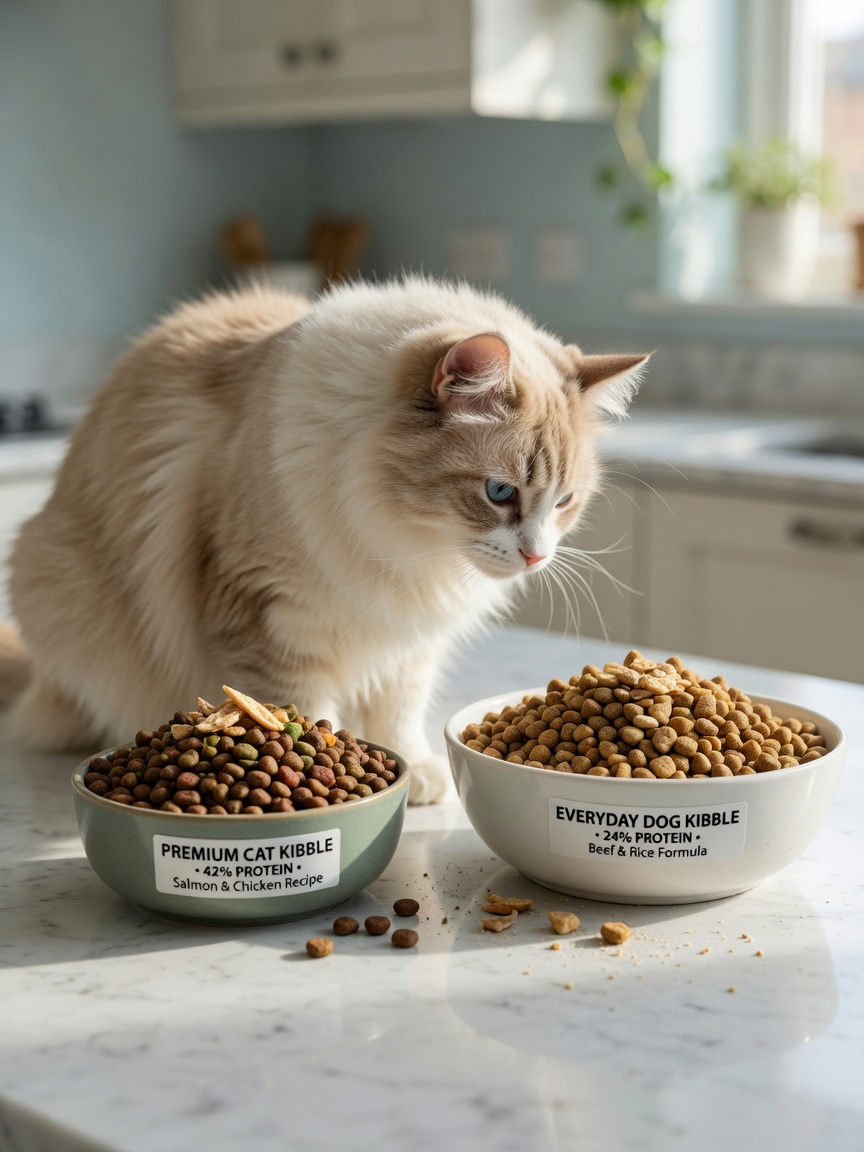
Two food bowls comparison with cat standing between premium cat kibble and standard dog kibble

Cats require dramatically higher levels of dietary protein than dogs. While dog foods are required to contain at least 18% protein on a dry matter basis for adults, cats need a minimum of 26%, and many nutritionists consider 35 to 45% more appropriate for optimal feline health.

Beyond the quantity issue, cats have elevated requirements for specific amino acids beyond taurine — arginine in particular is critical. Arginine is part of the urea cycle, which processes ammonia produced during protein metabolism. Cats are so dependent on dietary arginine that a single arginine-deficient meal can cause dangerously elevated blood ammonia levels, leading to neurological signs within hours. While arginine is present in most meat-based dog foods, the overall amino acid profile of dog food is calibrated for a different species with different minimum requirements.

Niacin: Another Nutrient Cats Cannot Synthesise

Most mammals, including dogs, synthesise niacin from tryptophan. Cats have high activity of an enzyme that diverts tryptophan away from niacin production, meaning they rely almost entirely on dietary preformed niacin. Dog food may not be formulated with this in mind. Niacin deficiency in cats leads to poor coat quality, gastrointestinal disturbance, and in severe cases, neurological signs.

What About Occasional Accidental Exposure?

A cat that occasionally steals a mouthful of the dog's dinner is not in immediate danger. The concern is habitual or primary feeding of dog food to cats. Even a few weeks of eating dog food as the main diet can begin depleting taurine stores. Several months of this diet places a cat at genuine risk of cardiac and ocular damage.

If you have a multi-pet household, feeding separate meals in separate locations is the simplest solution. Cats and dogs can safely coexist without sharing food bowls. Store cat food and dog food separately, feed at different times or in different rooms if necessary, and ensure that cats in particular always have access to species-appropriate food.

The Bottom Line

Dog food is not a safe backup option for cats, even temporarily if proper cat food runs out. It lacks taurine at adequate levels, does not provide preformed arachidonic acid, may not supply sufficient preformed vitamin A, and does not meet feline protein requirements either in quantity or amino acid profile. The damage this causes builds invisibly over time and often becomes apparent only when it is too late to reverse. Cats must eat cat food — this is not a marketing slogan but a physiological reality.

#can cats eat dog food dangerous#dog health#dog nutrition#cat health#feline nutrition#forpetshealthcare

Sources & further reading

This article is based on peer-reviewed veterinary research and reputable animal-health sources. Explore the underlying science in our Research Library.

Related articles

Can Cats Be Allergic to Dogs?

Many multi-pet households wonder whether their feline companions can develop allergies to their canine housemates. The simple answer is yes—cats can indeed be allergic to dogs, though it's far less common than you might think. Understanding the nature of these allergies and how to manage them is cru…

Read more →

What Vaccinations Does My Kitten Need?

Bringing a new kitten into your home is an exciting time, but it also comes with important responsibilities—and vaccination is one of the most critical decisions you'll make for their health. Kittens are particularly vulnerable to infectious diseases during their early weeks, which is why a proper v…

Read more →

What Can Cats Eat? Safe Human Foods & Toxic Ingredients

As a cat owner, you've probably wondered whether it's safe to share your meals with your feline friend. While cats are obligate carnivores with specific nutritional needs, several human foods can be offered as occasional treats—and just as importantly, many common household items can cause serious h…

Read more →

How to Kitten Proof Your Home

Bringing a new kitten into your home is an exciting time, but it also comes with significant responsibilities. Kittens are naturally curious, energetic, and prone to getting into trouble as they explore their new environment. Unlike adult cats, kittens lack the experience to recognise genuine danger…

Read more →

How to Care for a Sick Kitten

Caring for a sick kitten can be stressful, especially if you're a first-time cat parent. Young kittens are vulnerable to various illnesses, from viral infections to parasites, and recognising the signs early is crucial for their recovery. This guide will help you understand the essentials of kitten …

Read more →

Can Cats Have Blueberries? Is It Safe?

If you've ever wondered whether your feline friend can enjoy the same healthy snacks you do, you're not alone. Blueberries are a nutritional powerhouse for humans, packed with antioxidants and vitamins. But when it comes to our cats, the rules are quite different. The good news is that yes, cats can…

Read more →
Disclaimer:This article is for informational purposes only and does not constitute veterinary advice. Always consult a qualified veterinarian for your pet's health concerns.

Free newsletter

Pet health tips, straight to your inbox

Weekly science-backed advice for dog & cat owners. No spam, unsubscribe anytime.