
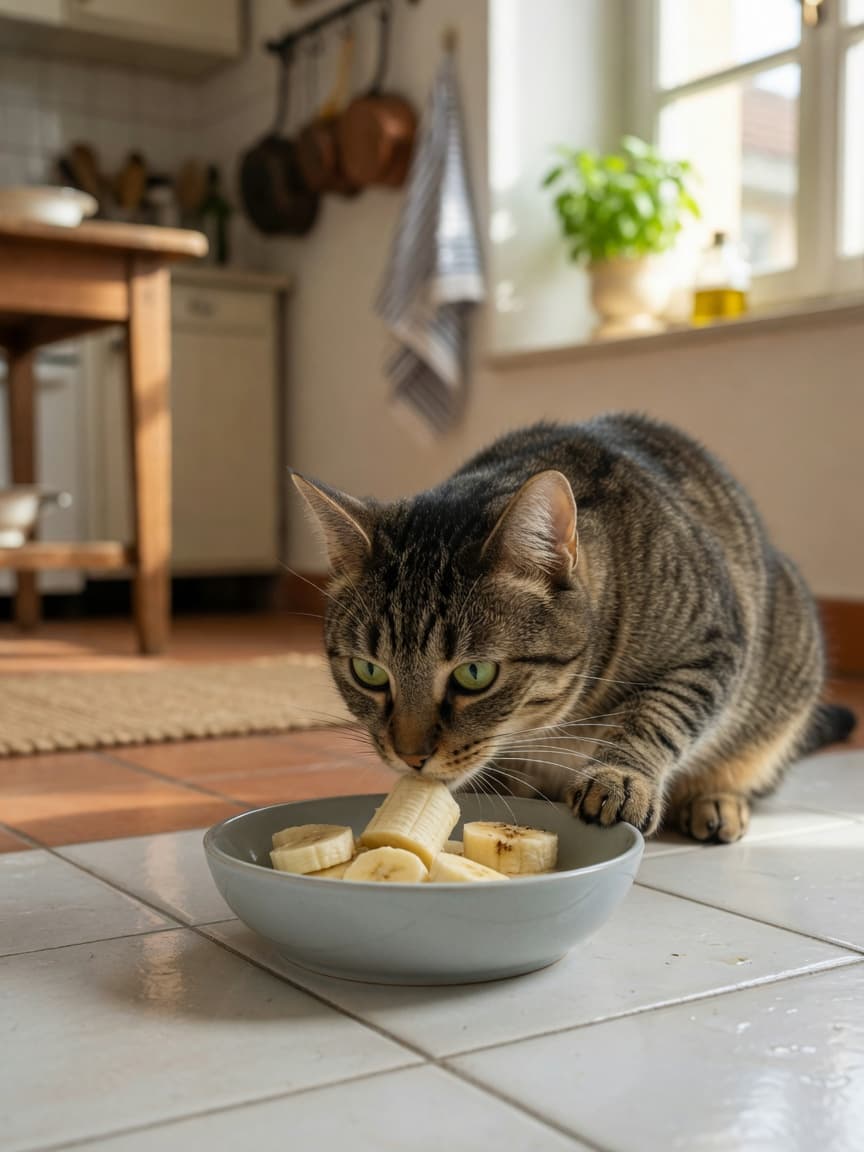
Can Cats Eat Bananas? The Truth About Cats and This Popular Fruit
Are Bananas Toxic to Cats?
The straightforward answer is no — bananas are not listed as toxic to cats by major veterinary toxicology references. The ASPCA does not classify bananas as poisonous to felines. This makes them safer than many other fruits that cat owners ask about, such as grapes, raisins, or citrus. However, "not toxic" and "safe" or "beneficial" are very different things, and bananas fall short on both of the latter criteria for cats.
The banana's non-toxic status means that an occasional, tiny piece is unlikely to send your cat to the emergency vet. But it also should not be read as a green light to offer bananas regularly or in meaningful quantities. The sugar and starch content of bananas creates metabolic challenges for cats that do not exist for omnivorous animals.
The Sugar Problem: Why Bananas Are a Poor Choice for Cats
A ripe banana is approximately 12–15% sugar by weight, primarily in the form of fructose, glucose, and sucrose. It also contains a significant amount of starch, which converts to glucose during digestion. For humans, this represents a useful energy source. For cats, it represents a metabolic burden.
Cats evolved as hypercarnivores and have metabolic systems calibrated for low-carbohydrate, high-protein intake. Unlike omnivores, cats have limited production of the digestive enzymes needed to break down starches and sugars efficiently. Their livers lack certain enzymes that regulate carbohydrate metabolism the way omnivore livers do. The result is that excess carbohydrates — including sugars from fruit — can contribute to blood glucose dysregulation, weight gain, and over time, may be a factor in feline diabetes.
Even a small piece of banana contains more sugar than a cat should reasonably consume in a day. The American Association of Feline Practitioners recommends keeping treats to no more than 10% of a cat's daily caloric intake — and those calories are best spent on meat-based treats, not fruit.
Can Cats Even Taste Bananas?
This is where feline biology becomes genuinely fascinating. Cats are one of the few mammals known to have lost functional sweet taste perception. The gene responsible for detecting sweet flavors — Tas1r2 — is a pseudogene in cats, meaning it exists in their DNA but does not produce a working protein. As a result, cats are effectively taste-blind to sweetness.
This evolutionary quirk makes perfect sense for an obligate carnivore that has no dietary need for sugar or carbohydrates. The ability to detect sweetness likely evolved in animals that needed to identify ripe, energy-rich plant foods. Cats, whose energy comes entirely from prey, had no evolutionary pressure to maintain that ability.
What this means practically: if your cat shows interest in your banana, it is not because it finds the fruit delicious. More likely it is responding to the smell — bananas have a distinctive volatile aroma that may attract feline curiosity — or reacting to your behavior and the attention around the food. Many cats, however, will simply turn their nose up at banana and walk away.
What About the Peel?
Banana peels are not toxic to cats, but they are extremely difficult to digest and present a real choking and intestinal blockage risk. The thick, fibrous texture of banana peel can form a mass in the digestive tract that may require veterinary intervention to resolve. Never offer banana peel to your cat, and if you are eating a banana near your cat, dispose of the peel promptly and securely.
Potassium: Is It Beneficial for Cats?
Bananas are often promoted for their potassium content, and potassium is indeed an essential mineral for cats — it supports heart function, muscle contraction, and nerve transmission. However, cats that eat a complete, balanced commercial cat food already receive adequate potassium from their diet. There is no documented benefit to supplementing a healthy cat's potassium intake through bananas or any other fruit.
If your cat is experiencing potassium deficiency (hypokalemia), which can occur in cats with kidney disease or certain gastrointestinal conditions, your veterinarian will prescribe appropriate supplementation — not bananas. Self-treating a mineral deficiency with fruit is not an appropriate approach and can mask underlying health issues.
Ver alimentos para gatos en Zooplus →Better Treat Options for Cats
If you want to give your cat a special treat, lean toward options that align with their obligate carnivore biology. Small pieces of cooked, unseasoned chicken, turkey, or fish are excellent choices — they are high in the animal protein cats thrive on, contain no sugars or starches, and are genuinely palatable to most cats. Commercial cat treats made from single-protein sources with minimal fillers are another solid option.
Freeze-dried meat treats in particular have become popular for good reason — they retain most of the nutritional value of raw meat while being shelf-stable and convenient. These give your cat a reward that works with their biology rather than against it.
Signs Your Cat Has Eaten Too Much Banana
If your cat has eaten a larger piece of banana than intended, watch for the following symptoms over the next several hours:
- Vomiting
- Diarrhea or loose stools
- Bloating or visible abdominal discomfort
- Lethargy or reduced activity
- Constipation (in some cases, due to the starchy content)
Most cats who consume a small amount of banana will not display any symptoms. But if symptoms appear or if your cat consumed a significant quantity, contact your veterinarian for guidance.
- Bananas are not toxic to cats, but they are high in sugar and starch that cats metabolize poorly.
- Cats cannot taste sweetness, so bananas hold no flavor appeal for them.
- Banana peel should never be given to cats — it is a choking and blockage hazard.
- As obligate carnivores, cats have zero nutritional need for fruit of any kind.
- Choose meat-based treats instead — they align with feline biology and provide real nutritional value.
References
- Morris JG. "Cats discriminate between carbohydrate-supplemented and unsupplemented diets." J Nutr. 2002;132(6 Suppl 2):1713S-5S. PMID: 12042485
- Verbrugghe A, Bakovic M. "Peculiarities of one-carbon metabolism in the strict carnivore, the domestic cat (Felis catus)." Nutrients. 2013;5(7):2811-35. PMID: 23873295
- Plantinga EA, Bosch G, Hendriks WH. "Estimation of the dietary nutrient profile of free-roaming feral cats: possible implications for nutrition of domestic cats." Br J Nutr. 2011;106 Suppl 1:S35-48. PMID: 22005436