
Understanding Kitten Development
Kittens develop faster than most people realise. Within a matter of weeks, a blind, deaf, and completely dependent newborn transforms into a curious, mobile, and increasingly independent creature. Each developmental stage is governed by biological timing that neither owners nor breeders can override. What you can do is understand the stages well enough to support them properly.
Stage One: Neonatal Period (0 to 2 Weeks)
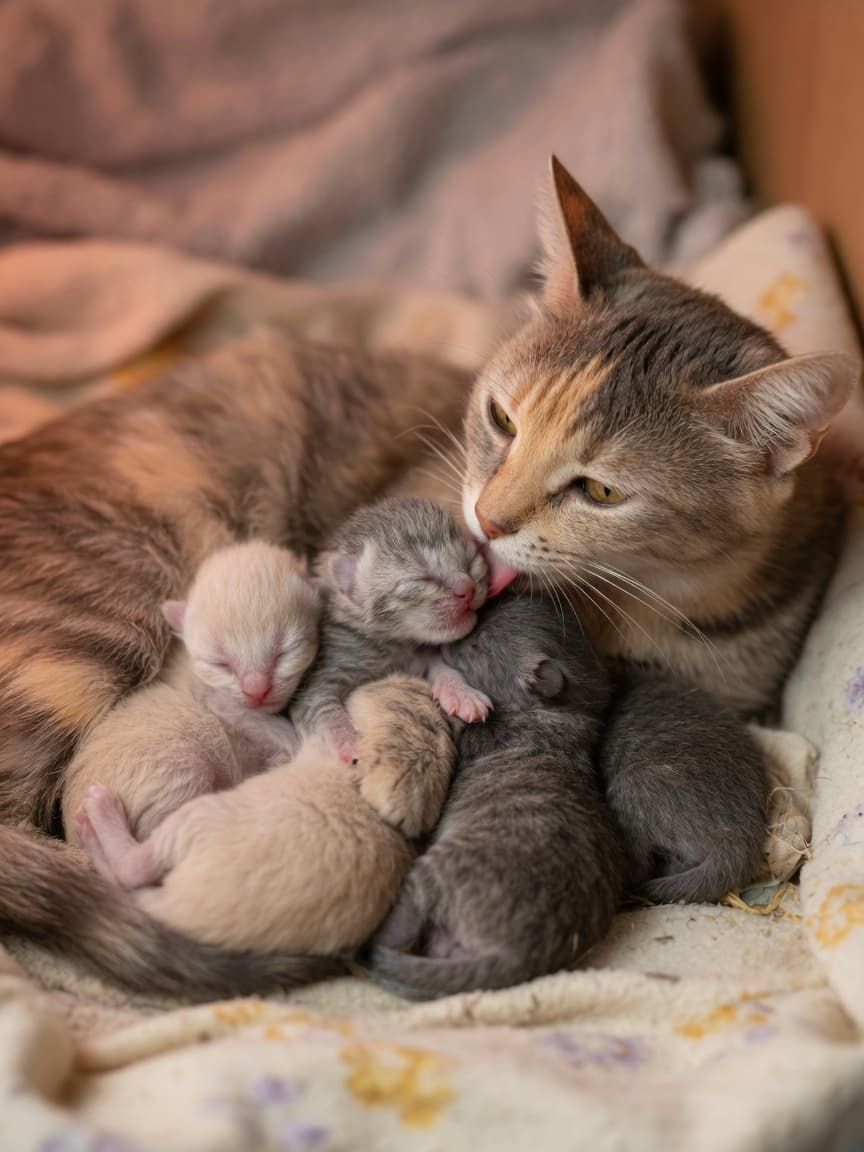
At birth, kittens are entirely reliant on their mother. Their eyes and ear canals are sealed shut. They cannot regulate their own body temperature, which means they depend on the queen and their littermates for warmth. A kitten separated from this heat source can become hypothermic quickly, and hypothermia is one of the leading causes of neonatal death in cats.
Feeding happens every two hours around the clock during the first week. The queen stimulates urination and defecation by licking the kittens' abdomen and genital area, a behaviour that must be replicated manually if kittens are being hand-reared. Despite the vulnerability of this stage, kittens are not passive. They root actively for the nipple, vocalise loudly when cold or hungry, and respond to touch.
Gentle handling by humans during these first two weeks is valuable. Breeders who regularly pick up, stroke, and hold kittens from the very first days produce animals that are more comfortable with human contact later in life. The brain is already recording and responding to early sensory input.
Stage Two: Transitional Period (2 to 4 Weeks)

Between one and two weeks of age, the eyes begin to open. All kittens are born with blue eyes regardless of the colour they will eventually display, and vision develops gradually over several weeks. The ear canals open around three weeks, and the kitten begins to hear and orient toward sounds.
Walking, or at least an approximation of it, begins around the third week. The first attempts are unsteady and endearing, but coordination improves quickly. Baby teeth start to erupt, signalling that weaning can begin. Soft, wet food introduced at this stage supplements nursing and gradually reduces the kitten's dependence on the queen's milk.
Litter tray introduction also happens here. Kittens typically take to this quickly, driven partly by instinct and partly by watching their mother. The tray should be low-sided, shallow, and placed away from the feeding area.
Stage Three: The Socialisation Window (2 to 7 Weeks)
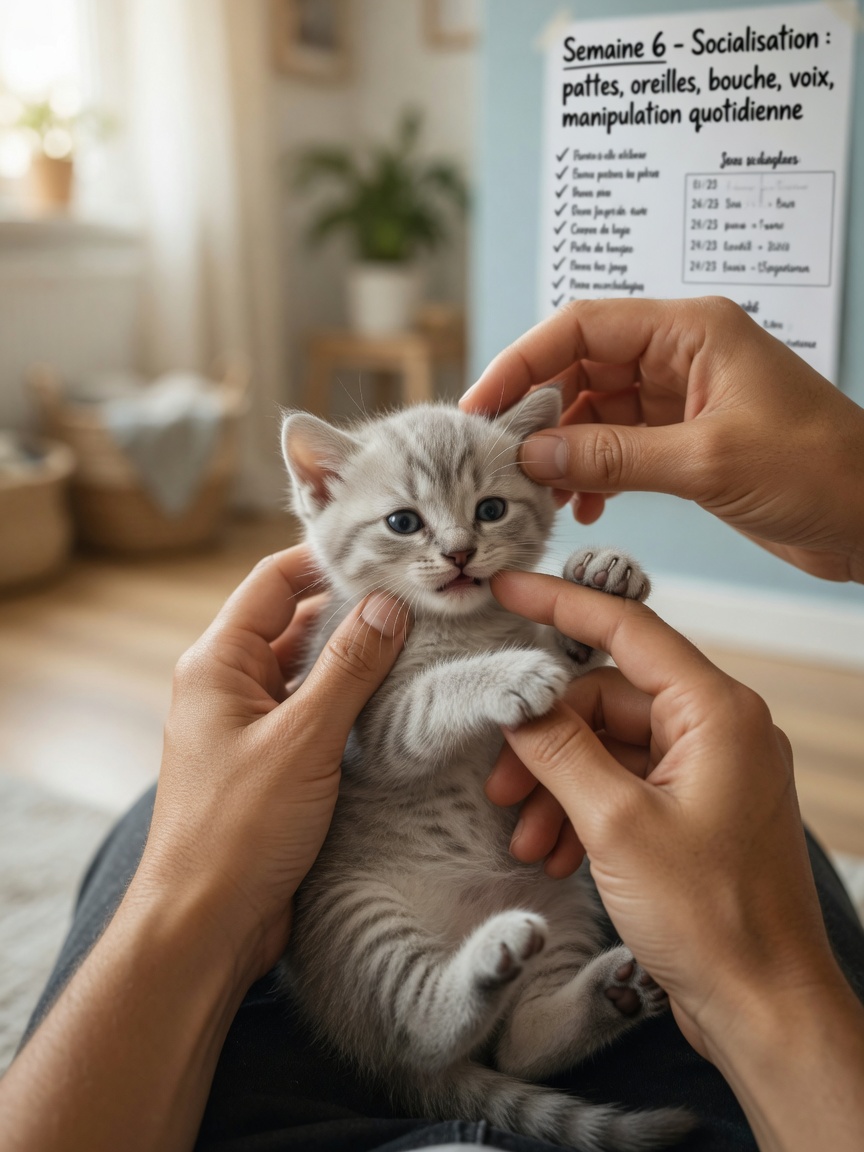
This is the most important developmental period for cats, and it is notably shorter than the equivalent window in dogs, which extends to around twelve weeks. Between two and seven weeks, a kitten's brain is especially receptive to learning what is normal and safe in its environment. Experiences during this period, both positive and negative, leave impressions that are difficult to undo in adulthood.
The most critical element of this window is human contact. Kittens that are handled regularly and kindly between two and seven weeks grow into cats that are comfortable with people. Those that receive little or no human contact during this period are at serious risk of becoming fearful or even feral in their responses to humans, even if they later receive extensive care and attention.
What Socialisation Should Include
- Being handled by a variety of people, including those of different ages, sizes, and appearances
- Exposure to different sounds in the home, such as the television, vacuum cleaner, and household appliances
- Contact with different surfaces and textures
- Gentle introduction to being lifted, held, and examined at the ears, paws, and mouth
- Positive early experience with a cat carrier, which will reduce stress at every future veterinary visit
Stage Four: Juvenile Period (7 Weeks to 6 Months)
Once the socialisation window closes, kittens enter a juvenile phase that is characterised by rapid growth, intense play, and the development of hunting skills. Play during this stage falls into two broad categories: social play, which involves interaction with littermates and human companions, and predatory play, which mimics the stalking, chasing, and pouncing behaviours used in hunting.
It is important to distinguish between the two. Predatory play directed at human hands and feet is common, but allowing it encourages biting and scratching behaviour that becomes problematic in an adult cat. Redirect this energy toward appropriate toys such as wand toys, feather teasers, and toy mice. Never use hands as playthings.
Kittens adopted at eight weeks are entering this stage. They need companionship, stimulation, and a safe environment to explore. If the kitten is to be an indoor cat, enrichment is not optional. Scratching posts, climbing structures, puzzle feeders, and regular play sessions are essential for mental and physical wellbeing.
Stage Five: Adolescence (6 to 12 Months)
Feline adolescence is less dramatic than its canine equivalent, but it is not without its challenges. Sexual maturity arrives, typically between five and nine months in females and slightly later in males. A queen in heat will vocalise loudly and frequently, roll on the floor, and attempt to escape outdoors. Entire males spray urine to mark territory and will roam considerable distances in search of females.
Neutering before or at the onset of sexual maturity is recommended by most veterinary professionals for cats not intended for breeding. The surgery eliminates heat cycles and spraying, reduces roaming behaviour, and lowers the risk of certain health conditions including mammary tumours in females and testicular cancer in males.
Social relationships with other household pets may shift during adolescence. A kitten that was accepted immediately by resident cats may find that dynamic renegotiated as it matures into a sexually active adult. Monitor interactions and provide sufficient resources, including food stations, water sources, litter trays, and resting spots, to reduce competition.
Reaching Adulthood
Most cats reach social maturity between eighteen months and four years of age. Physical growth concludes earlier, around twelve months for most breeds, but behavioural maturity continues to develop beyond this point.
The cat your kitten becomes is shaped significantly by what happened in those first seven weeks. If you are choosing a kitten, ask the breeder or rescue about early handling practices. If you are raising a litter yourself, invest in daily human contact from day two onward. That investment pays dividends across a lifetime.