
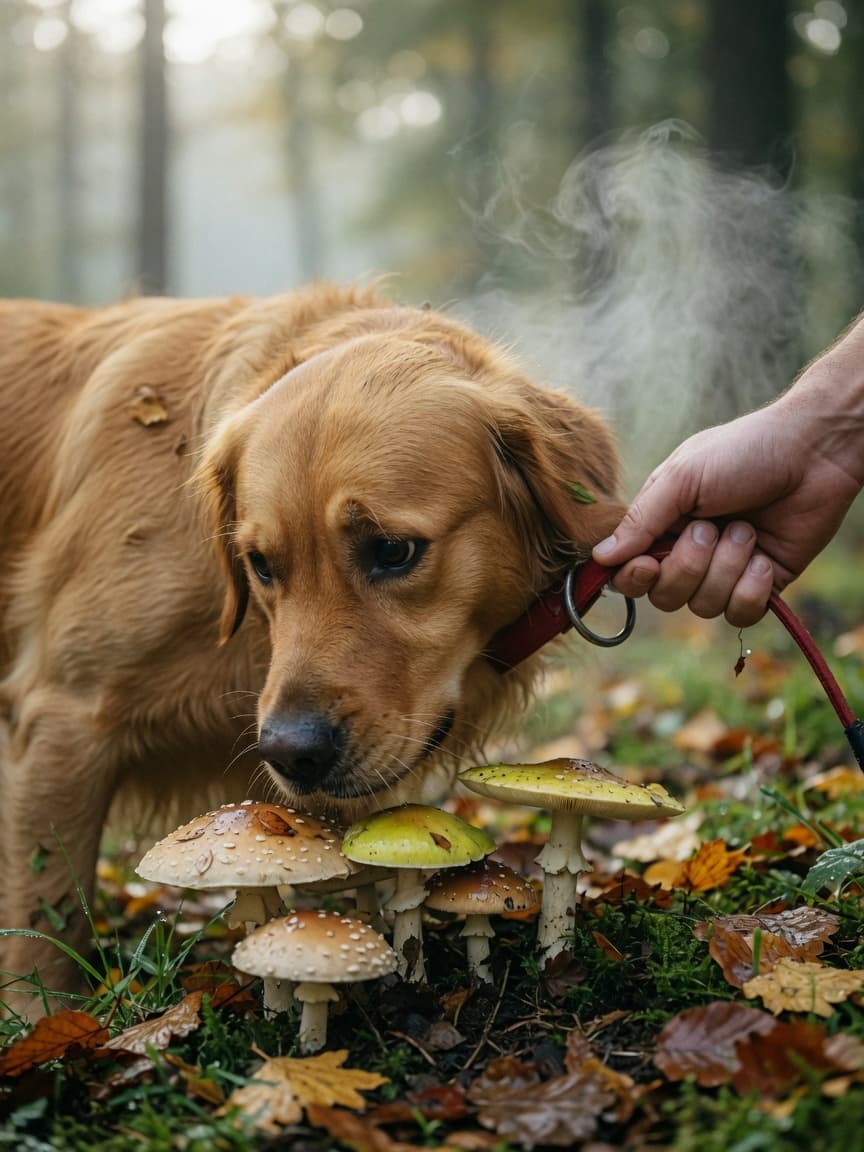
Les chiens peuvent-ils manger des champignons ? Ceux du commerce, oui — les champignons sauvages sont potentiellement mortels
Les champignons sont une catégorie d'aliments qui n'a pas de réponse simple par oui ou par non en matière de sécurité pour les chiens. La réponse dépend entièrement du champignon dont on parle — et cette distinction peut faire la différence entre une collation inoffensive et une urgence vitale. Comprendre la ligne de démarcation entre ce qui est sans danger et ce qui est mortel est une connaissance essentielle pour tout propriétaire de chien.
Champignons du commerce : généralement sans danger, mais bénéfice limité
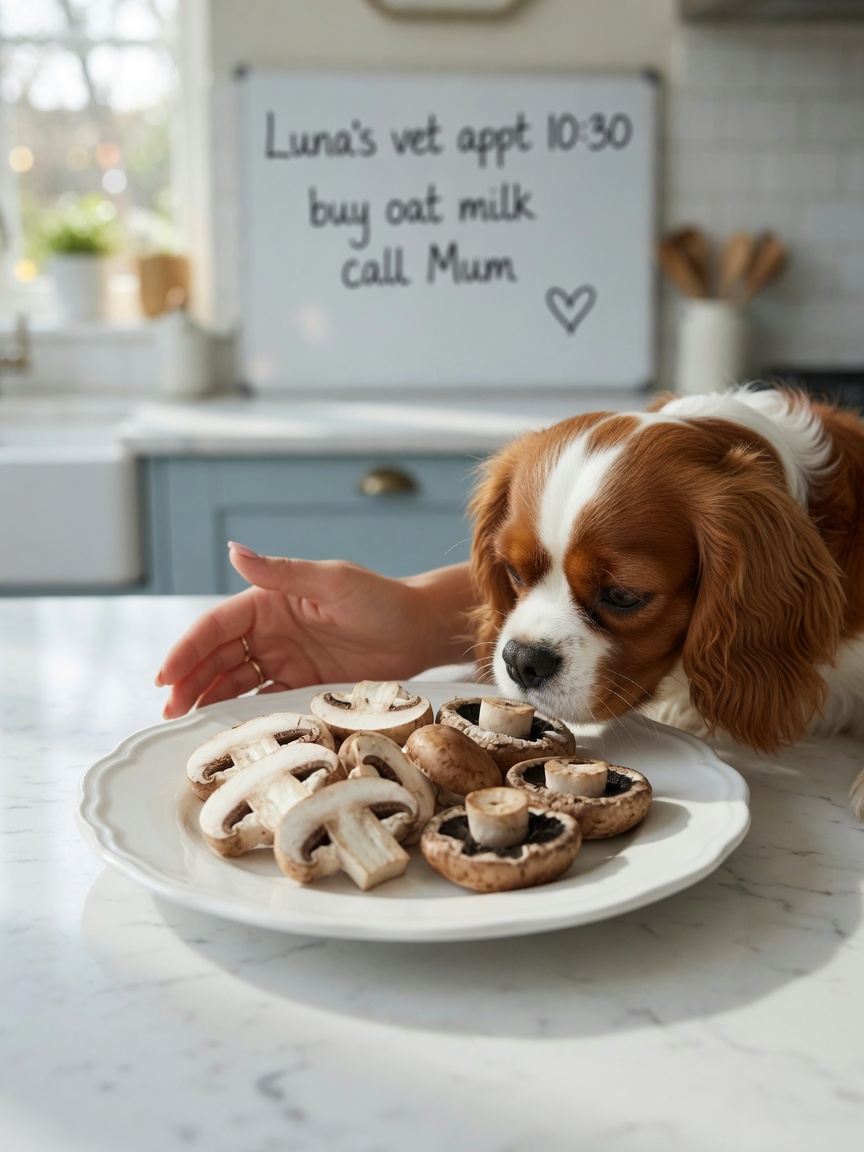
Les champignons que vous achetez en supermarché — champignons de Paris, champignons cremini, champignons portobello et baby bellas — ne sont pas considérés comme toxiques pour les chiens. Il s'agit de la même espèce (ou de variétés cultivées de) Agaricus bisporus, et lorsqu'ils sont servis nature et avec modération, ils ne présentent pas de risque de toxicité.
Cela dit, les champignons offrent un bénéfice nutritionnel relativement faible aux chiens par rapport à d'autres légumes. Les chiens ne digèrent pas efficacement la chitine, le glucide structural des parois cellulaires des champignons, ils absorbent donc moins de nutriments que les humains. Les champignons contiennent bien quelques vitamines du groupe B, du potassium et des antioxydants, mais ce ne sont pas des nutriments qui manquent généralement dans une alimentation canine équilibrée.
Si vous souhaitez partager un champignon nature avec votre chien en tant que friandise occasionnelle, il est peu probable que cela cause un préjudice. Les mises en garde importantes sont les suivantes :
- Nature uniquement — pas de beurre, d'huile, d'ail, d'oignons, de sel ni d'assaisonnement de quelque sorte. L'ail et les oignons sont toxiques pour les chiens ; les champignons cuits préparés pour les humains en contiennent presque toujours.
- Petites quantités — une ou deux tranches en friandise occasionnelle, pas un élément régulier de l'alimentation.
- Coupés ou tranchés en petits morceaux — les gros champignons entiers peuvent présenter un risque d'étouffement pour les petits chiens.
- Frais ou légèrement cuits — un champignon nature cru ou légèrement cuit à la vapeur est préférable aux formes fortement transformées.
Guide des portions de champignons du commerce selon la taille du chien
| Taille du chien | Poids | Portion occasionnelle maximale | Fréquence |
|---|---|---|---|
| Petit | <10 kg | 1 petite tranche (5–10g) | Occasionnellement, pas tous les jours |
| Moyen | 10–25 kg | 2–3 tranches (15–25g) | Occasionnellement, pas tous les jours |
| Grand | >25 kg | 3–5 tranches (25–40g) | Occasionnellement, pas tous les jours |
Rappelez-vous : les friandises de toute nature ne doivent pas dépasser 10 % de l'apport calorique quotidien d'un chien. Les champignons conviennent comme friandise très occasionnelle — pas comme aliment de base.
Champignons sauvages : un danger extrêmement grave
L'identification des champignons sauvages est notoirement difficile — même pour les mycologues formés. Des centaines d'espèces de champignons poussent dans les parcs, les jardins, les forêts et les prairies. De nombreuses espèces d'apparence comestible sont mortelles, et même des champignons d'apparence identique poussant côte à côte peuvent être des espèces entièrement différentes aux profils de toxicité radicalement différents.
Les chiens sont des fourrageurs curieux et sans discernement. Ils flaireront et mangeront des champignons sauvages lors des promenades, dans les jardins ou dans n'importe quelle zone herbeuse. Contrairement aux humains, ils n'ont aucune notion des champignons qui sont sans danger. En tant que propriétaire, vous êtes leur seule protection.
Les champignons sauvages les plus dangereux
Amanita phalloides — « amanite phalloïde »
C'est le champignon le plus mortel au monde, responsable de la grande majorité des intoxications mortelles par des champignons, tant chez l'homme que chez le chien. Il contient des amatoxines — en particulier l'alpha-amanitine — qui inhibent de manière irréversible l'ARN polymérase II dans les cellules hépatiques, provoquant une insuffisance hépatique aiguë. L'amanite phalloïde a un chapeau vert-jaune pâle, des lamelles blanches et une base distinctive en forme de coupe. Il pousse couramment près des chênes. Un seul chapeau contient suffisamment de toxine pour tuer un chien de taille moyenne.
Amanita ocreata — « ange de la mort »
Semblable à l'amanite phalloïde, cette espèce est courante dans l'ouest de l'Amérique du Nord et contient les mêmes amatoxines létales.
Galerina marginata — « galérine marginée »
Un petit champignon brun d'apparence inoffensive qui pousse sur le bois en décomposition. Il contient les mêmes amatoxines qu'Amanita phalloides et est extrêmement répandu en Amérique du Nord et en Europe.
Amanita muscaria — « amanite tue-mouches »
Le champignon emblématique rouge à points blancs. Contient de l'acide iboténique et du muscimol, provoquant des symptômes neurologiques : désorientation, tremblements, convulsions et hallucinations. Rarement mortel à lui seul, mais profondément désagréable et nécessite un traitement d'urgence.
Espèces d'Inocybe et de Clitocybe
Contiennent de la muscarine, qui provoque une salivation excessive, un larmoiement, des mictions, une défécation et un ralentissement du rythme cardiaque.
Symptômes d'une intoxication par des champignons sauvages
Les symptômes varient considérablement selon l'espèce et les toxines impliquées. Ce qui rend Amanita phalloides (amanite phalloïde) particulièrement mortel, c'est un schéma de symptômes retardés qui crée un faux sentiment de sécurité :
- Phase 1 (6–12 heures après l'ingestion) : vomissements sévères, diarrhée, crampes abdominales, salivation excessive
- Phase 2 (24–48 heures) : rétablissement apparent — les symptômes s'atténuent et le chien semble s'améliorer. Cette phase est dangereusement trompeuse. Les lésions hépatiques progressent silencieusement.
- Phase 3 (48–72 heures) : insuffisance hépatique et insuffisance rénale aiguës — ictère, troubles de la coagulation, convulsions, coma, mort
D'autres espèces de champignons peuvent provoquer des symptômes neurologiques rapides — tremblements, désorientation, convulsions — dans les 30 minutes suivant l'ingestion.
Que faire si votre chien mange un champignon sauvage
- N'attendez pas les symptômes — appelez immédiatement votre vétérinaire ou l'ASPCA Poison Control (888-426-4435).
- Essayez de prélever un échantillon du champignon (avec des gants ou un sac — ne le touchez pas à mains nues) ou photographiez-le clairement, en incluant le chapeau, les lamelles, le pied et la base. L'identification peut orienter le traitement.
- Notez l'heure de l'ingestion et la quantité consommée.
- Suivez les instructions du vétérinaire — un traitement dans la première heure peut faire une différence cruciale en cas d'intoxication par amatoxines.
Il n'existe pas d'antidote à l'intoxication par amatoxines. Le traitement est de soutien : fluides IV agressifs, hépatoprotecteurs (tels que la silibinine, un composé du chardon-Marie), et surveillance intensive. Dans les cas graves, une transplantation hépatique peut être discutée. Un traitement précoce améliore considérablement le pronostic.
Prévention : mesures pratiques
- Inspectez régulièrement votre jardin à la recherche de champignons, surtout après la pluie, et enlevez tous ceux que vous trouvez.
- Tenez votre chien en laisse dans les parcs, les forêts et les zones où des champignons sauvages peuvent pousser.
- Enseignez un ordre « Pas touche » fiable.
- Ne supposez jamais qu'un champignon est sans danger parce qu'il a l'air « petit » ou « ordinaire ».
- Si vous ne pouvez pas l'identifier avec une certitude absolue — traitez toute ingestion comme une urgence.
- Les champignons de Paris, cremini et portobello du commerce sont non toxiques pour les chiens lorsqu'ils sont servis nature.
- Les champignons sauvages constituent un danger grave et potentiellement mortel — de nombreuses espèces provoquent une insuffisance hépatique, une insuffisance rénale ou de graves symptômes neurologiques.
- Amanita phalloides (amanite phalloïde) est le plus mortel ; ses symptômes sont trompeusement retardés.
- Ne donnez jamais de champignons assaisonnés avec de l'ail, de l'oignon, du beurre ou du sel.
- Si votre chien mange un champignon sauvage ou non identifié, appelez immédiatement le vétérinaire — même s'il semble aller bien.
- Essayez de prélever un échantillon ou une photo du champignon à des fins d'identification.
Références scientifiques
- Puschner B, Wegenast C. « Intoxication par les champignons chez les chiens et les chats : gravité et issue associées à l'espèce de champignon ingérée. » J Vet Diagn Invest. 2012;24(4):765–771. PMID: 22635054.
- Vogt NA, Pearl DL, Janecko N, Reid-Smith RJ, Weese JS. « Intoxication par les champignons chez les animaux de compagnie : une étude rétrospective. » Can Vet J. 2020;61(1):59–65. PMID: 31896839.
- Tegzes JH, Puschner B. « Amanita intoxication par les champignons : efficacité d'un traitement agressif chez deux chiens. » Vet Hum Toxicol. 2002;44(2):96–99. PMID: 11931511.