

Wild Mushroom Poisoning in Dogs: Death Cap & Other Killers
ASPCA Poison Control: (888) 426-4435
Pet Poison Helpline: (855) 764-7661
Available 24/7. If your dog ate a wild mushroom, call immediately — some species cause irreversible liver failure within days.
Dogs sniff out and eat wild mushrooms with alarming enthusiasm, seemingly drawn to their earthy smell. This can be fatal. The mushroom kingdom contains some of the most potent hepatotoxins (liver poisons) known to science — substances so toxic that a single cap of the Death Cap mushroom (Amanita phalloides) can kill an adult human, and far less is needed to kill a dog. The tragedy of mushroom poisoning is compounded by delayed symptoms that lull owners into false security, and by the fact that even aggressive veterinary care often cannot reverse the liver destruction once it has begun. If your dog has eaten any wild mushroom you cannot positively identify as safe, treat it as a life-threatening emergency.
The Death Cap: Amanita phalloides and Related Species
Amanita phalloides, commonly called the Death Cap, is responsible for the majority of fatal mushroom poisonings in humans and animals worldwide. Related species that are equally deadly include Amanita ocreata (Destroying Angel), Amanita bisporigera (Eastern North American Destroying Angel), and Galerina marginata. These mushrooms grow in temperate regions across North America, Europe, and Australia, often near oak trees. They can appear deceptively similar to edible species including the Paddy Straw mushroom (Volvariella volvacea) — a cause of accidental human fatalities among foragers.
The primary toxins in Amanita species are amatoxins — a group of bicyclic octapeptides, most importantly alpha-amanitin. Amatoxins are extraordinarily stable: they survive cooking, freezing, and drying. A dog that eats a cooked, dried, or even partially decomposed Death Cap mushroom is still at full risk. Amatoxins inhibit RNA polymerase II, the enzyme responsible for mRNA synthesis in cells. By blocking this critical process, amatoxins halt protein synthesis and cause cell death — particularly in the liver and kidneys, which are exposed to high concentrations as they process the absorbed toxin. There is no antidote. The damage is direct and progressive.
The Deceptive Timeline: Why Dogs Die Days Later
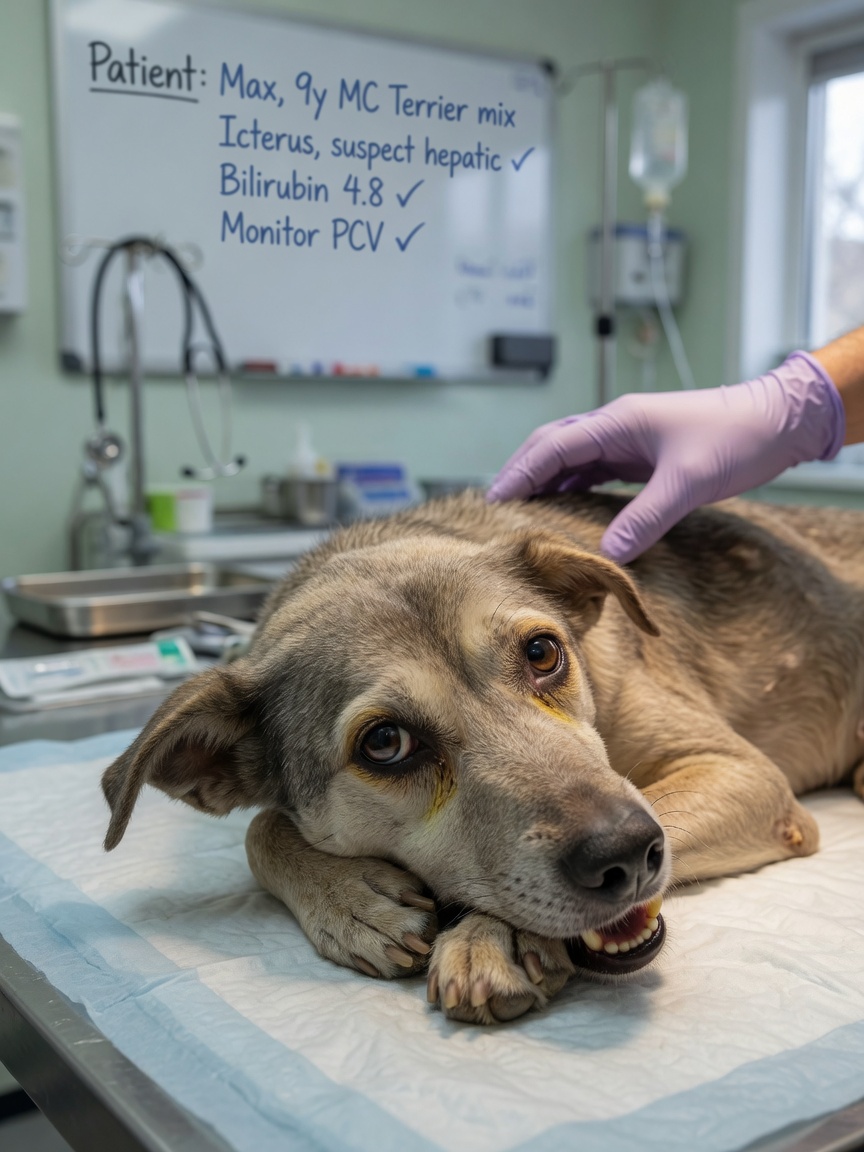
The timeline of amatoxin poisoning is what makes it so insidious and so deadly. After ingestion, there is a latent phase of 6–24 hours during which the dog shows no symptoms whatsoever. This silent period ends abruptly with a gastrointestinal phase: sudden onset of severe vomiting, watery and then bloody diarrhea, profound abdominal cramps, and dehydration. This phase may last 12–24 hours, after which the dog may appear to improve — a false recovery that exactly mirrors the clinical picture in human amatoxin poisoning. During this "improvement," the liver is being silently and massively destroyed. The hepatic phase follows 2–4 days after ingestion: acute liver failure becomes clinically apparent with jaundice (yellowing of skin and eyes), hemorrhage (from loss of clotting factors), profound weakness, hepatic encephalopathy (brain dysfunction from ammonia accumulation), seizures, coma, and death. By the time liver failure is evident, the damage is often irreversible.
Other Toxic Syndromes: Mushrooms Beyond Amanita
Amatoxin-containing mushrooms are the most lethal, but they are far from the only dangerous species. Mushroom toxicity syndromes in dogs include several distinct clinical presentations:
Muscarinic syndrome (SLUDGE): Caused by mushrooms containing muscarine, such as Inocybe and Clitocybe species. Symptoms: salivation, lacrimation (tearing), urination, defecation, GI distress, emesis (vomiting). Also bradycardia and miosis (constricted pupils). Onset within 30 minutes. The antidote is atropine.
Ibotenic acid/muscimol syndrome: Caused by Amanita muscaria (Fly Agaric) and Amanita pantherina. Symptoms: CNS excitation or depression, tremors, disorientation, vocalization, seizures. Onset 30 minutes to 2 hours. Treatment is supportive.
Gyromitrin syndrome: Caused by false morels (Gyromitra species). Gyromitrin is metabolized to monomethylhydrazine, a compound used in rocket fuel. Causes GI signs, hemolytic anemia (red blood cell destruction), and in severe cases, liver failure. Onset 2–24 hours.
GI irritant mushrooms: Many species cause vomiting and diarrhea without systemic toxicity. These are unpleasant but rarely life-threatening. The problem is that it is often impossible to distinguish GI irritant mushrooms from more deadly species without expert identification — and the delay involved in waiting to see "how bad" symptoms become may cost a dog its life if an amatoxin-containing species was ingested.
What to Do Immediately
If your dog has eaten a wild mushroom, do not wait for symptoms. Try to collect a sample of the mushroom (use a bag — handle as little as possible, photograph it thoroughly including the cap, gills, stem, and any base structure in the ground). Call ASPCA Poison Control or Pet Poison Helpline immediately. Bring the dog and the mushroom sample to an emergency vet. If ingestion was recent (within 1 hour), the vet may induce vomiting. For known or suspected amatoxin exposure, intensive treatment includes aggressive IV fluids, liver protectants (silymarin/milk thistle, N-acetylcysteine, penicillin G at high doses, which interferes with hepatic uptake of amatoxins), and monitoring of liver enzymes every 6–12 hours. In human medicine, liver transplant is sometimes required for amatoxin poisoning; this option is not routinely available for dogs.
Prevention
Inspect your yard regularly and remove any wild mushrooms before dogs can access them. During walks in parks or wooded areas, watch closely for dogs sniffing or eating from the ground. Train a reliable "leave it" command. Be especially vigilant in autumn when mushroom fruiting is at its peak.
Key Takeaways
- The Death Cap (Amanita phalloides) is lethal in tiny amounts — a single cap can kill a dog.
- Amatoxins survive cooking, freezing, and drying — there is no "safe" preparation of toxic mushrooms.
- The 6–24 hour silent phase and false recovery period cause dangerous delays in treatment.
- Multiple toxic syndromes exist beyond amatoxins — any wild mushroom ingestion should be treated as an emergency.
- Try to collect a mushroom sample for identification when seeking treatment.
- Call ASPCA Poison Control (888-426-4435) or Pet Poison Helpline (855-764-7661) immediately — do not wait for symptoms.
References
- Puschner B, Wegenast C. "Mushroom poisoning cases in dogs and cats: diagnosis and treatment of hepatotoxic, neurotoxic, gastroenterologic, nephrotic, and muscarinic mushrooms." Veterinary Clinics of North America: Small Animal Practice. 2018;48(6):1053–1066. PMID: 30031574.
- Tegzes JH, Puschner B. "Amanita mushroom poisoning: efficacy of aggressive treatment of two dogs." Veterinary and Human Toxicology. 2002;44(2):96–99. PMID: 11931511.
About the Author: Julia Wrenfield is a Pet Wellness Researcher with over 12 years of experience in companion animal health. She writes for ForPetsHealthcare.com to help pet owners make informed, evidence-based decisions for their animals.