
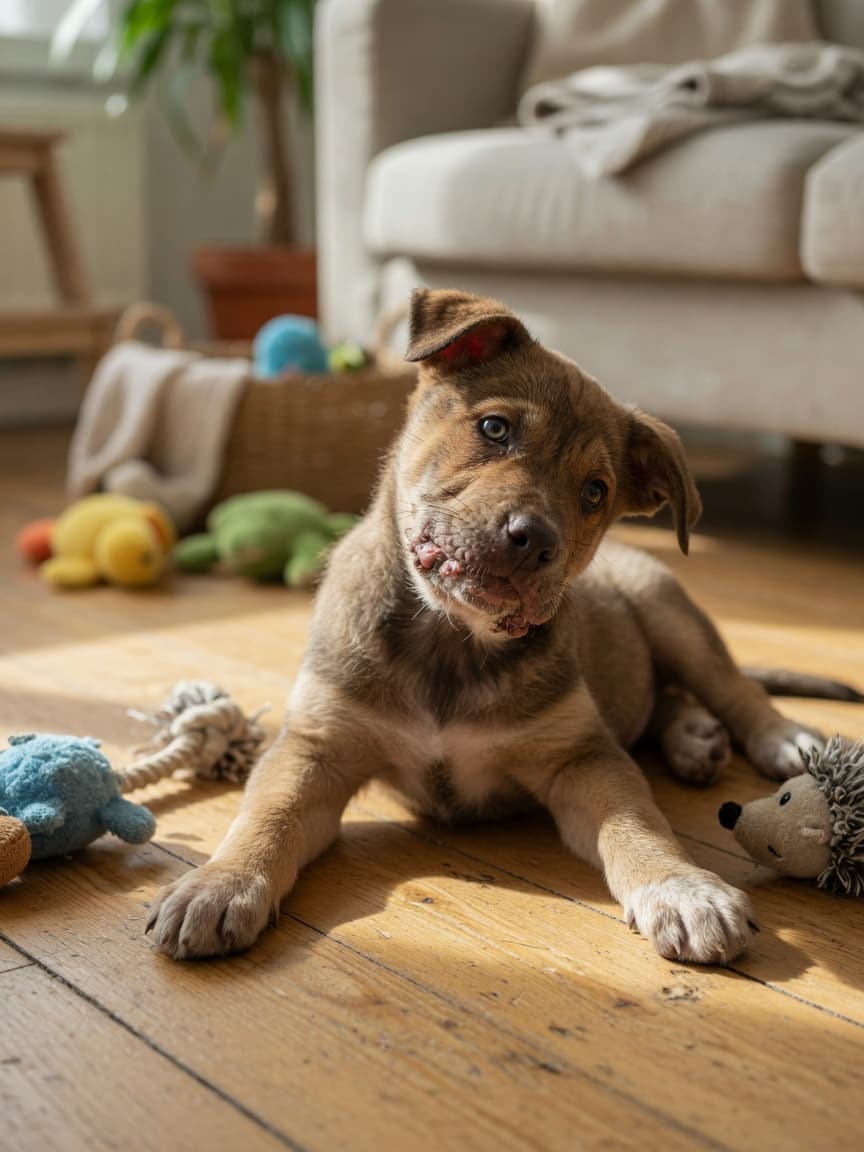
If you've recently noticed swollen lymph nodes, facial swelling, or discharge around your puppy's face and neck, you might be dealing with a condition called puppy strangles—formally known as juvenile cellulitis or juvenile pyoderma. This bacterial infection is far more common than many new puppy owners realise, and whilst it sounds alarming, the good news is that it's typically treatable and doesn't usually cause long-term complications. Understanding what puppy strangles is, recognising the signs early, and knowing when to seek veterinary care can make all the difference in your puppy's recovery.
Understanding Puppy Strangles: The Basics
Puppy strangles is an inflammatory skin condition that primarily affects puppies between three weeks and four months old, though it can occasionally occur in older dogs. Despite its unsettling name, the condition doesn't involve actual strangulation. Instead, it causes significant swelling of the face, muzzle, eyelids, and lymph nodes, which may give the appearance of the puppy being "strangled" by inflammation.
The exact cause remains somewhat mysterious to veterinary scientists. Unlike typical bacterial skin infections, puppy strangles doesn't appear to be contagious from one puppy to another, and it's not caused by poor hygiene or neglect. Some researchers believe it may involve an abnormal immune system response or a genetic predisposition in certain puppies.
Recognising the Signs and Symptoms
Early recognition is crucial for prompt treatment. Look out for these telltale signs:
- Dramatic facial swelling, particularly around the muzzle, lips, and eyelids
- Swollen lymph nodes under the jaw and neck
- Pustules (small, pus-filled bumps) on the face, ears, or muzzle
- Discharge or crusting around affected areas
- Lethargy or reduced appetite
- Mild to moderate fever
- Difficulty eating or reluctance to drink
Some puppies may also develop generalised lymph node enlargement throughout their body. If you notice any combination of these symptoms, contact your veterinary surgeon promptly.
Diagnosis and Veterinary Assessment
Your vet will typically diagnose puppy strangles based on clinical appearance and your puppy's age, as the combination of facial swelling and lymphadenopathy in a young puppy is quite distinctive. They may perform a cytology (cell sample) from any pustules to confirm bacterial infection and rule out other conditions like mange or ringworm.
Blood work may be recommended to assess your puppy's overall health and rule out systemic involvement. In some cases, your vet might suggest imaging if they're concerned about deeper tissue involvement.
Treatment Options
The good news is that puppy strangles responds well to treatment. Most cases require:
- Antibiotics: Oral antibiotics are the cornerstone of treatment, typically administered for 4-6 weeks. Your vet will select an antibiotic effective against common skin bacteria.
- Anti-inflammatory medications: Corticosteroids are often prescribed to reduce swelling and inflammation, helping your puppy feel more comfortable and eat normally.
- Local care: Gentle cleaning of affected areas with warm water or antiseptic solutions can help prevent secondary infections.
- Supportive care: Ensure your puppy has soft, easy-to-eat food if chewing is painful, and provide plenty of fresh water.
Most puppies show significant improvement within 1-2 weeks of starting treatment, though the full course of antibiotics must be completed as directed.
Potential Complications and Prognosis
Whilst puppy strangles is usually straightforward to treat, complications can occasionally occur if left untreated. These may include secondary skin infections, abscess formation, or rarely, spread to internal organs. However, with appropriate veterinary care, the prognosis is excellent.
Most puppies make a complete recovery without scarring or lasting effects. Some may experience mild hair loss in affected areas, but this typically regrows normally.
Key Takeaways
Puppy strangles, whilst visually alarming, is a manageable condition that responds well to veterinary treatment. Don't delay seeking professional advice if you notice facial swelling or pustules on your young puppy. Early intervention with antibiotics and anti-inflammatory medication can have your puppy back to their playful self within weeks. Remember, this condition is not a reflection of poor care—it simply requires prompt, appropriate medical attention.