
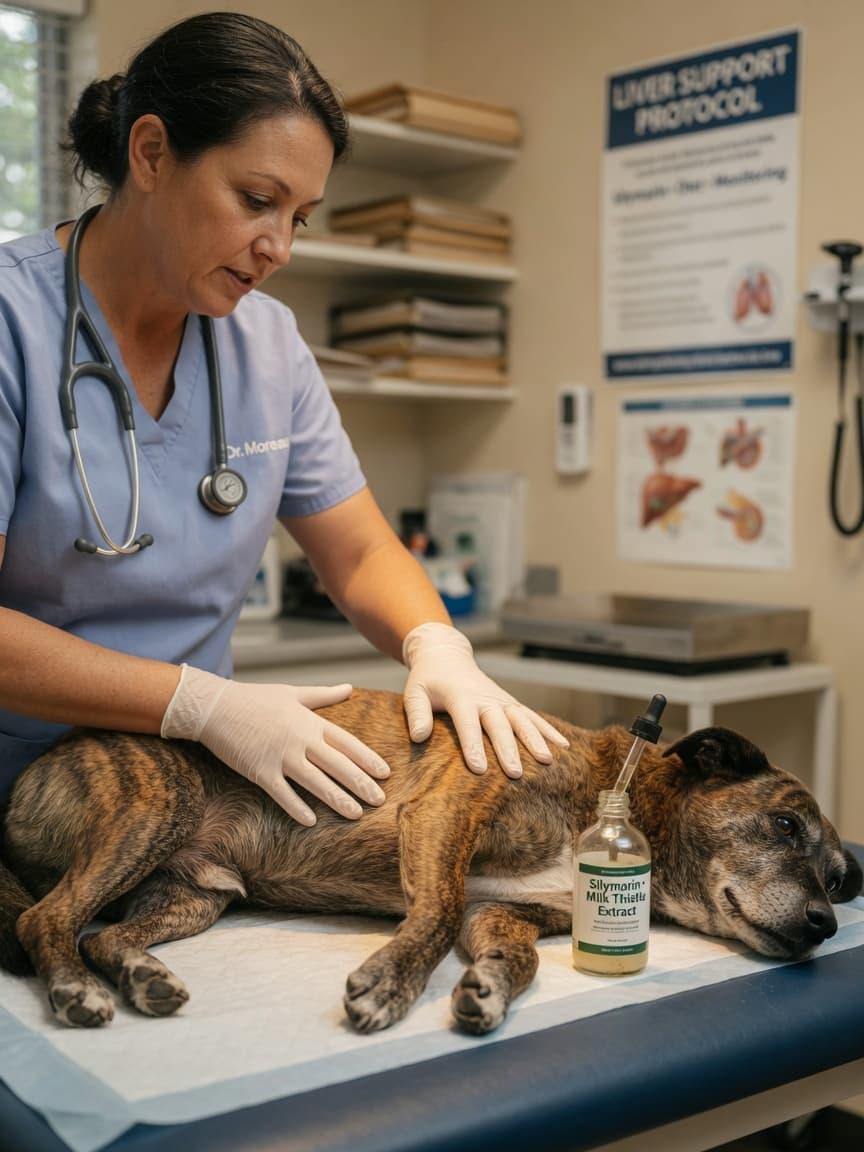
Milk Thistle for Dogs: Liver Protection, Evidence & Dosage
Understanding Milk Thistle and Silymarin
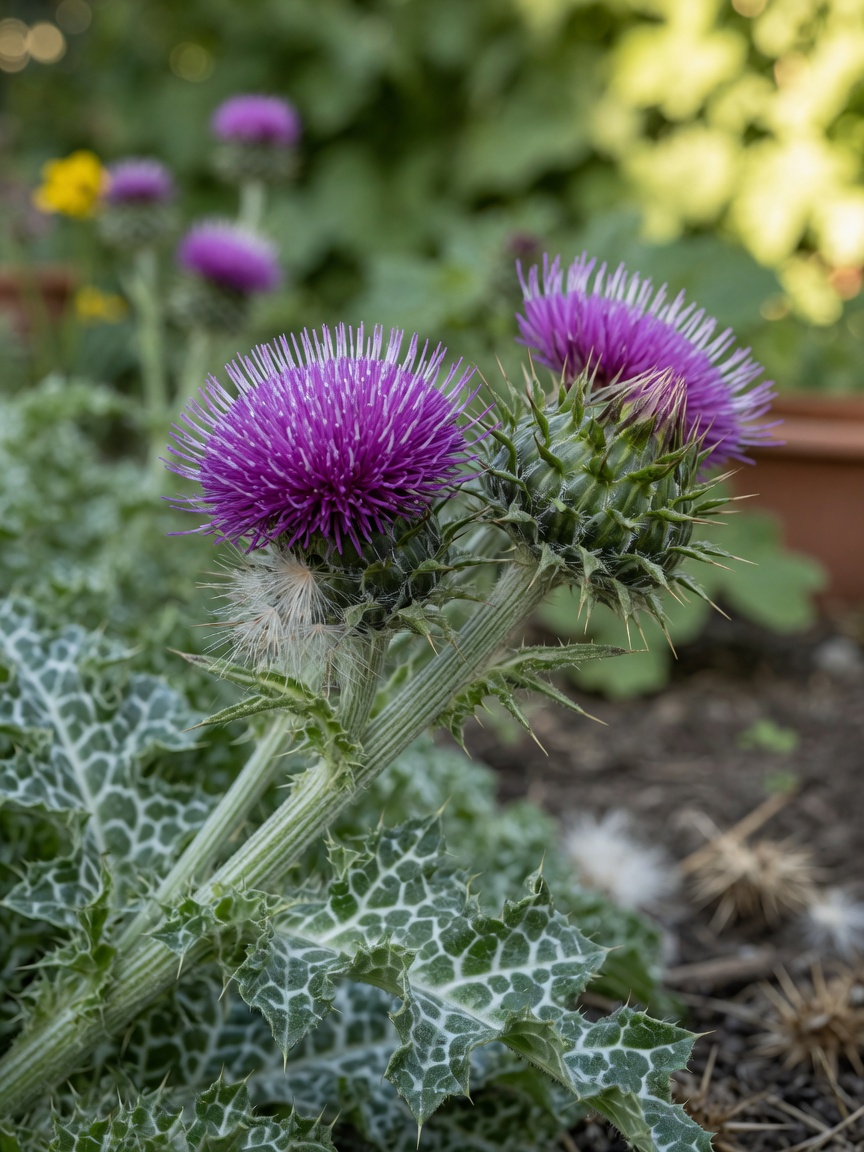
Silybum marianum, commonly known as milk thistle, is a flowering plant in the daisy family with a 2,000-year history of use as a liver tonic in human medicine. Its active compound complex, silymarin, is a group of flavonolignans — primarily silybin (also called silibinin), silydianin, and silychristin — extracted from the seeds of the plant.
Silymarin is not a single molecule but a standardised extract, and this distinction matters for interpreting research: studies using "milk thistle" without specifying silymarin concentration or silybin content are difficult to compare and often have weak clinical applicability. Well-designed veterinary studies typically specify the active fraction being tested.
The liver is the primary metabolic organ affected, and the mechanisms by which silymarin exerts its effects are better characterised than for most nutraceuticals. These mechanisms include antioxidant activity (silymarin scavenges reactive oxygen species), anti-fibrotic effects (inhibiting stellate cell activation), anti-inflammatory action (inhibiting NF-κB signalling), and direct membrane stabilisation — reducing hepatocyte permeability to toxins.
Evidence in Dogs
The strongest evidence for silymarin in dogs comes from studies of amanita mushroom toxicosis. Amanita phalloides (death cap mushroom) causes severe liver failure in dogs through inhibition of RNA polymerase II. Intravenous silybin has demonstrated a life-saving effect in both human and veterinary cases, and is considered standard care in several European countries. A 2012 case series from the University of Bern documented full hepatic recovery in dogs treated with IV silybin following amanita ingestion, where historical mortality rates exceed 90%.
Beyond acute toxin exposure, the evidence for oral silymarin in chronic liver disease is more limited but encouraging. A controlled study in dogs with chronic hepatitis, conducted at the University of Milan, found that dogs receiving oral silymarin (70 mg/kg of a standardised 70% silymarin extract, equivalent to 49 mg/kg silybin) showed significantly lower alanine aminotransferase (ALT) and aspartate aminotransferase (AST) activity compared to placebo-treated controls after 90 days of treatment. Histological improvement was also noted in a subset of biopsied animals, though this finding requires cautious interpretation given the small sample.
Silymarin has also been studied as a protective agent against drug-induced hepatotoxicity. Dogs receiving long-term phenobarbital therapy — a common anticonvulsant known to elevate liver enzymes over time — have been shown in some studies to benefit from concurrent silymarin supplementation, with smaller increases in serum liver enzyme activity over the treatment period. This is clinically relevant because many dogs on phenobarbital require lifelong medication management.
What Lack of Evidence Means Here
It is important to be honest about the gaps. Most veterinary silymarin studies are small, lack standardised dosing protocols, and use surrogate markers (enzyme levels) rather than clinical outcomes (survival, quality of life, histological resolution). The fact that ALT normalises does not always mean underlying disease has resolved — and conversely, some dogs with significant liver pathology have normal enzymes at presentation.
There are no large randomised controlled trials of oral milk thistle in dogs with spontaneous chronic hepatitis or hepatic fibrosis that meet the methodological standards we would apply to pharmaceutical drugs. Absence of such evidence is not evidence of absence of benefit, but it does mean confident dosing recommendations remain elusive.
Safety Profile
Milk thistle is considered one of the safest herbal supplements for dogs. Significant adverse effects have not been reported in dogs at recommended doses. The most commonly noted side effects are mild gastrointestinal symptoms (soft stools, flatulence) that typically resolve spontaneously or with dose reduction.
Theoretical concerns include:
- Drug interactions: Silymarin inhibits certain cytochrome P450 enzymes (CYP2C9, CYP3A4 in humans). In dogs, the clinical significance of these interactions is not fully characterised, but it is prudent to flag concurrent milk thistle use to your veterinarian if the dog is receiving medications metabolised hepatically.
- Hormone-sensitive conditions: Silymarin has mild estrogenic activity in rodent studies. The relevance to dogs is unclear, but it warrants caution in intact females with known hormone-responsive tumours.
- Allergy: Milk thistle is in the Asteraceae (daisy) family. Dogs with known hypersensitivity to plants in this family (e.g., chamomile, echinacea) may cross-react, though documented cases in dogs are rare.
Dosage in Dogs
Dosing recommendations in the veterinary literature vary considerably depending on the form used and the condition being treated:
- Standardised extract (70–80% silymarin): Most published veterinary references cite 20–50 mg/kg/day of total silymarin, divided into 2 doses. Some hepatologists use up to 70 mg/kg/day in severe hepatotoxicity cases, but this exceeds evidence from controlled trials.
- Whole herb powder: Not recommended for precise dosing because silymarin content is highly variable between products. If used, the product should specify standardised silymarin percentage.
- Duration: For chronic liver support, most practitioners reassess with serum chemistry at 8–12 weeks. Liver enzyme normalisation is a reasonable initial endpoint, though long-term use is common in dogs with progressive hepatic disease.
Many commercial pet products labelled as "liver support" contain milk thistle in proprietary blends where the actual silymarin dose is below therapeutic levels. Always verify the milligram amount of standardised extract — not just "milk thistle" — per dose.
When to Use and When Not To
Milk thistle is most appropriate as a supportive measure in dogs with:
- Documented hepatotoxin exposure (phenobarbital, NSAIDs, environmental toxins)
- Mildly elevated liver enzymes without identified cause, pending workup
- Chronic inflammatory liver disease being managed with conventional therapy
- Post-infectious hepatitis, as a recovery adjunct
It is not a substitute for diagnosing and treating the underlying cause of liver disease. Dogs with significantly elevated liver enzymes, icterus, ascites, or signs of hepatic encephalopathy require prompt veterinary investigation — not supplementation.
- Silymarin (the active complex in milk thistle) has well-characterised hepatoprotective mechanisms including antioxidant, anti-fibrotic, and membrane-stabilising effects.
- Evidence is strongest for acute mushroom toxicosis (particularly Amanita species); IV silybin is now used as emergency treatment.
- Oral silymarin shows promise in chronic hepatitis and drug-induced liver injury, but large controlled trials in dogs are lacking.
- Therapeutic dose: 20–50 mg/kg/day of standardised 70–80% silymarin extract; verify actual silymarin content in any product used.
- Generally very safe; flag concurrent use with hepatically metabolised drugs to your veterinarian.
- Milk thistle is a supportive measure — it does not replace diagnosis or primary treatment of liver disease.
- Vogel G, Tuchweber B, Trost W, Mengs U. (1984). Protection by silibinin against Amanita phalloides intoxication in beagles. Toxicology and Applied Pharmacology, 73(3):355–62. PMID: 6424120
- Filburn CR, Kettenacker R, Griffin DW. (2007). Bioavailability of a silybin-phosphatidylcholine complex in dogs. Journal of Veterinary Pharmacology and Therapeutics, 30(2):132–8. PMID: 17348885
- Ginel PJ, Hernández E, Lucena R, et al. (2002). Silymarin hepatoprotection in dogs receiving long-term phenobarbital therapy. Veterinary Record, 151(21):636–8. PMID: 12467381
Written by Julia Wrenfield, Pet Wellness Researcher. Last reviewed June 2026. This article is for informational purposes only and does not constitute veterinary advice.