
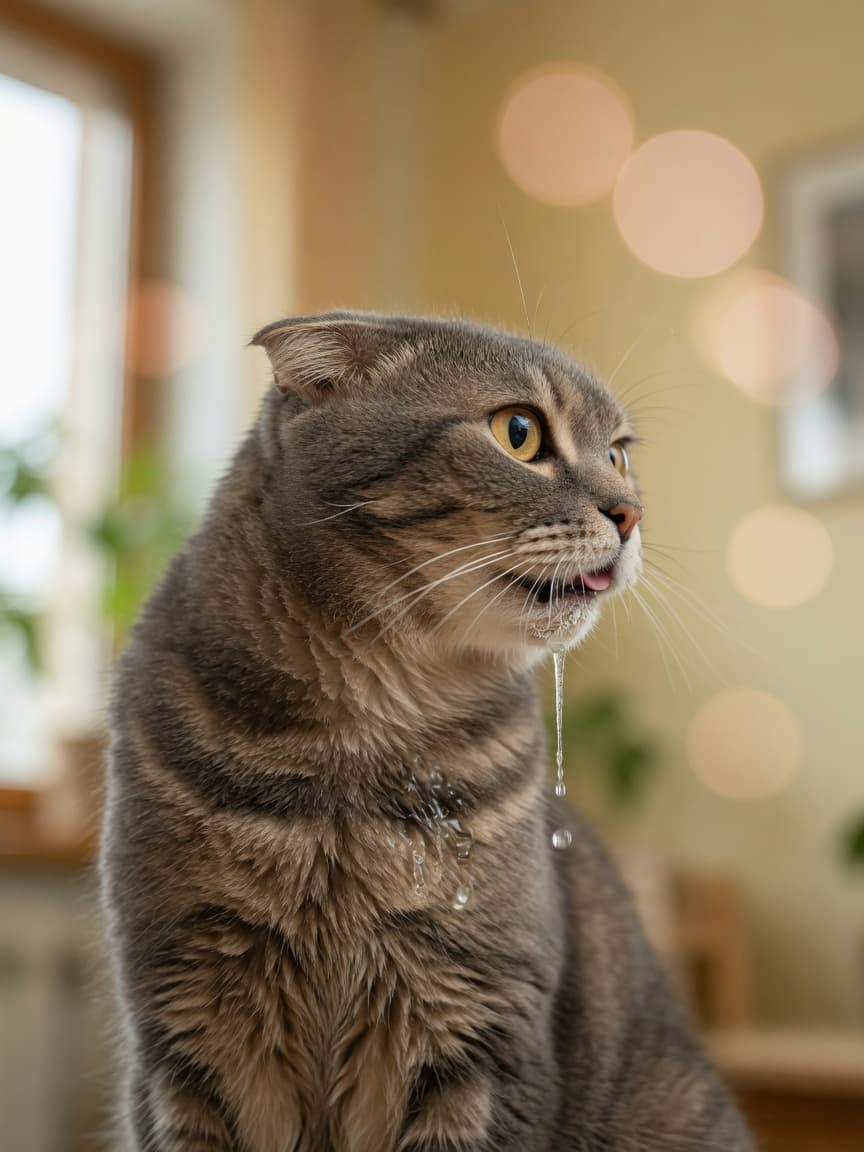
Why Is My Cat Drooling? Normal vs Concerning
Updated June 2026
- Sudden, profuse drooling with pawing at the mouth — possible toxin ingestion or foreign body
- Drooling with difficulty breathing, blue gums, or collapse
- Drooling after chewing a plant, household chemical, or unfamiliar substance
- Drooling alongside facial swelling, neurological signs (seizures, twitching), or sudden weakness
Unlike dogs, cats are not naturally drooly animals. While a dog might slobber its way through a normal day, excessive salivation in cats — called ptyalism — almost always has a specific cause. Some causes are completely benign, others are dental nuisances, and some represent genuine emergencies. Learning to read the context of your cat's drooling can help you respond calmly and appropriately.
When Drooling Is Normal
Some cats drool when they're deeply relaxed or kneading — a behavior linked to nursing-time contentment. If your cat drools a little during intense purring sessions or while receiving a particularly satisfying head scratch, this is physiological, not pathological. Similarly, some cats drool briefly when stressed — during a car trip or vet visit — because anxiety activates the salivary glands. These situations produce transient, mild drooling that stops when the trigger does.
1. Dental Disease and Oral Pain — Most Common Pathological Cause
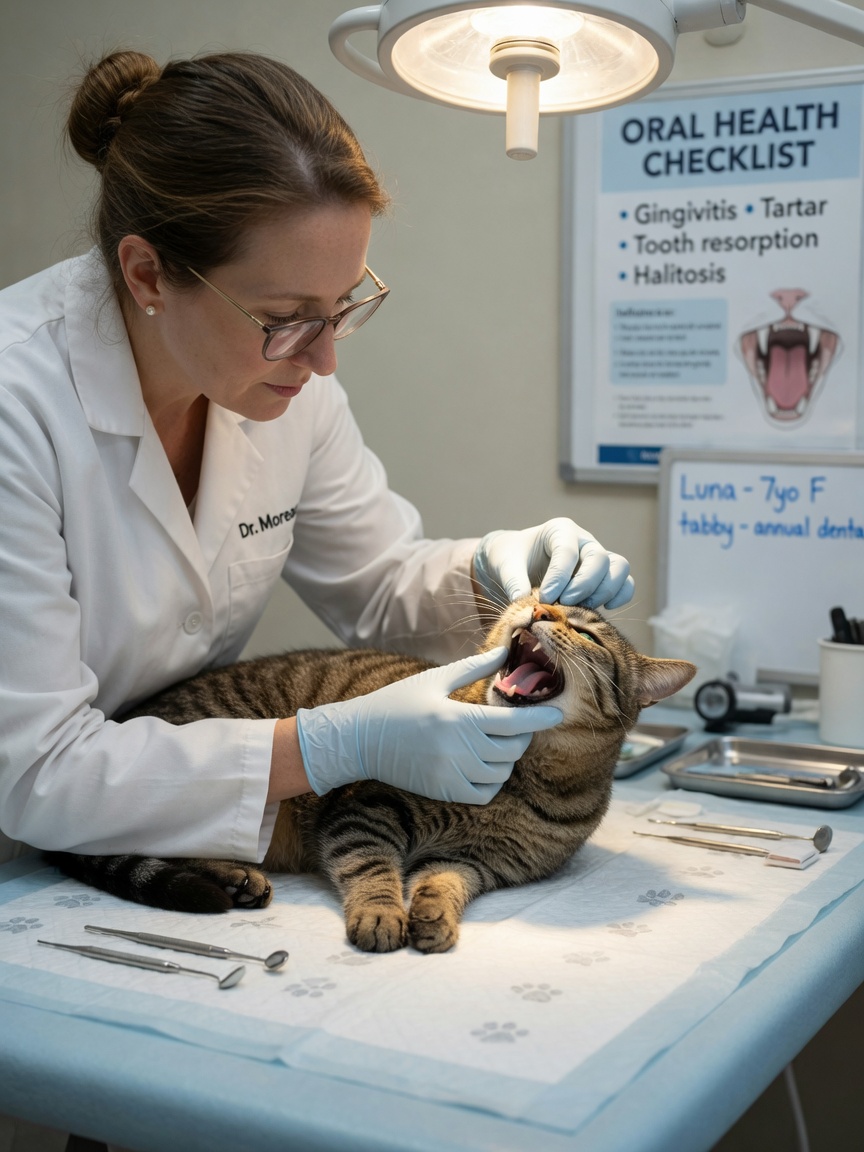
Painful conditions in the mouth are by far the most frequent medical cause of drooling in cats. Periodontal disease, tooth resorption (a condition unique to cats where teeth are gradually destroyed from within), stomatitis (widespread painful oral inflammation), and oral ulcers all produce excessive saliva as a pain response. Affected cats may also paw at the mouth, drop food while eating, have bad breath, or stop eating hard food. A dental examination under anesthesia is required to fully assess the mouth, as even cooperative cats rarely allow a complete oral check while awake.
2. Nausea
Nausea — from any cause — reliably produces hypersalivation. A cat that is about to vomit, has ingested something irritating, or feels carsick will often drool before or instead of vomiting. If drooling is intermittent and closely linked to car travel, new foods, or episodes of vomiting, nausea is the likely culprit. Treating the underlying cause of nausea (motion sickness, dietary change, GI disease) addresses the drooling.
3. Toxin or Caustic Substance Ingestion
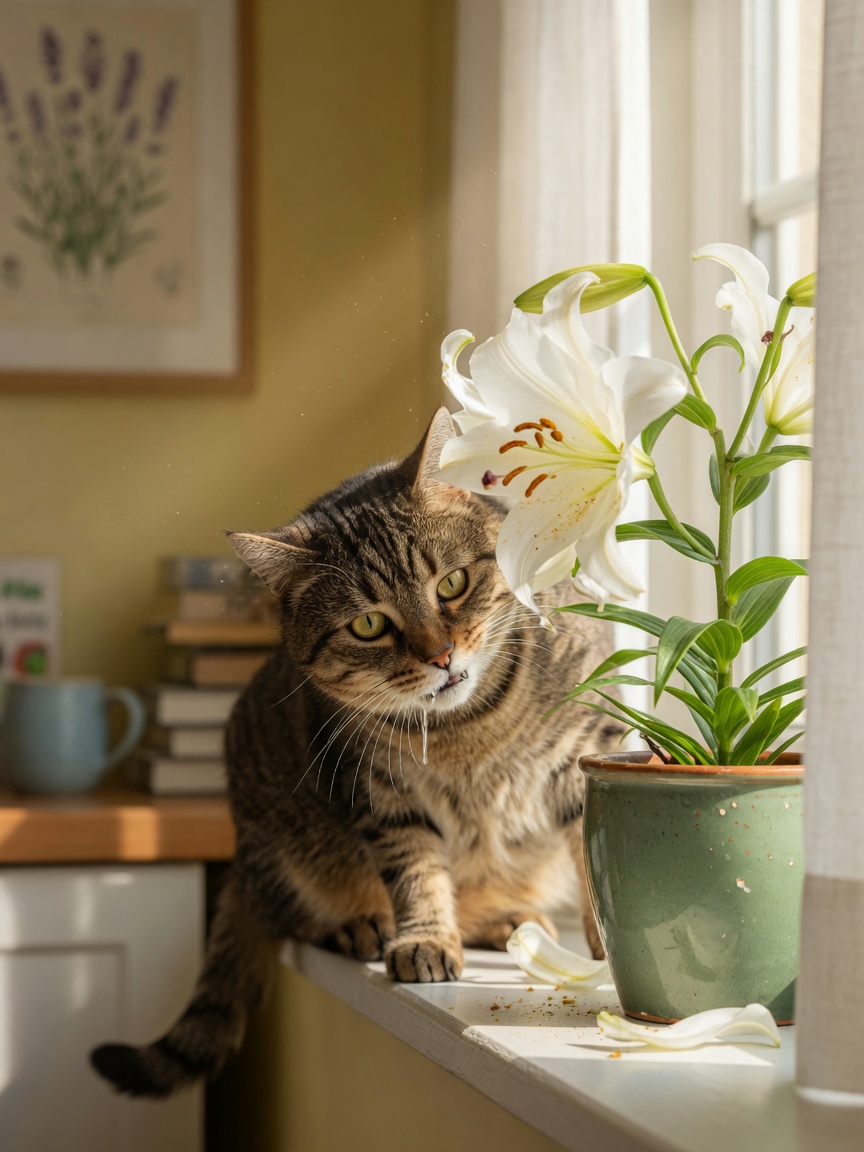
This is among the most urgent causes of sudden-onset drooling. Cats that chew on toxic plants — particularly lilies (which cause kidney failure), dieffenbachia, or philodendron — may drool profusely because the plant's calcium oxalate crystals cause intense oral burning. Household chemicals, some essential oils (tea tree, eucalyptus), certain pesticides, and even some spot-on flea treatments applied incorrectly can all trigger sudden drooling. If your cat starts drooling dramatically without warning and may have accessed any of these substances, call your vet or ASPCA Animal Poison Control (888-426-4435) immediately.
4. Upper Respiratory Infection
Feline herpesvirus and calicivirus infections commonly cause oral ulcers — painful sores on the tongue, gums, and palate that make swallowing difficult and lead to drooling. The drooling in this context is usually accompanied by clear or colored nasal discharge, sneezing, conjunctivitis, and fever. These infections are managed supportively with antivirals, nutritional support, and pain management.
5. Foreign Body in the Mouth or Throat
A bone fragment, needle, splinter of wood, or piece of string lodged in the mouth, between teeth, or at the back of the throat causes immediate distress, pawing at the face, and copious drooling. Do not attempt to remove a foreign body yourself — improper attempts can push it deeper or cause lacerations. Your vet can safely remove it, usually under sedation, and check for injuries to the soft tissues.
6. Kidney Disease and Uremia
In advanced chronic kidney disease, uremic toxins accumulate in the bloodstream and cause oral ulcers and a characteristic ammonia smell to the breath. Drooling in this context is a sign of significant disease progression and accompanies loss of appetite, vomiting, and lethargy. Bloodwork will reveal elevated kidney values. Aggressive supportive care — fluid therapy, anti-nausea medication, phosphate binders — can improve quality of life meaningfully.
7. Neurological Causes
Seizure activity, vestibular disease, and certain toxins affecting the nervous system can cause drooling by disrupting normal swallowing or salivary control. Post-seizure drooling is temporary and resolves as the cat recovers from the episode. A cat that drools persistently alongside changes in gait, head tilt, or eye movements needs urgent neurological assessment.
If your cat drools only during relaxed petting or purring, no action is needed — enjoy the bonding moment. For intermittent drooling in a cat that is otherwise healthy, schedule a dental check at the next routine visit. For sudden-onset profuse drooling — especially if the cat is pawing at its mouth, seems distressed, or may have ingested something unusual — treat it as a potential emergency and call your vet rather than waiting to see if it resolves.
Key Takeaways
- Mild drooling during relaxation or kneading is normal in some cats; sudden profuse drooling is not.
- Dental disease — particularly stomatitis and tooth resorption — is the most common medical cause of drooling in cats.
- Sudden, dramatic drooling after possible exposure to a plant or household substance is a potential toxin emergency requiring immediate veterinary contact.
- Nausea from any cause produces hypersalivation; resolving the underlying GI issue stops the drooling.
- Drooling combined with oral ulcers, ammonia breath, and lethargy in an older cat may indicate advanced kidney disease.
References
- Reiter AM, Gracis M. WSAVA dental guidelines for cats and dogs. J Small Anim Pract. 1998;39(11):531–539. PMID: 12790574
- Plumb DC. Plumb's Veterinary Drug Handbook. 9th ed. PharmaVet Inc; 2018. PMID: 28981720