

Periodontal Disease in Dogs: The Silent Epidemic Affecting 80% of Dogs Over 3
If you've ever leaned in for a cuddle with your dog and been hit by a wave of foul breath, you may have already encountered the early signs of periodontal disease — the most common health condition in domestic dogs. According to the American Veterinary Medical Association (AVMA), an estimated 80% of dogs show signs of periodontal disease by the time they reach three years of age. Despite this staggering prevalence, the condition often goes untreated because its early stages are largely invisible — and painless enough that dogs continue eating normally.
Periodontal disease progresses silently, quietly destroying the structures that hold your dog's teeth in place. By the time obvious symptoms appear, significant — sometimes irreversible — damage has already been done. Understanding this condition is the first step to protecting your dog's health and longevity.
What Is Periodontal Disease?
Periodontal disease refers to infections of the structures surrounding the teeth: the gums (gingiva), periodontal ligament, alveolar bone, and cementum. It begins with the accumulation of plaque — a soft, sticky film of bacteria — on tooth surfaces. If not removed by brushing or chewing, plaque mineralises within 24–48 hours into tartar (calculus), a hard yellow-brown deposit that cannot be removed at home.
Tartar creates a rough surface where more bacteria accumulate, especially at and below the gum line. The body's immune response to these bacteria causes inflammation — known as gingivitis — which is the earliest, reversible stage of periodontal disease. Without intervention, gingivitis progresses to periodontitis, where the infection destroys the supporting bone and tissues, eventually causing tooth loss and, critically, systemic disease.
The Four Stages of Periodontal Disease
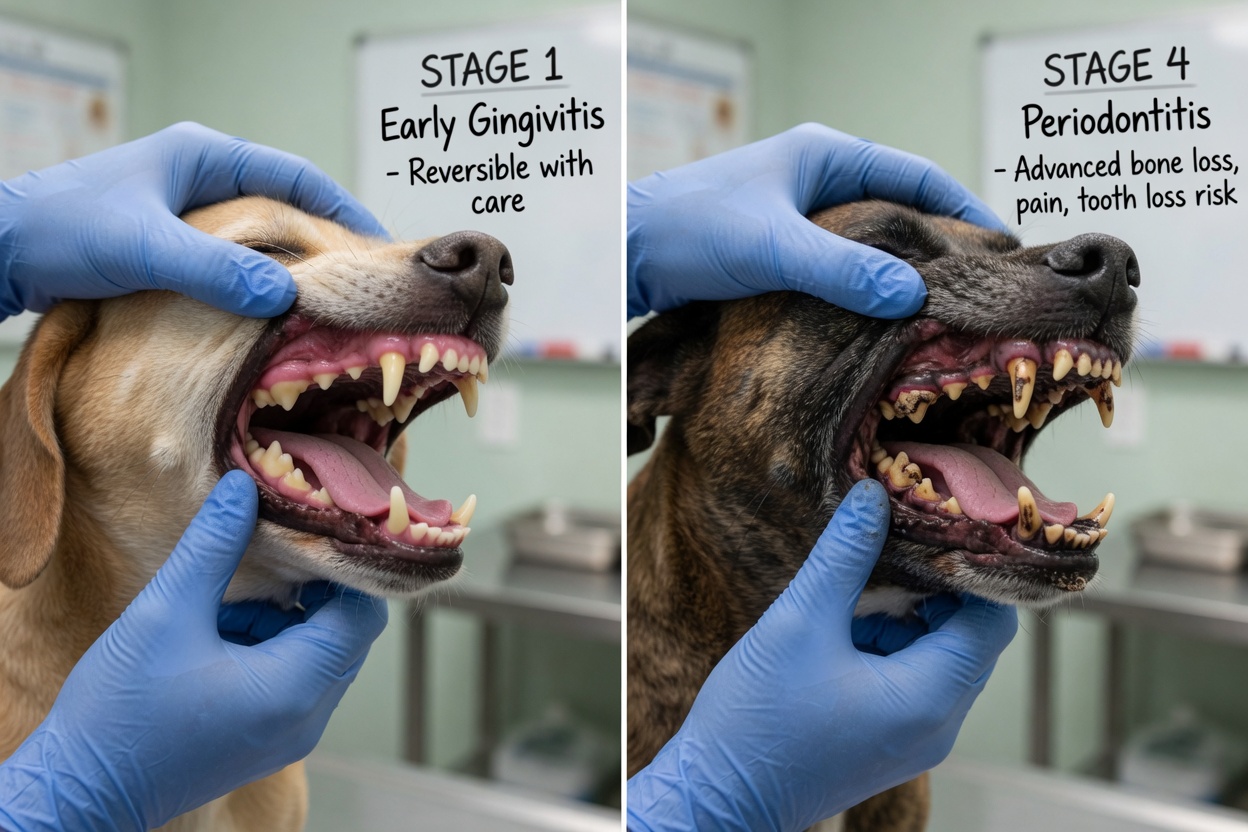
Veterinary dentists classify periodontal disease into four progressive stages:
- Stage 1 — Gingivitis: Gum redness and mild swelling only. No bone loss. Fully reversible with professional cleaning and home care.
- Stage 2 — Early Periodontitis: Less than 25% bone loss. Some attachment loss between the tooth and gum. Reversible with treatment.
- Stage 3 — Moderate Periodontitis: 25–50% bone loss. Deep pockets form between teeth and gums. Some teeth may be saved with advanced treatment.
- Stage 4 — Advanced Periodontitis: Greater than 50% bone loss. Tooth extraction is often the only humane option at this stage.
Research published in the Journal of Veterinary Dentistry (PubMed) confirms a significant association between advanced periodontal disease and pathological changes in the kidneys and myocardium, underscoring why dental health must be treated as integral to whole-body health.
Why Are Dogs So Vulnerable?
Dogs are more prone to periodontal disease than humans for several reasons. Their saliva is more alkaline, which accelerates tartar formation. Many modern dogs consume soft, processed foods that do not provide the abrasive action needed to slow plaque build-up. Smaller and toy breeds are especially vulnerable because their teeth are often crowded in a smaller jaw, creating more surfaces where bacteria can hide.
Genetics also plays a role — certain breeds including Dachshunds, Cavalier King Charles Spaniels, Greyhounds, and Shih Tzus are predisposed to early and severe periodontal disease regardless of diet or care routine.
Recognising the Symptoms
Because dogs instinctively hide pain, many owners do not realise their dog is suffering. Watch for these warning signs:
- Persistent bad breath (halitosis) that doesn't improve with treats or water additives
- Yellow or brown tartar build-up on teeth, especially at the gum line
- Red, swollen, or bleeding gums
- Dropping food while eating or chewing on one side only
- Reluctance to chew hard toys or treats
- Pawing at the mouth or face
- Loose or missing teeth
- Nasal discharge (can indicate oro-nasal fistula in advanced cases)
The ASPCA recommends annual veterinary dental examinations for all adult dogs, with more frequent monitoring for high-risk breeds.
Systemic Effects: More Than Just Teeth
The mouth is not an isolated system. Chronic periodontal infection introduces a constant stream of bacteria into the bloodstream — a condition called bacteraemia. Over time, these bacteria can colonise the heart valves (endocarditis), damage kidney tubules, and impair liver function. A landmark study available via PubMed found that dogs with severe periodontal disease had significantly higher rates of chronic kidney disease compared to dogs with healthy mouths.
This systemic connection is why many veterinary cardiologists and internists now ask about a dog's dental history as part of a full health assessment.
Prevention: What Actually Works
The good news is that periodontal disease is largely preventable with consistent home care and professional dental cleanings. The Veterinary Oral Health Council (VOHC) — the gold standard authority on pet dental products — awards its seal only to products clinically proven to reduce plaque or tartar. When choosing toothpastes, dental chews, or water additives, look for the VOHC seal as your benchmark for efficacy.
Tooth brushing remains the single most effective home prevention method. Daily brushing with an enzymatic dog toothpaste can reduce plaque accumulation by up to 70%. Aim for daily brushing, and never use human toothpaste, which contains xylitol and fluoride — both toxic to dogs.
Dental chews approved by the VOHC can be a helpful supplement to brushing, particularly for dogs who resist having their teeth brushed. Look for chews with mechanical abrasion rather than those that dissolve quickly with no chewing action.
Professional dental cleanings under general anaesthesia allow your vet to scale below the gum line — something no home product can replicate. Most dogs benefit from annual cleanings; higher-risk breeds may need them every six months.
For highly effective enzymatic dental products, Zooplus's dental care range offers a wide selection of VOHC-recognised chews, toothpastes, and water additives suitable for all sizes.
Diet and Dental Health
Certain prescription dental diets — particularly those carrying the VOHC seal, such as Hill's t/d — have been shown in clinical trials to reduce plaque and tartar compared to standard kibble. These diets use a unique fibre matrix that causes the kibble to scrub tooth surfaces as the dog chews, rather than shattering on contact.
Raw feeding advocates often claim that raw meaty bones prevent dental disease. While there is anecdotal support, the scientific evidence is mixed, and the risks — fractured teeth, gastrointestinal obstructions, and bacterial contamination — are well documented. Always consult your vet before introducing bones to your dog's diet.
Key Takeaways
- 80% of dogs over three years old have some degree of periodontal disease.
- The disease progresses through four stages — early stages are reversible, later stages are not.
- Bacteria from gum disease can damage the heart, kidneys, and liver.
- Daily tooth brushing with enzymatic toothpaste is the most effective prevention.
- Look for the VOHC seal when choosing dental products — it is the gold standard for proven efficacy.
- Annual professional dental cleanings are essential for most dogs.
References
- Glickman LT, et al. "Evaluation of the risk of endocarditis and other cardiovascular events on the basis of the severity of periodontal disease in dogs." Journal of the American Veterinary Medical Association. 2009. PubMed
- Gawor JP, et al. "Influence of diet on oral health in cats and dogs." Journal of Nutrition. 2006. PubMed
- American Veterinary Medical Association. Dental Care for Dogs and Cats.
- ASPCA. Dog Dental Care.
- The Guardian. Pets & Animal Health. Guardian Life & Style.