
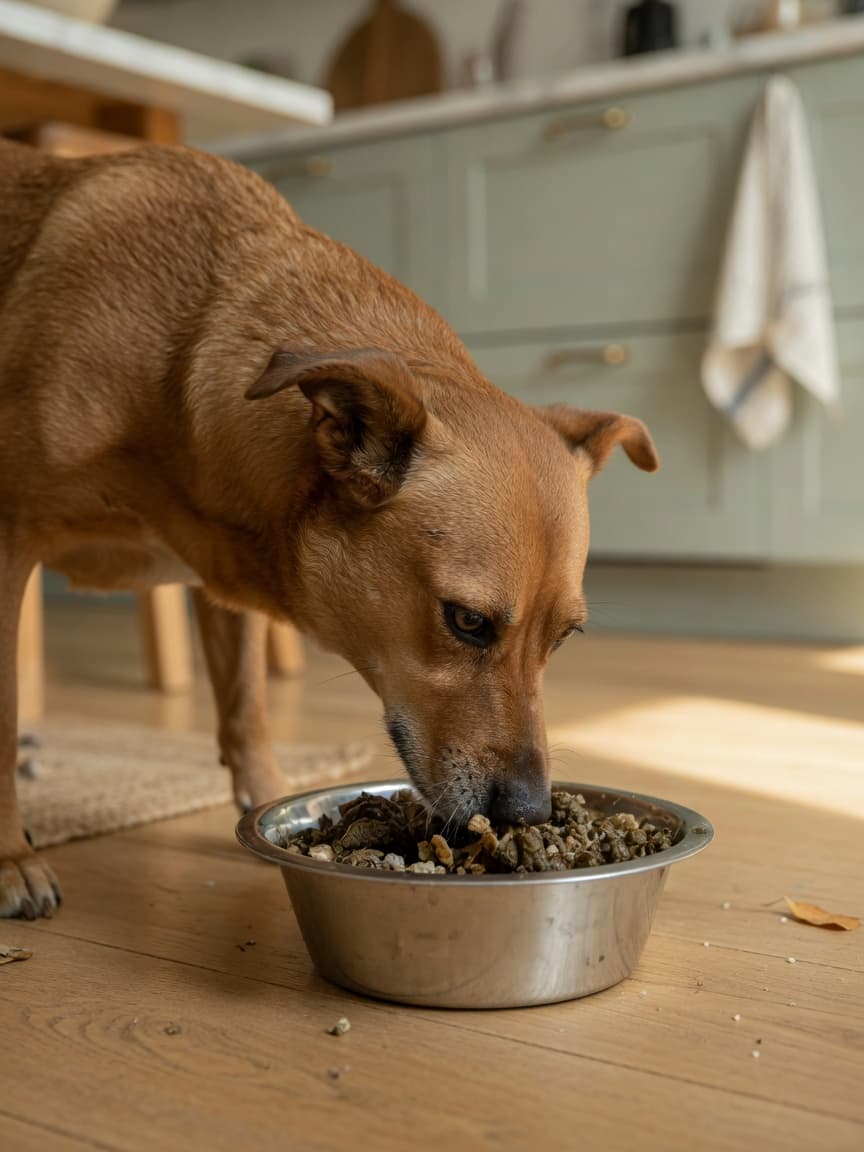
Why Does My Dog Eat Poop (Coprophagia): Causes & Fixes
Few things are more alarming — or more mortifying — than watching your dog eat poop. Whether it's their own stool, another dog's, or cat feces from the litter box, coprophagia triggers immediate disgust and genuine concern in most owners. Before you spiral into worry, know this: stool eating has multiple causes, most of which are manageable, and some of which are completely normal.
Normal in Puppies
If you have a puppy who eats poop, start by taking a breath. Coprophagia is developmentally normal in puppies under six months of age. Mother dogs routinely consume the stool of their young pups to keep the den clean — and puppies frequently mimic this behavior as part of exploratory development. Most puppies simply grow out of it by six months to a year, especially with consistent supervision and management.
It's also worth noting that dogs in general are scavengers by nature. Their ancestors ate whatever was nutritionally available, and feces from other animals (particularly herbivores) can contain partially digested nutrients. The behavior has evolutionary roots, even if it makes us cringe.
Nutritional Deficiency or Malabsorption
One of the most clinically significant causes of coprophagia in adult dogs is an underlying nutritional issue. If a dog's diet is deficient in certain nutrients — particularly B vitamins, iron, or digestive enzymes — they may instinctively seek those nutrients in stool. Dogs with exocrine pancreatic insufficiency (EPI), a condition in which the pancreas fails to produce adequate digestive enzymes, often eat their own stool because undigested food passes through intact and still has nutritional value to them.
If your adult dog suddenly starts eating stool, especially their own, and you notice other signs like weight loss despite good appetite, loose or greasy stools, or poor coat condition, an EPI screening with your vet is worthwhile. A simple change to an enzyme-supplemented food can resolve the behavior entirely in these cases.
Learned Behavior
Dogs who were punished for eliminating indoors sometimes learn to "hide the evidence" by consuming their stool. This is a direct consequence of punishment-based house training — the dog isn't misbehaving, they're trying to avoid punishment. This is one of the strongest arguments against scolding accidents: the dog associates your anger with the presence of the feces, not the act of eliminating, and eating it seems like a logical solution.
Dogs may also learn coprophagia from other dogs. If one dog in a multi-dog household eats stool, others can pick up the behavior through observation. Managing the stool-eating dog with prompt clean-up is essential in these situations.
Medical Causes
Intestinal parasites: Parasites compete with the host for nutrients, leaving the dog in a state of chronic nutritional deficiency. Dogs with significant parasite burdens may eat stool as a result. Regular fecal testing and deworming protocols help prevent this.
Steroid medication: Dogs on corticosteroids (like prednisone) experience dramatically increased appetite and may consume things they normally wouldn't, including stool. This is a known side effect and typically resolves when the medication course ends.
Thyroid disease and diabetes: Conditions that increase hunger or impair nutrient absorption can drive coprophagia. If your dog is eating stool alongside increased appetite, thirst, or urination, a metabolic panel from your vet is in order.
Boredom and Attention-Seeking
Dogs confined to small spaces, understimulated, or attention-deprived may eat stool as a self-soothing or boredom behavior. They may also quickly learn that the behavior gets an immediate — if horrified — reaction from their owner, and attention of any kind can reinforce behavior in dogs. Chasing the dog or shouting when they approach stool can inadvertently turn it into a game.
Practical Fixes
Supervision and prompt clean-up: The most reliable fix for coprophagia is denying access to stool. Pick up immediately after your dog eliminates. Use a leash on walks to prevent access to stool in public areas. In multi-pet households, keep litter boxes inaccessible to dogs (a cat door with a dog-proof barrier works well).
Dietary review: Ensure your dog is on a nutritionally complete, high-quality diet. If you suspect enzyme deficiency, ask your vet about pancreatic enzyme supplementation or a highly digestible prescription diet.
Stool deterrents: Products containing ingredients like monosodium glutamate, chamomile, yucca, or capsaicin are available that make stool unpalatable when added to the dog's food. Results are variable — some dogs are deterred, others are not. For-bid and Nasty Habit are two commonly used products. Pineapple or pumpkin added to the diet is a popular home remedy, with anecdotal but limited scientific support.
Veterinary check: Any adult dog that starts eating stool without a clear behavioral explanation should be evaluated. A fecal exam, bloodwork, and discussion of current medications will rule out medical drivers quickly.
Key Takeaways
- Coprophagia affects roughly 16% of dogs and is developmentally normal in puppies under six months.
- In adult dogs, sudden stool eating warrants a vet check to rule out EPI, parasites, or metabolic disease.
- Punishment-based house training can inadvertently cause dogs to eat stool to "hide the evidence."
- Prompt clean-up and physical management (leash, barriers) are the most reliable preventive strategies.
- Stool deterrent supplements may help in some dogs, but results are inconsistent across individuals.
References
Hart BL, et al. (2012). The paradox of canine conspecific coprophagy. Veterinary Medicine and Science. PubMed
Bosch G, et al. (2009). Dietary nutrient profiles of wild wolves: Insights for optimal dog nutrition. British Journal of Nutrition. PubMed