
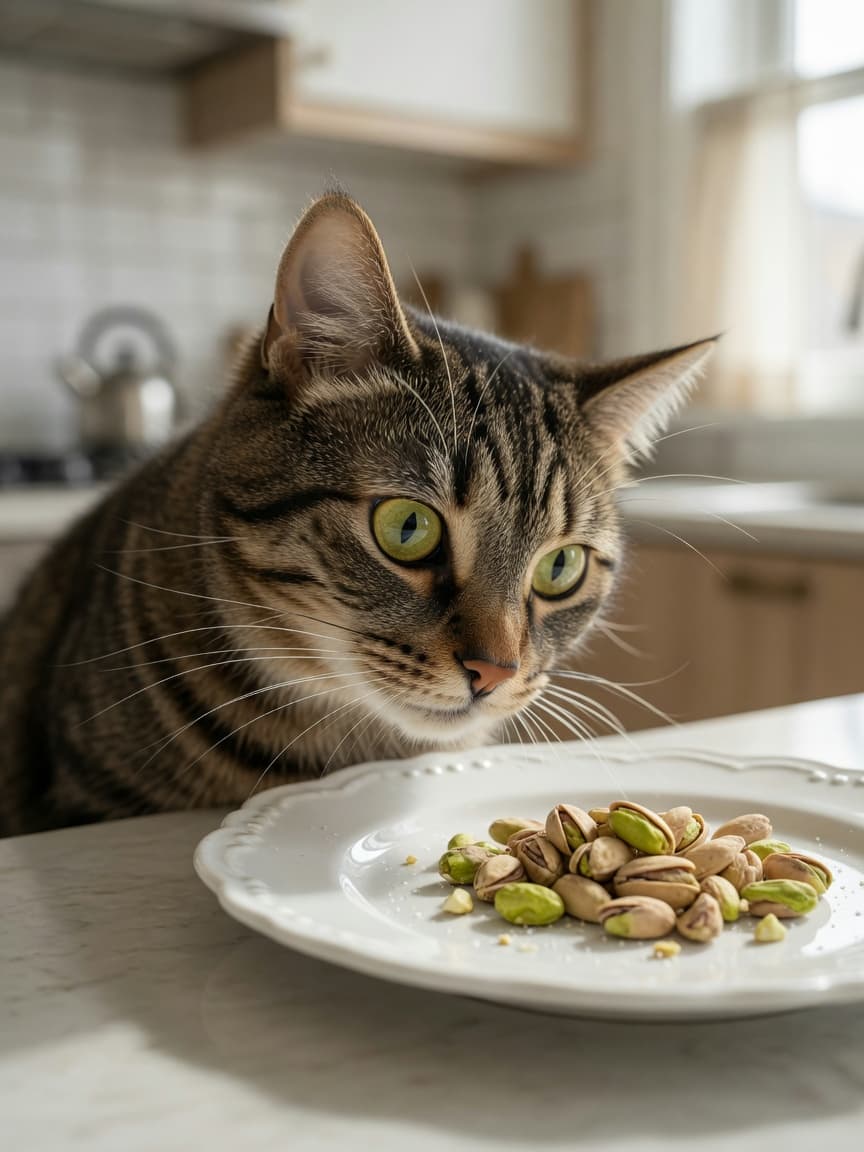
Can Cats Eat Pistachios?
The short answer is: yes, but with significant caution. Whilst pistachios aren't toxic to cats in the way that grapes or chocolate are, they do present real risks that make them far from an ideal treat. If your cat has accidentally eaten a pistachio or two, there's no need to panic—but they shouldn't become a regular part of their diet.
Why Pistachios Require Caution
Several factors make pistachios problematic for cats. First, cats are obligate carnivores, meaning their digestive systems are designed to process meat, not plant-based foods. Their stomachs lack the enzymes needed to efficiently break down nuts and their high fat content. Pistachios are fatty—roughly 45% fat by weight—which can upset a cat's sensitive digestion and potentially trigger vomiting or diarrhoea.
The bigger concern is choking and obstruction. Pistachios are hard, and cats lack the grinding molars that humans use to chew thoroughly. If a cat swallows a pistachio whole or in large chunks, it can lodge in the oesophagus or intestines, causing a potentially life-threatening blockage. This is particularly true for kittens and smaller breeds.
Salt is another issue. Many commercially roasted pistachios are heavily salted, and excess sodium is harmful to cats. It can lead to salt poisoning if consumed in significant quantities, causing symptoms like excessive thirst, vomiting, and neurological problems.
Additionally, some pistachios are coated with seasonings, chocolate, or artificial flavourings—all of which add unnecessary risk. If a pistachio is mouldy, it may contain aflatoxins, naturally occurring toxins that are particularly concerning for cats.
Safe Preparation and Portion Size
If you're determined to offer a pistachio as an occasional treat, here's how to minimise risk:
Remove the shell completely. Never give your cat a pistachio in its shell. The shell itself is a choking hazard and serves no nutritional purpose for cats.
Choose unsalted varieties. Plain, unsalted pistachios are safer than roasted or salted ones. Avoid any with seasonings or coatings.
Crush or finely chop it. Breaking the pistachio into very small pieces reduces choking risk, though it doesn't eliminate the digestive upset risk.
Offer sparingly. If given at all, a single small piece of pistachio should be a rare treat—not a regular snack. Once every few months at most, if you choose to offer it at all.
Which Cats Should Avoid Pistachios Entirely?
Certain cats should never eat pistachios:
Kittens under six months old lack the digestive maturity to handle nuts safely. Cats with a history of digestive problems, pancreatitis, or obesity should avoid high-fat foods entirely. Senior cats or those with dental disease may struggle more with nuts, even if softened. Any cat with a known food sensitivity should steer clear.
Warning Signs to Watch For
If your cat has eaten a pistachio, watch carefully for the following symptoms over the next 24–48 hours:
Vomiting or diarrhoea, loss of appetite, abdominal pain or bloating, lethargy or unusual behaviour, straining to defecate, or drooling excessively. If your cat shows any of these signs, contact your vet. Blockage symptoms—such as repeated vomiting, complete loss of appetite, or a hunched, painful posture—require immediate emergency veterinary care.
Better Alternatives
Rather than offering pistachios, consider cat-appropriate treats instead. Small pieces of cooked chicken, turkey, or fish are far safer and more nutritionally appropriate. Commercial cat treats are formulated for feline digestive systems. Many cats also enjoy a small amount of cooked pumpkin or melon.
The Bottom Line
Pistachios are not recommended for cats. Whilst a tiny amount of unsalted, shelled pistachio won't necessarily cause harm, the risks of choking, digestive upset, and salt toxicity make them poor choices for feline treats. Your cat's wellbeing is best served by sticking to foods designed for their carnivorous needs. When in doubt, consult your vet before offering any new food.