
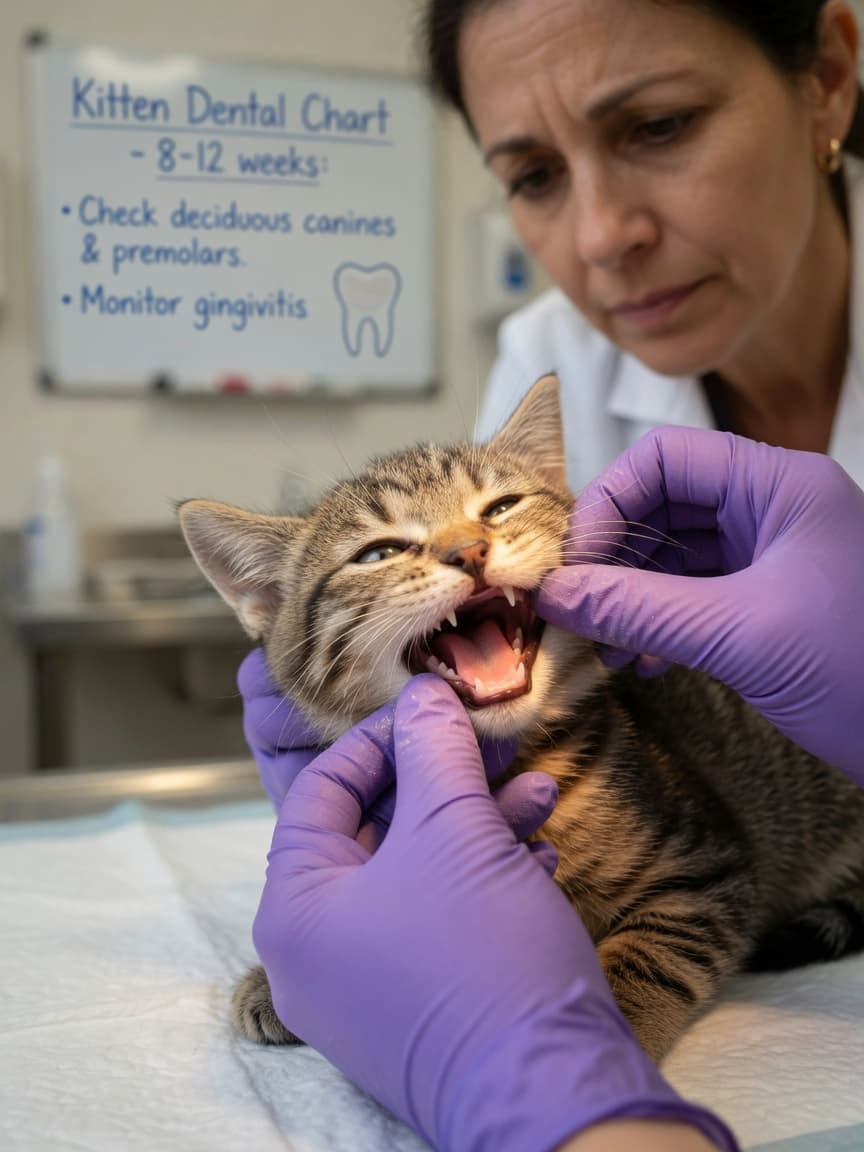
Your kitten's smile might look adorable, but beneath those tiny teeth lies the foundation for lifelong oral health. Dental care during the kitten stage sets the stage for healthy teeth throughout your cat's life, yet it's often overlooked by well-meaning pet owners. Understanding how your kitten's teeth develop, what to expect during the teething process, and how to establish good dental habits now can prevent costly dental problems and discomfort later. This comprehensive guide will equip you with everything you need to know about kitten dental care.
The Timeline of Kitten Tooth Development
Kittens are born without visible teeth, but don't worry—they're developing beneath the gums. Understanding the timeline helps you recognise what's normal and when to seek veterinary advice:
- 3-4 weeks: Deciduous (baby) incisors begin erupting
- 3-5 weeks: Canines appear
- 4-6 weeks: Premolars come through
- 3-5 months: All 26 baby teeth are typically present
- 3-7 months: Adult teeth begin erupting, baby teeth start shedding
- 6-7 months: Most permanent teeth are in place
- By 12 months: All 30 adult teeth should be present
Some kittens experience retained baby teeth, where the deciduous tooth doesn't fall out before the adult tooth erupts. If you notice this, contact your vet, as retained teeth can cause misalignment and dental problems.
Managing Teething Discomfort

Between three and seven months, your kitten will experience teething, which can be uncomfortable. You might notice increased drooling, difficulty eating, or more chewing behaviour than usual. Here's how to help:
- Provide soft food alongside their regular diet to ease eating discomfort
- Offer safe chewing toys to massage sore gums
- Consider refrigerated (not frozen) teething toys for soothing relief
- Avoid giving hard treats or bones that could damage emerging teeth
- Be patient with behavioural changes; increased playfulness and chewing are normal
If your kitten seems to be in significant pain or refuses to eat, contact your veterinarian to rule out complications.
Establishing a Dental Care Routine
Early dental care habits establish routines that your cat will accept more readily as an adult. Start these practices whilst your kitten is young:
- Begin with gentle touch: Let your kitten become comfortable with you touching their mouth and gums
- Introduce a toothbrush gradually: Use a soft-bristled cat toothbrush or fingertip brush
- Use cat-specific toothpaste: Never use human toothpaste, which contains ingredients harmful to cats
- Aim for daily brushing: Even a few times per week makes a significant difference
- Keep sessions short: Start with just 30 seconds and gradually increase duration
Recognising Dental Problems Early
Watch for warning signs that might indicate dental issues requiring veterinary attention:
- Persistent bad breath beyond the teething phase
- Bleeding or inflamed gums
- Broken or loose teeth
- Excessive drooling or difficulty swallowing
- Pawing at the mouth or face
- Reluctance to eat hard food
Professional Veterinary Care
Your vet should assess your kitten's teeth during routine appointments. Most cats benefit from professional dental cleaning under anaesthesia once they're adults, but early dental assessments can catch problems before they develop. Ask your vet about fluoride treatments or dental sealants if appropriate for your kitten.
Key Takeaways for Kitten Dental Health
Investing time in your kitten's dental care now pays dividends for years to come. Remember that teething is temporary but the habits you establish are lasting. By understanding tooth development, managing discomfort compassionately, and establishing a consistent dental routine, you're setting your kitten up for a lifetime of healthy smiles and good oral hygiene. Don't hesitate to consult your veterinarian with any concerns—early intervention prevents serious dental disease and keeps your growing kitten comfortable and healthy.
```