
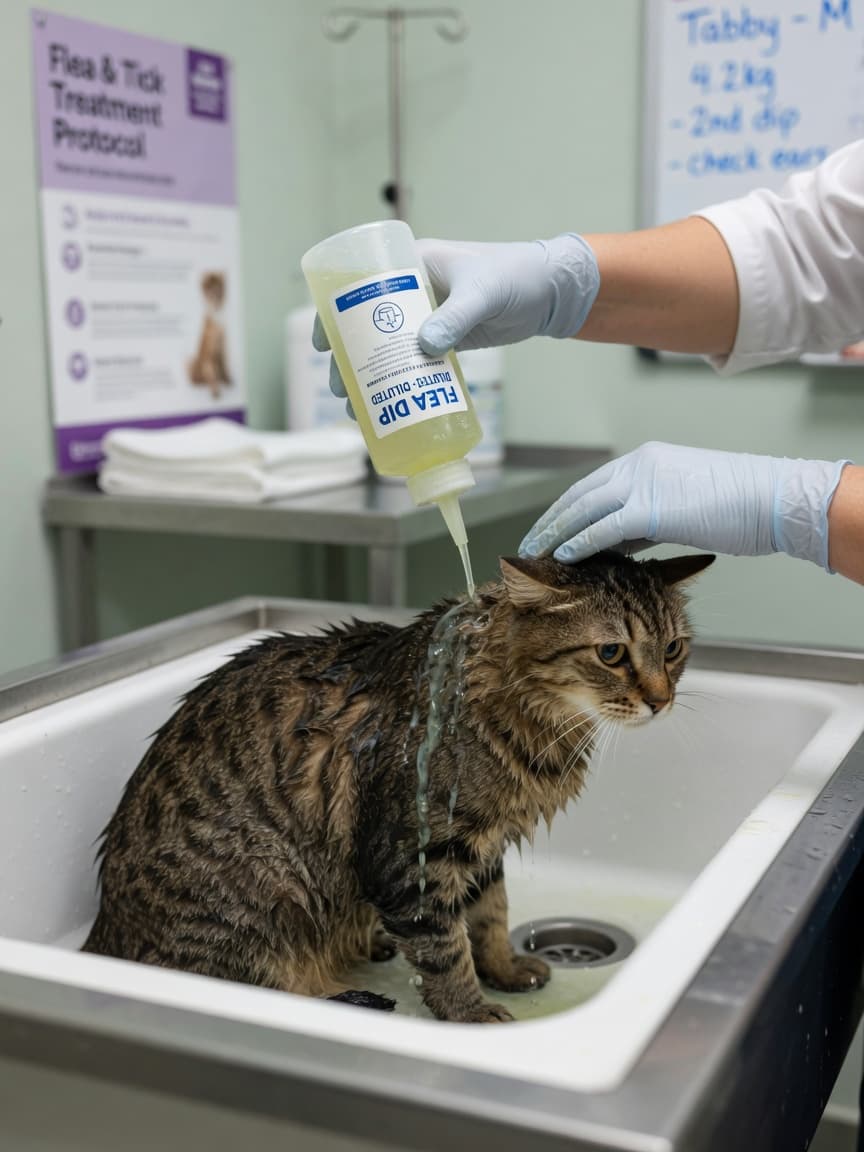
Flea dips have been used for decades to combat flea infestations in cats, and whilst newer treatments have emerged, they remain a viable option for many cat owners. However, understanding how they work, their benefits, limitations, and potential risks is essential before choosing this treatment for your feline companion. This guide will help you make an informed decision about whether flea dips are right for your cat.
What Are Flea Dips?
Flea dips are concentrated solutions that you dilute with water and apply to your cat's entire body. The cat is essentially immersed in or thoroughly washed with this medicated solution, which kills fleas and sometimes ticks on contact. The active ingredients typically include organophosphates, pyrethrins, or pyrethroids, which attack the nervous system of parasites.
Unlike spot-on treatments or oral medications, dips provide immediate, full-body coverage. They're particularly useful during severe infestations because they address all life stages of fleas more comprehensively than some alternatives.
How Flea Dips Work
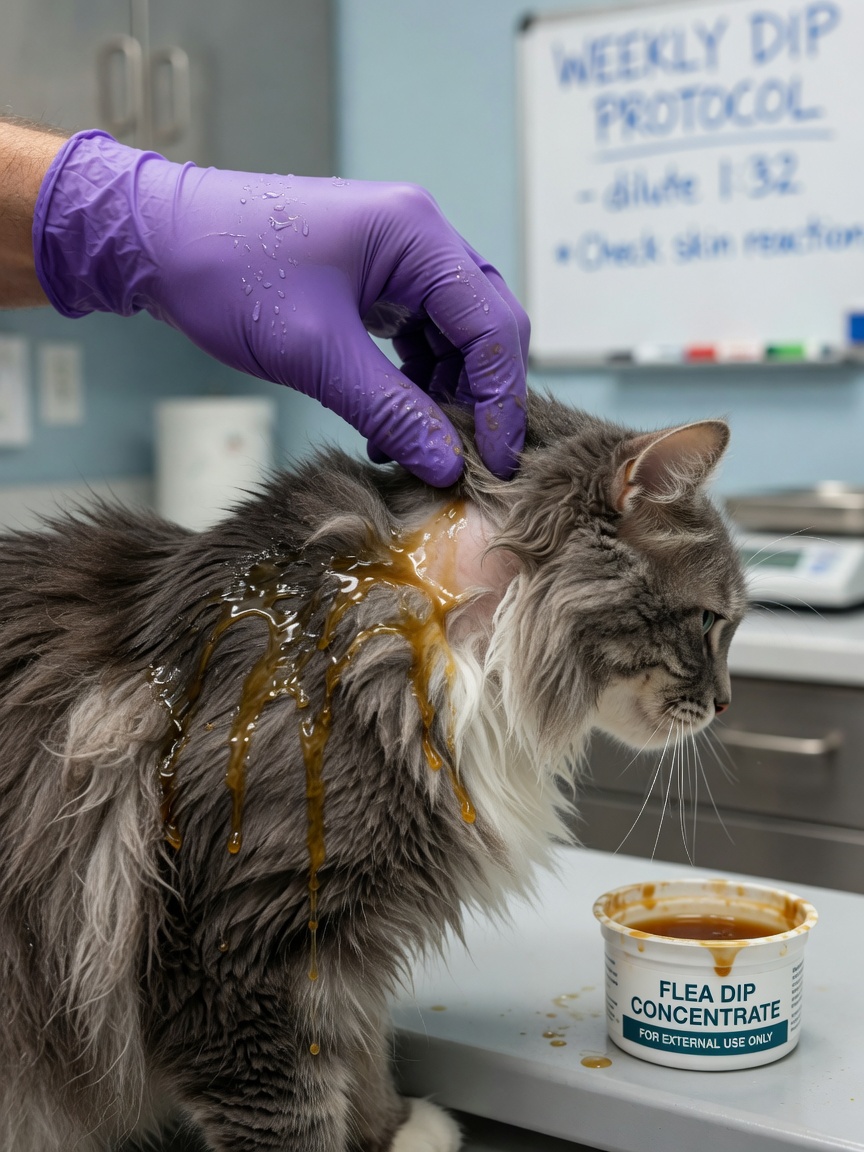
Flea dips work through direct contact with parasites. When applied, the solution coats your cat's skin and fur, creating an inhospitable environment for fleas and ticks. The active ingredients disrupt the parasites' nervous systems, leading to paralysis and death within minutes to hours.
Most flea dips are designed to be left on the skin for approximately 10-15 minutes before rinsing with clean water. This contact time is crucial for effectiveness, so it's important to follow application instructions precisely.
Benefits and Drawbacks
Advantages:
- Immediate action against adult fleas and ticks
- Cost-effective compared to monthly spot-on treatments
- Useful during acute, heavy infestations
- Full-body coverage in a single application
- No waiting period for the product to dry
Disadvantages:
- Cats often dislike being immersed in water or having liquid applied thoroughly
- Can be stressful for anxious or elderly cats
- Potential for skin irritation in sensitive cats
- Shorter duration of protection (typically 1-2 weeks) compared to modern alternatives
- Does not prevent future infestations
- Not suitable for kittens under 8 weeks old
Safety Considerations for Cats
Cats are particularly sensitive to certain flea treatments, and this applies to dips as well. Always purchase cat-specific formulations—never use dog flea dips on cats, as they often contain higher concentrations of active ingredients that can be toxic to felines.
Potential side effects include:
- Skin irritation or dermatitis
- Salivation or drooling if the cat licks the residue
- Trembling or muscle twitching (with organophosphate-based products)
- In severe cases, neurological symptoms
Always consult your veterinarian before applying a flea dip, especially if your cat is pregnant, nursing, elderly, or has existing health conditions. Your vet can confirm the product is appropriate for your individual cat.
Modern Alternatives to Consider
Today's pet owners have more options than ever. Spot-on treatments, oral medications, and injectable solutions often provide longer-lasting protection (up to three months) with minimal stress. These modern alternatives may be more convenient, though they're typically more expensive. Your veterinarian can recommend the best option based on your cat's age, health status, and lifestyle.
Key Takeaways
Flea dips remain a useful tool in combating feline parasites, particularly during severe infestations. However, they work best as part of a comprehensive pest management strategy rather than a standalone solution. Always use cat-specific products, follow instructions carefully, and consult your veterinarian beforehand. For long-term flea prevention and your cat's overall comfort, discuss modern alternatives with your vet to find the most suitable option for your family.