

Turmeric for Dogs: Anti-Inflammatory Benefits, Dosage & Golden Paste Recipe
Walk into any health food store and you'll find turmeric promoted as one of nature's most powerful anti-inflammatory compounds. But is the golden spice actually useful for dogs — or is it just another wellness trend that looks better in headlines than in clinical outcomes?
The honest answer sits somewhere in the middle. The science behind curcumin — turmeric's active compound — is genuinely interesting, and some of it is relevant to canine health. But there are important caveats about bioavailability, dosing, and conditions where turmeric is contraindicated. This guide covers all of it: the mechanism, the research, a simple golden paste recipe, and the situations where turmeric should be avoided entirely.
What Is Curcumin and Why Does It Matter?
Turmeric (Curcuma longa) is the yellow-orange spice derived from the root of a plant in the ginger family. Its active compound, curcumin, belongs to a class of polyphenols that have been studied extensively for their biological effects in mammals. Curcumin constitutes roughly 2–5% of dried turmeric by weight, meaning the spice itself is not a high-concentration source — but in the right preparation, it can deliver a meaningful therapeutic dose.
The reason nutritionists and researchers pay attention to curcumin is its documented ability to modulate multiple inflammatory pathways simultaneously. Rather than blocking a single enzyme (as NSAIDs do), curcumin appears to act on a broader range of targets, which may make it useful across several inflammatory conditions. The most studied of these is the NF-κB pathway.
The Anti-Inflammatory Mechanism: NF-κB and Beyond
Nuclear factor kappa-light-chain-enhancer of activated B cells (NF-κB) is a protein complex that acts as a master regulator of inflammation. When activated by injury, infection, or cellular stress, NF-κB triggers the production of pro-inflammatory cytokines — signaling molecules that recruit immune cells and sustain the inflammatory response. In chronic conditions like osteoarthritis, NF-κB remains persistently activated, keeping inflammation and associated pain elevated.
Curcumin has been shown in multiple studies to inhibit NF-κB activation, thereby reducing downstream production of inflammatory mediators including TNF-α, IL-1β, and IL-6. It also inhibits COX-2 (the same enzyme targeted by NSAIDs like meloxicam) and reduces activity of 5-LOX, another inflammatory enzyme. Research published in BioMed Research International (PMID 28177745) demonstrated curcumin's multi-target anti-inflammatory properties, supporting its potential as a complement to conventional pain management strategies.
For dogs with chronic joint inflammation, this mechanistic profile is relevant. The question is whether curcumin can be delivered in sufficient quantities to have a meaningful clinical effect — which brings us to the bioavailability problem.
The Bioavailability Problem (and How to Solve It)
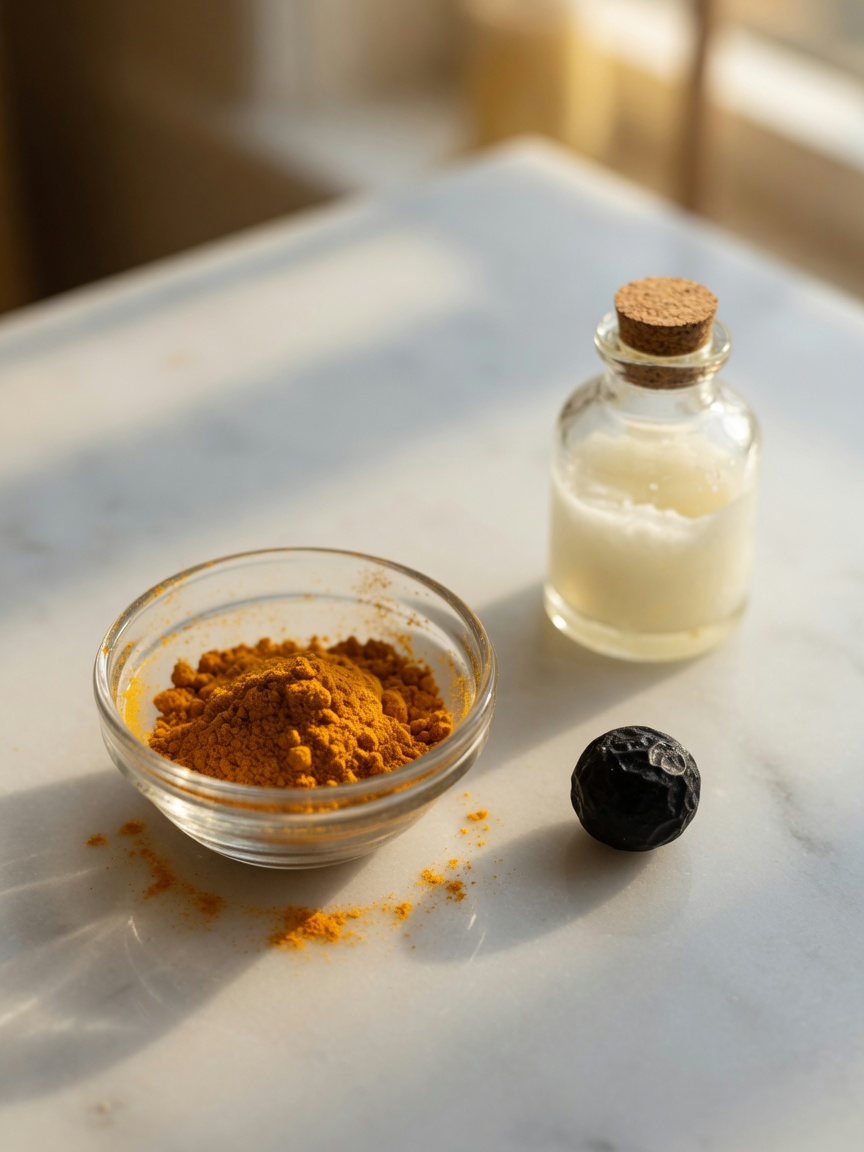
Curcumin's biggest limitation is that it is poorly absorbed on its own. When consumed without any enhancement, most of it passes through the gastrointestinal tract without being absorbed into systemic circulation. This has long been the obstacle between curcumin's impressive in-vitro results and real-world clinical efficacy.
Fortunately, the solution has been known for decades: piperine and fat.
Piperine — the active compound in black pepper — inhibits enzymes responsible for metabolizing curcumin in the gut and liver. When curcumin and piperine are co-administered, bioavailability increases by up to 2,000% in human studies. Even small amounts of black pepper (as little as 1/4 teaspoon per recipe) are sufficient to produce this effect.
Dietary fat enhances absorption because curcumin is fat-soluble. Combining turmeric with a healthy fat — coconut oil is the most common choice in canine golden paste recipes — significantly increases the proportion that crosses the intestinal wall and enters circulation.
Any practical turmeric formulation for dogs must address both of these factors. Plain turmeric sprinkled on kibble without fat or piperine is unlikely to deliver meaningful curcumin concentrations systemically.
What Research Exists for Dogs Specifically?
Human and rodent curcumin research vastly outnumbers canine studies, but relevant dog-specific evidence exists. A study reviewed in BMC Veterinary Research (PMID 26528921) examined curcumin's effects in dogs with chronic inflammatory conditions and found promising signs of reduced inflammatory markers and improved mobility scores in arthritic dogs over a supplementation period. While the sample sizes in canine trials remain small and more research is needed, the direction of findings aligns with mechanistic predictions.
The American Kennel Club (AKC) notes that turmeric is generally recognized as safe (GRAS) for dogs by the FDA when used in appropriate food quantities. The VCA Animal Hospitals website includes turmeric among natural supplements that veterinary practitioners sometimes recommend for joint support, while emphasizing the importance of proper formulation and professional guidance.
Golden Paste Recipe for Dogs
Golden paste is the most practical way to deliver bioavailable curcumin to dogs at home. It combines turmeric, fat, and piperine in a shelf-stable preparation that can be added to food daily.
Ingredients
- 1/2 cup (60 g) organic turmeric powder
- 1 cup (240 ml) water (you may need slightly more)
- 1/3 cup (80 ml) cold-pressed coconut oil (or olive oil)
- 1 ½ teaspoons freshly ground black pepper
Method
- Combine turmeric and water in a small saucepan over medium-low heat.
- Stir continuously for 7–10 minutes until a thick paste forms. Add more water if it becomes too dry.
- Remove from heat and allow to cool slightly (not fully).
- Stir in the coconut oil and black pepper until well combined.
- Transfer to a glass jar and refrigerate. The paste keeps for up to two weeks.
How to Use
Mix directly into your dog's food at mealtimes. The paste blends easily with wet food; for dry kibble, adding a small amount of broth helps incorporate it. Start with a small amount and build up over 1–2 weeks to avoid digestive upset.
Dosing Guidelines by Weight
There are no officially established veterinary dosing standards for turmeric in dogs. The following general guidelines are drawn from integrative veterinary practice recommendations and should be confirmed with your vet:
- Small dogs (under 10 kg): Start with 1/4 teaspoon golden paste per day, building to 1/2 teaspoon
- Medium dogs (10–25 kg): Start with 1/2 teaspoon, building to 1 teaspoon per day
- Large dogs (25–40 kg): Start with 3/4 teaspoon, building to 1.5 teaspoons per day
- Giant breeds (over 40 kg): Start with 1 teaspoon, building to 2 teaspoons per day
Divide the daily amount across two meals rather than giving it all at once to improve absorption and reduce the chance of digestive discomfort.
Conditions That May Benefit
Based on the available evidence and mechanistic rationale, turmeric supplementation may offer support for dogs with:
- Osteoarthritis and joint stiffness: The most researched application, with both mechanistic and preliminary clinical support.
- Chronic skin conditions: Curcumin's anti-inflammatory and potential antioxidant effects may benefit dogs with atopic or inflammatory skin conditions.
- Inflammatory bowel disease (IBD): NF-κB is centrally involved in gut inflammation; curcumin's modulatory effect on this pathway may support gut health in susceptible dogs.
- General aging support: As an antioxidant, curcumin may contribute to cellular protection in senior dogs, though direct evidence is limited.
When NOT to Use Turmeric in Dogs
- Is taking anticoagulant medications (e.g., warfarin, heparin) — curcumin has blood-thinning properties that may amplify the effect dangerously
- Has gallbladder disease or gallstones — curcumin stimulates bile production, which can worsen obstruction
- Is scheduled for surgery within two weeks — risk of increased bleeding
- Is pregnant — may stimulate uterine contractions in high doses
- Has iron deficiency — curcumin may inhibit iron absorption
Consult the AVMA or your veterinarian for personalized guidance if any of these apply.
Key Takeaways
- Curcumin, turmeric's active compound, inhibits multiple inflammatory pathways including NF-κB, COX-2, and 5-LOX.
- Bioavailability is poor without enhancement — always combine turmeric with black pepper (piperine) and a dietary fat like coconut oil.
- Golden paste is the most practical homemade delivery format; dose by body weight and introduce gradually.
- Preliminary canine research supports potential benefits for joint inflammation, skin, and gut health.
- Do not use turmeric in dogs on blood thinners, with gallbladder disease, or pre-surgery.
- Always consult your veterinarian before adding any supplement to your dog's routine.