
Snake Care for Beginners: Ball Python, Corn Snake & Setup Guide
By Julia Wrenfield, Pet Wellness Researcher
Snakes are one of the fastest-growing categories of exotic pet ownership in Europe and North America, and it is not hard to see why. They are silent, do not require daily feeding, produce no dander, and can form surprisingly strong bonds with their owners through regular, gentle handling. But they are also demanding in ways that are easy to get wrong: temperature gradients, humidity, enclosure size, and feeding schedules all require careful attention. This guide gives you the full picture — not a simplified beginner version, but the real husbandry information your snake needs.
Ball Python vs. Corn Snake: Choosing Your First Snake
Both species are excellent choices, but they suit slightly different keeper lifestyles:
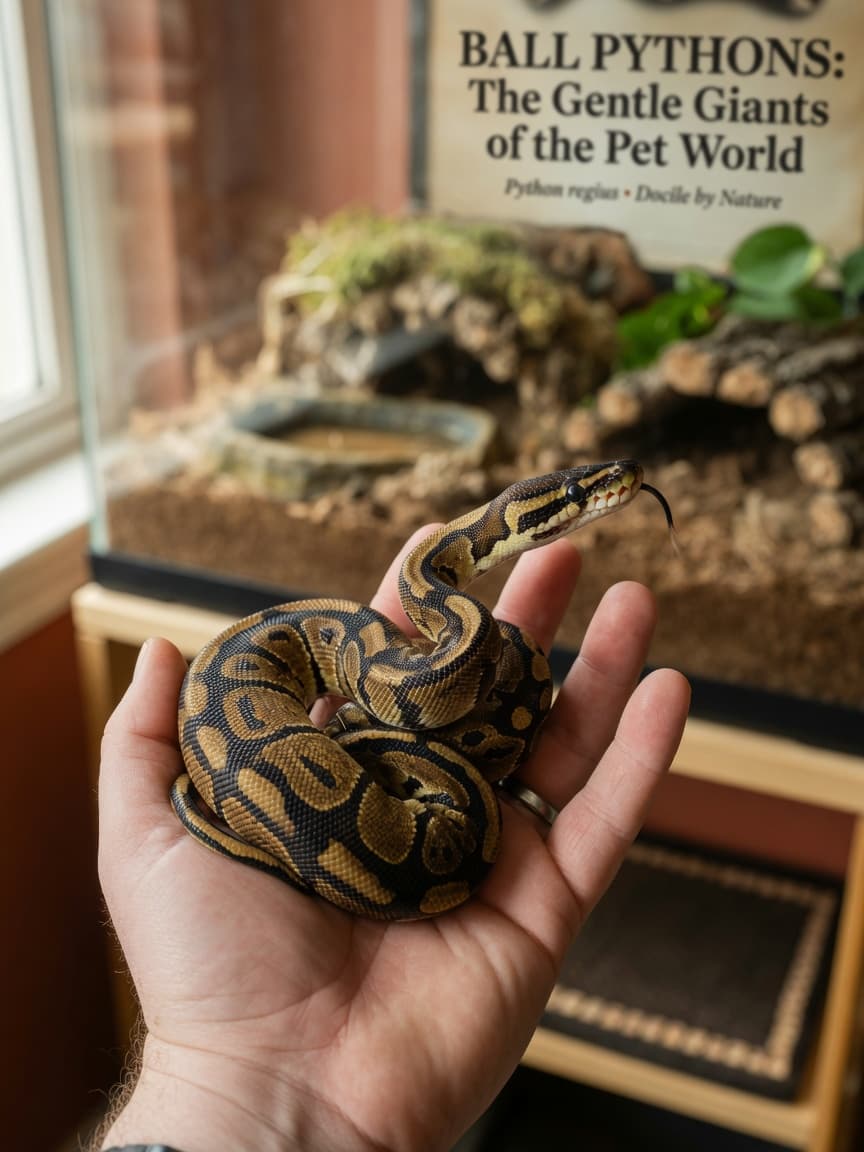
Ball Python (Python regius) — Named for their tendency to curl into a ball when stressed. Ball pythons are the best-selling pet snake globally. Adults reach 90–150 cm and live 20–30 years in captivity. They are heavier-bodied and slower-moving than corn snakes, which makes handling easier for nervous beginners. However, they are notoriously prone to feeding refusals, especially during breeding season (autumn/winter), which can concern new owners. Ball pythons require higher humidity (60–80%) and a tighter temperature gradient than corn snakes.
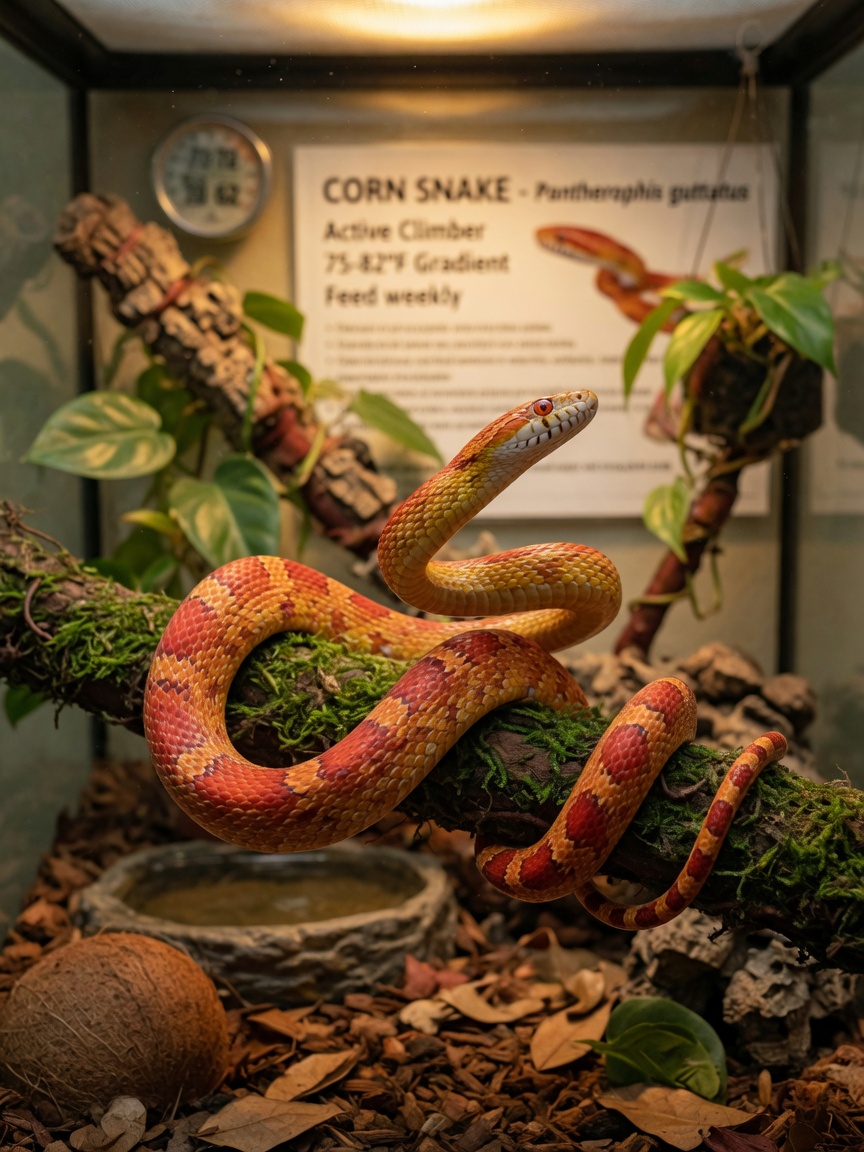
Corn Snake (Pantherophis guttatus) — Native to the southeastern United States, corn snakes are slender, active, and curious. Adults reach 90–150 cm and live 15–20 years. They are voracious feeders with very few refusal issues, which makes them arguably better for beginners who worry about their animal not eating. They tolerate a wider humidity range (40–60%) and are slightly more active, meaning they benefit from longer, more enriched enclosures. Corn snakes are escape artists — enclosure security is essential.
According to the RSPCA's reptile welfare guidance, both species are routinely surrendered to rescue centres due to inadequate husbandry or owners underestimating their 20–30 year lifespan. Go in with open eyes.
Enclosure Setup: Getting It Right From Day One
The most common beginner mistake is starting with a tank that is too small. Hatchlings can start smaller, but adult snakes need appropriate space:
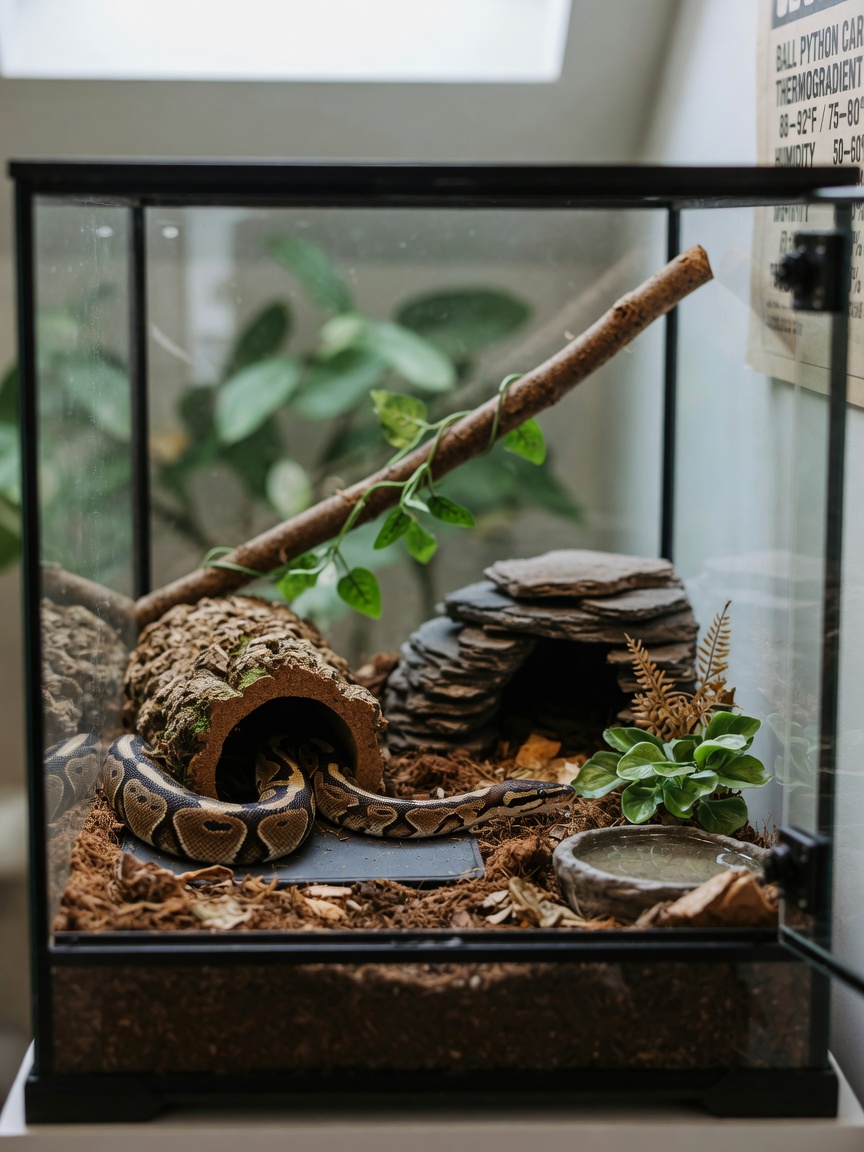
- Ball Python adult minimum: 120 cm × 60 cm × 60 cm (4ft × 2ft × 2ft). Larger is better. Front-opening vivariums are preferred over top-opening as they are less threatening to the snake.
- Corn Snake adult minimum: 120 cm × 45 cm × 45 cm. Corn snakes benefit from more height due to their semi-arboreal tendency to climb.
Substrate choices:
- Ball Python: Coco coir, cypress mulch, or a bioactive substrate blend. These retain humidity well. Avoid cedar, pine, and sand.
- Corn Snake: Aspen shavings work well (they allow burrowing), or coco coir/cypress mulch. Avoid damp substrates that might cause scale rot.
Hides: Every snake enclosure must have at least two hides — one on the warm end and one on the cool end. This allows the snake to thermoregulate without feeling exposed. Research published in Applied Animal Behaviour Science (2017) confirmed that snakes provided with adequate hides show significantly lower stress behaviours and feed more reliably than those without.
Temperature and Heating
Snakes are ectotherms — they rely entirely on their environment to regulate body temperature. Getting this wrong is one of the most common causes of illness and feeding refusal.
Ball Python temperature requirements:
- Warm side: 30–32°C (ambient); basking spot: 33–35°C
- Cool side: 24–27°C
- Night temperature: no lower than 22°C
- Recommended heating: ceramic heat emitter (CHE) or radiant heat panel, controlled by a proportional thermostat. Do NOT use hot rocks or uncontrolled heat mats.
Corn Snake temperature requirements:
- Warm side: 28–30°C
- Cool side: 20–24°C
- Night temperature: can drop to 18°C safely
- Recommended heating: heat mat under-tank (covering one-third of the floor area) on a mat stat thermostat, or a low-wattage CHE.
Always use a thermostat. Overheating kills snakes quickly and silently. Digital thermometers with probes placed at both ends of the enclosure allow accurate monitoring.
Feeding: Frozen/Thawed Is the Only Ethical Choice
Both ball pythons and corn snakes eat rodents. The standard feeding protocol for pet snakes is frozen/thawed (F/T) prey — mice or rats that have been humanely killed and frozen, then fully thawed before feeding. This is strongly recommended over live prey for multiple reasons:
- Safety: Live prey can injure or kill snakes. Even a small mouse can inflict serious bites if the snake misses or hesitates.
- Ethics: Live feeding is illegal in the UK under the Animal Welfare Act 2006 and restricted in many EU countries.
- Nutrition: Properly stored F/T prey is nutritionally equivalent to live prey.
- Parasite risk: Live rodents can carry parasites and pathogens. F/T prey does not.
Thawing protocol: Remove prey from freezer, place in a sealed bag, and thaw in warm (not boiling) water for 20–30 minutes. Prey should feel warm to the touch (approximately body temperature) before offering. Use feeding tongs — never your bare hands — to avoid conditioning the snake to associate your hand with food.
Feeding frequency:
- Hatchlings (up to 6 months): every 5–7 days, appropriately sized pinky or fuzzy mouse
- Juveniles (6–18 months): every 7–10 days
- Adults: every 10–14 days; prey should be approximately the same diameter as the snake's widest point
The AKC's reptile guidance and the National Geographic profile of ball pythons both confirm the species' tendency for feeding refusals during autumn months — do not panic if your ball python stops eating for 4–6 weeks in October–December.
Humidity Management
Humidity directly affects shedding. A snake that cannot shed properly (dysecdysis) will retain shed around the eyes (spectacles) and tail tip, which can lead to permanent damage if not addressed.
- Ball Python: Maintain 60–80% ambient humidity. Add a humid hide filled with damp sphagnum moss during shedding.
- Corn Snake: 40–60% ambient. A moist hide is beneficial during sheds.
If your snake has a retained shed, soak it in lukewarm water for 15–20 minutes and gently roll the retained skin off using a damp cloth. Never forcibly pull retained shed.
Handling and Socialisation
New snakes should be left alone for at least 7–10 days after arrival to settle in. After their first successful feed in your care, handling sessions can begin: start with 5–10 minutes, 3–4 times per week, building gradually. Never handle within 48 hours of feeding — this can cause regurgitation, which is stressful and nutritionally costly for the snake.
For ongoing supplies including enclosure accessories and frozen feeders, Zooplus UK carries a wide range of reptile equipment, substrates, and accessories at competitive prices — a solid one-stop shop for ongoing snake keeper needs.
Key Takeaways
- Ball pythons and corn snakes are the best beginner snakes — both docile, manageable in size, and captive-bred widely.
- Adult enclosures should be at least 120 cm × 60 cm × 60 cm with two hides (warm side and cool side).
- Temperature gradients are non-negotiable — always use a thermostat and digital thermometer probes.
- Feed frozen/thawed prey only — live feeding is unethical, illegal in the UK, and risks injury to your snake.
- Ball pythons need 60–80% humidity; corn snakes need 40–60%. Moist hides during shedding prevent dysecdysis.
- Both species live 15–30 years — this is a long-term commitment requiring consistent care.