
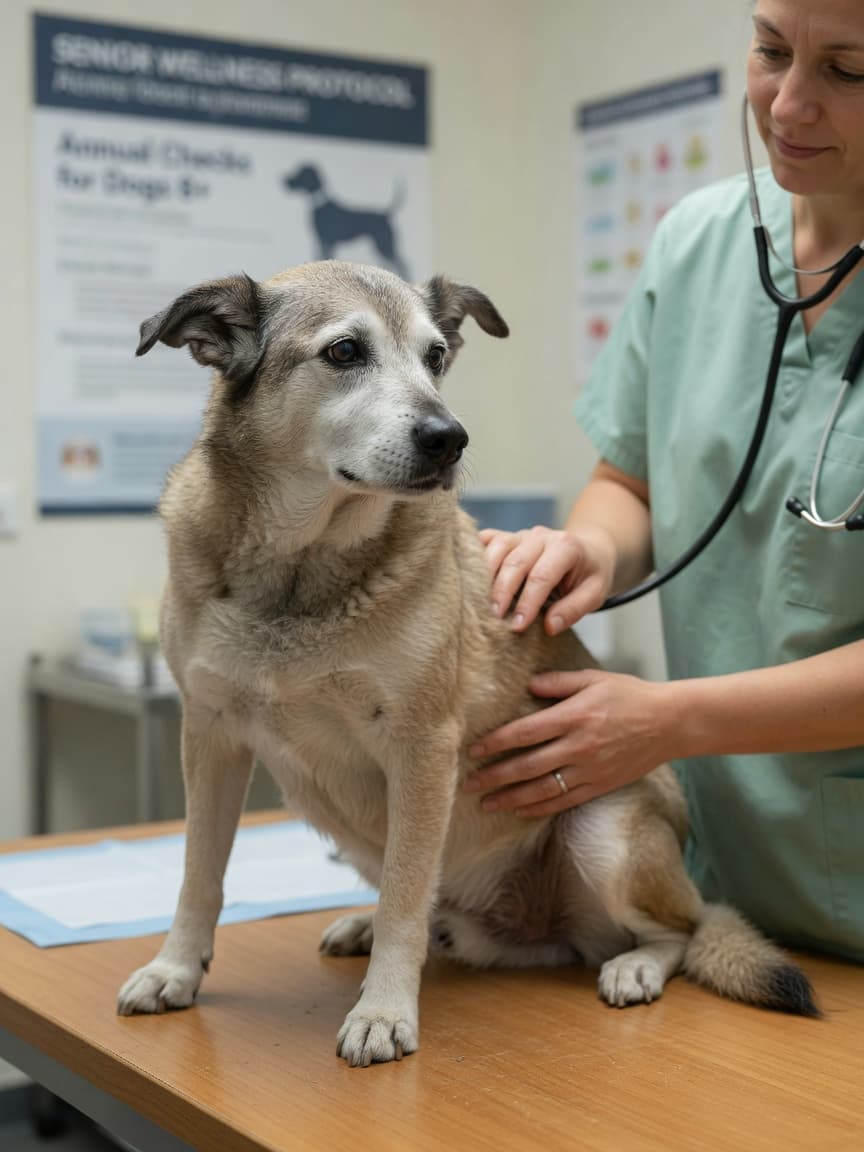
When Is a Dog Considered Senior?
Dogs do not all age at the same rate, and the notion that one human year equals seven dog years is a significant oversimplification. Body size has a profound effect on how quickly dogs age. According to WSAVA (World Small Animal Veterinary Association) guidelines, large and giant breed dogs — those weighing over 25 to 45 kilograms — are considered senior from around 5 to 6 years of age. Medium-sized breeds typically reach senior status at 7 to 8 years, while small breeds often do not enter their senior years until 8 to 10 years old. Knowing when your dog becomes senior helps you understand when increased vigilance and more frequent veterinary monitoring becomes important.
Normal Age-Related Changes
Some changes in senior dogs are a normal part of the ageing process and do not necessarily indicate illness. Reduced activity levels are common, though it is important to distinguish between a dog that is simply slowing down and one that is in pain — the latter requires veterinary assessment. Stiffness after rest, particularly first thing in the morning, can be an early sign of arthritis. Minor hearing loss and gradual vision decline are also common in older dogs. You may notice your dog is less responsive to calls or startles more easily, which can indicate reduced hearing. A slight greying of the muzzle is entirely normal.
Changes in sleeping patterns, reduced enthusiasm for play, and a tendency to seek warmth are all typical in senior dogs. However, these same signs can also mask underlying conditions, which is why regular veterinary assessment becomes more important as your dog ages.
Warning Signs That Need Veterinary Attention
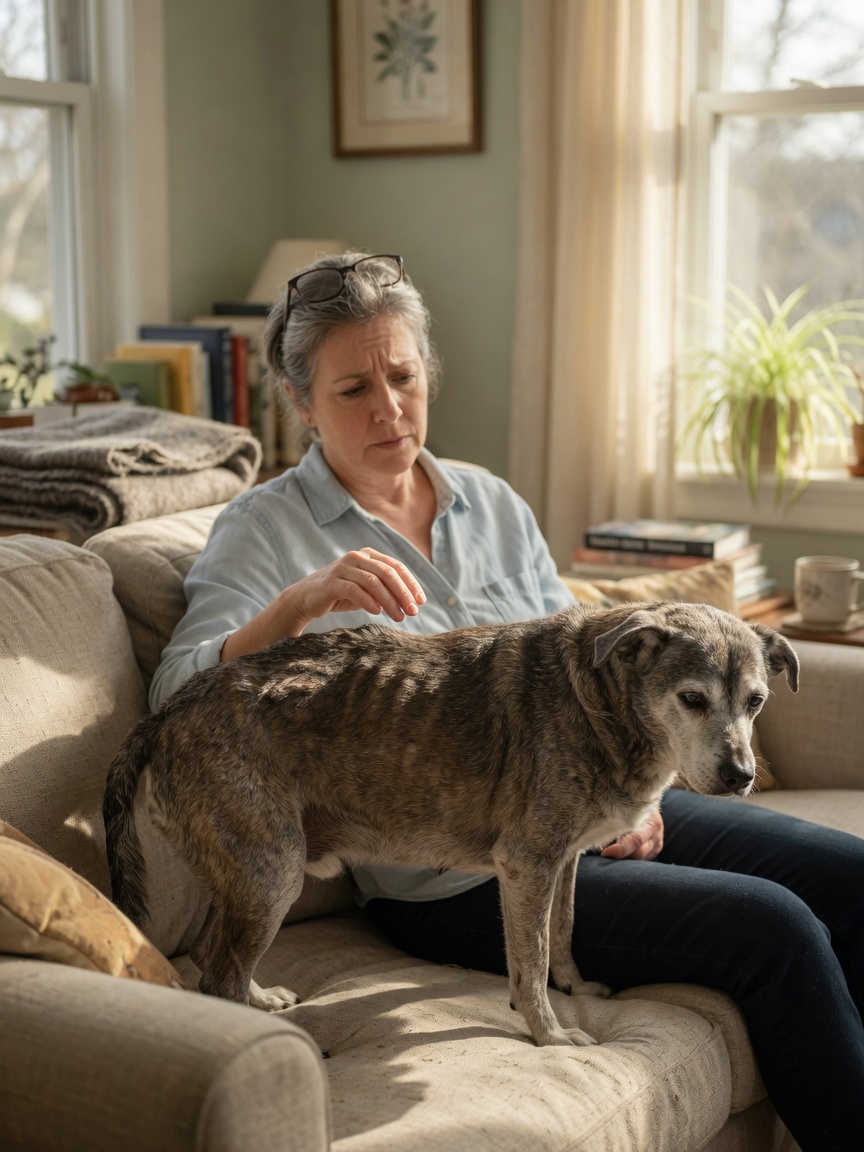
The following signs should prompt a veterinary appointment promptly rather than a "wait and see" approach:
- Unexplained weight loss — weight loss without a change in diet or activity level can indicate cancer, diabetes, organ disease, or dental pain. It should always be investigated.
- Increased thirst and urination — a dog that is drinking noticeably more water and urinating more frequently may have diabetes mellitus, kidney disease, Cushing's disease (hyperadrenocorticism), or a uterine infection (pyometra in unspayed females). All require prompt diagnosis.
- Persistent coughing — a new or worsening cough in a senior dog can be a sign of heart disease, particularly in small breeds. Dilated cardiomyopathy is more common in large breeds. A cough that sounds moist or occurs at night or on waking is particularly concerning.
- New lumps or bumps — any new growth on or under the skin should be assessed by a vet. Many lumps in older dogs are benign (lipomas are very common), but some are malignant and early detection is important. Do not assume a lump is harmless without having it checked.
- Changes in bowel habits — persistent vomiting, diarrhoea, constipation, or blood in the stools warrants investigation.
- Difficulty breathing or exercise intolerance — laboured breathing, coughing during or after light exercise, or collapsing are emergency signs.
- Cognitive changes — confusion, getting stuck in corners, house soiling despite being house-trained, disrupted sleep cycles, or failure to recognise familiar people may indicate Cognitive Dysfunction Syndrome (CDS), the canine equivalent of dementia.
WSAVA Recommendation: Bi-Annual Vet Checks
The WSAVA recommends that senior dogs receive veterinary health checks every six months rather than the annual checks typically sufficient for younger animals. The rationale is straightforward: disease processes in senior animals can progress quickly, and conditions detected early are generally more treatable and less costly to manage. In six months, a condition such as kidney disease, hypothyroidism, or early heart disease can progress considerably if undetected. A bi-annual schedule allows your vet to track trends in body weight, organ function markers, and physical condition over time, making it easier to identify meaningful changes.
Senior Blood Panels: What They Check
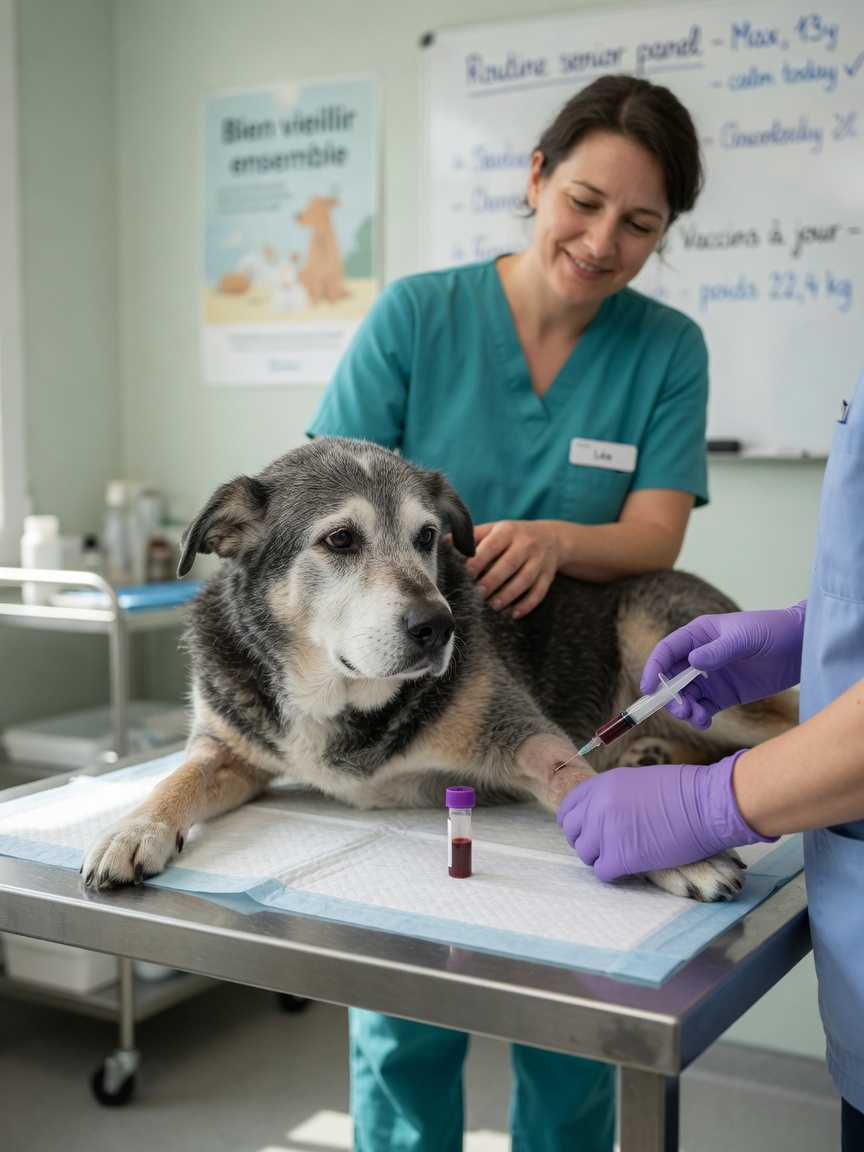
A senior blood panel is typically recommended at least once a year from middle age onwards, and twice a year in dogs showing any signs of illness or established health conditions. A comprehensive senior screen usually includes:
- Full blood count — checks red and white blood cell levels, platelets, and can indicate anaemia, infection, or bone marrow problems.
- Biochemistry panel — assesses kidney function (creatinine, urea, SDMA), liver enzymes (ALT, ALP, GGT), blood glucose (diabetes screening), protein levels, and electrolytes.
- Thyroid hormone (T4) — hypothyroidism is common in middle-aged and older dogs, particularly in certain breeds such as Labradors, Golden Retrievers, and Dobermanns.
- Urinalysis — urine testing complements the blood panel in assessing kidney function and can detect urinary tract infections, protein loss, and glucose in the urine.
- Blood pressure — hypertension is underdiagnosed in dogs and can cause organ damage over time.
Common Conditions in Senior Dogs
Several conditions become significantly more common as dogs age:
- Osteoarthritis — affects a large proportion of dogs over eight years old. Pain management is available and effective but requires diagnosis first.
- Hypothyroidism — the thyroid gland produces insufficient hormone, causing weight gain, lethargy, hair loss, and skin changes. Managed with daily medication.
- Cushing's disease (hyperadrenocorticism) — the adrenal glands produce excess cortisol. Signs include increased thirst, a pot-bellied appearance, hair loss, and skin changes. More common in middle-aged to older dogs.
- Heart disease — mitral valve disease is very common in small breeds (particularly Cavalier King Charles Spaniels and Dachshunds). Dilated cardiomyopathy affects large breeds. Both are manageable with medication if detected early.
- Cancer — the incidence of cancer increases with age. Regular examination allows lumps and changes to be detected early.
- Dental disease — periodontal disease is extremely common in older dogs and can be a source of chronic pain as well as systemic infection.
Preventive Health in Senior Dogs
Senior dogs should have their vaccination schedules reviewed — some vaccines may be given less frequently based on titre testing, while protection against certain diseases remains important. Parasite prevention should continue year-round, and the choice of product may need to be adjusted if your dog develops kidney or liver disease. Weight management is critical, as obesity significantly worsens arthritis, heart disease, and metabolic conditions. Dental checks at every vet visit allow early intervention before dental disease causes pain.
Keeping a Health Diary
One of the most practical things you can do as the owner of a senior dog is to keep a simple health diary. Record your dog's weight monthly (most vet practices will let you use their scales for free), note changes in appetite, water intake, toilet habits, activity levels, and sleep patterns. When a change is gradual, it is easy to miss — looking back at notes from three months ago can make it much clearer that something has shifted. This information is also valuable to your vet, who can only observe your dog for a short time during a consultation. Your observations at home provide a far richer picture of your dog's day-to-day health.