
Why Rabbits Need Companions
The Rabbit Welfare Association and Fund (RWAF), the leading UK organisation for rabbit welfare, is clear on the subject: rabbits are social animals that should live with at least one compatible companion of their own species. A rabbit kept alone without appropriate companionship is unable to fulfil some of its most fundamental behavioural needs — mutual grooming, companionable resting, and the social communication that comes naturally from living alongside another rabbit.
Whilst a rabbit kept alone can still live a reasonable life with devoted owner interaction, the RWAF and most veterinary organisations now consider lone rabbit keeping a welfare compromise. If you currently have one rabbit, considering a companion is one of the most significant improvements you can make to their quality of life.
Neutering Is Essential Before Bonding
Before any bonding attempt begins, both rabbits must be neutered. This is non-negotiable for several reasons.
- Unneutered males will mount, chase, and harass any rabbit placed with them, making bonding virtually impossible and causing significant distress.
- Unneutered females are highly territorial and aggressive, particularly when in season. Female-female pairings between entire does frequently result in serious fighting.
- Neutering reduces hormonal aggression dramatically, making rabbits significantly more receptive to forming new social bonds.
- For female rabbits, neutering also eliminates the very high risk of uterine cancer, which affects up to 80% of entire does by the age of five.
After neutering, allow at least four to six weeks before commencing bonding introductions to allow hormone levels to settle fully.
Choosing a Compatible Companion
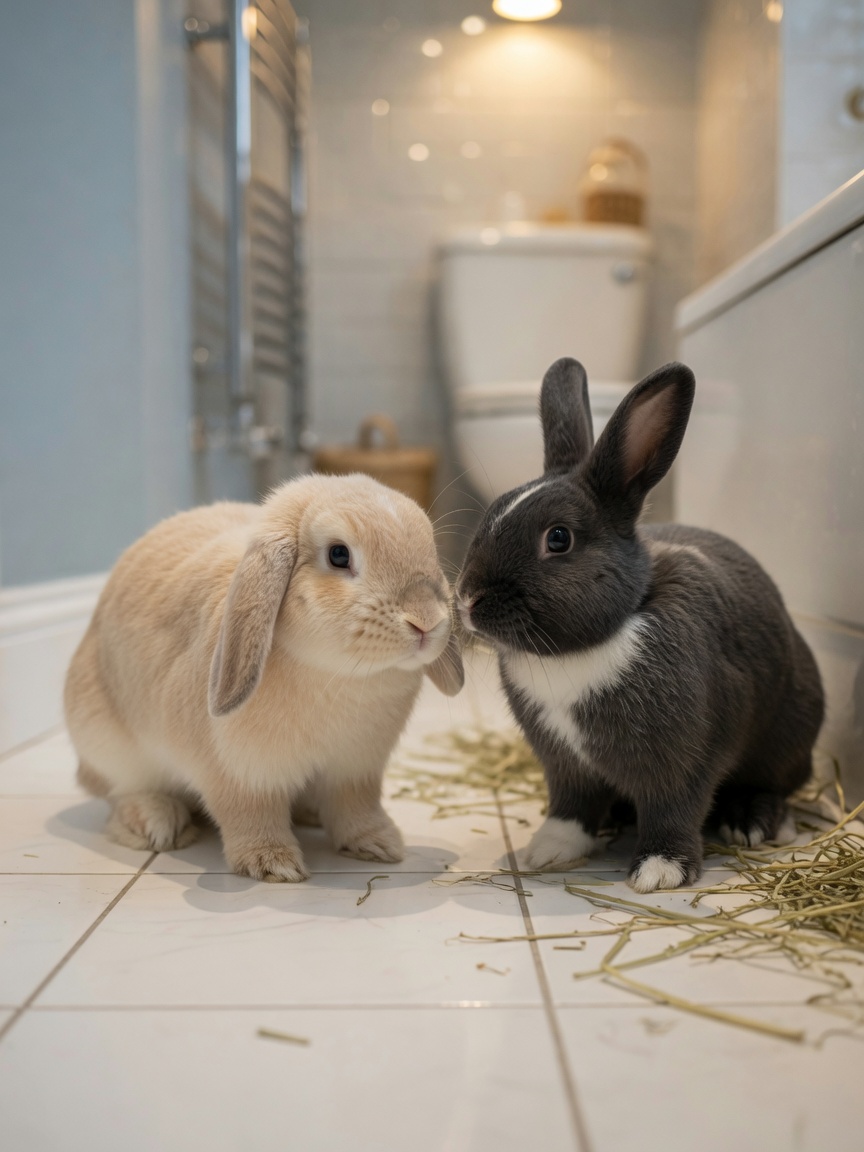
The most reliably successful pairings are typically between a neutered male and a neutered female. Female-female pairings can work but require more patience. Male-male pairings are possible but can be challenging. Many rescue organisations offer a bonding assessment or date service where you can bring your existing rabbit to meet potential companions before committing to adoption — this is highly recommended.
The Bonding Process: Stage by Stage
Stage One: Side-by-Side Living
Begin by housing the two rabbits in adjacent enclosures separated by a mesh or wire panel that allows them to smell and see one another without physical contact. This stage should last a minimum of one to two weeks. During this time, swap bedding, toys, and litter trays between the two enclosures daily so each rabbit becomes thoroughly accustomed to the other's scent. Eating near the mesh divider is a positive sign.
Stage Two: Neutral Territory Introductions
Choose a space that neither rabbit has previously occupied — a bathroom, a spare room, or a sectioned-off area of the garden all work well. Neutral territory is essential. A rabbit introduced into another rabbit's established home space will perceive it as an intruder and respond with aggression.
Keep early sessions short — ten to fifteen minutes — and supervise every moment. Have a thick towel or oven gloves ready to separate the rabbits safely if a serious fight breaks out. Light chasing, circling, and one rabbit attempting to mount the other is normal and should be allowed to play out without intervention, as long as no blood is drawn. Mounting is not always sexual — it is a dominance behaviour and a normal part of establishing hierarchy.
Stage Three: Extended Supervised Sessions
Gradually increase the duration of sessions as the rabbits become more comfortable in each other's presence. Signs that bonding is progressing well include parallel feeding, resting in proximity, and mutual investigation without persistent chasing. Do not rush this stage. Bonding can take days, weeks, or occasionally months.
The Stress Bonding Method
Stress bonding is a technique used to accelerate the bonding process by exposing both rabbits simultaneously to a mild, shared stressor — typically a short car journey in a carrier. The shared experience can encourage rabbits to seek comfort in each other rather than focusing on territorial rivalry. Always keep rabbits contained in a secured carrier during this process, and never leave them unsupervised.
Signs of a Successful Bond
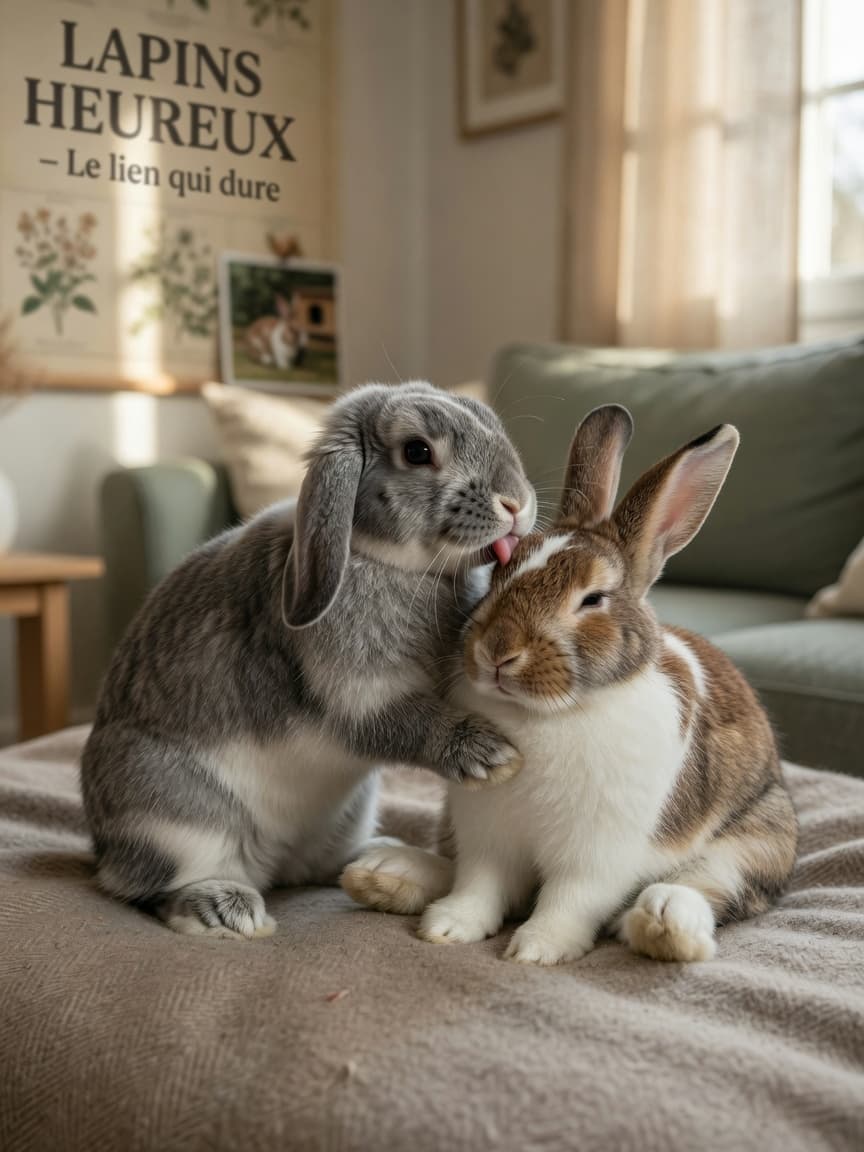
- Allogrooming — one rabbit grooming the other's head, ears, and face. This is the clearest possible sign of acceptance and affection between bonded rabbits.
- Sleeping together in physical contact, often pressed side by side or with one resting their head on the other
- Relaxed loafing in the same space without either rabbit feeling the need to move away
- Eating side by side without guarding food or chasing the other rabbit away
Signs of an Incompatible Pair
- Persistent fur pulling — tufts of fur being extracted during confrontations that do not settle over time
- Relentless chasing without the chased rabbit ever being allowed a period of rest — the key distinction is whether the pursued rabbit gets respite
- Bite wounds, particularly to the face, genitals, or scruff
Not every pairing will work, and forcing an incompatible pair together causes chronic stress and can result in serious injury. If bonding has been attempted carefully over a sustained period without improvement, seek advice from a rabbit behaviourist or welfare organisation.
Re-Bonding After Vet Visits
A commonly overlooked challenge is that an established bonded pair may need re-bonding after one rabbit returns from a vet visit. The returning rabbit smells strongly of the veterinary practice — unfamiliar animals, disinfectants, and medical treatment all alter their scent profile significantly. The rabbit left at home may fail to recognise their companion and react with aggression. Rub both rabbits gently with the same cloth before reintroduction and supervise their reunion carefully, particularly in the first hour after the returning rabbit comes home.
--- AUTHOR: Julia Wrenfield