
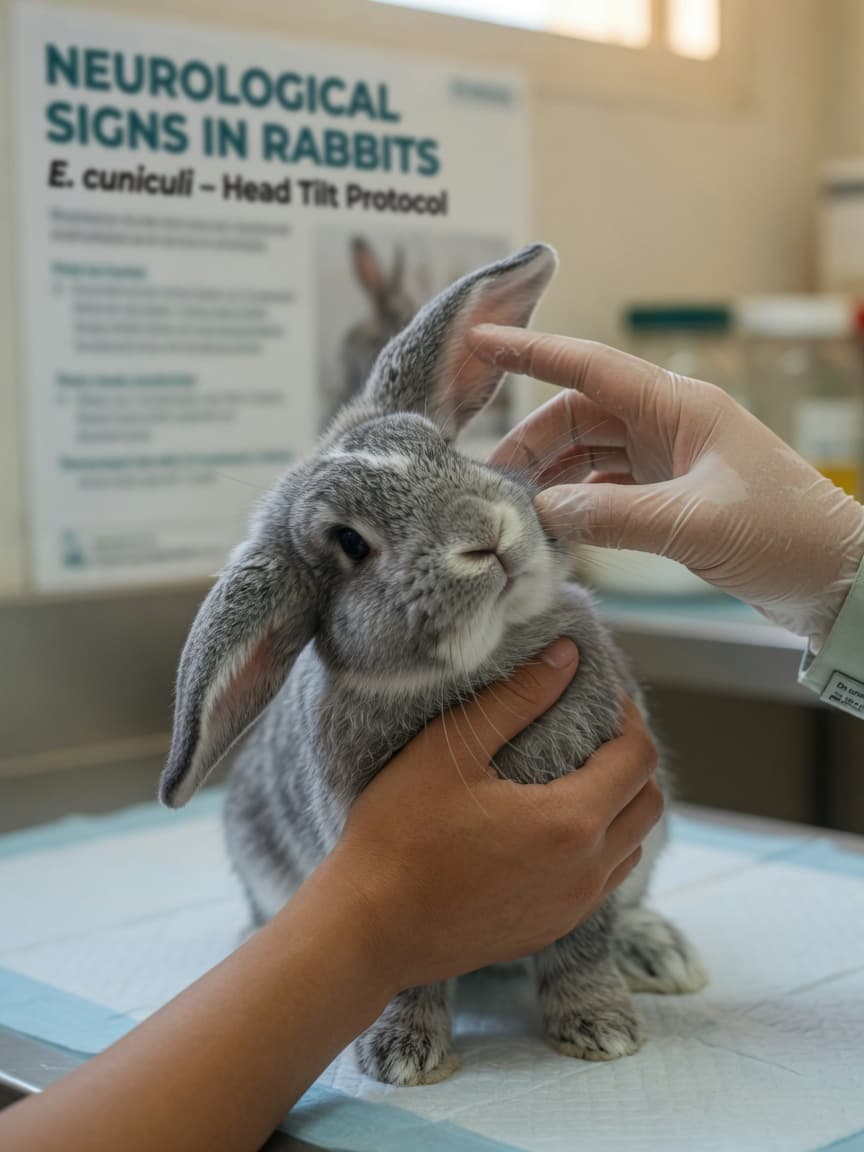
What Is Encephalitozoon Cuniculi?
Encephalitozoon cuniculi, commonly abbreviated to E. cuniculi, is a microsporidian parasite — a type of obligate intracellular organism — that infects rabbits and a range of other animals. It is not a bacterium, virus, or typical parasite, but occupies a category somewhere between fungus and protozoan in modern taxonomy.
What makes E. cuniculi particularly significant for rabbit owners in the UK is the extraordinary prevalence of infection. Studies suggest that the majority of pet rabbits in Britain have been exposed to and carry E. cuniculi, often showing no outward signs of illness for extended periods. The parasite lies dormant, suppressed by a healthy immune system, until a triggering event allows it to become clinically active.
How Is E. Cuniculi Transmitted?
The primary route of transmission is via the urine of infected rabbits. Spores shed in urine can survive in the environment for several weeks and are ingested by other rabbits during normal grooming and feeding behaviour. In-utero transmission from an infected mother to her kits is also well documented. This explains why infection rates in the pet rabbit population are so high — most rabbits acquire exposure early in life, often before or shortly after leaving the breeder.
Transmission to humans is considered possible in severely immunocompromised individuals, but represents an extremely low risk for healthy people. Standard hygiene precautions — washing hands after handling rabbits or cleaning their enclosure — are sufficient.
What Triggers Clinical Disease?
Most infected rabbits never develop clinical signs. The immune system keeps the parasite in check indefinitely. Clinical E. cuniculi disease tends to emerge following periods of significant stress or immune suppression, including illness, major environmental change, surgery recovery, or concurrent disease. This is why affected rabbits so often appear to develop symptoms suddenly, seemingly from nowhere — they have carried the infection for years and something has finally tipped the balance.
Clinical Signs of E. Cuniculi
E. cuniculi can affect several body systems, and the presenting signs vary considerably between individual rabbits.
Neurological Signs
- Head tilt — the most dramatic and recognisable sign. The rabbit holds its head at a marked angle, sometimes so severe that the rabbit rolls repeatedly and cannot maintain balance. This is caused by the parasite affecting the vestibular system, either centrally in the brain or peripherally in the inner ear.
- Nystagmus — rapid, involuntary movement of the eyes, which often accompanies vestibular disease
- Rolling or circling behaviour as the rabbit attempts to correct its perception of balance
- Hind limb paresis or paralysis — weakness or complete loss of function in the back legs, which can range from mild stumbling to total inability to stand
- Seizures in severe cases of cerebral involvement
Ocular Signs
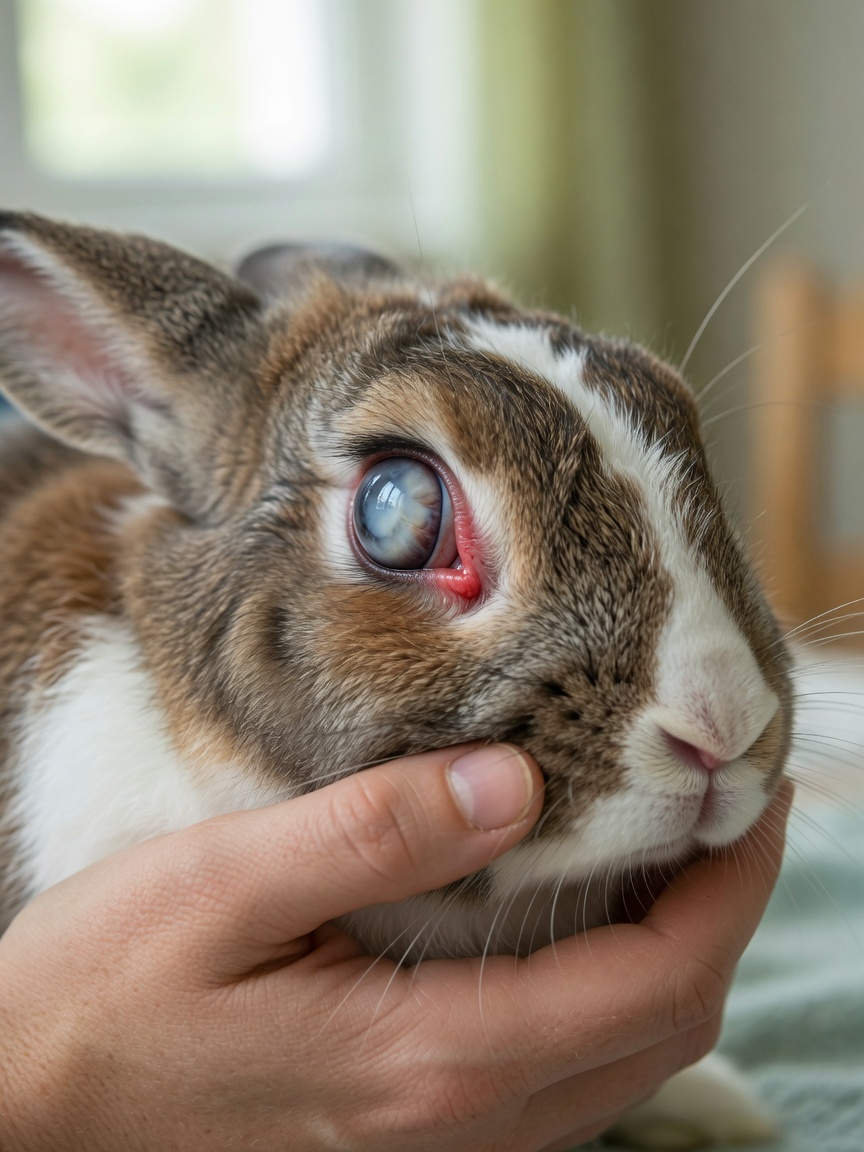
- Uveitis — inflammation inside the eye — which causes the eye to appear cloudy, blue-white, or opaque
- Phacoclastic uveitis occurs when the parasite infects the lens of the eye, causing the lens to rupture and trigger intense inflammation. This produces the characteristic cloudy white eye associated with E. cuniculi and is one of the most recognisable presentations of the disease.
- Without treatment, lens rupture leads to permanent vision loss in the affected eye and can cause severe, chronic pain requiring surgical eye removal in some cases
Renal Signs
- Chronic kidney disease secondary to E. cuniculi infection, as the parasite damages renal tissue over time
- Increased thirst and urination, weight loss, and poor coat condition in affected rabbits
Diagnosis
Diagnosis of E. cuniculi is based on a combination of clinical signs, blood serology, and the response to treatment. A blood test measuring antibody titres (IgM and IgG) can indicate whether a rabbit has been exposed to E. cuniculi and whether the infection is recent or longstanding. However, serology alone cannot confirm that E. cuniculi is causing the current symptoms — a positive titre means exposure, not necessarily active disease. Definitive diagnosis requires post-mortem histopathology.
In practice, most vets treat presumptively based on clinical signs and positive serology, particularly when the presentation is consistent with vestibular or ocular disease.
Treatment
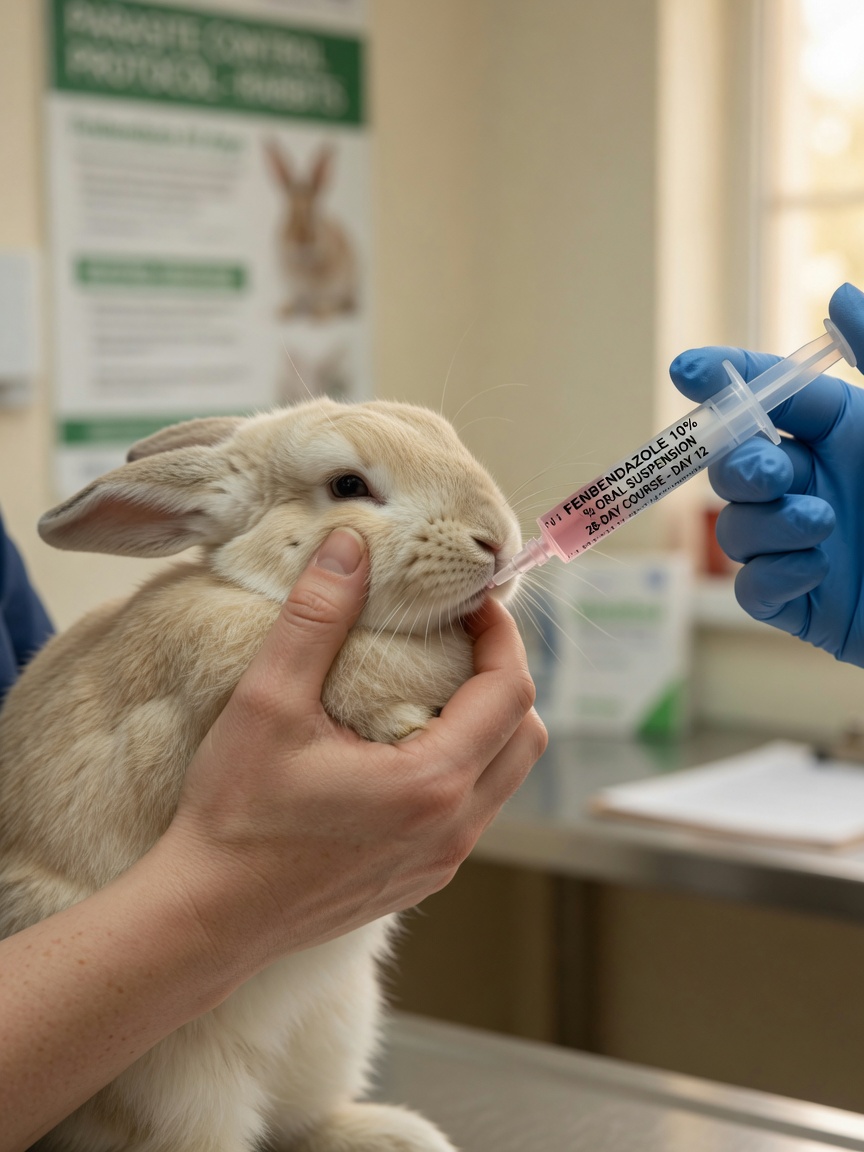
The cornerstone of E. cuniculi treatment is a 28-day course of fenbendazole, commonly known under the brand name Panacur. Fenbendazole is an antiparasitic drug that crosses the blood-brain barrier and directly targets the parasite. It is generally well tolerated by rabbits. Treatment should be initiated as quickly as possible after signs appear, as early intervention offers the best chance of recovery.
Supportive care is equally important and may include:
- Anti-inflammatory medication, typically meloxicam, to reduce inflammation in the brain, inner ear, or eye
- Anti-nausea drugs such as maropitant to reduce the distress of vestibular dysfunction and encourage the rabbit to continue eating
- Assisted feeding if the rabbit is unable to eat independently due to rolling or disorientation
- Physiotherapy and environmental adaptations for rabbits with head tilt — padded, enclosed spaces prevent injury during rolling episodes and help the rabbit feel secure
Prognosis and Long-Term Outlook
Recovery from E. cuniculi varies enormously. Some rabbits with mild head tilt improve significantly over weeks to months, retaining a slight residual tilt that causes no functional impairment. Others with severe neurological involvement make only partial recoveries or do not improve. Rabbits with hind limb paralysis can adapt remarkably well if they remain continent and receive good nursing care. Ocular disease may result in permanent vision loss. Regular veterinary follow-up is essential for all affected rabbits.
--- AUTHOR: Julia Wrenfield