
Puppy Sleep Schedule: How Much Do Puppies Need & When?
By Julia Wrenfield, Pet Wellness Researcher
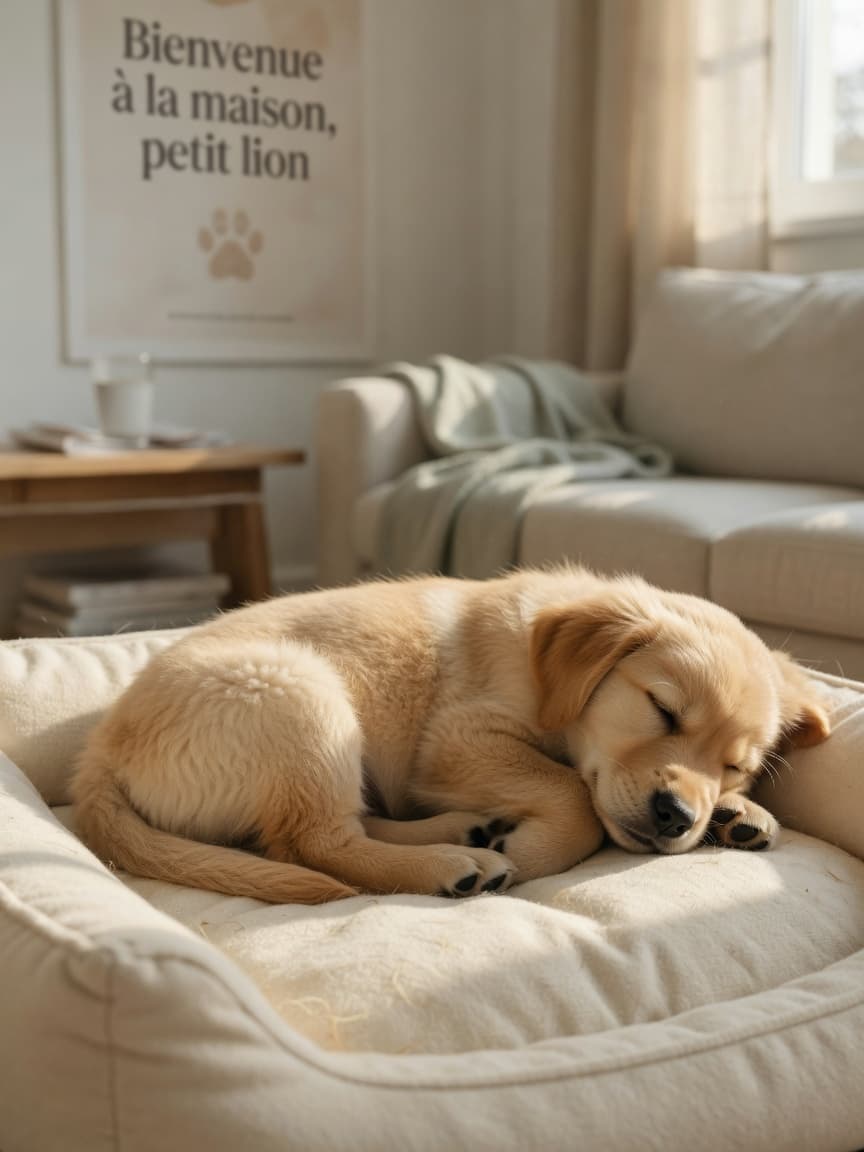
One of the most common messages I get from new puppy owners goes something like this: "My puppy sleeps constantly. Is something wrong?" The short answer is no — everything is very right. Puppies are growing at a speed that's almost impossible to comprehend, and sleep is the engine that powers that growth. Understanding exactly how much sleep your puppy needs, and when, will help you set up a routine that benefits both of you.
How Much Sleep Do Puppies Need by Age?
Sleep requirements drop as puppies mature, but they remain remarkably high throughout the first year of life. Here's a general breakdown:
- Newborn (0–2 weeks): Up to 22 hours per day. At this stage, puppies cannot regulate their own body temperature and spend virtually all time sleeping or nursing.
- 3–7 weeks: Around 20 hours per day. Eyes and ears open, but the brain is still in rapid development mode.
- 8–10 weeks (typical adoption age): 18–20 hours per day. This is when most puppies come home — expect many naps with short bursts of intense energy.
- 3–4 months: 16–18 hours per day. More alert windows, but still needs structured nap time.
- 5–6 months: 14–16 hours per day. Energy levels rise noticeably, but the need for sleep remains high.
- 7–12 months: 12–14 hours per day. Gradually approaching adult sleep patterns.
For reference, adult dogs typically sleep 12–14 hours. So even at one year old, your dog will still sleep more than most people expect.
Why Sleep Is Critical for Brain Development
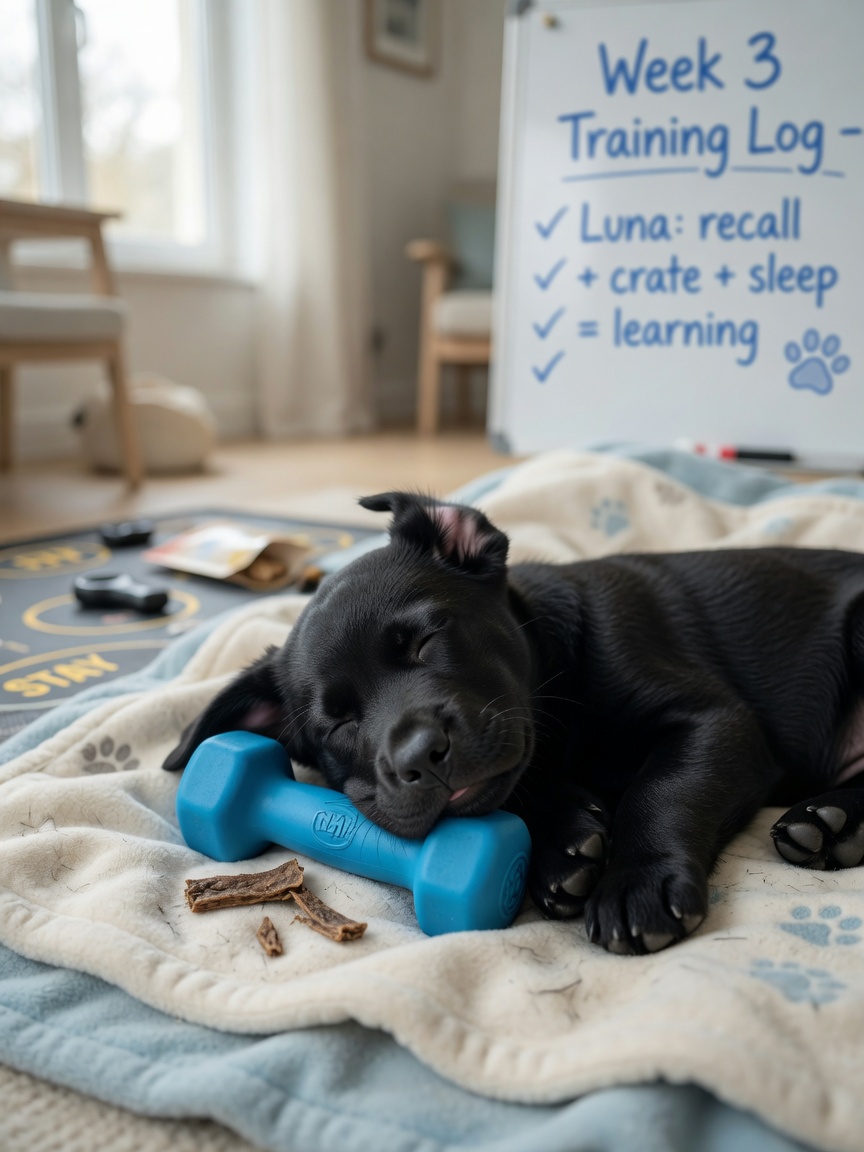
This isn't just about physical rest. During sleep, especially during REM cycles, a puppy's brain actively processes everything it experienced while awake — sights, sounds, social interactions, training cues. Research published in PLOS ONE (PMID: 28448579) demonstrated that learning consolidation in dogs occurs significantly during sleep, meaning a puppy that naps after a training session retains commands better than one kept awake.
Sleep also drives the release of growth hormone in dogs. Interrupting sleep cycles repeatedly during this phase can slow physical development, weaken the immune system, and make your puppy more reactive and harder to train. A well-rested puppy is a calmer, more receptive learner.
Setting Up a Sleep Schedule
Puppies thrive on predictability. A loose but consistent daily schedule helps their bodies anticipate sleep, making it easier for them to settle — and easier for you to plan your day around their needs.
Here is a sample daily schedule for an 8–10 week old puppy:
- 7:00 AM: Wake up, toilet break, brief play (10–15 min)
- 7:30 AM: Breakfast, then nap (1.5–2 hours)
- 9:30 AM: Toilet break, short training session (5 min), gentle exploration
- 10:30 AM: Nap (1.5–2 hours)
- 12:30 PM: Toilet break, lunch, short play
- 1:30 PM: Nap (1.5–2 hours)
- 3:30 PM: Toilet break, socialization or walk
- 5:00 PM: Nap (1 hour)
- 6:00 PM: Toilet break, dinner, calm evening play
- 8:00 PM: Wind-down period — dim lights, quiet environment
- 9:00 PM: Toilet break, then bed for the night
As your puppy grows, active windows extend and naps condense. By 4–5 months, many puppies settle into a two-nap day.
The Crate as a Sleep Aid
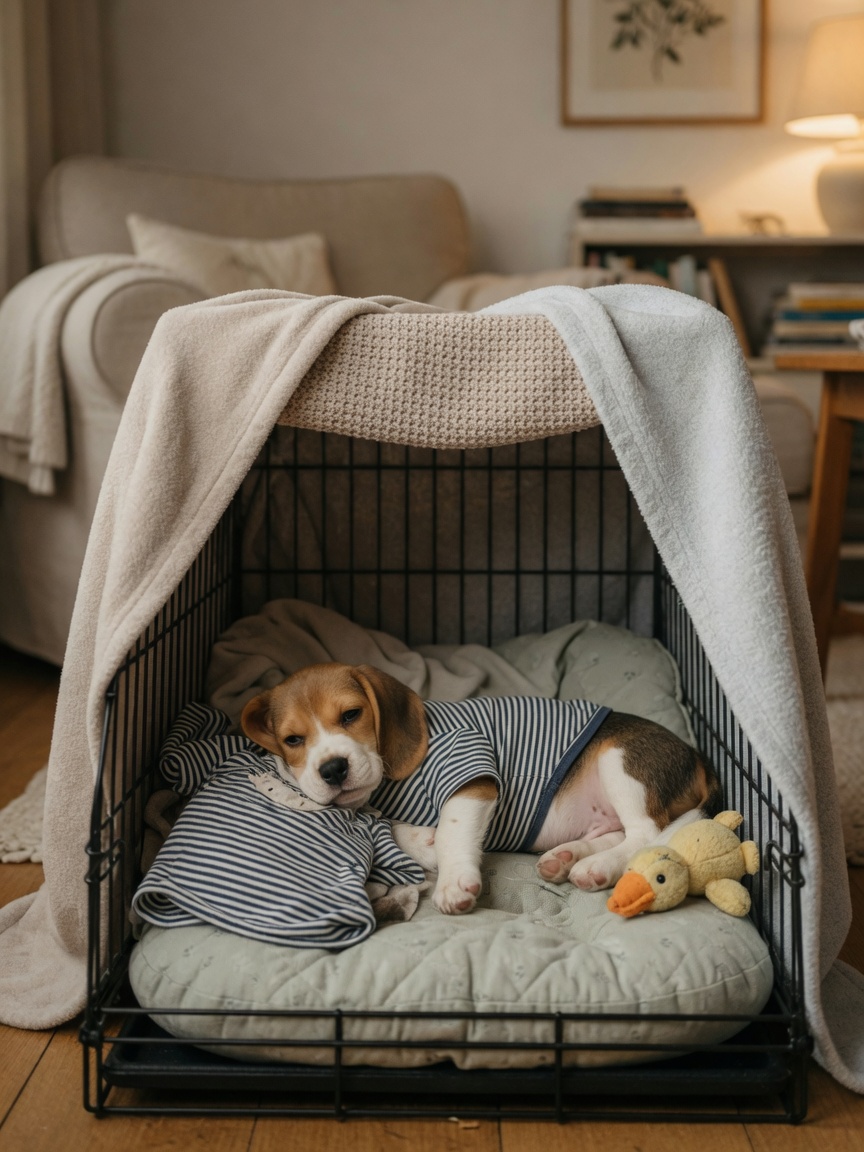
Crate training and sleep quality go hand in hand. A properly introduced crate gives your puppy a defined, enclosed space that signals "this is where we sleep." Dogs are den animals by nature, and a crate taps into that instinct.
Keep these principles in mind:
- The crate should be just large enough for the puppy to stand, turn around, and lie down. Too large and it becomes a place to toilet in one corner and sleep in another.
- Cover three sides with a blanket to create a den-like environment.
- Place an item with your scent (a worn t-shirt) inside for comfort.
- Never use the crate as punishment — it must stay a positive space.
- Introduce it gradually: feed meals near it, then inside it, before closing the door.
Why Puppies Wake at Night (and What to Do)
Night waking is extremely common in the first few weeks and almost always has one of four causes: needing to toilet, hunger, loneliness, or discomfort.
- Toileting: Young puppies cannot hold their bladder more than 2–3 hours. Set an alarm to take them out rather than waiting for them to cry — proactive trips prevent accidents and help the puppy learn the routine faster.
- Hunger: At 8 weeks, puppies have small stomachs. A small late-night snack (part of their daily ration) can help bridge the gap.
- Loneliness: This is real and valid. The first week or two, placing the crate next to your bed lets your puppy smell and hear you without being in your bed. Most puppies settle significantly within 5–7 days.
- Discomfort: Check for temperature — puppies get cold quickly. A covered heating pad on low under half the crate bedding can help.
Nap Triggers: Reading Your Puppy's Signals
Puppies crash fast. Common nap triggers include eating, playing, exciting experiences (meeting new people, a car ride), and training. If you notice your puppy becoming bitey, clumsy, or whiny about 30–45 minutes after waking, those are reliable signs they need to sleep — not more stimulation. Overtired puppies behave very much like overtired toddlers: they get louder, more frustrated, and harder to manage.
The solution is not more exercise. It is a nap.
A good-quality puppy food keeps energy metabolism stable and supports deep sleep. I recommend exploring nutritionally complete options at Zooplus, where you'll find a wide range of age-appropriate puppy foods with home delivery.
Key Takeaways
- Puppies at 8 weeks need 18–20 hours of sleep per day — this is normal and necessary.
- Sleep supports brain development, learning consolidation, and immune function.
- A consistent daily schedule with structured nap times makes training and settling much easier.
- Crate training is one of the best tools for supporting quality puppy sleep.
- Night waking is normal in early weeks — address the cause (toileting, hunger, loneliness) calmly and consistently.
- An overtired puppy shows biting and whining — the fix is sleep, not more activity.
References
- Kis A, et al. "The interrelated effect of sleep and learning in dogs." Scientific Reports. 2017. PMID: 28448579
- Iotchev IB, et al. "EEG transients in the sigma range during non-REM sleep predict learning ability in dogs." Scientific Reports. 2017;7(1):12164. PMID: 28939842
Written by Julia Wrenfield, Pet Wellness Researcher. Content is for informational purposes only and does not replace veterinary advice.