

Every Puppy Bites — the Goal Is to Teach Them How Not To
Puppy teeth are remarkably sharp, and a puppy that treats every hand as a chew toy is both painful and alarming for new owners. But mouthing and biting are not signs of aggression or a difficult temperament — they are entirely normal puppy behaviour. In the litter, biting is how puppies play, how they explore the world, and crucially, how they learn to regulate the force of their mouth through feedback from their siblings. Your job is to continue that education in a way the puppy can understand.
What Is Bite Inhibition and Why Does It Matter
Bite inhibition refers to a dog's ability to control the pressure of its mouth. A dog with good bite inhibition that is startled or hurt may mouth or nip, but causes little or no damage. A dog that was never taught to moderate its bite pressure is genuinely dangerous, even if the intention is play rather than aggression.
The window for teaching bite inhibition is the first four to five months of life. After this period, the lesson becomes significantly harder to instil. This is why addressing mouthing early — and doing so correctly — has consequences that extend well beyond the puppy phase.
How Puppies Learn Bite Inhibition in the Litter

When a puppy bites a sibling too hard, the sibling yelps and disengages from play. This is immediate, clear feedback that the bite was excessive. The puppy quickly learns that hard biting ends the game — one of the most motivating consequences imaginable for a social animal that wants to keep playing. You can replicate this feedback at home, with some important nuances.
The Most Effective Responses to Mouthing
The Yelp and Withdrawal Method
When the puppy bites with meaningful pressure, produce a short, sharp vocalisation — a high-pitched "ouch" or yelp — and immediately withdraw your hand and remove all attention for 10 to 30 seconds. No eye contact, no talking, no reaction beyond the sound and withdrawal. Then calmly re-engage. Repeat every time pressure crosses the threshold. This mirrors litter feedback closely and is most effective in young puppies under 14 weeks.
Redirect to a Toy
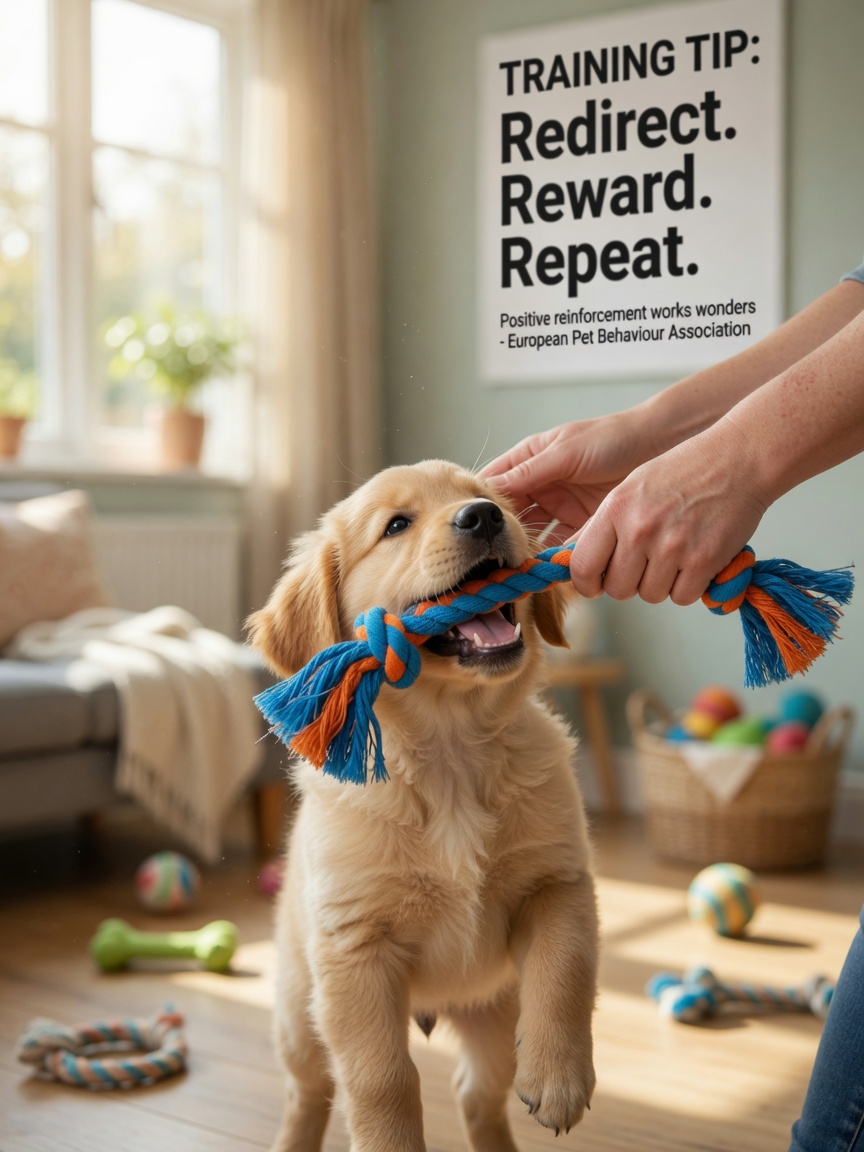
As the puppy approaches with intent to mouth, offer a toy before contact is made. This teaches the puppy what is appropriate to bite rather than simply teaching what is not. Keep toys accessible in every room during the mouthing phase. Tug toys are particularly useful because they allow the puppy an outlet for the same play behaviour it is trying to direct at your hands.
Brief Time-Outs
For puppies that are over-aroused — when the yelp method seems to excite rather than inhibit — a brief, calm time-out is more effective. Gently remove the puppy behind a baby gate or to a calm area for 20 to 30 seconds, then re-engage. The message is the same: biting ends the interaction. The delivery is quieter and less stimulating.
What Not to Do
- Do not tap the puppy's nose, hold its muzzle shut, or physically correct it in any way. These responses can create hand-shy behaviour and, in some puppies, escalate the biting rather than suppress it.
- Do not allow rough play with hands. If hands are sometimes toys and sometimes off-limits, the puppy cannot learn the rule. Be consistent — hands are never appropriate chew objects, regardless of how cute the mouthing seems at eight weeks.
- Do not push the puppy away when it bites. Pushing is interpreted as play by most puppies and reinforces the behaviour.
- Do not shout or react dramatically. Excited reactions often function as rewards for a puppy seeking engagement.
Managing the Mouthing Phase Practically
During the peak mouthing period — typically weeks eight to sixteen — there are practical management steps that make life considerably more comfortable while the lesson is being absorbed:
- Ensure the puppy has adequate physical and mental exercise. A tired puppy mouths less. Short training sessions, sniff work, and appropriate play all reduce excess arousal.
- Recognise that mouthing increases when the puppy is over-tired or over-stimulated. A puppy that has been handled extensively and is becoming frantic needs rest, not more interaction.
- Wear long sleeves if needed during peak play periods. This is not surrender — it is practical management while the training takes effect.
- Ensure all family members and visitors apply the same response. One person who thinks the mouthing is endearing and allows it will significantly slow progress for everyone else.
When Mouthing Becomes a Concern
There is an important distinction between normal puppy mouthing and behaviour that warrants professional attention. Hard, unprovoked biting accompanied by growling, stiff body posture, or a fixed stare is not typical play mouthing and should be assessed by a qualified behaviourist and your veterinarian without delay. Similarly, if mouthing is showing no reduction after several weeks of consistent, appropriate handling, professional guidance is worthwhile before patterns become established.
Key Takeaways
- Mouthing is normal puppy behaviour — the goal is to teach pressure control, not to eliminate all mouth contact immediately.
- Respond to hard biting with a yelp and withdrawal, or a brief calm time-out for over-aroused puppies.
- Redirect onto appropriate toys consistently and ensure all household members apply the same rules.
- Never use physical corrections — they are counterproductive and can damage trust.
- Manage the environment and ensure the puppy gets adequate rest and exercise.
- Consult your vet or a qualified behaviourist if biting seems atypical in intensity or if consistent training produces no improvement after several weeks.