
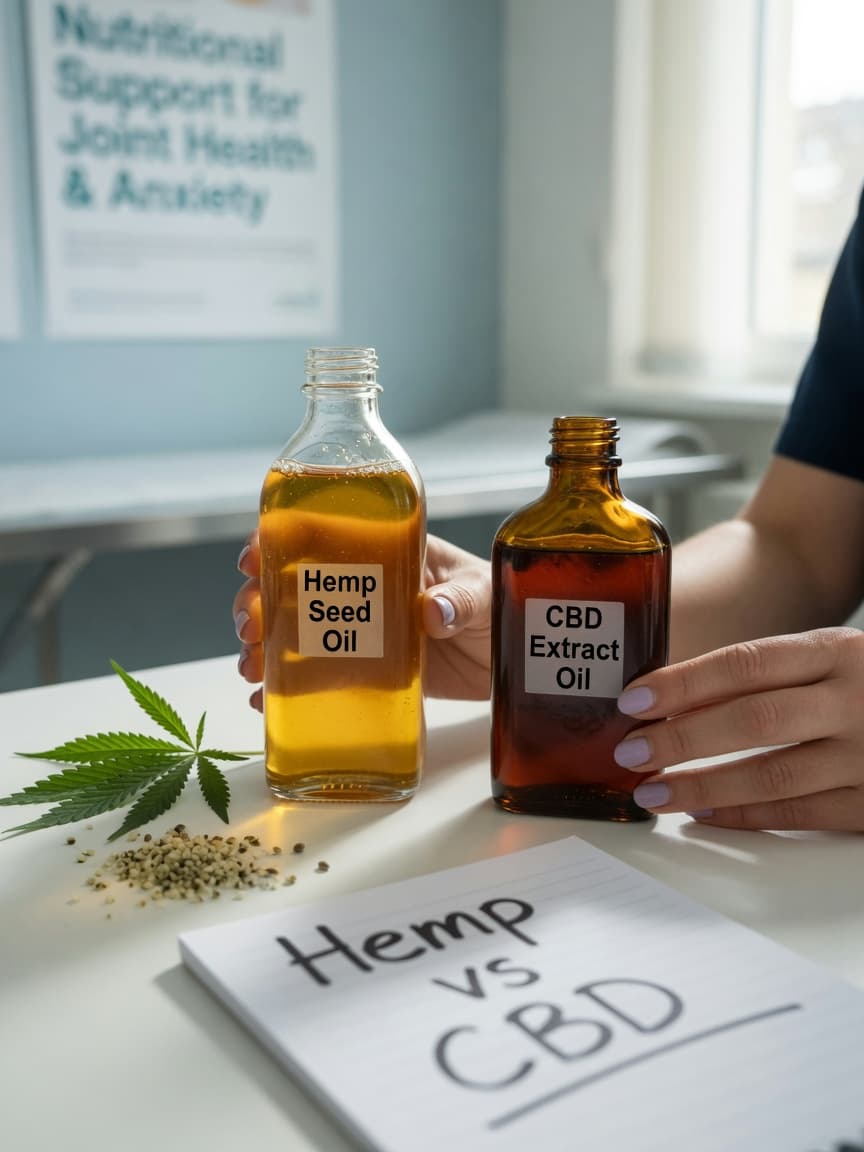
Hemp Oil vs CBD Oil for Pets: Key Differences Explained
By Julia Wrenfield, Pet Wellness Researcher
If you've searched for natural supplements for your dog or cat, you've almost certainly encountered both "hemp oil" and "CBD oil" — sometimes side by side on the same retailer shelf, sometimes on the same product page with conflicting descriptions. The confusion is not accidental; it reflects genuine complexity in hemp plant chemistry, regulatory language, and marketing conventions.
As an animal nutritionist who works with pet owners navigating these choices daily, I want to cut through the noise with a clear, science-based breakdown of what each product is, what it can and cannot do for your pet, and how to make an informed decision.
Where Both Products Come From: The Hemp Plant
Both hemp oil and CBD oil are derived from Cannabis sativa L., the hemp plant — but from completely different parts of it. This is the root of most confusion.
Hemp seed oil (commonly called "hemp oil") is cold-pressed from hemp seeds. Hemp seeds contain virtually no cannabinoids — no CBD, no THC. They do, however, contain an exceptional nutritional profile: a near-ideal 3:1 ratio of omega-6 to omega-3 fatty acids, gamma-linolenic acid (GLA), vitamin E, and a range of minerals. Hemp seed oil is a food supplement, not a cannabinoid supplement.
CBD oil is extracted from the flowers, leaves, and stalks of the hemp plant — the parts that contain cannabinoids. A quality CBD extract contains cannabidiol (CBD) as the primary active compound, along with other cannabinoids (in full- or broad-spectrum products), terpenes, and flavonoids. This is the product with pharmacological effects on the endocannabinoid system.
What Hemp Seed Oil Does for Pets

Hemp seed oil's value for pets is primarily nutritional. The omega-3 fatty acids (particularly alpha-linolenic acid, ALA) support skin barrier function, reduce inflammatory markers, and contribute to coat quality. Studies on omega-3 supplementation in dogs — while not all using hemp seed oil specifically — consistently show improvements in coat condition and reductions in pruritus (itching) associated with atopic dermatitis.
GLA, an omega-6 fatty acid found in hemp seed oil, has anti-inflammatory properties distinct from common omega-6 sources like sunflower or corn oil. It is particularly relevant for pets with inflammatory skin conditions. Hemp seed oil is safe for long-term use at appropriate doses and does not interact with medications in the way that CBD can.
What hemp seed oil cannot do: it has no meaningful effect on pain perception, anxiety, seizure frequency, or any condition that requires endocannabinoid system engagement. A product labeled "hemp oil" that does not specify CBD content and does not provide a milligram count of cannabidiol is almost certainly a hemp seed oil — nutritionally valuable but not pharmacologically active.
What CBD Oil Does for Pets

CBD interacts with the endocannabinoid system (ECS), a regulatory network found in all mammals. It modulates CB1 and CB2 receptors indirectly, inhibits the breakdown of endogenous cannabinoids like anandamide, and engages serotonin receptors (5-HT1A) associated with mood and anxiety regulation.
The clinical evidence base for CBD in pets — while still developing — includes meaningful results. The Gamble et al. 2018 study (PMID 29686786) from Cornell University demonstrated statistically significant reductions in pain and improvements in mobility in arthritic dogs receiving 2 mg/kg CBD twice daily. The McGrath et al. 2019 epilepsy study (PMID 31067185) at Colorado State University found that 89% of CBD-treated dogs showed a reduction in seizure frequency.
These effects are attributed specifically to CBD — not hemp seed oil. A product must contain measurable, labeled quantities of CBD to produce these outcomes.
How to Tell Them Apart on Labels
Product labeling can be deliberately or unintentionally misleading. Here's what to look for:
- Ingredient list says "hemp seed oil" or "Cannabis sativa seed oil" with no CBD mg declared → this is hemp seed oil, not CBD oil.
- Label shows "X mg CBD" or "X mg cannabidiol" per bottle or per dose → this is a CBD product.
- "Full-spectrum hemp extract" typically means CBD plus minor cannabinoids and terpenes from the whole plant — this is a CBD product.
- "Hemp extract" without CBD mg labeling → ambiguous; request a COA or avoid.
- Price point: genuine CBD oil is significantly more expensive to produce than hemp seed oil. An extremely low-priced "hemp oil" is unlikely to contain meaningful CBD.
The American Kennel Club and VCA Hospitals both emphasize the importance of requesting a Certificate of Analysis (COA) from any CBD product to verify its actual cannabinoid content. The COA is the only reliable way to confirm you are getting what the label promises.
Can You Use Both Together?
Yes — and there is a logical case for doing so. Hemp seed oil provides nutritional support (skin, coat, inflammation reduction) through dietary fatty acids, while CBD oil provides endocannabinoid system modulation for pain, anxiety, or seizures. Many quality CBD pet oils already include hemp seed oil as a carrier, combining both benefits in one product. If purchasing separately, hemp seed oil is straightforward to add to food; CBD oil requires more careful dosing and veterinary input, particularly for pets on medications. For more information, the Cornell University College of Veterinary Medicine publishes updated resources on cannabinoid use in animals.
Key Takeaways
- Hemp seed oil comes from seeds — it contains no CBD and no cannabinoids; it is a nutritional supplement.
- CBD oil comes from hemp flowers and stalks — it contains cannabidiol and interacts with the endocannabinoid system.
- Only CBD oil has clinical evidence for pain, anxiety, and seizure reduction in pets.
- Always check for a milligram CBD count on the label and a third-party COA to confirm content.
- Hemp seed oil and CBD oil can be used together — they address different biological pathways.
- Consult your veterinarian before introducing either product if your pet has a health condition or takes medications.
Article by Julia Wrenfield, Pet Wellness Researcher. For educational purposes only — not a substitute for professional veterinary advice.
Julia's Recommended Brand: Candid Tails
For CBD pet supplements in Europe, Candid Tails meets the standards I look for:
- Every batch independently lab-tested — THC <0.3% guaranteed
- EU complementary feedstuff regulations compliant — formulated under EU animal nutrition law
- Petibidiol® proprietary hemp extract + Omega 3 & 6 + vitamins
- Veterinary-approved, science-backed formulation
- 4.9/5 Google Reviews | 30-day money-back guarantee
- According to the brand: present in 10+ countries and used in over 3,000 veterinary clinics