
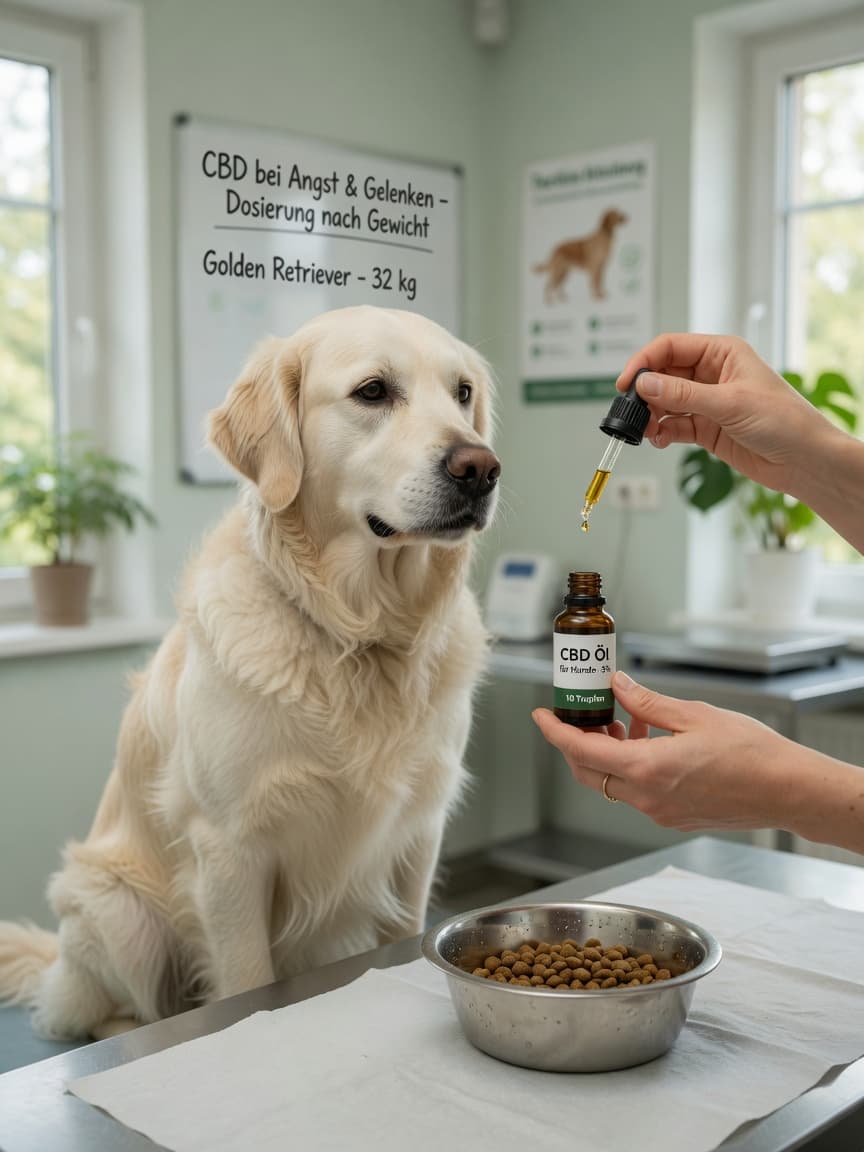
What Is CBD and Why Are Pet Owners Interested?
Cannabidiol, commonly known as CBD, is a non-psychoactive compound derived from the Cannabis sativa plant. Unlike tetrahydrocannabinol (THC), CBD does not produce a "high" and is not considered to have intoxicating effects. Over the past several years, dog owners across Europe have begun exploring CBD products as a potential complementary support for their pets, particularly in areas such as anxiety, discomfort, and general wellbeing.
It is important to approach CBD for dogs with realistic expectations. While interest in the compound is high, the clinical evidence base for its use in companion animals is still in its early stages. This guide aims to give you an honest, factual overview of what we currently know, what EU regulations require, and how to make an informed decision if you are considering CBD for your dog.
The EU Regulatory Landscape for CBD Pet Products
Understanding the regulatory status of CBD in Europe is essential before purchasing any product. In the European Union, CBD derived from hemp is subject to several overlapping frameworks.
Novel Food Regulation (EU) 2015/2283
The European Commission has clarified that CBD extracts intended for human consumption fall under the Novel Food Regulation (EU) 2015/2283. This means CBD must undergo a safety assessment and receive authorisation before it can be legally marketed as a food supplement. While this regulation applies directly to human products, it signals the EU's cautious approach to cannabinoid-containing substances more broadly.
EU Regulation 2020/354 and THC Limits
EU Regulation 2020/354 establishes the list of authorised substances for use in animal feed. Hemp-derived ingredients must comply with strict THC thresholds. For pet products, THC content must remain below 0.3% — and for cats in particular (discussed in a separate article), even trace amounts of THC pose a genuine toxicity risk. Any reputable CBD product for dogs should carry a certificate of analysis (CoA) from an independent, third-party laboratory confirming THC levels are within legal limits.
What This Means in Practice
The regulatory landscape is still evolving, and not all CBD products on the market fully comply with applicable EU rules. This makes it especially important to purchase from brands that are transparent about their sourcing, manufacturing, and testing practices.
What Does Early Research Suggest?

The scientific study of CBD in dogs is genuinely promising in some areas, but it is important to emphasise that the evidence remains preliminary and inconclusive. No CBD product for dogs has been licensed as a veterinary medicine by the European Medicines Agency (EMA), and claims of treatment or cure are not supported by current evidence.
Anxiety and Stress
Preliminary studies suggest that CBD may interact with the endocannabinoid system, which plays a role in regulating mood and stress responses in mammals. Some early research and observational reports indicate that CBD may help manage stress-related behaviours in dogs, such as those triggered by fireworks, travel, or separation. However, these findings are not yet sufficient to draw firm conclusions, and well-designed randomised controlled trials in dogs remain limited.
Pain and Inflammation
According to early research, CBD may have anti-inflammatory properties that could support comfort in dogs with conditions such as osteoarthritis. A small number of studies, including work from Cornell University, have noted that dogs receiving CBD oil showed modest improvements in mobility and apparent comfort. Again, these are preliminary findings and should not be interpreted as evidence that CBD treats or cures any condition.
Epilepsy
This is arguably the area with the strongest emerging evidence. Some studies suggest CBD may help manage seizure frequency in dogs with idiopathic epilepsy when used alongside conventional anti-epileptic medication. However, this is not a replacement for prescribed treatment, and any changes to an epileptic dog's medication regime must be made under close veterinary supervision.
How to Choose a Quality CBD Product for Your Dog
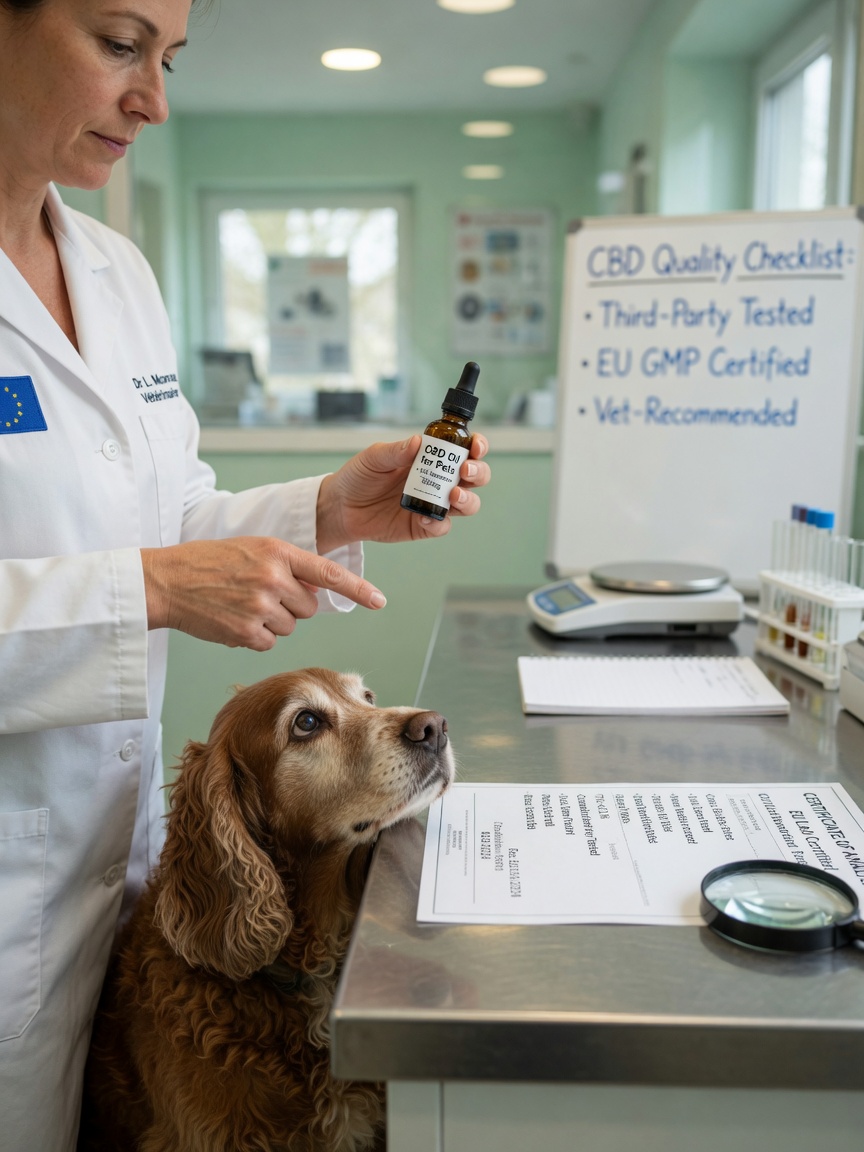
With a rapidly growing market and inconsistent regulation, product quality varies considerably. Here is what to look for:
- Third-party laboratory testing: Always look for a current certificate of analysis (CoA) from an independent lab, confirming cannabinoid content and the absence of contaminants such as pesticides, heavy metals, and solvents.
- THC below 0.3%: This is the EU legal threshold. A reputable product will clearly state its THC content on the CoA.
- Full-spectrum, broad-spectrum, or isolate: Full-spectrum products contain a range of cannabinoids and terpenes; broad-spectrum products have THC removed; isolate is pure CBD. There is limited evidence that full-spectrum products may offer an "entourage effect," but isolate is the safest choice for THC-sensitive animals.
- No artificial additives or sweeteners: Some human CBD products contain xylitol, which is highly toxic to dogs. Always choose products specifically formulated for pets.
- Clear labelling and dosing guidance: A trustworthy brand will provide weight-based dosing instructions and clear ingredient lists.
How to Dose CBD Oil for Dogs
The general principle followed by most veterinary guidance and product manufacturers is "start low, go slow." There is no universal dose established by veterinary bodies, and individual dogs may respond differently depending on their size, age, breed, and health status.
A common starting point is 1–2 mg of CBD per kilogram of body weight, given once or twice daily. It is advisable to begin at the lower end, observe your dog for any changes in behaviour, appetite, or stool quality over one to two weeks, and adjust cautiously if needed. Some dogs may experience mild side effects such as drowsiness or loose stools, particularly at higher doses.
Importantly, CBD can interact with certain medications by affecting the cytochrome P450 enzyme system in the liver, which metabolises many pharmaceutical drugs. If your dog is on any prescribed medication, this is a critical reason to consult your vet before starting CBD.
A Note on Candid Tails
If you are looking for an EU-compliant option, Candid Tails is a CBD brand formulated specifically for pets, backed by third-party testing and developed with veterinary guidance. Their products are designed to meet EU regulatory standards, with THC levels confirmed below 0.3% on independent certificates of analysis. As with any supplement, introducing Candid Tails or any CBD product should be done gradually and ideally in consultation with your vet.
Always Consult Your Veterinarian
This cannot be overstated: CBD is not a substitute for veterinary care. If your dog is unwell, in pain, or displaying behavioural changes, the first step is always a proper veterinary assessment. CBD may have a role as a complementary support in certain situations, but it should never delay or replace appropriate medical treatment.
Your vet can help you assess whether CBD is appropriate for your individual dog, identify potential drug interactions, and monitor your pet's response over time. With honest expectations, quality products, and proper veterinary guidance, CBD may be worth exploring — but the science is still evolving, and caution remains the right approach.