
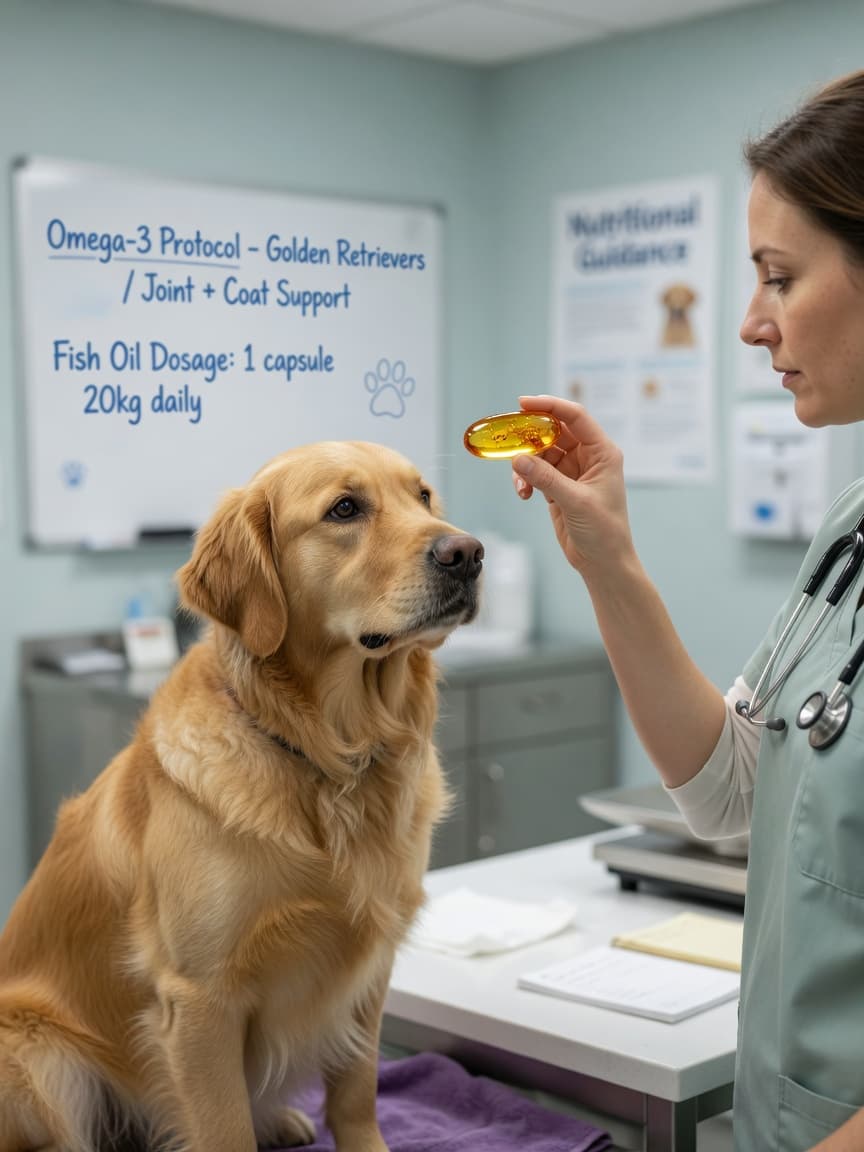
Omega-3 Fatty Acids for Dogs and Cats: A Complete Guide
Omega-3 fatty acids are a family of polyunsaturated fats that have attracted significant scientific attention for their wide-ranging anti-inflammatory and health-supporting properties. In veterinary medicine, omega-3 supplementation is one of the most commonly recommended nutritional interventions, and for good reason — the evidence supporting benefits for skin, coat, joints, heart, and brain is stronger than for almost any other supplement in the pet health space. However, the subject is more nuanced than simply adding a capsule of fish oil to your pet's bowl. The type of omega-3, the source, the dose, and how the product is stored all significantly influence whether supplementation will actually deliver benefit.
Understanding the Three Main Omega-3s
The omega-3 family contains several fatty acids, but three are most relevant to pet health:
- ALA (alpha-linolenic acid): a short-chain omega-3 found in plant sources such as flaxseed, chia seeds, and hemp. It is technically an essential fatty acid, meaning mammals cannot synthesise it and must obtain it from the diet. However, ALA must be converted by the body into the longer-chain forms (EPA and DHA) to exert most of its biological effects.
- EPA (eicosapentaenoic acid): a long-chain omega-3 with potent anti-inflammatory effects. EPA directly modulates the inflammatory cascade, making it particularly relevant for conditions characterised by chronic inflammation such as arthritis, allergic skin disease, and inflammatory bowel conditions.
- DHA (docosahexaenoic acid): a long-chain omega-3 that is a critical structural component of cell membranes, particularly in the brain, retina, and nervous system. DHA is especially important for cognitive function and eye health, and is the primary omega-3 of relevance to neurological development in puppies and kittens.
Why Marine Sources Are Far Superior to Plant Sources
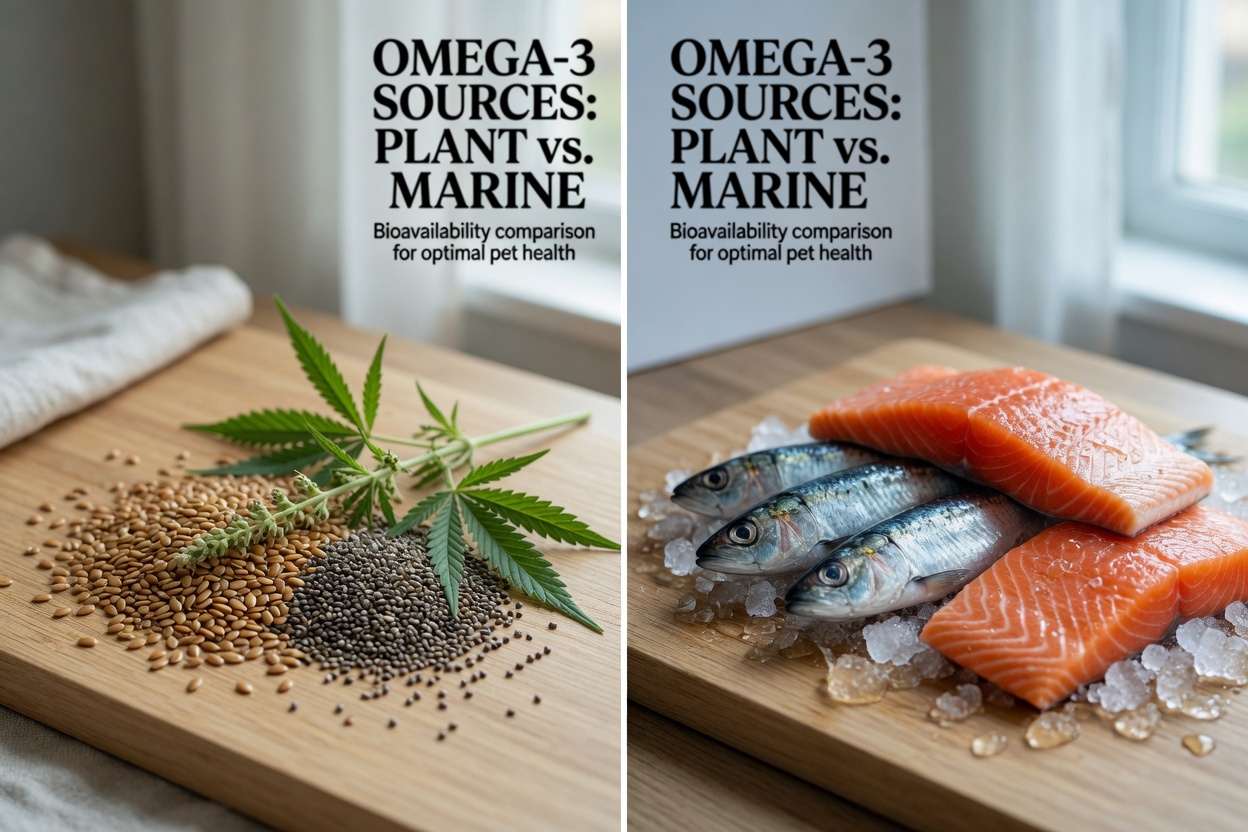
This is the most important practical point for pet owners to understand. EPA and DHA from marine sources — fish oil, krill oil, algae oil — are immediately bioavailable. The body can use them directly without any conversion step.
Plant-derived omega-3 (ALA from flaxseed, for example) must first be converted into EPA and then DHA. Dogs can perform this conversion, but only very inefficiently — studies suggest that less than 10 per cent of ingested ALA is converted to EPA, and conversion to DHA is even lower, often negligible. This means a dog would need to consume very large quantities of plant-based omega-3 to achieve any meaningful increase in EPA or DHA.
For cats, the situation is even more stark. Cats are obligate carnivores with a metabolic profile adapted to a meat-based diet. They have extremely limited activity of the enzymes needed to convert ALA to EPA and DHA — the conversion is so poor as to be functionally near-zero. A cat fed only plant-based omega-3 sources will essentially receive no meaningful EPA or DHA at all. For cats, marine-source omega-3 is not merely preferable — it is the only viable option.
Benefits of EPA and DHA Supplementation

Skin and Coat
Omega-3 fatty acids support the integrity of the skin barrier, reduce transepidermal water loss, and modulate the inflammatory responses that drive allergic and atopic skin disease. Dogs with allergic skin conditions often show significant improvement in itch, redness, and coat quality with appropriate supplementation. In cats, omega-3 supplementation can support coat lustre and reduce the frequency of overgrooming associated with skin sensitivity.
Joints and Inflammation
EPA in particular competes with arachidonic acid — a pro-inflammatory omega-6 fatty acid — in the inflammatory signalling pathway. Higher EPA levels shift the balance towards lower-intensity inflammatory responses, which is clinically meaningful in osteoarthritis. Multiple studies have demonstrated that omega-3 supplementation can reduce lameness, improve mobility, and reduce the need for non-steroidal anti-inflammatory drugs (NSAIDs) in arthritic dogs. This makes omega-3 a valuable adjunct to conventional arthritis management.
Cardiac Health
In dogs with dilated cardiomyopathy (DCM) and other cardiac conditions, omega-3 supplementation has been shown to reduce inflammation, support normal cardiac rhythm, and improve cardiac muscle function. Some cardiologists routinely recommend omega-3 supplementation as part of a management protocol for dogs with diagnosed heart disease, though it should always be discussed with your vet before adding to a cardiac patient's regime.
Brain and Cognitive Function
DHA is a structural building block of neuronal cell membranes and is essential for normal cognitive development and maintenance. In puppies and kittens, adequate DHA supports brain development and trainability. In older animals, DHA supplementation has shown promise in supporting cognitive function and may help slow the progression of canine cognitive dysfunction syndrome (CCDS), the canine equivalent of dementia.
Fish Oil vs Krill Oil vs Algae Oil
Three marine sources of EPA and DHA are commonly available for pets:
- Fish oil: derived from oily fish such as sardines, anchovies, mackerel, and salmon. This is the most widely studied and most cost-effective source. It contains both EPA and DHA in well-characterised amounts. Quality and concentration vary between products, so checking the label for actual EPA and DHA content (not just total omega-3) is important.
- Krill oil: derived from small crustaceans. The omega-3s in krill oil are bound to phospholipids rather than triglycerides, which some research suggests may be more efficiently absorbed. Krill oil also naturally contains the antioxidant astaxanthin, which helps protect the oil from oxidation. It tends to be significantly more expensive than fish oil for an equivalent dose of EPA and DHA.
- Algae oil: the original source of marine omega-3 in the food chain — fish accumulate EPA and DHA by eating algae. Algae oil is the only vegan source of DHA (and increasingly EPA) and is a good option for owners who prefer to avoid fish-derived products for ethical or environmental reasons. It is also a practical option for pets with fish protein allergies. Algae oil tends to be more expensive than fish oil but is a genuinely effective alternative.
Dosing by Weight
Dosing omega-3 for pets should be based on the combined EPA and DHA content, not the total volume of oil. As a general guideline used by many veterinary nutritionists:
- For general health maintenance in dogs: approximately 20-55 mg of combined EPA and DHA per kg of body weight per day
- For therapeutic purposes (arthritis, skin disease, cardiac conditions): doses may be higher, often in the range of 75-100 mg/kg combined EPA and DHA, under veterinary guidance
- For cats: typically 30-40 mg of combined EPA and DHA per kg per day for general health; therapeutic doses under vet guidance
Always start at the lower end of any dosing range and increase gradually to reduce the risk of gastrointestinal upset. Very high doses can affect platelet function and should be discussed with your vet, particularly before any planned surgical procedures.
Rancidity: A Frequently Overlooked Risk
Omega-3 fatty acids are highly susceptible to oxidation — the process by which exposure to air, heat, and light causes the oil to break down into harmful compounds. Rancid fish oil not only loses its health benefits but may actually generate free radicals that cause cellular damage, potentially worsening the conditions it was meant to treat.
Signs of rancid oil include a strong, unpleasant fishy smell (fresh, high-quality fish oil should have only a mild smell), a dark colour, and a bitter taste. To minimise rancidity risk:
- Store fish oil in the refrigerator after opening, away from heat and light
- Use liquid bottles within one to three months of opening
- Choose capsule formulations over large bottles of liquid oil if supplementing a small pet, as individual capsules limit air exposure
- Look for products that contain added vitamin E (mixed tocopherols) as a natural antioxidant preservative
- Buy from reputable brands that conduct third-party testing for oxidation levels and contaminants such as heavy metals
Omega-3 supplementation, done correctly, is one of the most valuable additions you can make to your dog or cat's health regime. Choosing a high-quality marine source, dosing appropriately for your pet's size and health needs, and storing the product with care are the key steps to ensuring your pet receives the full benefit of this well-evidenced supplement.