

Natural Tick Prevention for Dogs: What Works & What Doesn't
By Julia Wrenfield, Pet Wellness Researcher
The evidence base for natural tick prevention is substantially weaker than for pharmaceutical options. Some natural repellents show measurable but partial efficacy in research settings; none approach the protection levels of veterinary-grade products. If you live in or travel to high-risk tick areas where Lyme disease, babesiosis, or other serious tick-borne diseases are endemic, natural methods should be viewed as supplements — not replacements — for reliable prevention.
The appeal of natural tick prevention is completely understandable. Many pet owners are uncomfortable with the idea of applying synthetic chemicals to their animals every month — especially in households with young children or pets with known chemical sensitivities. The desire to find a gentler, more plant-based approach is legitimate. What's also legitimate is demanding an honest answer about whether these approaches actually work. This article applies a critical, evidence-based lens to the most popular natural tick prevention methods so you can make an informed decision.
Rose Geranium Oil
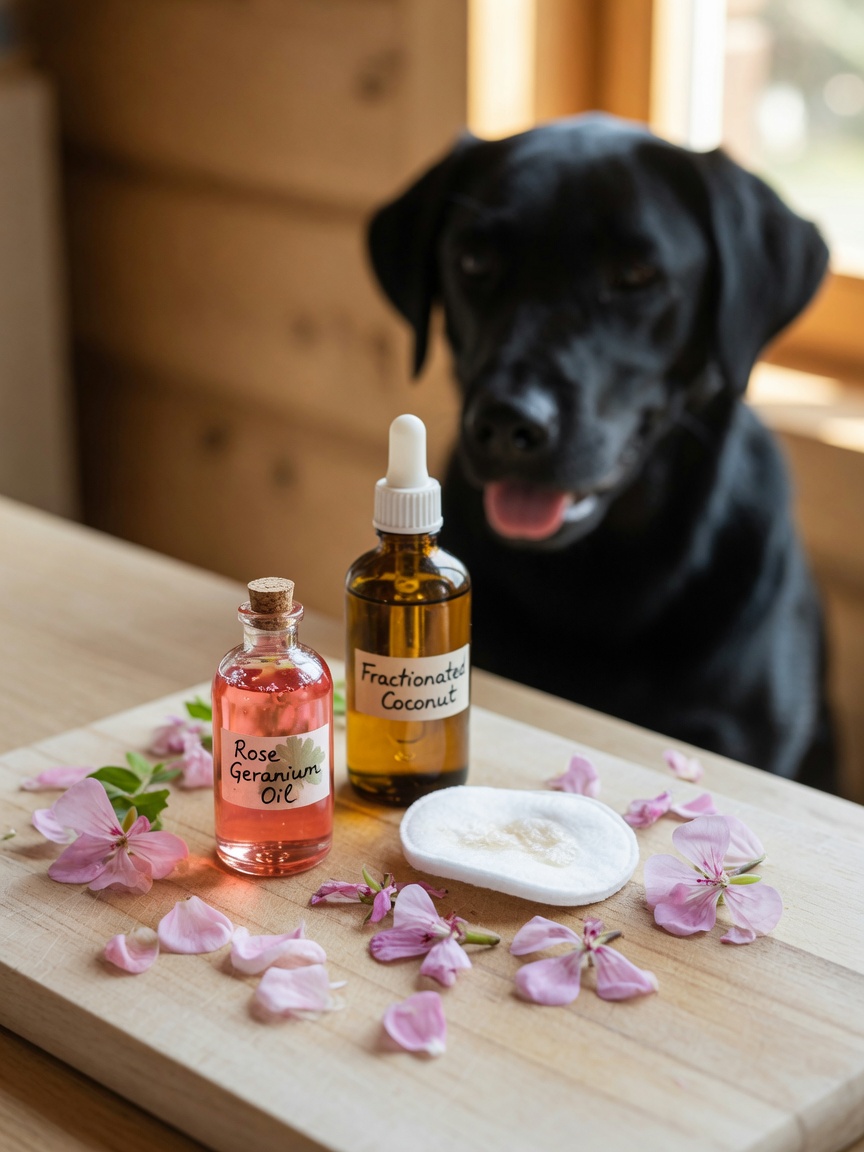
Rose geranium oil (Pelargonium graveolens) is perhaps the most cited natural tick repellent for dogs. Laboratory studies have shown that certain compounds in the oil — particularly citronellol and geraniol — do have repellent properties against some tick species. A study published in 2016 found that formulations containing geraniol showed moderate repellency against Ixodes ricinus nymphs under controlled conditions.
However, the gap between "shows repellency in a lab petri dish" and "protects your dog walking through woodland" is significant. Efficacy depends heavily on concentration, dilution, how it is applied, how quickly it evaporates, and whether it reaches the skin (where ticks feed) through a dense coat. The available evidence suggests partial, short-lived protection rather than the comprehensive coverage offered by registered veterinary products.
If you wish to use rose geranium oil, it must be properly diluted in a carrier oil — no more than 1–2% dilution — and applied sparingly. Never apply undiluted essential oils to dogs, and never use geranium or any essential oil on cats, as felines lack the liver enzymes to metabolise many of these compounds, with potentially fatal consequences.
Neem Oil

Neem oil, derived from the seeds of Azadirachta indica, contains the active compound azadirachtin, which disrupts insect and arachnid development and feeding. Some studies have found repellent properties against mosquitoes and ticks in topical formulations. Neem-based sprays and shampoos for dogs are commercially available and may reduce tick attachment when used consistently.
The limitations: neem oil has a strong, distinctive smell that many dogs (and owners) find unpleasant. Its efficacy wanes quickly with exposure to sunlight and water. And like all natural repellents, the evidence for meaningful field protection is limited compared to pharmaceutical treatments. Neem is generally considered safe for dogs when properly formulated, but products vary widely in quality and active compound concentration.
Apple Cider Vinegar
Apple cider vinegar is frequently recommended in natural pet care communities as a tick repellent — added to drinking water or sprayed on the coat. The idea is that it changes the pH of the skin and makes the animal less attractive to ticks. There is no credible scientific evidence to support this mechanism or the claimed efficacy. Ticks do not select hosts based on skin acidity; they respond primarily to body heat, carbon dioxide, and movement. Apple cider vinegar does not meaningfully reduce these signals.
It is generally harmless in the amounts used, but spending time and money on it as a tick repellent is unlikely to provide meaningful protection and may create a false sense of security.
Diatomaceous Earth
Food-grade diatomaceous earth (DE) is a powder made from fossilised algae. When insects and arachnids walk through it, the microscopic sharp particles damage their exoskeleton, causing dehydration and death. It is genuinely effective against fleas and ticks in controlled environments — dusted into bedding, along skirting boards, and in carpet — and can reduce environmental tick burden modestly.
Its limitations for live field protection are significant. DE must be dry to work — rain, dew, and a wet dog coat render it completely ineffective. It also poses inhalation risks if applied near the dog's face or in enclosed spaces. It is better suited to environmental management than as a protective barrier on the coat during outdoor activity.
Tick Checks: The Most Reliable Natural Defence
Of all the non-chemical strategies discussed here, daily thorough tick checks offer the most reliable protection — and there is no debate about the evidence. Most tick-borne diseases require the tick to be attached for 24–48 hours before transmission can occur. Removing ticks promptly after walks eliminates the transmission window. Focus on ears, between the toes, the groin, around the collar, under the tail, and in any skin folds. Use a proper tick removal hook and pull steadily — do not squeeze.
Browse natural and herbal tick repellent products for dogs on ZooplusThe Honest Verdict: Supplement, Not Replacement
Used together — rose geranium oil spray, neem-based shampoo, diatomaceous earth in the home, and diligent daily tick checks — natural methods can meaningfully reduce tick exposure compared to doing nothing. If you live in a low-to-moderate tick risk area and your dog does not frequently venture into tall grass or woodland, this approach combined with veterinary tick tests may be a reasonable choice to discuss with your vet.
In high-risk areas where Lyme disease, babesiosis, or anaplasmosis are common, natural methods are genuinely insufficient to protect your dog's health. In these contexts, the responsible choice is to use pharmaceutical prevention as the primary barrier, with natural methods as a complement if desired.
Key Takeaways
- Rose geranium oil and neem oil show partial tick repellency in research — but field efficacy is weaker and short-lived.
- Apple cider vinegar has no credible scientific evidence as a tick repellent despite widespread popularity in natural communities.
- Diatomaceous earth is useful for environmental tick management when dry, but ineffective on a wet coat in the field.
- Daily tick checks are the most reliable natural protective measure — most diseases require 24–48 hours of attachment for transmission.
- Natural methods are best used as supplements to pharmaceutical prevention in high-risk areas, not as standalone replacements.
References
- Moro CV, Paris L, Gaillard D, Bicout DJ. "Tick repellent activity of essential oils and their potential for acaricide use in veterinary medicine." Parasitol Res. 2015;114(4):1567-1579. PMID: 25648988
- Jaenson TG, Garboui S, Pålsson K. "Repellency of oils of lemon eucalyptus, geranium, and lavender and the mosquito repellent MyggA natural to Ixodes ricinus (Acari: Ixodidae) in the laboratory and field." J Med Entomol. 2006;43(4):731-736. PMID: 16892626
Written by Julia Wrenfield, Pet Wellness Researcher. This article is for informational purposes only and does not substitute professional veterinary advice.