
Tick Removal: The Right Way & What NOT to Do
Discovering a tick attached to your dog is an unpleasant but common experience for pet owners in tick-prone regions. How you respond in the next few minutes matters enormously. Incorrect removal techniques can increase the risk of disease transmission and cause additional trauma to the skin. This guide walks you through the safest, most effective approach — and the dangerous mistakes you must avoid at all costs.
What You Will Need Before You Start
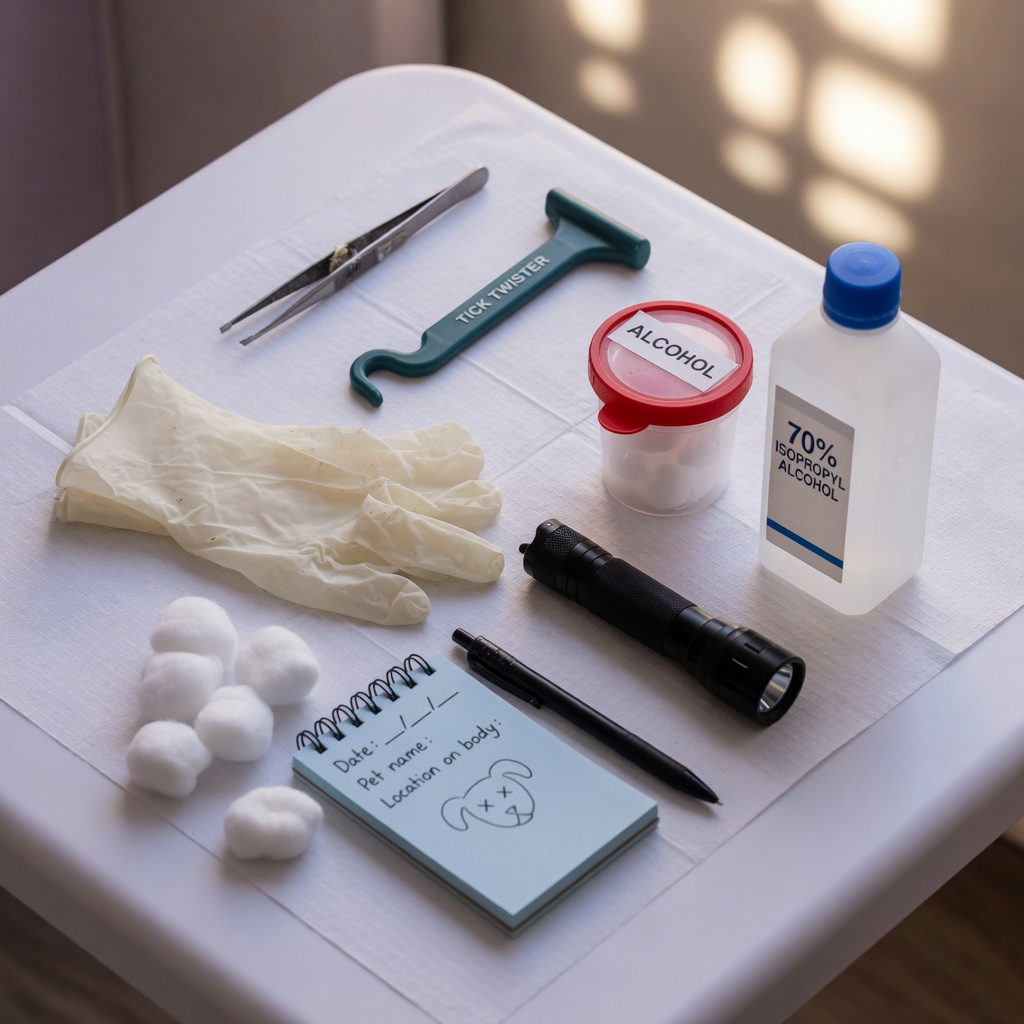
Preparation makes a significant difference. Before you begin, gather the following items:
- Fine-tipped tweezers or a dedicated tick removal hook (such as a Tick Twister or O'Tom hook)
- Disposable gloves or a tissue to protect your hands
- A small sealed container, zip-lock bag, or jar with rubbing alcohol
- Isopropyl alcohol (70%) or mild antiseptic soap
- A flashlight or good lighting
- A pen and paper or your phone to note the date and location of the bite
Tick removal hooks are often preferred over standard tweezers because they are specifically designed to slide under the tick's body at the correct angle without squeezing the abdomen. If you have a dog who spends significant time outdoors, a tick removal kit is a worthwhile investment for your first-aid supplies.
Step-by-Step: The Correct Tick Removal Technique
Step 1: Protect yourself. Put on gloves or use a folded tissue. Ticks can transmit pathogens to humans as well, and you should never handle a tick with bare fingers if avoidable.
Step 2: Part the fur and locate the tick clearly. Use a flashlight to confirm you can see the full body of the tick and where its mouthparts meet the skin. Ticks in dogs are often found around the ears, between the toes, around the tail base, in the groin folds, and under the collar.
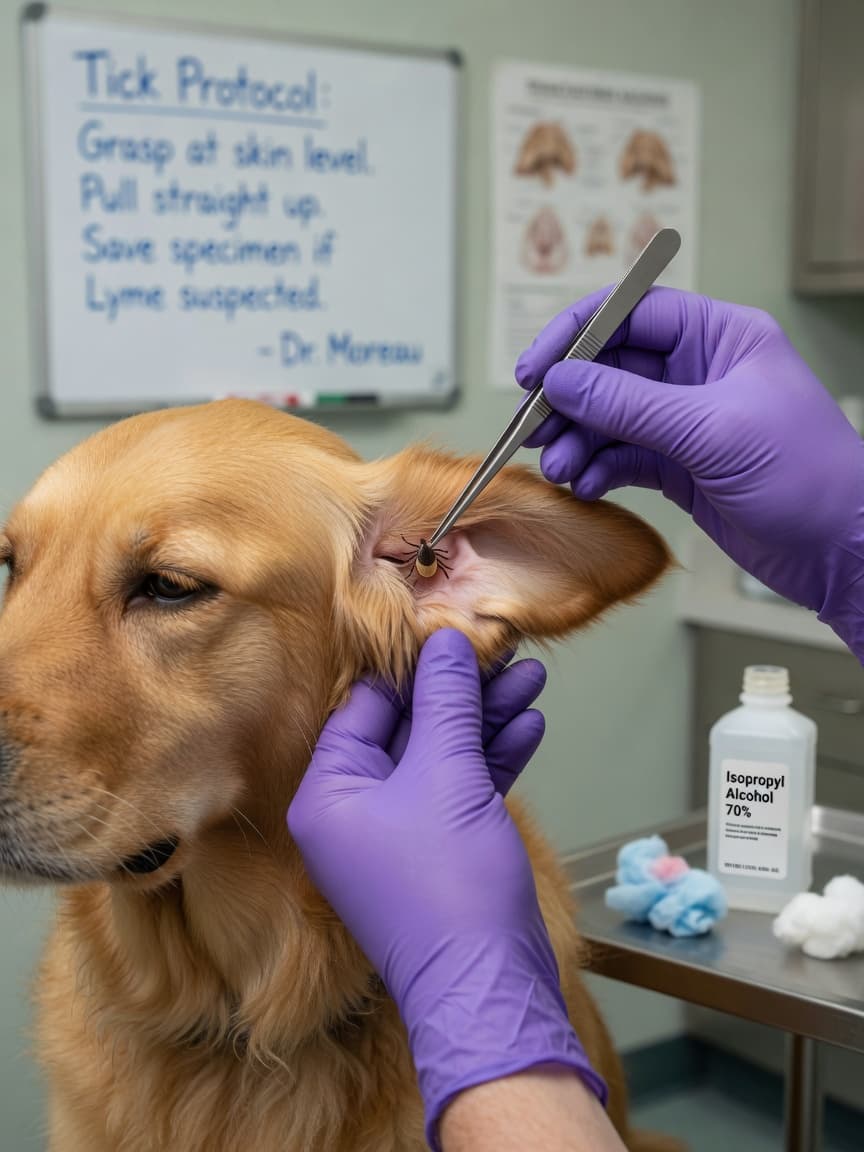
Step 3: Grasp the tick as close to the skin as possible. With fine-tipped tweezers, grip the tick as low on its body as you can — ideally right at the point where the mouthparts enter the skin. Do not grasp the abdomen. If using a tick hook, slide the notch under the tick's body at skin level.
Step 4: Pull steadily upward. Apply slow, firm, even pressure directly upward — perpendicular to the skin surface. Do not jerk, twist, or rotate. Steady pressure allows the mouthparts to release without breaking. With a tick hook, a gentle rotation motion (following the tool's design) is acceptable, but standard tweezers should always be used with a straight pull.
Step 5: Check that the mouthparts are intact. After removal, inspect the tick to confirm the head and mouthparts came out with the body. If a small black fragment remains in the skin, do not dig aggressively to retrieve it — this can introduce infection. Clean the area well and monitor it; the body will typically expel small remnants naturally. If the area becomes inflamed or infected, contact your vet.
Step 6: Clean the bite site. Wipe the area gently with a cotton ball soaked in isopropyl alcohol or clean it with mild antiseptic soap and water. Wash your hands thoroughly.
How to Dispose of the Tick Safely
Do not crush the tick between your fingers — this can expose you to pathogens. The recommended disposal methods are:
- Place the tick in a sealed container filled with isopropyl alcohol, which kills it quickly
- Seal the tick in a zip-lock bag and place it in the bin
- Flush it down the toilet
If you live in an area with high rates of tick-borne disease, you may wish to preserve the tick in alcohol for identification purposes. Some laboratories offer tick testing services. Note the date of removal — this information will be useful if your dog develops symptoms in the following weeks.
Monitoring the Bite Site
After removal, check the bite site daily for at least two to three weeks. A small amount of local redness immediately after removal is normal and reflects minor skin irritation. However, you should be alert to signs that something more serious is developing.
Watch for:
- Expanding redness or a "bullseye" rash pattern around the bite (this is characteristic of Lyme disease in humans, though it presents less clearly in dogs)
- Swelling, warmth, or discharge at the site suggesting local infection
- The bite site remaining inflamed for more than 48 to 72 hours
- Your dog excessively licking or scratching the area
Recommended: A quality tick removal kit is essential for any dog owner in tick-endemic areas. Zooplus stocks a wide range of tick hooks, fine-tipped tweezers, and after-bite antiseptic sprays. Browse tick removal tools at Zooplus →
Signs of Infection — When to Act Immediately
Beyond the bite site itself, monitor your dog for systemic signs of illness in the days and weeks following tick attachment. Tick-borne diseases often have an incubation period of one to three weeks, which means your dog may appear fine initially and then become ill later.
Contact your veterinarian promptly if you observe any of the following:
- Lethargy or unusual tiredness
- Loss of appetite
- Lameness or joint swelling, particularly in multiple joints
- Fever (normal dog temperature is 38–39.2°C / 100.5–102.5°F)
- Vomiting or diarrhoea
- Facial paralysis or neurological symptoms in rare cases of tick paralysis
- Pale gums, which may indicate anaemia from tick-borne disease
Tick paralysis is a particularly urgent condition caused by a neurotoxin in the saliva of certain tick species. It can cause ascending paralysis — beginning in the hind limbs and moving forward — and is a veterinary emergency. Removal of the tick is the primary treatment, but supportive care may be required.
When to Visit the Vet
Always consult your veterinarian if your dog has been bitten by a tick and you are in a region where Lyme disease, Anaplasmosis, Ehrlichiosis, or Rocky Mountain Spotted Fever are endemic. Your vet may recommend a 4Dx blood test — a simple in-clinic panel that screens for heartworm and the four most common tick-borne diseases — ideally performed six to eight weeks after the tick bite, when antibodies become detectable.
Prescription tick preventatives remain the first-line recommendation for preventing tick attachment and tick-borne disease. Speak to your vet about whether an oral isoxazoline product (such as Bravecto, NexGard, or Simparica), a topical product, or a tick collar is most appropriate for your dog's lifestyle and health profile. These are the most rigorously tested and effective options available.
Preventing Future Tick Attachment
Consistent prevention is far preferable to tick removal after the fact. Practical steps include:
- Year-round prescription tick prevention: Discuss isoxazoline-based oral preventatives or veterinary-approved topical treatments with your vet
- Tick checks after every outdoor outing: Run your hands through your dog's coat, paying special attention to ears, groin, axillae, between toes, and around the tail
- Lawn management: Keep grass short and clear leaf litter in your garden, as ticks shelter in damp, shaded environments
- Avoid peak habitat: Ticks are most common in tall grass, woodland edges, and dense scrub — keep your dog on paths when possible in high-risk areas
- Lyme vaccination: In high-risk areas, your vet may recommend the Lyme disease vaccine as an additional layer of protection alongside tick preventatives
Natural tick repellents — such as those containing neem oil or rose geranium — are sometimes used as adjuncts by owners seeking complementary approaches, but they should never replace prescription preventatives, which have robust clinical evidence behind them. If you are interested in additional protective measures, discuss them with your veterinarian first.
Natural adjunct support: If you are looking for a natural supplement to support your dog's overall resilience, HolistaPet offers hemp-based wellness products formulated for dogs. These are not tick preventatives but may support general wellbeing alongside your vet's prescribed programme. Explore HolistaPet supplements →
Key Takeaways
- Use fine-tipped tweezers or a tick hook and pull steadily upward — never twist or jerk
- Never apply petroleum jelly, heat, or alcohol to the tick while it is still attached
- Dispose of the tick in alcohol or a sealed bag; record the date and bite location
- Monitor the bite site for 2–3 weeks for signs of local infection
- Watch for systemic illness — lethargy, lameness, fever — in the weeks following tick attachment
- A 4Dx blood test 6–8 weeks post-bite can screen for tick-borne diseases
- Year-round prescription tick prevention is the most effective strategy — discuss options with your vet
References
- Krupka I, Straubinger RK. "Lyme borreliosis in dogs and cats: background, diagnosis, treatment and prevention of infections with Borrelia burgdorferi sensu stricto." Veterinary Clinics of North America: Small Animal Practice. 2010;40(6):1103–1119. PMID: 20933139. PubMed →
- Sonenshine DE. "Biology of ticks." Oxford University Press; referenced in: Dantas-Torres F, Otranto D. "Best practices for preventing vector-borne diseases in dogs and humans." Trends in Parasitology. 2016;32(1):43–55. PMID: 26433249. PubMed →
Written by Julia Wrenfield, Pet Wellness Researcher. This article is for informational purposes only and does not replace professional veterinary advice. Always consult your veterinarian for guidance specific to your pet's health needs.