

The Claw That Grew Too Long
A cat brought into a veterinary clinic with a claw that had curled completely into the pad is not a rare presentation — it is seen regularly, and almost always in older cats whose owners had not realised that nail maintenance becomes a medical necessity with age. Nail overgrowth in cats is a gradual process that is easy to miss until it causes visible pain, lameness or infection. Understanding why it happens and how to manage it prevents entirely avoidable suffering.
Why Cat Claws Overgrow
Wild and free-roaming cats self-maintain their claws through scratching, climbing and hunting activity that naturally wears the outer sheath and keeps length in check. Indoor cats engage in far less of this activity, and while a scratching post helps, it rarely compensates fully. In younger, active cats this creates a moderate trimming requirement. In senior cats, the situation is compounded by several additional factors:
- Reduced activity levels mean less natural abrasion of the claw surface
- Arthritic pain makes scratching behaviours uncomfortable, further reducing natural maintenance
- The claw tissue itself tends to thicken and become more brittle with age, growing in a tighter curve
- Cats with systemic illness or hyperthyroidism — common in older individuals — may show accelerated or abnormal nail growth
Polydactyl cats, who carry additional toes, face particular risk because the extra claws are less likely to contact surfaces during normal activity and have almost no natural wear mechanism.
Ingrown Claws: Recognising the Signs
An ingrown claw occurs when the nail curves back on itself and penetrates the pad. The entry wound creates an infection risk and causes significant pain. Signs that a claw may have become ingrown include:
- Limping or reluctance to bear weight on one paw
- Repeated licking or chewing at a specific foot
- Swelling, redness or discharge around the base of a toe
- Vocalisation when the paw is touched
- A visible groove, indentation or puncture in the pad tissue
An ingrown claw should always be assessed and treated by a veterinarian. The claw requires careful removal of the embedded portion, and the wound typically needs cleaning and, in many cases, antibiotic treatment to resolve secondary infection. Attempting to cut the claw at home when it has already entered the pad risks breaking it beneath the skin surface.
Safe Trimming at Home
Equipment
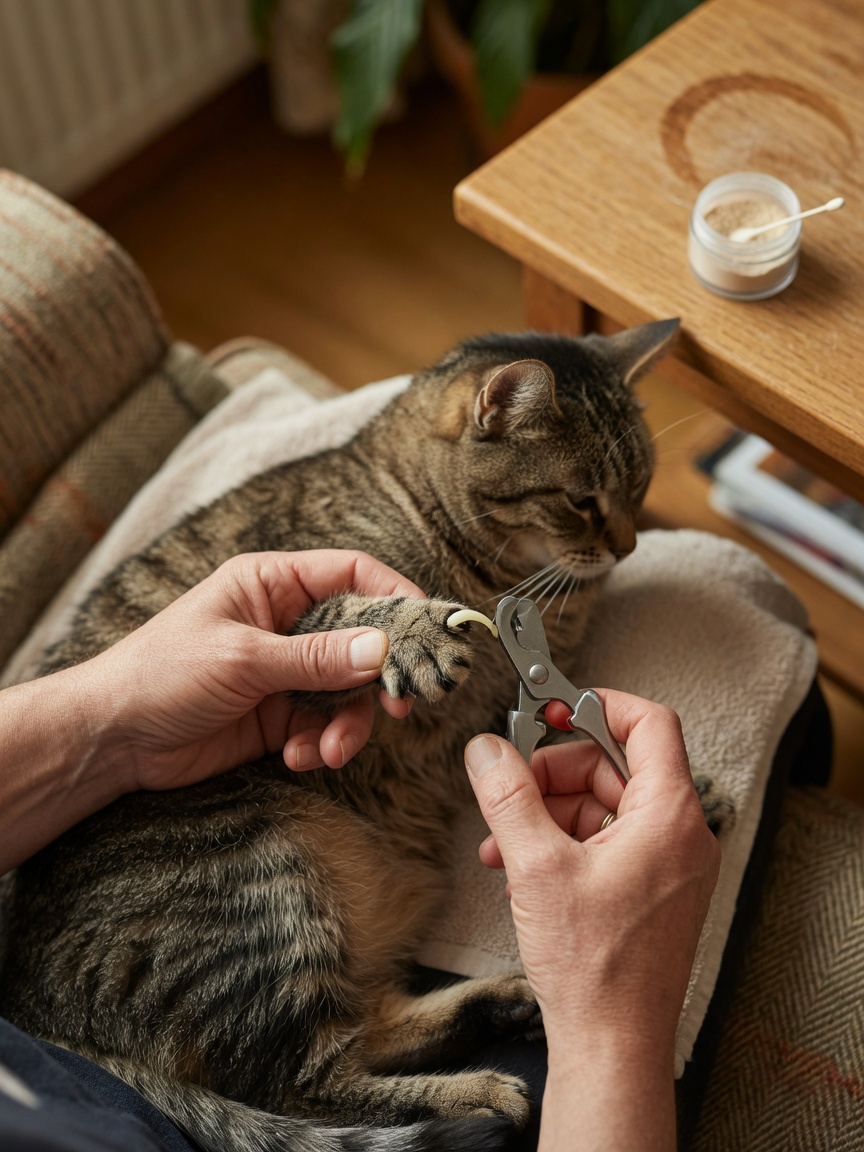
Use clippers specifically designed for cats — either scissor-style or guillotine-style. Human nail clippers can split the nail and cause cracking. Ensure the blade is sharp; a dull blade compresses the nail before cutting, which is uncomfortable. Have a small amount of styptic powder or cornflour to hand in case of accidental cutting into the quick.
Identifying the Quick
The quick is the pink, vascularised tissue visible through a light-coloured claw as a pink core within the translucent outer nail. Cutting into the quick causes pain and bleeding. In cats with dark or opaque claws, the quick is not visible; in these cases, trim conservatively — a small amount from the very tip only — and increase frequency of trimming rather than attempting to cut back further in a single session.
Technique and Positioning
With the cat settled on your lap or a stable surface, gently press the toe between thumb and forefinger to extend the claw from its sheath. Cut swiftly and decisively at a slight angle, taking only the curved tip beyond the quick. Hesitant or slow cutting is more likely to cause splitting. Work through one paw per session if the cat is tolerating it poorly, and allow time between sessions rather than attempting all four paws at once on a stressed cat.
Frequency and Senior Cat Considerations
Most adult indoor cats benefit from nail trimming every four to six weeks. Senior cats — typically those over ten years of age — often need trimming every three to four weeks due to the thickening and faster curvature of older claw tissue. Incorporating a brief nail check into any routine handling of older cats is a reliable way to avoid overgrowth escalating to the ingrown stage.
For cats with arthritis, be particularly careful when extending the claws, as pressure on inflamed joints is painful. Gentle handling and briefer sessions with rest in between are appropriate. A veterinary nurse clinic visit for nail trimming is a reasonable option for cats who are difficult to handle at home or for owners who are not confident in their technique.
When to See a Vet
Routine trimming is a home task, but the following situations require veterinary attention:
- A claw that has penetrated or is close to penetrating the pad
- A broken claw where the break is at or below the quick
- Signs of infection around any toe, including discharge, odour or heat
- Sudden changes in claw appearance such as discolouration, flaking or abnormal curvature that appears rapidly
- A cat in significant pain who will not allow paw examination
Summary Checklist
- Check all claws, including dewclaws, every three to four weeks in senior cats and every four to six weeks in younger adults
- Use sharp, cat-specific clippers and cut only the curved tip, clear of the pink quick
- For dark claws, trim conservatively and frequently rather than deeply and infrequently
- Polydactyl cats and senior cats are at highest risk of ingrown claws and need more frequent monitoring
- Any claw that has entered or is near the pad, or any paw showing swelling and discharge, requires veterinary assessment without delay