
Leopard Gecko Care: Everything UK Keepers Need to Know
Leopard geckos (Eublepharis macularius) are one of the most widely kept reptile species in the world, and for many keepers they represent a first reptile. They are manageable in size, relatively straightforward to care for, and can develop genuinely engaging personalities. With the right husbandry, a leopard gecko can live for 15 to 20 years — a commitment that deserves serious preparation.
Understanding the Nocturnal Lifestyle
Leopard geckos are nocturnal, meaning they are most active during the evening and night hours and spend much of the day sheltering in hides. This has historically led many keepers to conclude that UVB lighting is unnecessary. Recent research and updated reptile care guidance has changed this view.
While leopard geckos do not require the high UVI levels that diurnal species like bearded dragons need, low-level UVB exposure — equivalent to a 2.0 tube or low-output compact bulb — has been shown to support vitamin D3 synthesis and may contribute to improved bone density and overall health. Many experienced keepers and reptile vets now recommend providing low-level UVB as standard, even for nocturnal species.
If you do use UVB lighting, ensure it is on a timer that mirrors a natural day cycle of approximately 10 to 12 hours, and provide plenty of shaded hides so your gecko can choose to avoid the light entirely.
Temperature Zones: Three Distinct Areas
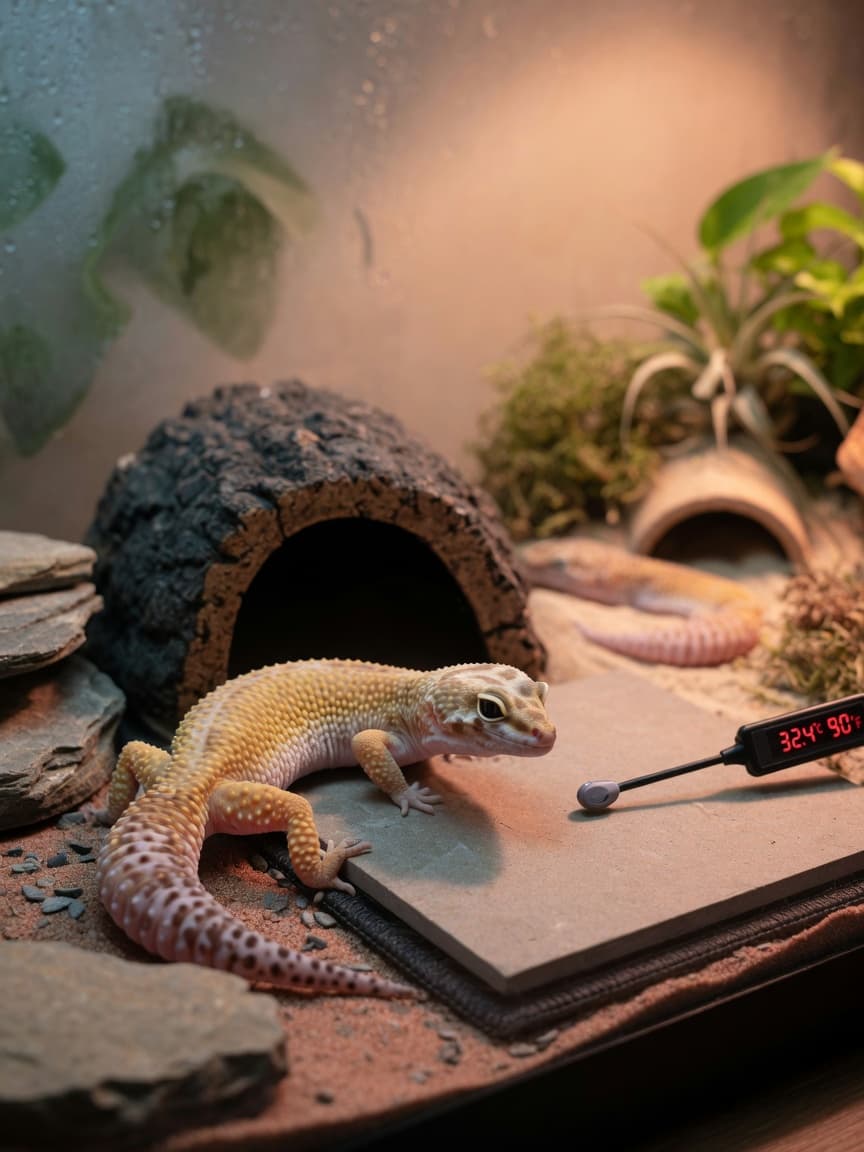
Leopard geckos require a thermal gradient across their enclosure, and they need access to three distinct temperature zones to thermoregulate effectively:
- Warm hide: 30–32°C — this is typically a hide positioned directly over an under-tank heat mat
- Cool hide: 22–24°C — on the opposite side of the enclosure
- Ambient room temperature: the open central area sits somewhere between these two extremes
Heat should be provided via a heat mat placed under one third of the enclosure floor, connected to a thermostat. A thermostat is not optional — without one, heat mats can overheat and cause thermal burns to your gecko's underside, which are serious and painful injuries. Measure temperatures with a digital probe thermometer for accuracy.
Avoid using heat lamps as the sole heat source for leopard geckos. As nocturnal animals, they absorb heat from warm surfaces in the environment, not from overhead basking.
Substrate: Sand Causes Impaction
Sand substrate, despite being widely sold in pet shops alongside leopard gecko accessories, is one of the most dangerous choices you can make for these animals. Leopard geckos regularly ingest substrate while hunting feeder insects, and sand — including calcium sand — accumulates in the digestive tract and causes impaction, a potentially fatal blockage.
Safe substrate options include:
- Reptile carpet — easy to clean, no ingestion risk
- Paper towels or newspaper — not attractive but entirely safe, ideal for new keepers and juveniles
- Ceramic or slate tiles — hygienic and good heat conductors
- Coconut fibre or topsoil mixes — suitable for experienced keepers in bioactive setups
The Moist Hide: Essential for Healthy Shedding
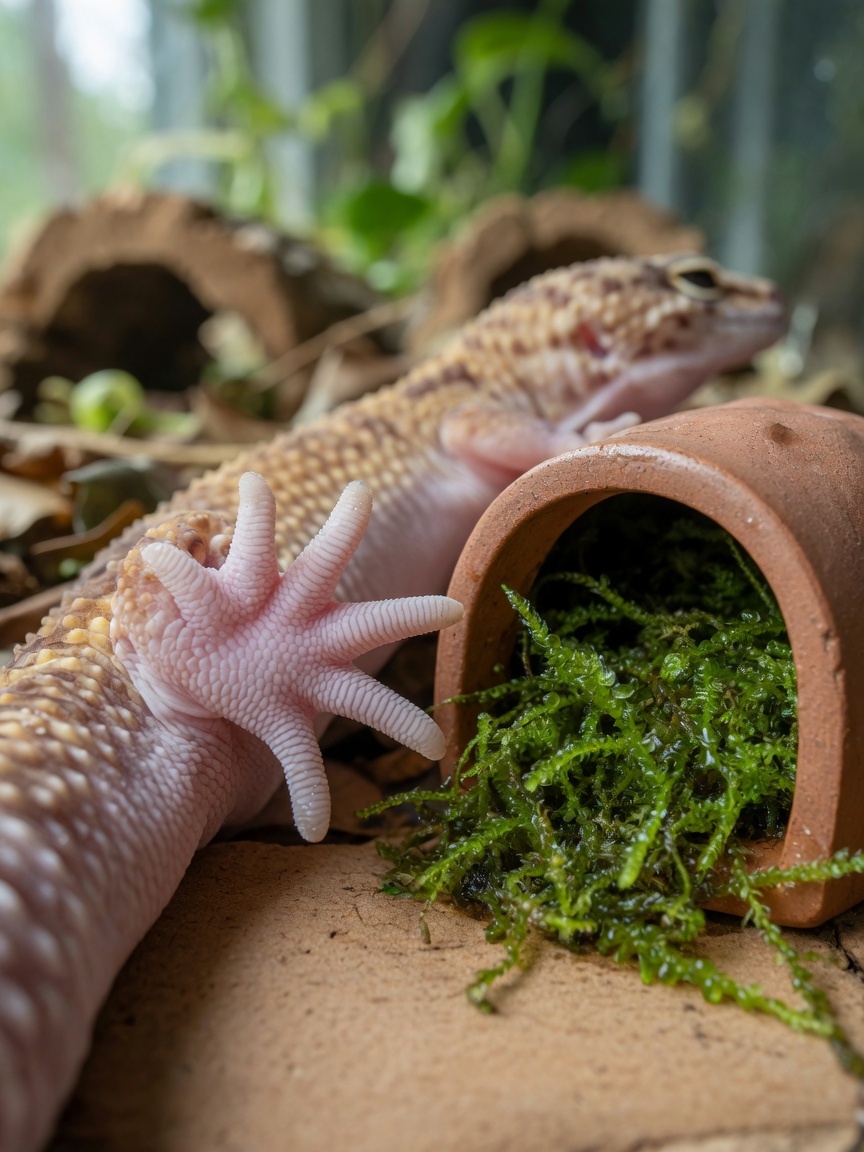
One of the most important additions to any leopard gecko enclosure is a moist hide — a shelter containing a layer of damp sphagnum moss, damp kitchen roll or damp coco fibre. The moist hide provides a microclimate of high humidity within an otherwise moderate-humidity enclosure.
Without a moist hide, leopard geckos frequently experience dysecdysis — incomplete or retained shed. This is particularly dangerous around the toes, where rings of retained shed constrict blood flow and, if not removed promptly, cause the loss of toe tips. Retained shed around the eyes is equally serious, potentially causing eye infections and vision problems.
Signs of retained shed include:
- Dull or grey patches of skin remaining after a shed
- Swollen or discoloured toes
- Difficulty opening the eyes fully
If retained shed is present, soak your gecko in a shallow dish of lukewarm water for 10 to 15 minutes to soften the skin before gently attempting removal. Do not pull retained shed forcibly — if it does not come away easily, seek veterinary assistance.
Cryptosporidiosis: The Most Serious GI Disease
Cryptosporidiosis is the most frequently encountered and most serious gastrointestinal disease in leopard geckos. It is caused by the protozoan parasite Cryptosporidium varanii and is unfortunately common in captive populations, particularly animals that have passed through large-scale breeding operations.
The disease causes severe damage to the lining of the digestive tract, and the hallmark signs include:
- Chronic regurgitation of food
- Progressive weight loss despite apparent appetite
- A visibly pinched or wasting tail — the tail stores fat reserves and loses condition rapidly
- Lethargy and reduced activity
There is currently no cure for cryptosporidiosis in reptiles. Management focuses on supportive care — keeping the animal warm, hydrated and comfortable — and strict hygiene to prevent spread to other animals. The parasite is highly contagious between reptiles, so any new gecko should be quarantined for a minimum of 90 days before being housed near other animals, and a fresh faecal sample should be tested by a vet during this period.
Feeding Leopard Geckos
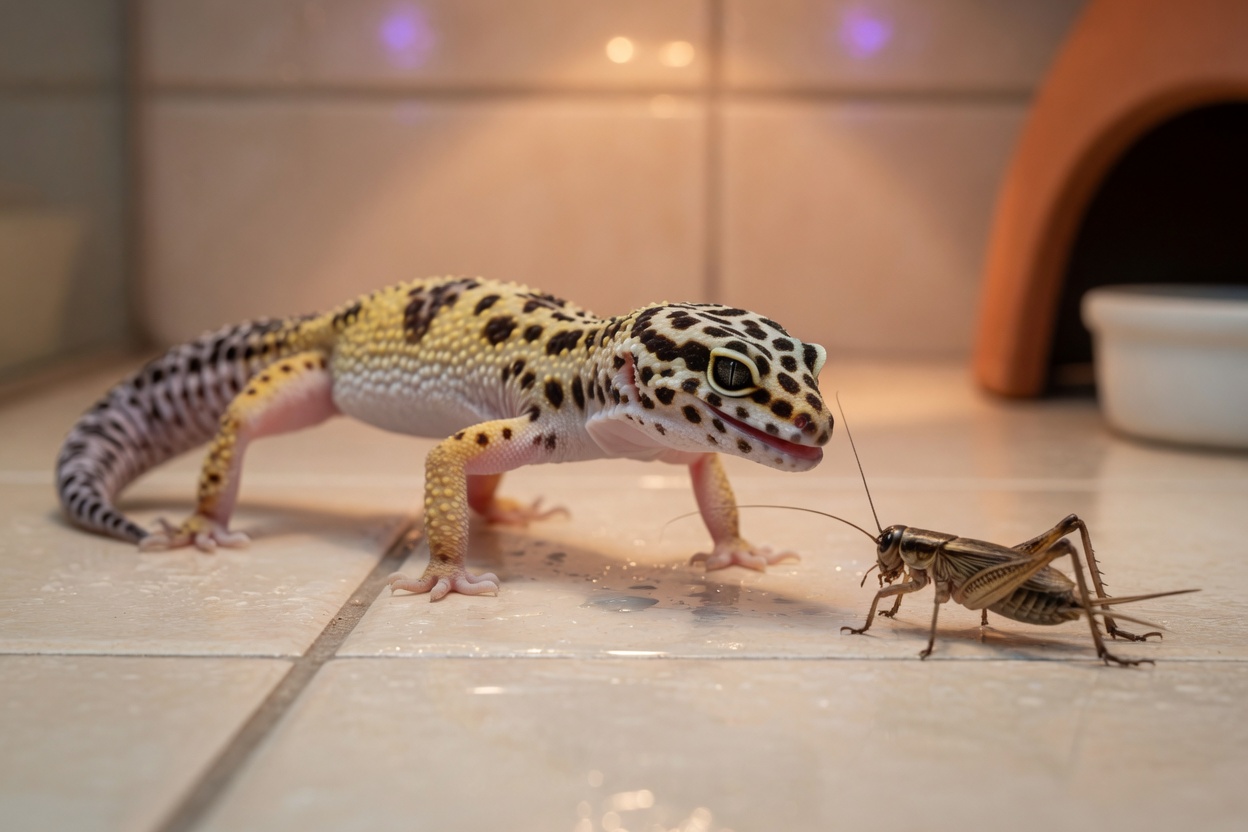
Leopard geckos are insectivores and should be fed exclusively on live insects. Good feeder options include:
- Crickets — widely available and nutritionally adequate
- Dubia roaches — superior nutritional profile, quieter and less escape-prone
- Mealworms — acceptable as a supplement but high in fat; do not use as a staple
- Black soldier fly larvae — excellent calcium-to-phosphorus ratio
- Waxworms — high fat content; use only as an occasional treat or for underweight animals
Dust feeder insects with a calcium supplement at every feeding for juveniles and every other feeding for adults. Offer a vitamin supplement once or twice per week. Juveniles should be fed daily; adults every two to three days.
Lifespan and Long-Term Commitment
A well-cared-for leopard gecko can live for 15 to 20 years, with some individuals reaching beyond this. Males tend to live slightly longer than females, partly because the physical demands of egg production take a toll on females over time. Before acquiring a leopard gecko, consider whether you are prepared for a commitment of this length, and whether you have access to a reptile-experienced veterinarian who can provide routine health checks and emergency care when needed.