
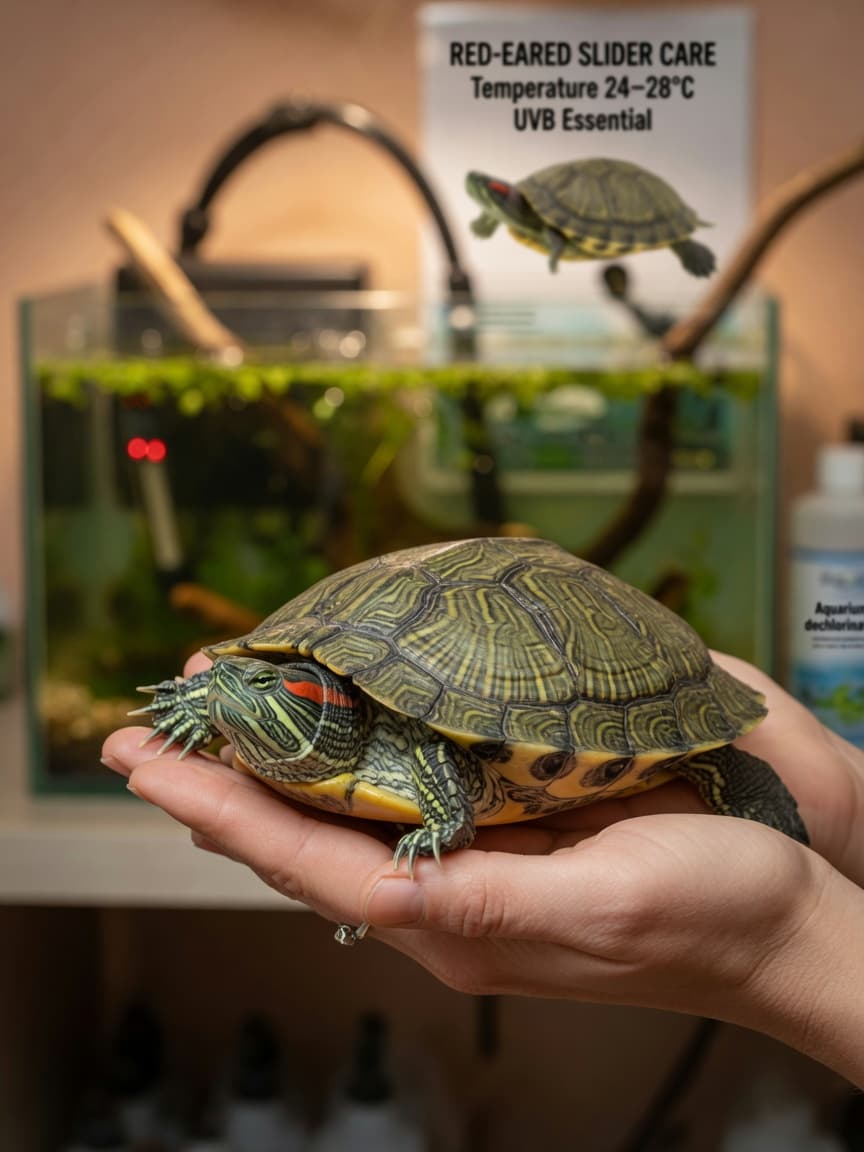
Important: This Article Is for Existing Owners Only
This guide is written for people who already own a red-eared slider (Trachemys scripta elegans) — whether they acquired it legally before the ban, inherited one, or received one from someone who could no longer care for it. It is not a guide to acquiring new red-eared sliders. Purchasing, selling, breeding, transporting, or releasing red-eared sliders is now illegal across the European Union, and this guide does not encourage acquiring these animals in any way. If you have a red-eared slider and are wondering what to do, read on — you are in the right place.
The Legal Situation in the EU
Red-eared sliders are listed as an Invasive Alien Species of Union Concern under EU Regulation 1143/2014, which establishes a framework for managing invasive species across all EU member states. Since 3 August 2016, it has been illegal throughout the European Union to sell, breed, transport, use, exchange, or release red-eared sliders. The regulation also applies to import and export.
In practical terms for existing owners in EU countries: you may keep your slider if you owned it before the ban came into force, but you cannot sell it, give it to a pet shop, breed it, or let it go in a garden pond, lake, river, or any other natural or semi-natural environment. The conditions under which existing pre-ban animals may be kept vary by member state — some countries require owners to register pre-ban animals with the relevant authority. Check with your national environment or wildlife agency for the specific requirements where you live.
The Legal Situation in Post-Brexit UK
In the United Kingdom, red-eared sliders are not currently listed on the UK's Invasive Alien Species of Special Concern list (the UK equivalent of the EU list, maintained following Brexit). This means there is no equivalent sales ban in Great Britain at the time of writing. However, this does not mean they can be released into the wild. Releasing a red-eared slider into any wild habitat in the UK is illegal under Section 14 of the Wildlife and Countryside Act 1981, which prohibits the release of non-native species. The ecological consequences of released sliders are serious and well documented — they compete with native wildlife for basking spots and food, and transmit diseases to native species.
Why You Must Never Release a Red-Eared Slider
Red-eared sliders are native to the central and southern United States and northern Mexico. In Europe's warmer regions — particularly Spain, France, Italy, and Portugal — released individuals have established feral populations that are now actively displacing native turtle species, including the already-threatened European pond turtle (Emys orbicularis). Even in cooler climates, the potential ecological harm from release is significant. Releasing your slider is not a humane solution to a difficult situation — it is an illegal act that contributes to one of the most serious biodiversity threats affecting European freshwater ecosystems.
If you can no longer care for your red-eared slider, the correct course of action is to contact a reptile rescue organisation, a veterinary practice with reptile experience, or a specialist reptile sanctuary. Never put your slider in a garden pond, a lake, a canal, or any outdoor water body.
Tank Size: Sliders Grow Larger Than Most People Expect
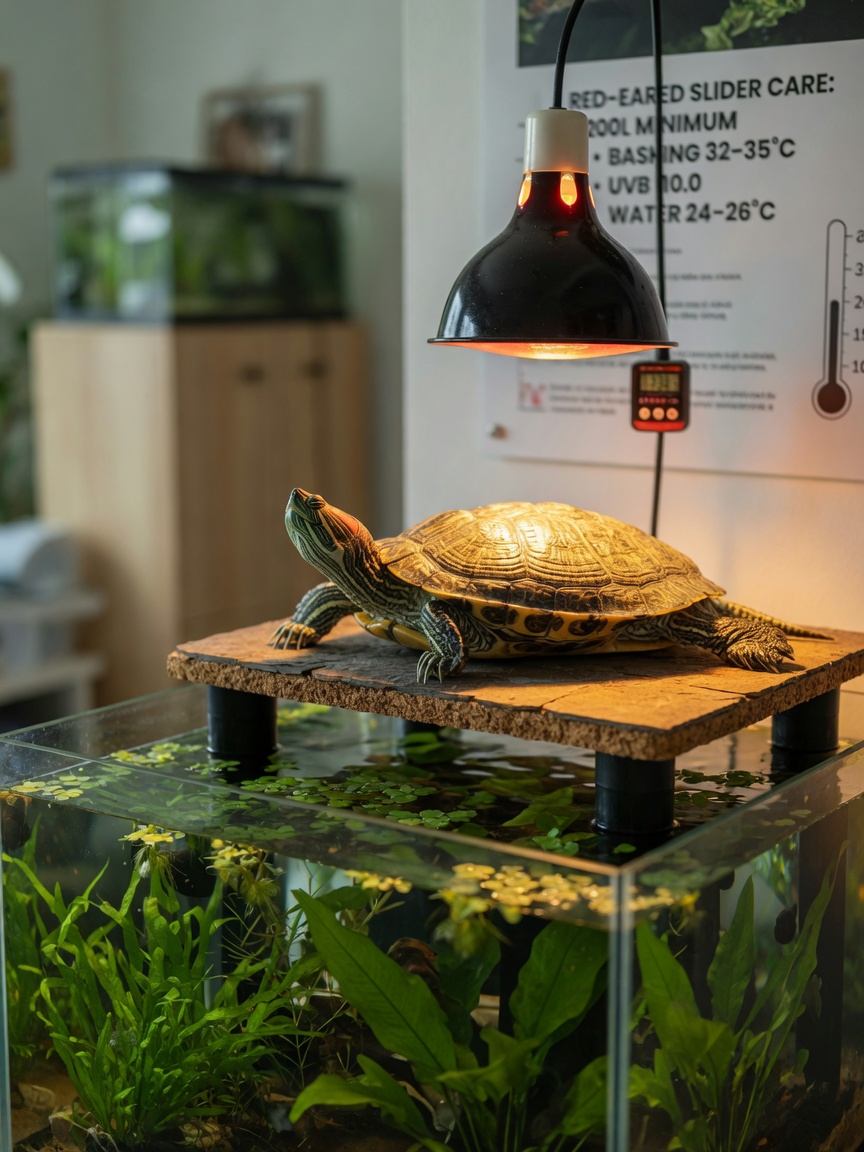
One of the most frequent welfare problems with red-eared sliders in captivity is inadequate housing. These turtles are sold as hatchlings at 2 to 3 centimetres — fitting easily in the palm of a hand — but adults reach 25 to 30 centimetres in shell length, with females typically being larger than males. An animal this size cannot be housed in the small acrylic starter tanks that are commonly sold alongside hatchlings.
A single adult red-eared slider needs an enclosure with a minimum water volume of 200 litres, ideally significantly more. The water must be deep enough for the slider to swim and submerge fully and to turn around without restriction. In addition to the water section, a substantial and easily accessible dry basking area is essential — sliders spend a considerable part of their day out of the water basking, and a turtle that cannot fully dry off will develop health problems.
Water Temperature and Filtration
Red-eared sliders require water temperatures between 24 and 26 degrees Celsius. In most European homes, a submersible aquarium heater will be needed to maintain this range, particularly through autumn and winter. Protect the heater from physical damage — sliders are large, active, and powerful animals that can break unprotected glass heaters.
Filtration must be robust. Sliders are messy feeders and produce large amounts of biological waste. A canister filter rated for at least three times the water volume of the enclosure is a practical minimum. Clean the filter regularly and perform partial water changes of 25 to 50 percent weekly. Poor water quality is one of the primary causes of illness in captive sliders.
Basking and UVB Lighting
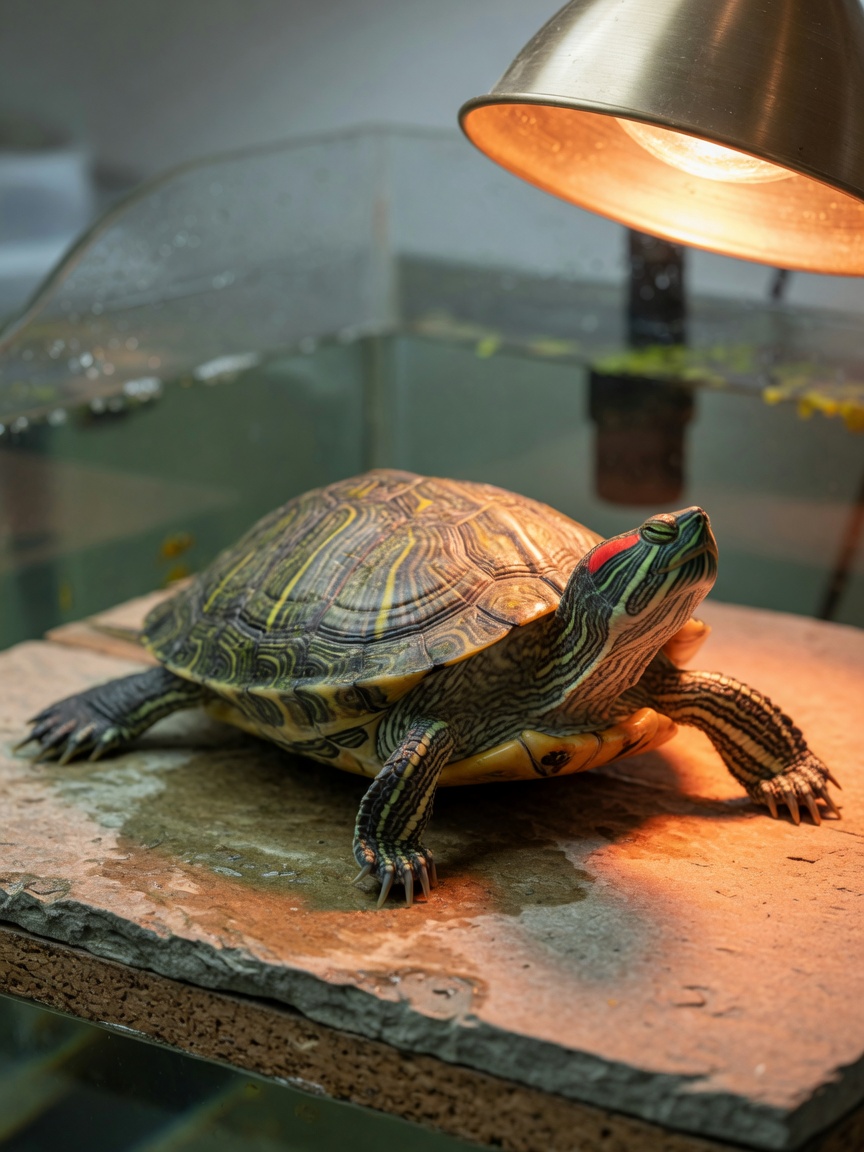
A dry basking area with a surface temperature of 30 to 33 degrees Celsius is essential for thermoregulation and digestion. Use a directed basking lamp — a halogen or incandescent spotlight — positioned above the land area, and check the actual surface temperature with an infrared thermometer.
UVB lighting is equally critical. Without UVB, sliders cannot synthesise vitamin D3 and therefore cannot absorb calcium properly, leading to metabolic bone disease — a condition that causes shell softening, skeletal deformity, and eventually death. Use a 10 to 12 percent UVB tube, positioned 25 to 30 centimetres above the basking area with no glass or plastic between the bulb and the animal. Run the UVB light for 12 hours daily on a timer, and replace the bulb every 12 months even if it still emits visible light.
Diet and Feeding
Red-eared sliders are omnivores. Juveniles tend to be more carnivorous, while adults shift towards a more plant-based diet. A good adult diet consists of high-quality commercial aquatic turtle pellets as the staple, supplemented with leafy greens (romaine, dandelion leaves, watercress, endive), aquatic plants, and occasional protein in the form of earthworms, small feeder fish, or defrosted bloodworm. Avoid feeding exclusively protein-rich foods to avoid pyramiding and other nutritional problems.
Feed adults three to four times per week rather than daily — overfeeding is a common mistake that degrades water quality rapidly. Remove any uneaten food after 15 minutes. If possible, feed in a separate container to keep the main enclosure cleaner.
If You Can No Longer Care for Your Slider
Life circumstances change, and some owners who legally acquired their slider before the ban, or who inherited one, may find themselves no longer able to provide appropriate care. In this situation, the correct steps are clear:
- Contact a reptile rescue organisation. In the UK, organisations such as the British Chelonia Group can help connect owners with appropriate rescues. In EU countries, national herpetological societies are often a good starting point for finding reputable contacts.
- Contact your local exotic animal veterinary practice — they frequently maintain lists of rescue contacts and may be able to assist with rehoming.
- Contact a specialist reptile sanctuary that has experience with invasive species and can provide appropriate long-term housing.
- Never advertise sliders for sale — this is illegal in the EU and ethically problematic even in the UK where sales are not currently banned.
Providing detailed information about the animal's history, health, diet, and enclosure setup will make the rehoming process smoother and help the receiving organisation give it the best possible care. Responsible ownership does not end when your circumstances change — it includes ensuring the animal is transferred to competent hands rather than released or abandoned.
A Note on Responsible Ownership
Owning a red-eared slider in Europe today comes with an unusual set of responsibilities. These are intelligent, long-lived animals that deserve proper care, and the vast majority of existing owners are doing their best in a situation that has become legally complex. The aim of this guide is to support those owners in providing the highest possible standard of care while navigating that complexity responsibly. If you have a slider and are committed to its welfare, the information above gives you the foundation you need to do right by it.