
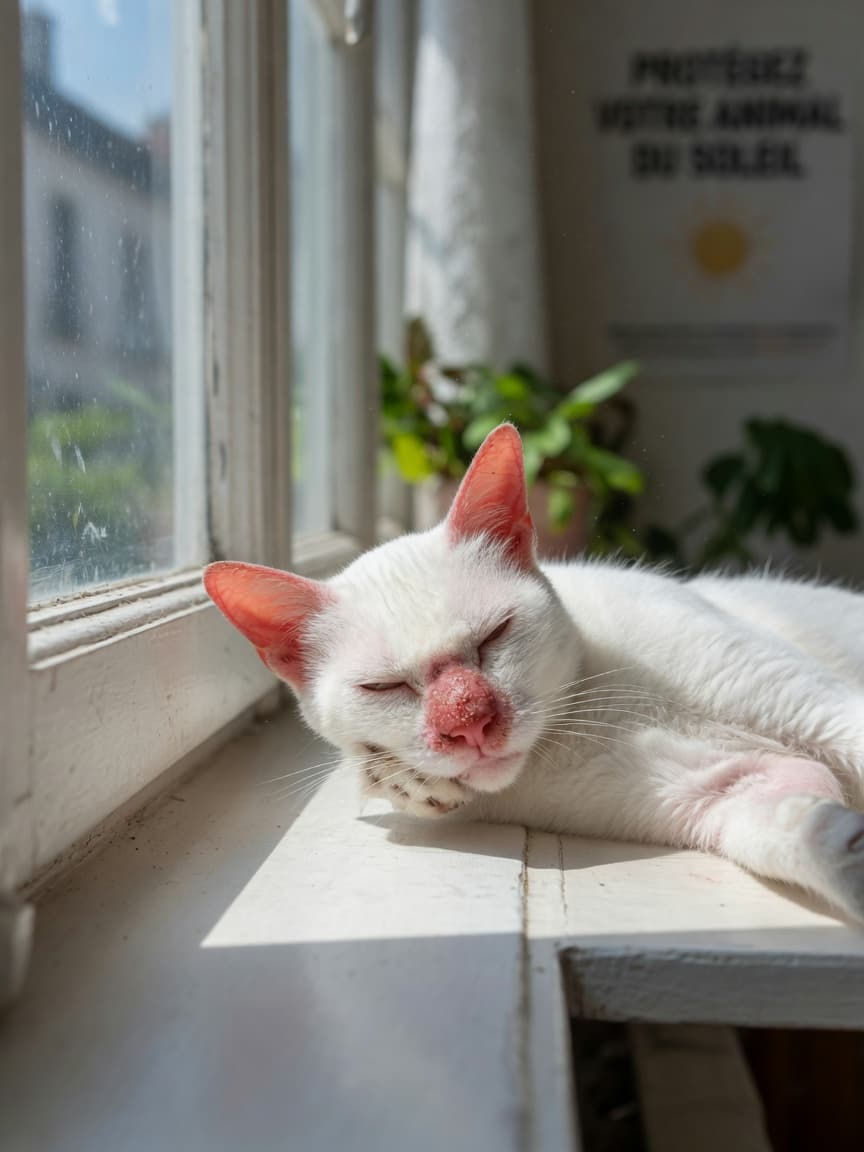
Many of us enjoy basking in the sunshine with our feline friends, watching them stretch languidly across sun-warmed windowsills. However, whilst cats do love sunbathing, few pet owners realise that their beloved companions are equally vulnerable to sunburn as humans are. In fact, cats with light-coloured or thin coats face particularly high risks. Understanding the dangers of UV exposure and knowing how to protect your cat from harmful sun damage is essential for responsible pet ownership.
Do Cats Really Get Sunburn?
Yes, cats absolutely can develop sunburn. Their skin is thinner than ours and offers limited natural protection against ultraviolet (UV) radiation. Whilst their fur provides some defence, it's often insufficient, especially for cats with white, cream, or light-coloured coats. Short-haired breeds and cats with sparse fur are even more susceptible. When a cat's skin is exposed to intense or prolonged sun exposure, the UV rays can damage the skin cells, causing inflammation and discomfort—classic signs of sunburn.
Which Cats Are Most at Risk?
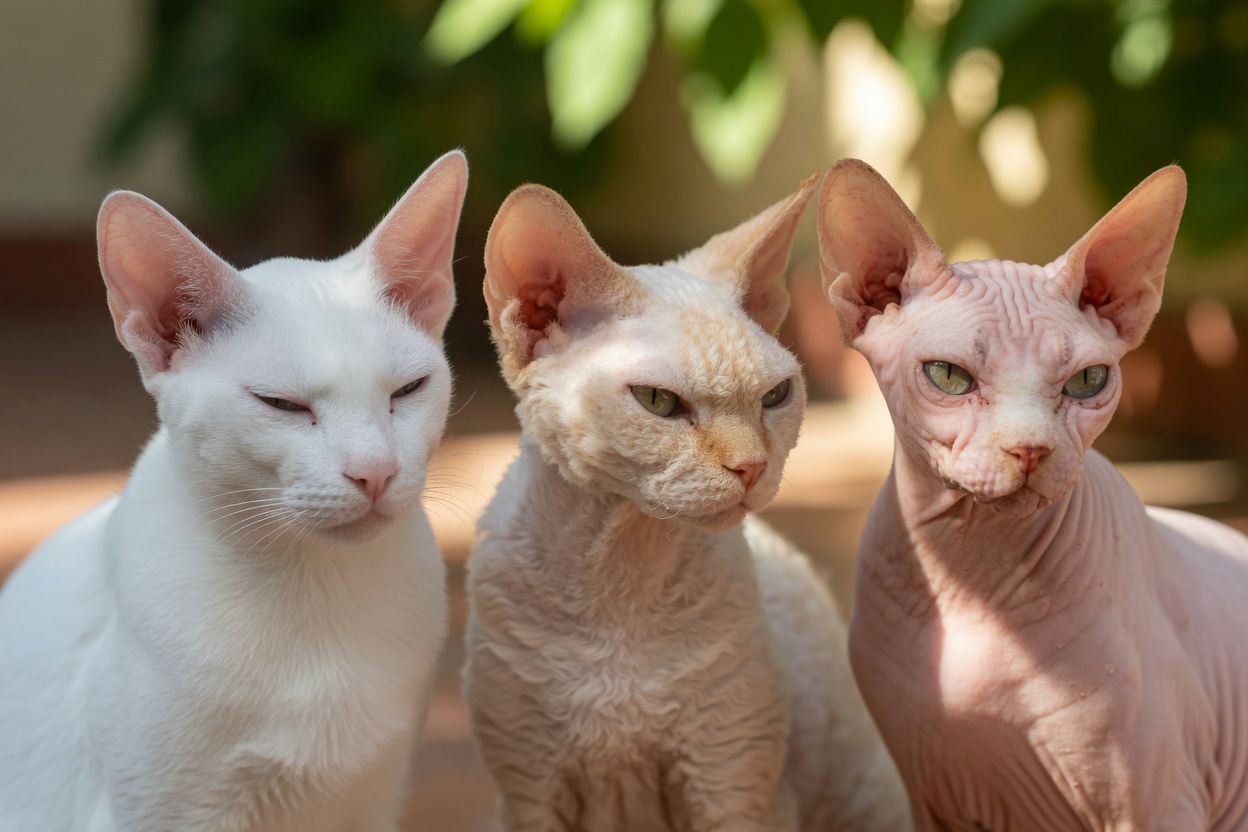
Certain cats face elevated sunburn risks:
- White or light-coloured cats: These lack sufficient pigmentation to filter harmful UV rays effectively
- Cats with pink noses or ears: These sensitive areas have minimal pigmentation and are extremely vulnerable
- Short-haired breeds: Breeds like Siamese, Abyssinian, and Devon Rex have thinner coats offering less protection
- Senior cats: Ageing cats have thinner skin and reduced cellular repair mechanisms
- Hairless breeds: Sphynx cats and similar breeds need maximum sun protection
- Cats with existing skin conditions: Those with feline acne or dermatitis are more susceptible
Signs of Sunburn in Cats
If your cat has been exposed to excessive sunlight, watch for these telltale signs:
- Redness or pink discolouration of the skin, particularly on ears, nose, and paw pads
- Sensitivity to touch or tenderness in affected areas
- Peeling or flaking skin as the burn heals
- Blistering in severe cases
- Excessive grooming or licking of affected areas
- Restlessness or unusual behaviour indicating discomfort
If you notice these symptoms, contact your veterinary surgeon promptly. Severe sunburn can be painful and may require professional treatment.
Long-Term Risks Beyond Immediate Sunburn
Chronic sun exposure poses serious long-term health consequences for cats. Repeated sunburn episodes significantly increase the risk of squamous cell carcinoma, a type of skin cancer affecting cats, particularly on areas like the ears and nose. White cats are disproportionately affected by this condition. Additionally, prolonged UV exposure can contribute to premature skin ageing and weakened immune function in skin cells.
How to Protect Your Cat from Sunburn
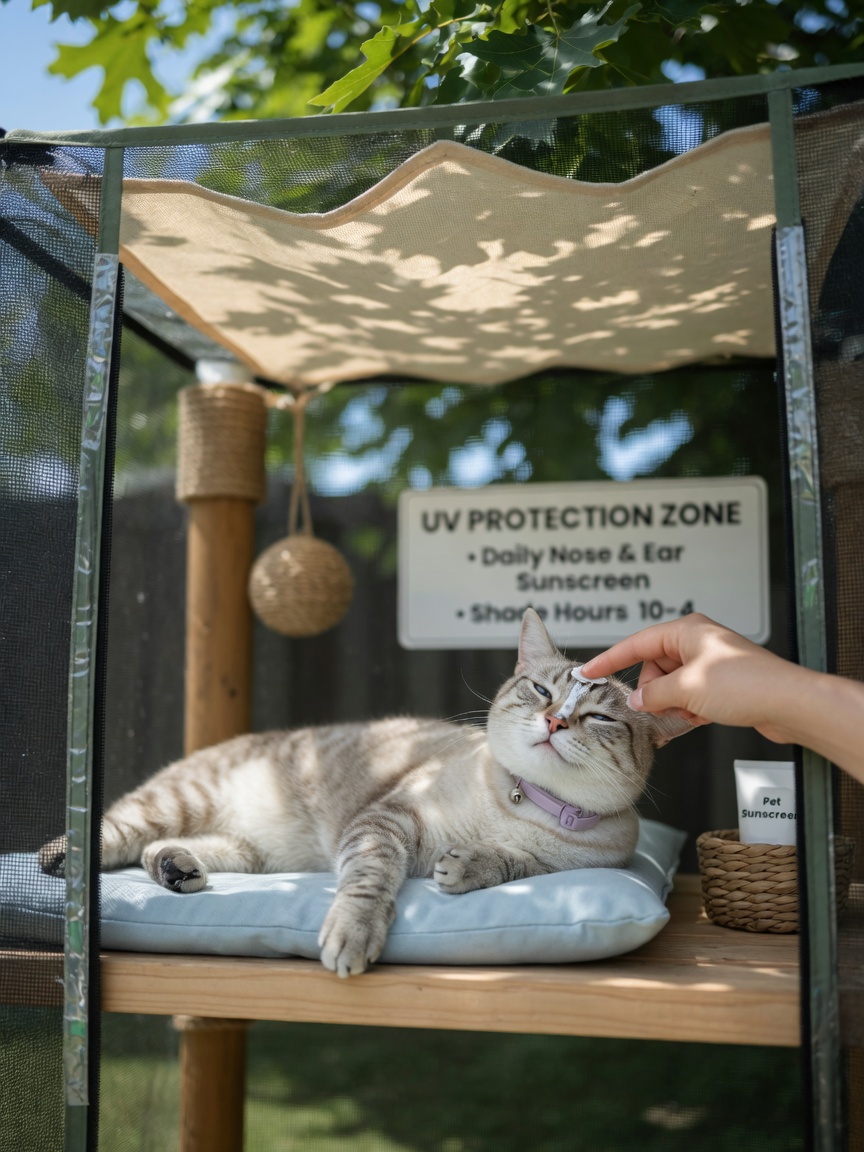
Prevention is far more effective than treating sunburn. Implement these protective measures:
- Limit outdoor exposure during peak hours: Keep cats indoors between 10am and 4pm when UV rays are strongest
- Provide shaded areas: Ensure outdoor spaces have trees, umbrellas, or shelters where cats can rest safely
- Use pet-safe sunscreen: Apply specially formulated feline sunscreen to vulnerable areas like ears and nose (never use human sunscreen, which contains toxic ingredients)
- Install window treatments: Use UV-blocking curtains or window films to reduce sun exposure indoors
- Create indoor enrichment: Offer engaging indoor activities to reduce reliance on outdoor sunbathing
- Choose covered outdoor spaces: Consider a covered cattery or enclosed garden where cats enjoy fresh air safely
Key Takeaways
Cats absolutely can and do develop sunburn, with light-coloured and white cats facing the highest risks. Beyond immediate discomfort, chronic sun exposure can lead to serious health complications including skin cancer. By implementing sensible sun-safety measures—limiting peak-hour exposure, providing shade, and using pet-safe sunscreen on vulnerable cats—you can protect your feline friend whilst still allowing them to enjoy the outdoors safely. When in doubt, consult your veterinary surgeon, particularly if your cat has light-coloured fur or spends considerable time outdoors.