
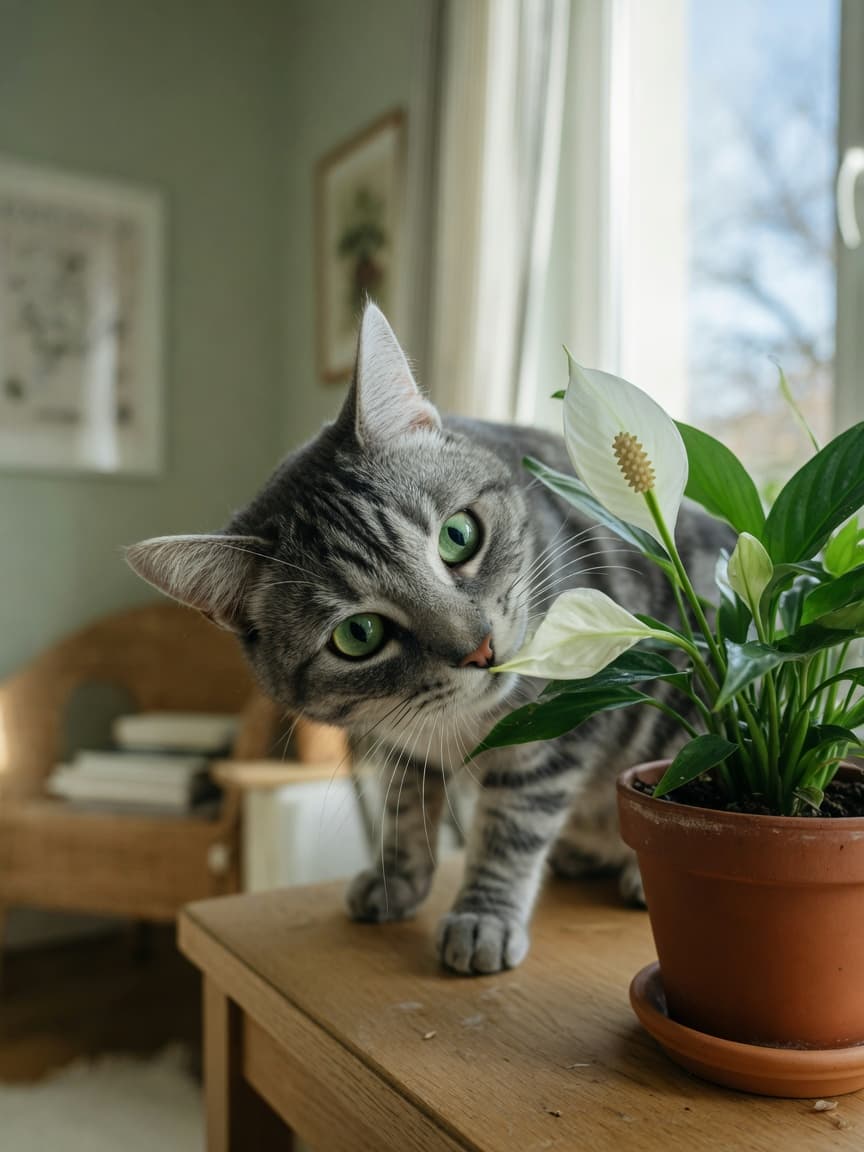
Is Peace Lily Toxic to Cats?
Updated: June 2026
Peace Lily vs. True Lilies: A Critical Distinction
One of the most dangerous pieces of misinformation circulating among cat owners is the idea that all plants called "lily" carry the same catastrophic risk. This confusion could cut both ways — it might cause panic when unnecessary, or false reassurance when the plant truly is deadly. The peace lily falls into a different category than true lilies, and understanding that distinction is essential.
The peace lily (Spathiphyllum species) is not botanically related to true lilies (Lilium and Hemerocallis). It belongs to the Araceae family — the same family as philodendrons, pothos, and elephant ears. This matters enormously because true lilies cause acute kidney failure in cats through a still-unidentified toxin. Peace lilies do not carry this mechanism. Your cat will not experience kidney failure from eating a peace lily.
However — and this is critical — "not as deadly as a true lily" does not mean "safe." Peace lilies contain insoluble calcium oxalate crystals that cause immediate, painful irritation to any soft tissue they contact. The oral cavity, throat, and gastrointestinal tract can all be affected, and the experience for your cat is genuinely distressing.
How Calcium Oxalate Crystals Harm Cats
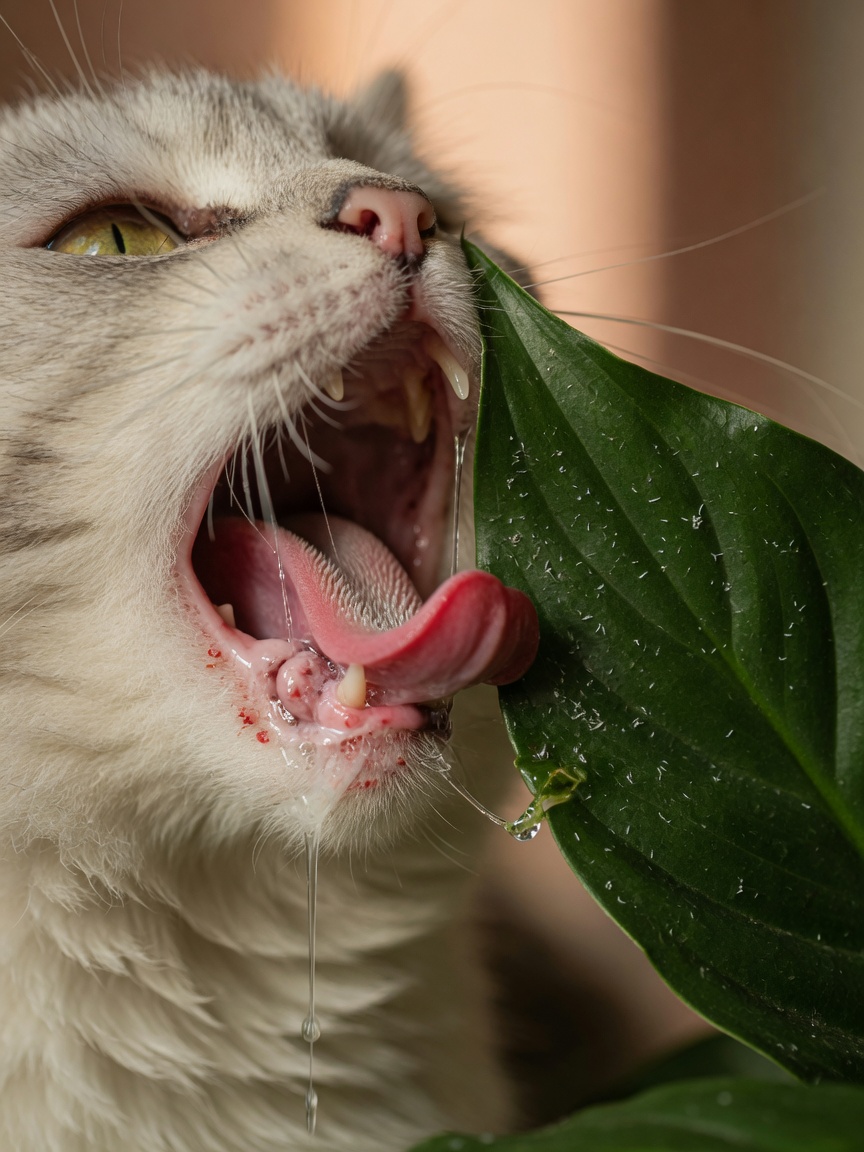
The calcium oxalate crystals in peace lily are microscopic, needle-shaped structures called raphides, embedded within specialized cells called idioblasts throughout the plant. When a cat bites into the plant, these cells rupture explosively, propelling the crystals into the soft tissues of the mouth, tongue, and lips with remarkable force. The crystals penetrate tissue and cause mechanical irritation, inflammation, and a burning sensation that is intensely unpleasant.
The good news — if there is any — is that this pain mechanism is self-limiting in most cases. The immediate burning sensation tends to stop cats from consuming large quantities. However, some cats, particularly those that are very food-motivated or young and curious, may chew on the plant repeatedly before the pain registers sufficiently to stop them. And even a small amount of crystal exposure can produce distressing symptoms.
Symptoms of Peace Lily Toxicity in Cats
Symptoms typically appear immediately or within minutes of ingestion:
- Excessive drooling (hypersalivation) — often the most prominent sign, as the mouth tries to flush the crystals out
- Pawing at the mouth or face — a clear indicator of oral pain
- Vomiting — common as the stomach reacts to the irritant
- Difficulty swallowing (dysphagia) — if crystals have affected throat tissues
- Loss of appetite — the cat associates eating with pain
- Oral swelling — the tongue, lips, or mouth interior may appear swollen and red
- Vocalization — some cats will cry or meow in distress
- Diarrhea — if larger quantities are consumed and reach the intestinal tract
In rare instances where a cat consumes a very large amount of peace lily, more systemic symptoms may develop, including severe gastrointestinal upset and possible difficulty breathing if throat swelling is pronounced. These severe cases require emergency treatment.
What to Do If Your Cat Eats Peace Lily
Even though peace lily does not cause kidney failure, you should still call your vet immediately any time your cat ingests a toxic plant. The ASPCA Animal Poison Control Center at (888) 426-4435 can also provide guidance.
While waiting for veterinary advice, you can help soothe your cat's mouth by offering cool, fresh water. Some veterinarians recommend offering a small amount of plain cow's milk or yogurt to coat the mucous membranes and provide some relief. Do not force-feed your cat anything and do not attempt to rinse the mouth unless your veterinarian specifically instructs you to do so.
Your veterinarian will likely perform an oral examination, assess the severity of any swelling, and may prescribe anti-inflammatory or anti-nausea medications. IV fluids may be given if the cat is dehydrated from prolonged vomiting or refuses to drink. In the vast majority of cases, cats recover fully within 12–24 hours with appropriate supportive care.
Peace Lily Is Extremely Common — Which Makes It Especially Risky
Peace lilies are among the most popular houseplants in the world. They are frequently gifted for occasions such as funerals and housewarming parties, given their elegant white blooms and association with serenity. They are sold in nearly every garden center, grocery store, and home goods retailer. This ubiquity means that cat owners need to be particularly vigilant — you may encounter peace lilies in your own home, in friends' homes, or even in offices where you bring your pet.
The safest approach is simply not to keep peace lilies in a home with cats. If you receive one as a gift, thank the giver and either find a cat-free home for it or donate it. If you must keep it, place it in a room your cat absolutely cannot access — not just a room with a door that's usually closed, but one with a door that is always secured.
Safe Alternatives for Cat Owners Who Love Lush Plants
You do not have to live in a plant-free home to have a cat. Many beautiful plants are considered non-toxic to cats, including:
- Spider plant (Chlorophytum comosum)
- Boston fern (Nephrolepis exaltata)
- Calathea and prayer plants (Maranta species)
- Orchids (Orchidaceae — most varieties)
- Areca palm (Dypsis lutescens)
Consult the ASPCA's comprehensive toxic and non-toxic plant database before adding any new plant to a home with cats.
Key Takeaways
- Peace lily is toxic to cats due to calcium oxalate crystals — but it is NOT a true lily and does NOT cause kidney failure.
- Symptoms include drooling, pawing at the mouth, vomiting, and difficulty swallowing — usually mild to moderate.
- Call your vet immediately or ASPCA Poison Control at (888) 426-4435 if your cat ingests peace lily.
- Most cats recover fully within 24 hours with supportive care.
- Peace lilies are extremely common household plants — vigilance is essential for cat owners.
- The safest solution is to remove peace lilies from cat-accessible areas entirely.
References
- Knight AP, Walter RG. A Guide to Plant Poisoning of Animals in North America. Teton NewMedia. 2001. Referenced in: Puschner B. "Oxalates." Veterinary Clinics of North America: Small Animal Practice. 2018. PMID: 30195456
- Osweiler GD. "Toxicology of plant ingestion in companion animals." Veterinary Medicine. 2004;99(7):620-634. PMID: 15478764