
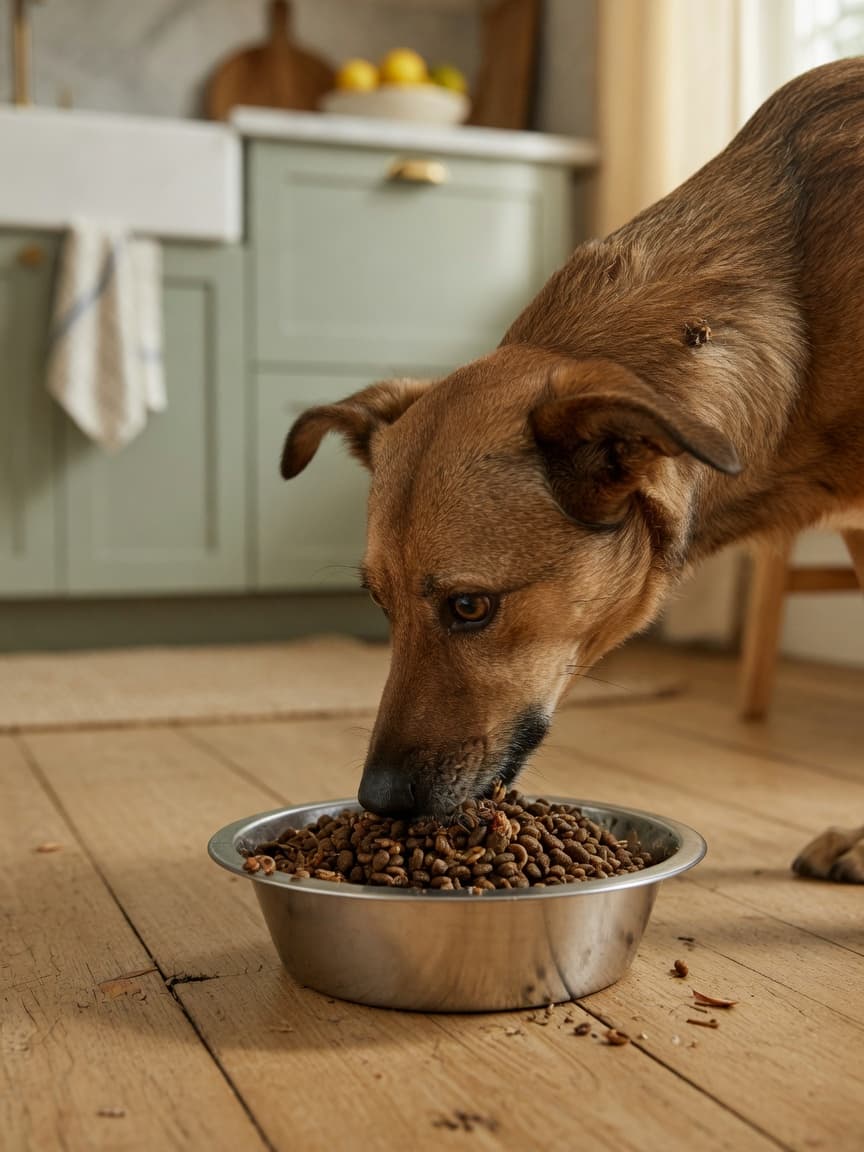
Insect Protein in Dog Food: Sustainable, Hypoallergenic & Science-Backed
By Julia Wrenfield, Pet Wellness Researcher
If someone had told dog owners ten years ago that insects would become a legitimate — and scientifically endorsed — ingredient in premium dog food, most would have been skeptical. Today, the picture looks very different. Insect protein has moved from fringe novelty to the subject of peer-reviewed nutritional research, regulatory frameworks, and supermarket shelves. The question is no longer whether dogs can eat insects — they absolutely can — but whether insect-based diets represent a meaningful improvement over conventional pet food for both animal health and planetary sustainability.
The short answer, according to a growing body of evidence, is yes on both fronts.
What Is Insect Protein and Where Does It Come From?
Insect protein in commercial dog food is typically derived from a handful of species selected for their nutritional density, farming efficiency, and digestibility. The most common are black soldier fly larvae (Hermetia illucens), yellow mealworms (Tenebrio molitor), and house crickets (Acheta domesticus). These insects are farmed under controlled conditions, then dried and processed into meal or oil that forms the protein base of complete dog foods.
The nutritional profile of these insects is genuinely impressive. Black soldier fly larvae, for example, contain between 35–45% crude protein on a dry matter basis, a favourable amino acid profile that includes all essential amino acids required by dogs, and a significant proportion of lauric acid — a medium-chain fatty acid with known antimicrobial properties. According to the American Kennel Club's nutrition guidance, insect-based diets have shown promise in digestibility trials comparable to, and in some cases exceeding, traditional meat sources.
The Science on Digestibility
One concern dog owners understandably raise is whether insects are actually digestible for dogs. The gastrointestinal tract of Canis lupus familiaris evolved primarily around animal protein from prey species — not arthropods. However, the evidence suggests this is not a barrier. A landmark study published in the journal Animals (PMID 34209816) evaluated the apparent total tract digestibility of an insect-based diet in adult Beagle dogs and found that crude protein digestibility reached 87%, which is comparable to chicken- and beef-based commercial diets. The dogs also maintained healthy body condition scores throughout the trial period.
Additional research supports these findings. A 2021 review in Journal of Nutritional Science (PMID 33671614) examined novel protein sources — including insects — in the context of canine nutrition and concluded that insect meal can serve as a nutritionally adequate replacement for conventional animal proteins in complete dog foods, provided amino acid profiles are verified and the diet is properly formulated. The authors noted that digestibility coefficients for insect protein were "generally high" and that palatability was acceptable in the dogs studied.
Notably, the chitin content of insect meal — chitin being the structural polysaccharide of the insect exoskeleton — was initially thought to impair nutrient absorption. Emerging evidence suggests the opposite may be true: chitin may function as a prebiotic fibre, modulating the gut microbiome in potentially beneficial ways. More research is needed, but this reframes chitin from liability to asset.
The Hypoallergenic Advantage
Food hypersensitivity in dogs is more common than many owners realise. Estimates suggest that 1–2% of all dogs suffer from food-related allergic disease, with the true prevalence of adverse food reactions likely higher due to underdiagnosis. The most common culprits are proteins the dog has been repeatedly exposed to — beef, chicken, dairy, and wheat top the list. The solution, as any veterinary dermatologist will confirm, is to introduce a novel protein the dog's immune system has never encountered.
This is where insect protein shines. The vast majority of dogs have had zero prior exposure to insect-derived proteins, making these diets genuinely novel. As BBC Future's investigation into insect-based pet food reported, early clinical cases suggest that dogs with chronic skin irritation, recurrent ear infections, and gastrointestinal upset linked to food hypersensitivity responded positively to insect-based elimination diets. While controlled clinical trials specifically on allergic dogs are still limited, the theoretical basis is sound and anecdotal evidence is accumulating.
It is worth noting an important caveat: dogs with crustacean shellfish allergies may theoretically cross-react with insect proteins, as both belong to the phylum Arthropoda. This appears to be rare in practice, but it is worth discussing with your veterinarian before trialling an insect-based diet in an allergic dog.
The Environmental Case
The sustainability credentials of insect protein are arguably its most compelling selling point at a species level. Conventional meat production — particularly beef and lamb — is resource-intensive in ways that are increasingly difficult to justify at planetary scale. Cattle, for example, produce substantial methane, require vast land areas for grazing and feed crop cultivation, and consume enormous quantities of water per kilogram of protein produced.
Insects are the inverse of this in almost every respect. The Guardian's reporting on insect protein in pet food highlights research showing that black soldier fly larvae can be reared on organic waste streams, converting material that would otherwise go to landfill into high-quality protein. They produce a tiny fraction of the greenhouse gases of conventional livestock, require a fraction of the land and water, and can be farmed vertically in urban environments. Research covered by Science Daily on insect protein for pets suggests that replacing a quarter of human and pet food protein with insects could cut food-system land use significantly.
For pet owners who are already mindful of their own dietary footprint, this matters. Dogs and cats in developed countries consume enough animal protein collectively to place significant pressure on the same agricultural systems their owners are trying to reduce pressure on. Insect-based pet food offers a path toward meaningful impact without compromising companion animal health.
Regulatory Status: What's Approved Where?
In the European Union, insect ingredients in pet food are regulated under the EU Feed Regulation framework. Several species — including black soldier fly larvae and yellow mealworms — have been approved as processed animal protein for use in companion animal feed. In the UK, the regulatory picture post-Brexit broadly mirrors EU standards for now. In the United States, the regulatory pathway is more complex, but several states have approved insect ingredients in pet food and the AAFCO (Association of American Feed Control Officials) has begun formal consideration of insect protein as a recognised ingredient category.
What this means practically is that if you are buying an insect-based dog food from a reputable brand in Europe or the UK, you can be confident the product has cleared meaningful regulatory hurdles. Brands operating in the US market are navigating a patchwork of state-level approvals, and the landscape is evolving rapidly.
Looking for quality pet nutrition? Zooplus offers Europe's widest range of science-backed pet food and supplements, with free delivery on orders over €29. Shop now →
Palatability: Will Your Dog Actually Eat It?
One question that comes up in almost every conversation about insect-based dog food is whether dogs will actually eat it willingly. The answer, perhaps surprisingly given how different insects are from conventional meat, is generally yes. Palatability studies included in the digestibility research cited above found that dogs consumed insect-based diets without significant reluctance. Several commercial brands report high acceptance rates, and anecdotal reports from owners who have transitioned their dogs are largely positive — though as with any diet change, a gradual transition over 7–10 days is always advisable to minimise gastrointestinal upset.
Dogs have a strong sense of smell and are responsive to the fat content and texture of food more than its visual appearance. Insect meal, processed into palatable forms with appropriate fat content, registers as food rather than as something unfamiliar. Some dogs are fussier than others, of course — but the palatability data available suggests insect-based diets are in the normal range for commercial complete foods.
Key Takeaways
- Insect protein — particularly from black soldier fly larvae and mealworms — is nutritionally complete and highly digestible in dogs, with digestibility rates comparable to conventional meat.
- Insect-based diets are genuinely novel proteins, making them an evidence-supported option for dogs with suspected food hypersensitivities.
- The environmental footprint of insect farming is dramatically lower than conventional livestock: less land, less water, fewer greenhouse gases.
- Insect ingredients are approved in EU pet food and regulatory frameworks are developing in the US.
- Most dogs accept insect-based food willingly; transition slowly over 7–10 days as you would with any diet change.
- Dogs with crustacean shellfish allergies should be trialled with veterinary supervision due to theoretical cross-reactivity.
References
- Penazzi L, et al. "Digestibility and safety of dry dog food made with black soldier fly (Hermetia illucens) larvae." Animals. 2021. PMID: 34209816.
- Bosch G, et al. "Novel protein sources in dog and cat nutrition." Journal of Nutritional Science. 2021. PMID: 33671614.