
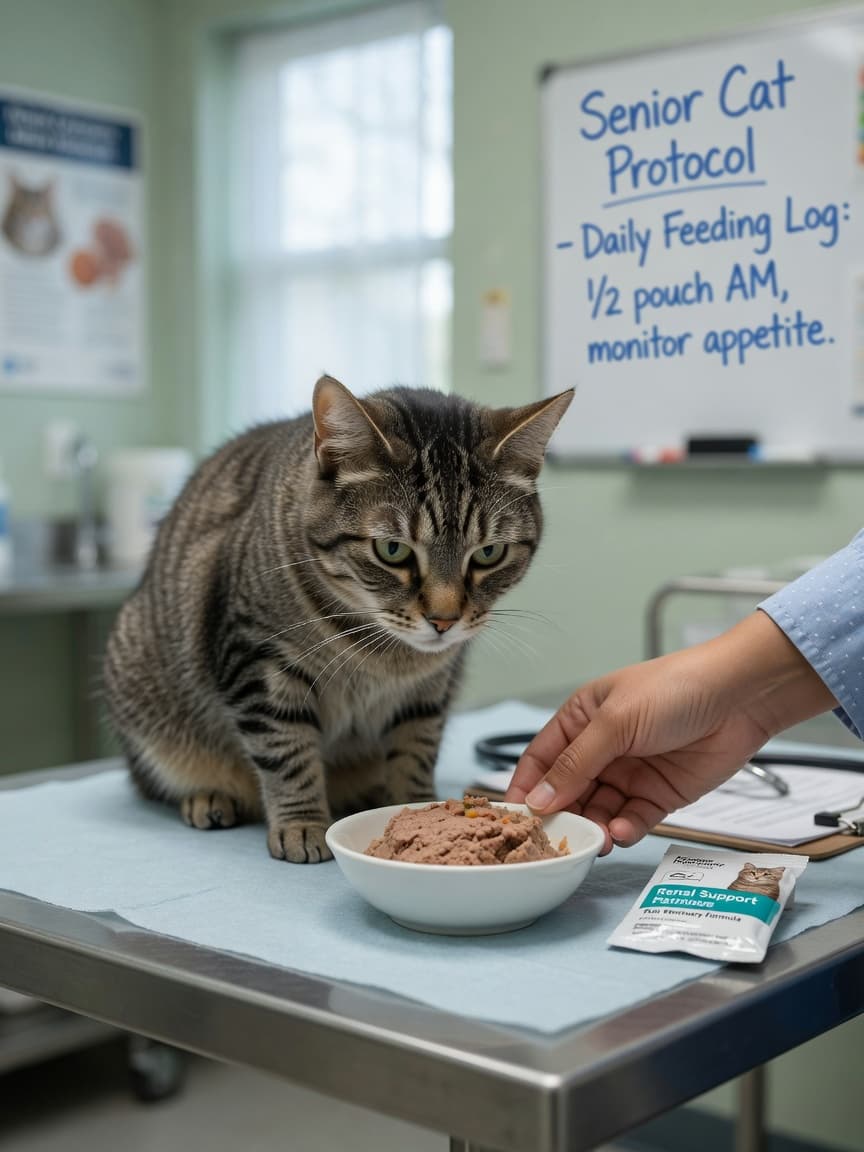
Why Feline Therapeutic Nutrition Is Different
Cats are obligate carnivores with metabolic requirements that differ substantially from dogs or humans. They have a higher protein requirement, a limited ability to downregulate protein catabolism when intake is low, and a lack of certain enzyme pathways that other species use to synthesise nutrients like taurine and arachidonic acid from precursors. Any therapeutic diet for a cat must account for these fundamental differences while also managing the target condition.
There is a further challenge unique to cats: they are notoriously neophobic around new foods, particularly when unwell. A cat that refuses a medically necessary diet cannot benefit from it, and force-feeding creates stress that can itself worsen many conditions. Palatability is therefore not a secondary concern in feline therapeutic nutrition — it is a clinical issue that shapes how and when these diets are introduced.
Renal Diets for Cats with CKD
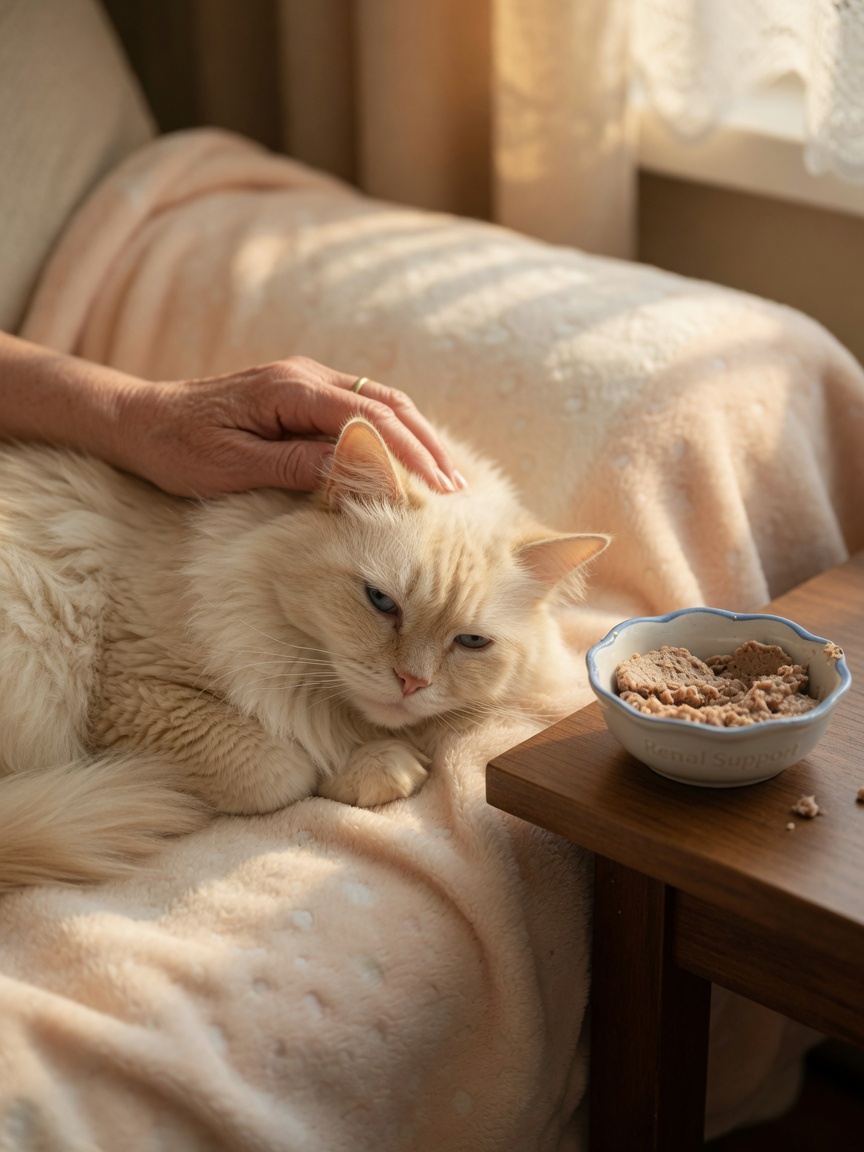
Chronic kidney disease is the most common cause of death in geriatric cats, affecting an estimated 50 per cent of cats over 15 years of age. Nutritional management is one of the few interventions shown to slow disease progression and extend survival in clinical trials.
The most critical nutritional modification in feline CKD is phosphorus restriction. Phosphorus retention drives renal mineralisation, secondary hyperparathyroidism, and progressive kidney damage. Prescription renal diets such as Royal Canin Renal and Hills Prescription Diet k/d are formulated with substantially reduced phosphorus levels compared to standard adult cat foods. They also provide:
- Moderately reduced protein — to limit uraemic waste without triggering the muscle wasting that cats are particularly susceptible to
- Increased omega-3 fatty acids — to reduce renal inflammation
- Added B vitamins — lost through polyuria
- High palatability formulations — including mousse, pâté, and jelly textures — to encourage adequate food intake in anorexic cats
The palatability challenge is real. Cats with uraemia often feel nauseous and are less motivated to eat. Introducing a renal diet gradually, warming the food, and offering multiple textures can help. Cats that refuse all renal diets should be given phosphate binders and a higher-quality standard food rather than allowed to stop eating altogether — malnutrition is acutely dangerous in cats.
Hyperthyroid Diets: The Iodine-Restricted Approach
Hills Prescription Diet y/d is a unique therapeutic food that manages feline hyperthyroidism by severely restricting dietary iodine. The thyroid gland requires iodine to produce thyroxine (T4) and triiodothyronine (T3). By limiting iodine intake to very low levels, y/d reduces thyroid hormone production and normalises thyroid function in many cats within a few weeks of exclusive feeding.
The critical word here is exclusive. For iodine restriction to work, the cat must consume no other food whatsoever — no treats, no table scraps, no access to other pets' bowls, and no flavoured medications. Even small amounts of dietary iodine from other sources will partially defeat the restriction and prevent normalisation of thyroid levels. This makes y/d impractical for cats that hunt, that live in multi-cat households where food-sharing cannot be controlled, or that refuse the diet.
When it works, y/d is a useful alternative to daily medication for owners who struggle with pilling. When the conditions for strict compliance cannot be guaranteed, methimazole tablets or transdermal gel, or surgical thyroidectomy, are more reliable options.
Urinary Diets: Struvite versus Oxalate — Not the Same Condition
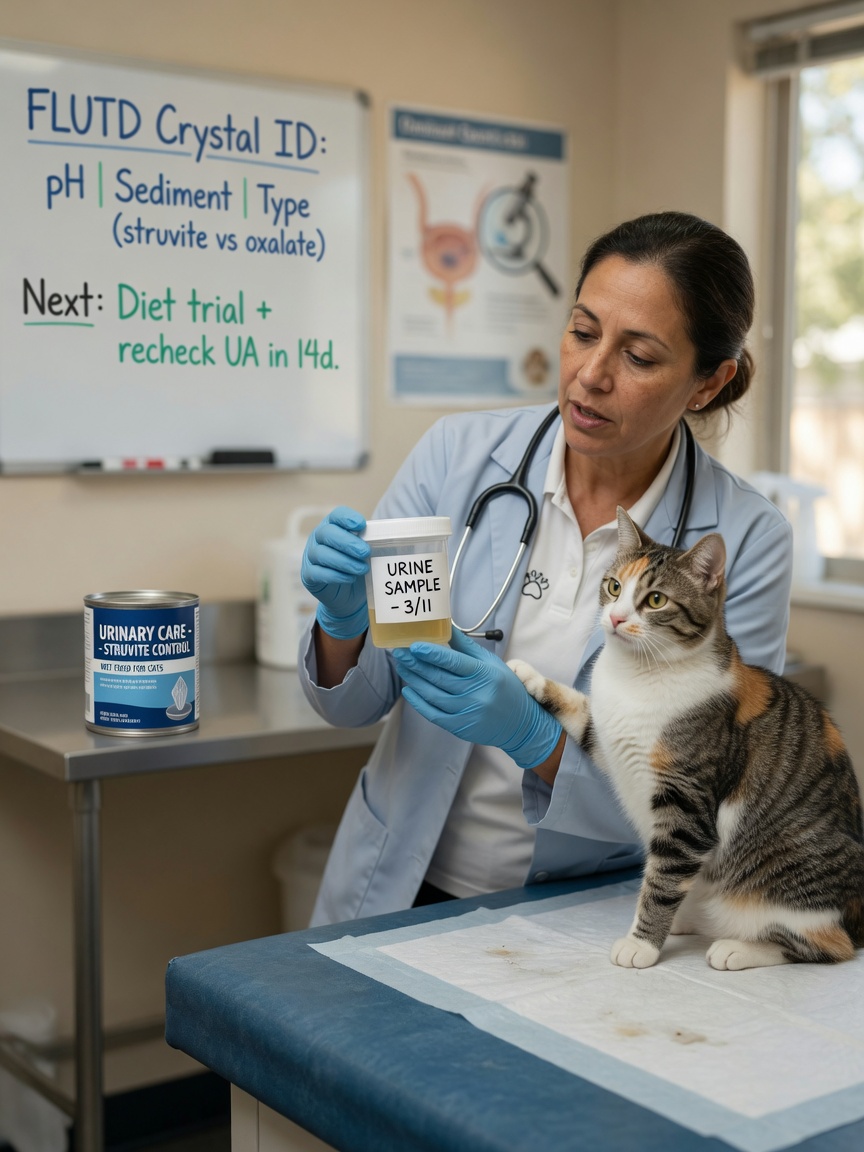
Feline lower urinary tract disease (FLUTD) encompasses several distinct conditions that require different dietary approaches. This is a critical point: a urinary diet designed for one condition may be inappropriate or harmful for another.
Struvite Crystal Dissolution and Prevention
Struvite crystals form in alkaline, concentrated urine. Prescription diets for struvite management — such as Hills c/d and Royal Canin Urinary SO — acidify urine, restrict magnesium and phosphorus, and increase water intake. Struvite stones can often be dissolved with these diets over four to twelve weeks, making surgery unnecessary.
Calcium Oxalate Prevention
Calcium oxalate crystals form in acidic urine and cannot be dissolved by diet — only prevented. Oxalate-preventive diets reduce urinary calcium excretion and avoid over-acidification. Using a struvite-dissolution diet in a cat with oxalate crystals will acidify the urine further and worsen the oxalate problem. Crystal type must be confirmed before selecting a urinary diet.
Increased water intake is beneficial for all urinary conditions. Wet food provides substantially more moisture than dry, and this alone reduces crystal formation risk. Many urinary cats do best on wet prescription diets rather than dry, regardless of crystal type.
Hydrolysed Diets for IBD and GI Lymphoma
Inflammatory bowel disease and low-grade intestinal lymphoma are difficult to distinguish clinically in cats without biopsy, and both often respond — at least partially — to dietary management with hydrolysed protein foods. In a hydrolysed diet, proteins are broken down into peptide fragments small enough to pass through the gut without triggering immune recognition. This reduces the antigen load that drives intestinal inflammation.
Royal Canin Anallergenic and Purina Pro Plan Veterinary Diets HA are hydrolysed options used in cats with suspected or confirmed food-responsive enteropathy. These diets are also used as the dietary component of an elimination trial when food allergy is suspected. They must be fed exclusively for the same reasons as elimination diets in dogs — any other protein source introduces antigens that could sustain the inflammatory response.
Diabetic Diets: High Protein, Low Carbohydrate
Cats are poorly adapted to high-carbohydrate diets. Unlike dogs, they lack the salivary enzyme amylase and have lower intestinal disaccharidase activity, meaning carbohydrates are digested less efficiently and cause greater postprandial glucose spikes. In diabetic cats, minimising dietary carbohydrate is therefore a primary nutritional goal.
Prescription diabetic diets such as Royal Canin Diabetic and Hills Prescription Diet m/d are formulated with high protein and very low carbohydrate levels — typically below 10 per cent of metabolisable energy from carbohydrates. High dietary protein also helps preserve lean muscle mass, which is often lost in uncontrolled feline diabetes. Many cats on a strict low-carbohydrate diet alongside insulin therapy achieve diabetic remission — a state where insulin injections are no longer needed. Dietary management is therefore not merely supportive but potentially curative in this species.
Written by Sarah Bennett