
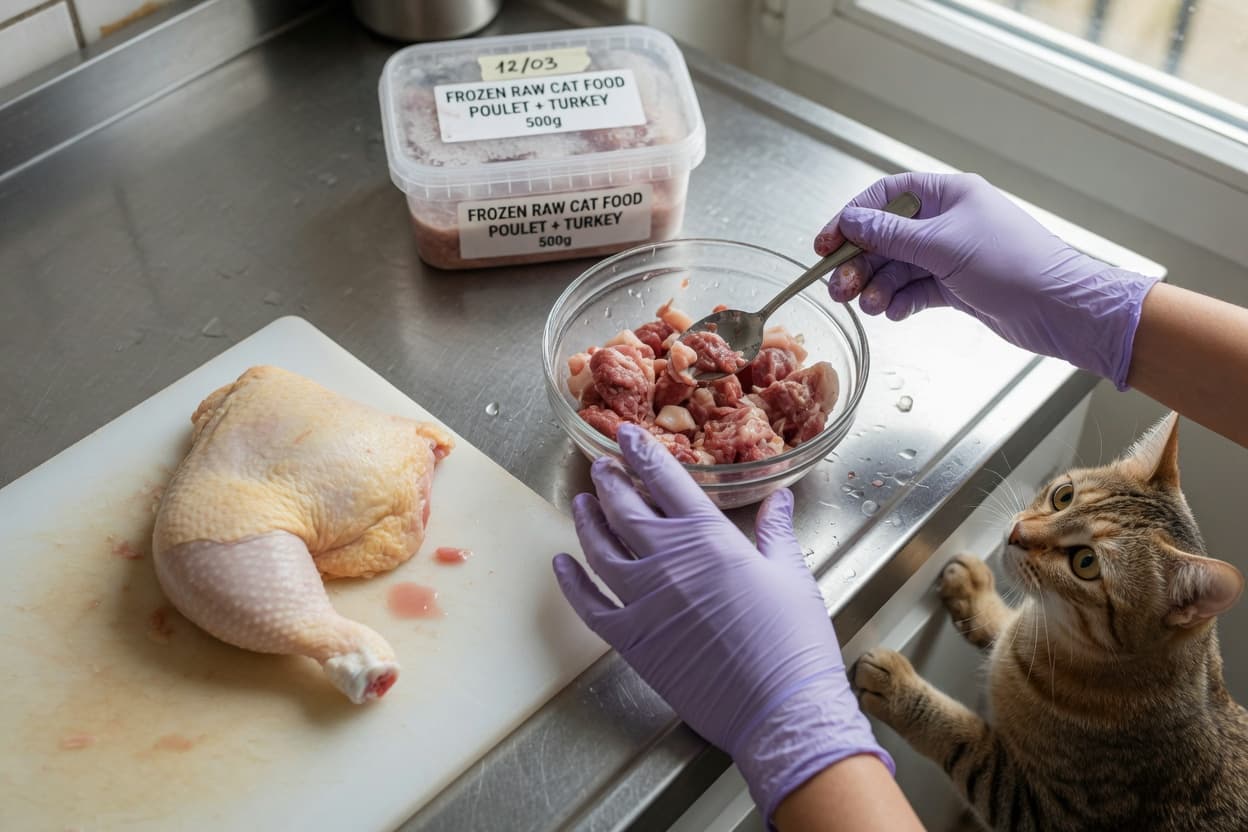
Why Raw Food and Cats Have a Complicated Relationship
Cats are obligate carnivores, which means their biology is fundamentally different from dogs and humans. They cannot survive on plant-based diets and have evolved to obtain essential nutrients exclusively from animal tissue. On the surface, this makes raw feeding seem like an obvious fit — after all, wild felids eat raw prey. In practice, however, feeding raw to domestic cats involves a set of nutritional and safety considerations that owners must understand before making the switch.
This guide examines what the science says about raw cat food, the specific nutrients at risk, the genuine health hazards, and current UK food safety guidance for owners considering this approach.
Taurine: The Amino Acid That Can Diminish in Frozen Raw Meat
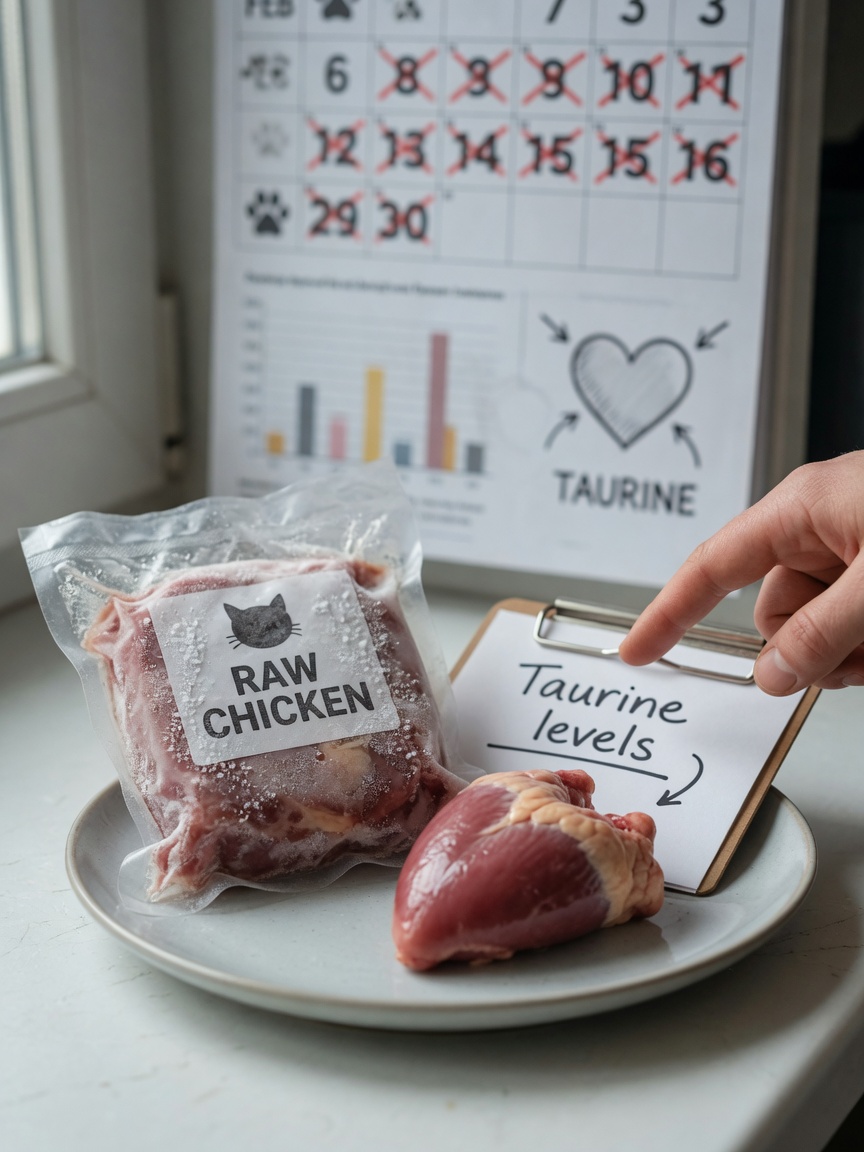
Taurine is an amino acid that cats cannot synthesise in sufficient quantities on their own, making dietary intake essential. Unlike dogs, cats have a very limited ability to produce taurine from other amino acids. Deficiency leads to dilated cardiomyopathy, a serious and potentially fatal heart condition, as well as central retinal degeneration causing irreversible blindness.
Fresh raw meat — particularly heart muscle — contains meaningful amounts of taurine. However, freezing degrades taurine over time. Studies have shown that taurine levels in meat can decline significantly with prolonged frozen storage, particularly beyond one to two months. If you are feeding a raw diet based on commercially frozen raw products or home-prepared meals stored in the freezer for extended periods, taurine content may be lower than you expect. This is a critical reason why home-prepared raw diets require careful formulation and ideally veterinary nutritionist input.
Arachidonic Acid: What Cats Cannot Make Themselves
Another nutrient that sets cats apart from most other mammals is arachidonic acid, an omega-6 fatty acid that plays a vital role in inflammation response, blood clotting, and reproductive function. Cats lack sufficient delta-6-desaturase enzyme activity to convert linoleic acid into arachidonic acid, which most other animals can do. This means arachidonic acid must come directly from animal fat in the diet.
Raw meat, particularly fatty animal tissues, does supply arachidonic acid. This is one area where a well-formulated raw diet based on diverse animal tissues can actually meet feline needs effectively. However, if a raw diet is lean or heavily plant-supplemented, arachidonic acid intake may fall short.
The Thiaminase Problem in Fish-Based Raw Diets
Many cat owners who feed raw include fish, which cats tend to find palatable. However, certain fish — including carp, herring, and many saltwater species — contain thiaminase, an enzyme that destroys thiamine (vitamin B1) in the gut. Thiamine deficiency in cats causes serious neurological signs including loss of coordination, seizures, and death if untreated.
Cooking destroys thiaminase, which is why commercial cooked fish-based cat foods do not carry this risk. If raw fish forms a significant part of the diet, owners should limit it to thiaminase-free species such as salmon (in moderation), or use cooked fish instead. Raw fish should never make up the majority of a cat's diet.
Bacterial and Parasitic Risks: What Is Particularly Relevant to Cats
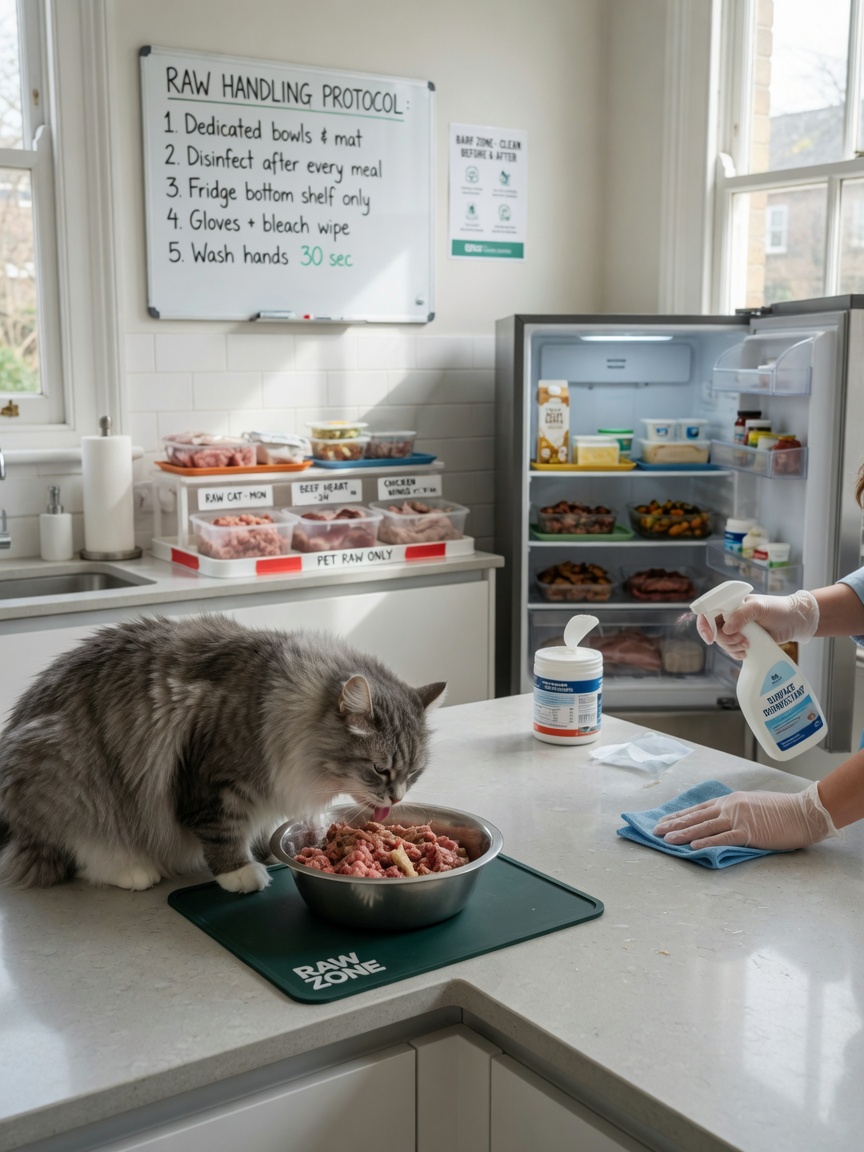
The bacterial risks associated with raw pet food — Salmonella and E. coli in particular — are well established. These pathogens can be present in raw meat and pose a risk both to the cat and to people in the household through environmental contamination. Most healthy adult cats handle bacterial exposure through stomach acid and immune defences, though immunocompromised cats, kittens, and elderly cats face higher risk of illness.
For cats specifically, Toxoplasma gondii deserves particular attention. Cats are the definitive host for Toxoplasma, meaning the parasite can complete its full lifecycle in feline intestinal cells and be shed as oocysts in cat faeces. Cats can become infected by eating raw or undercooked infected meat — particularly lamb, pork, and venison. A cat that sheds Toxoplasma oocysts represents a risk to pregnant owners, whose unborn babies can be seriously harmed by primary Toxoplasma infection during pregnancy. Immunocompromised individuals are also at risk.
While cats typically only shed oocysts for a short window following their first exposure, raw feeding increases the likelihood of that exposure occurring. This is a significant welfare and public health consideration that is sometimes underplayed in raw feeding discussions.
FSA Guidance on Raw Pet Food
The UK Food Standards Agency (FSA) advises pet owners who choose to feed raw pet food to handle it carefully, using the same hygiene practices as raw meat intended for human consumption. The FSA recommends:
- Washing hands thoroughly with soap and water after handling raw pet food and after contact with the pet's feeding area
- Cleaning and disinfecting all surfaces and utensils used to prepare raw pet food
- Storing raw pet food separately from human food and keeping it frozen until required
- Not allowing pets to lick faces after eating, particularly around young children or vulnerable individuals
- Disposing of any uneaten raw food promptly
The FSA does not prohibit raw pet food but notes the risks associated with it and expects manufacturers of raw pet food to meet relevant food safety standards.
Is Raw Feeding Right for Your Cat?
There is no single correct answer. A well-formulated, fresh raw diet based on diverse whole prey or carefully balanced ingredients can meet feline nutritional requirements. However, the risks of nutritional imbalance are real, especially for home-prepared meals lacking professional formulation. Taurine shortfalls, thiaminase exposure, and parasitic risks are specific concerns that require active management rather than assumptions.
If you are considering raw feeding, the most important steps are to consult a veterinary nutritionist to ensure the diet is properly balanced for your individual cat, to source high-quality raw ingredients from reputable suppliers, and to practise rigorous food hygiene throughout. Cats with underlying health conditions, pregnant owners in the household, or immunocompromised family members should approach raw feeding with extra caution.
Commercial raw pet foods formulated to FEDIAF standards offer a middle ground for owners who want the benefits of minimally processed food without bearing the full nutritional formulation burden themselves. Always check that any commercial raw food carries a complete and balanced nutritional statement appropriate for your cat's life stage.
Summary
- Cats are obligate carnivores with specific nutritional needs that raw diets can meet — if properly formulated
- Taurine in raw meat degrades over time during frozen storage, raising deficiency risk
- Arachidonic acid must come from animal fat as cats cannot synthesise it from plant sources
- Raw fish containing thiaminase can cause thiamine deficiency — a serious neurological risk
- Toxoplasma is a particular concern with raw cat feeding, especially for pregnant or immunocompromised owners
- FSA guidance stresses strict hygiene practices when handling raw pet food
- Professional nutritional formulation is strongly recommended for home-prepared raw diets
Written by Sarah Bennett, pet health writer at ForPetsHealthcare.