
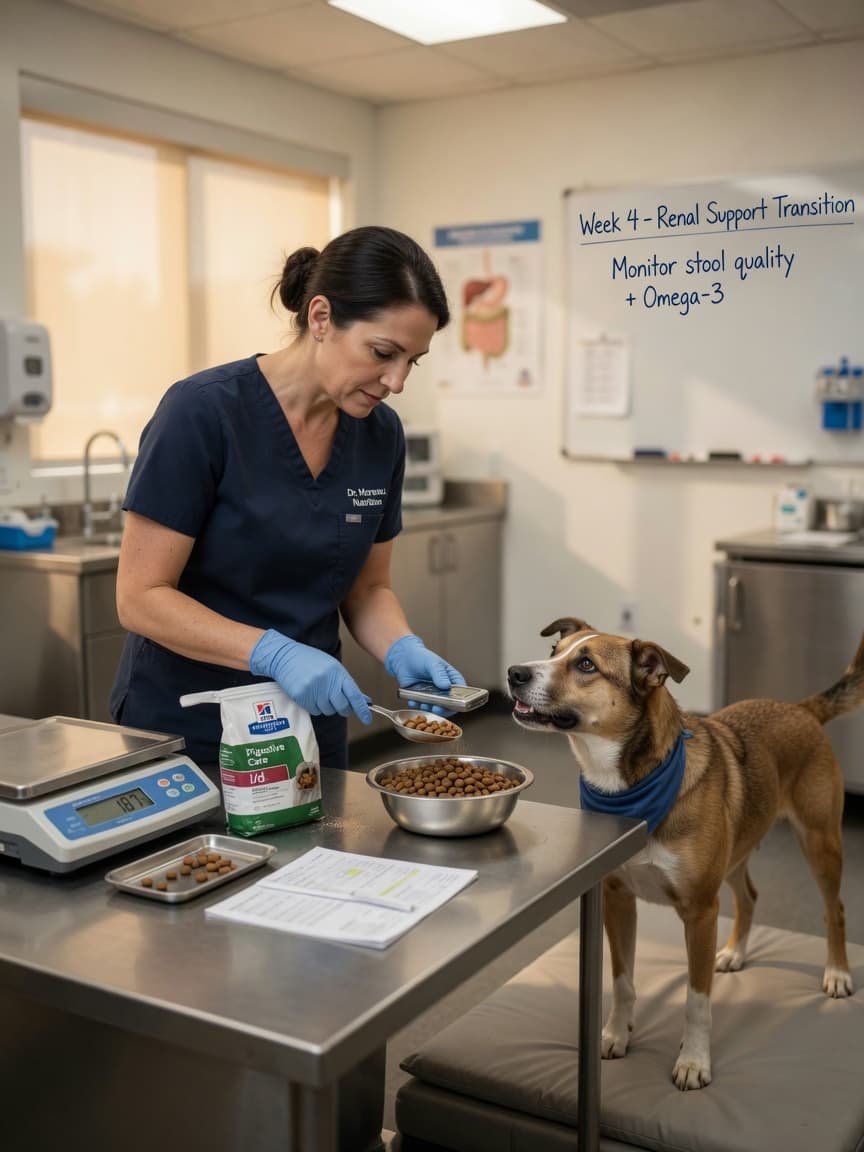
Why Prescription Diets Are Different from Regular Dog Food
Prescription or veterinary therapeutic diets are not simply premium foods with a clever label. They are formulated to contain therapeutic levels of specific nutrients — or to restrict others — to a degree that would be inappropriate and potentially harmful for a healthy animal. Because of this, they are legally classified differently from standard pet foods in the UK and EU, and selling them without a veterinary recommendation is not permitted for the most tightly controlled formulations.
The goal of a therapeutic diet is to use nutrition as an active medical tool. In the same way that a drug is prescribed at a specific dose to treat a condition, a therapeutic diet adjusts the nutrient composition of everything a dog eats, every day, to support a diseased organ or reduce metabolic stress. This is why compliance is so critical: even occasional non-prescribed treats or table scraps can undermine the therapeutic effect significantly.
Renal Diets: Supporting the Failing Kidney

Chronic kidney disease (CKD) is one of the most common conditions in middle-aged and older dogs, and dietary management is a cornerstone of treatment. The kidneys filter waste products from protein metabolism, and when kidney function declines, these waste products accumulate in the bloodstream — a state called uraemia that causes nausea, lethargy, and progressive damage.
Renal prescription diets address this through several mechanisms:
- Reduced phosphorus — phosphorus retention is a key driver of kidney disease progression and the associated bone and cardiovascular complications. Renal diets restrict phosphorus to levels far below standard foods.
- Adjusted protein — protein quantity is moderated to reduce the uraemic load, while protein quality is increased to minimise waste from what is consumed. This is a careful balance, as too little protein causes muscle wasting.
- Added omega-3 fatty acids — these reduce renal inflammation and slow disease progression.
- Increased B vitamins — lost through the increased urination that accompanies kidney disease.
Leading products include Hills Prescription Diet k/d and Royal Canin Renal. Both are available in wet and dry formulations, with wet food often preferred in CKD to support hydration. Your vet will recommend initiating the diet based on International Renal Interest Society (IRIS) staging of the disease.
Urinary Diets: Dissolving and Preventing Crystals
Urinary problems in dogs — including struvite and calcium oxalate crystal formation, bladder stones (uroliths), and recurrent infections — are managed through diets that alter the urine's chemical environment.
Struvite stones form in alkaline urine and can often be dissolved non-surgically using acidifying diets such as Hills Prescription Diet c/d or Royal Canin Urinary SO. These diets reduce urinary pH, limit the minerals that form struvite crystals, and increase urine volume to dilute potential stone-forming substances. Calcium oxalate stones, by contrast, form in acidic urine and cannot be dissolved — dietary management here is about prevention rather than dissolution, using a different nutrient profile that limits calcium and oxalate precursors while maintaining appropriate urine pH.
It is important to note that the diet appropriate for struvite prevention is not the same as for oxalate prevention. A precise diagnosis of the stone or crystal type — via urinalysis, imaging, or stone analysis — is essential before a urinary diet is selected.
Gastrointestinal Diets: Supporting Digestive Recovery
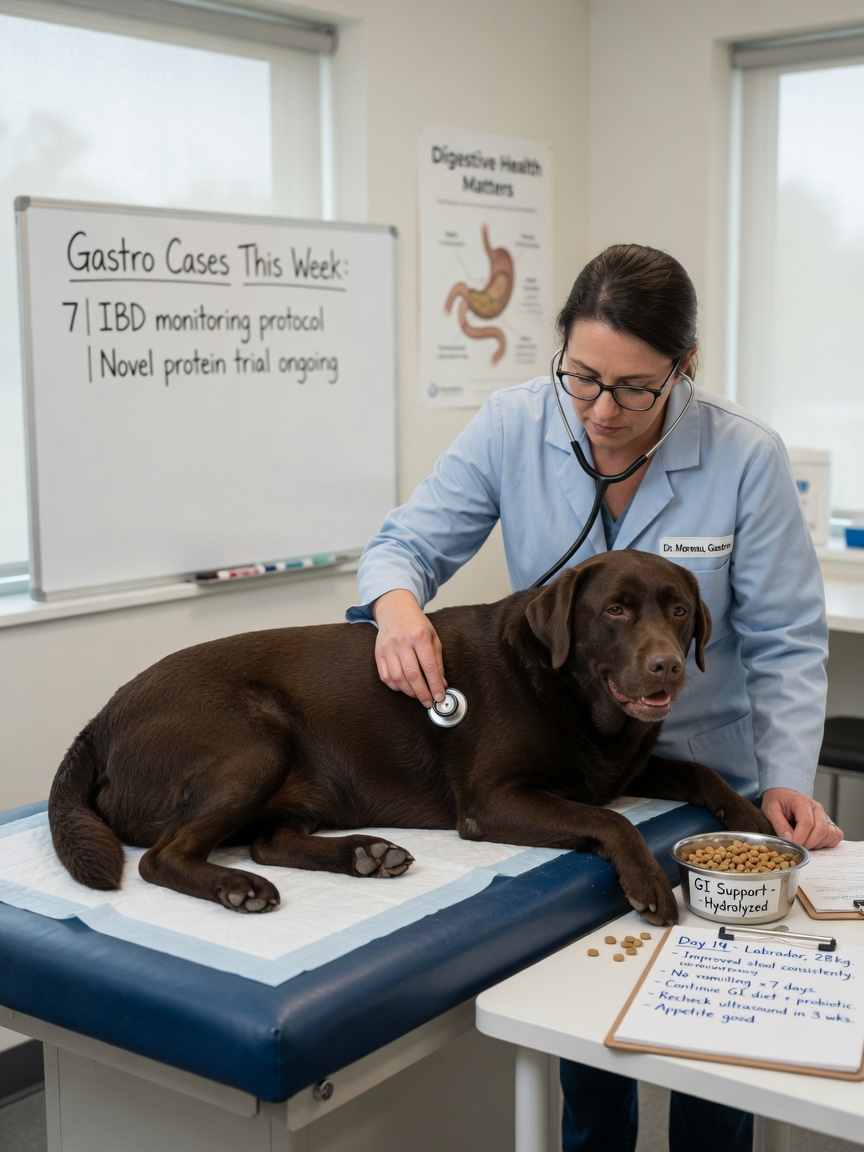
Dogs with inflammatory bowel disease, acute gastroenteritis, pancreatitis, or post-surgical recovery often benefit from highly digestible gastrointestinal diets. Hills Prescription Diet i/d is one of the most widely used in this category. These foods are formulated to be gentle on the digestive tract through several characteristics:
- High digestibility — ingredients are processed to maximise nutrient absorption with minimal residue reaching the large intestine
- Low fat — critical for dogs with pancreatitis, where dietary fat triggers further pancreatic inflammation
- Added prebiotics — to support a healthy gut microbiome
- Restricted fibre — to reduce intestinal workload during recovery
These diets are typically used short-term for acute conditions, though dogs with chronic IBD may require them long-term as part of ongoing management.
Cardiac Diets: Taurine, Carnitine, and Sodium Control
Dogs with heart disease — particularly dilated cardiomyopathy (DCM) and mitral valve disease — benefit from diets formulated to reduce the workload on the heart and support cardiac muscle function. Key features include:
- Taurine and L-carnitine supplementation — these amino acids are essential for cardiac muscle function and are deficient in some dogs with DCM, particularly those fed certain grain-free diets
- Restricted sodium — to reduce fluid retention and ease the burden on a compromised cardiovascular system
- Omega-3 fatty acids — for their anti-inflammatory and anti-arrhythmic properties
Liver and Copper-Restricted Diets
Certain breeds — particularly Bedlington Terriers, Labrador Retrievers, and Dalmatians — are predisposed to copper accumulation in the liver, leading to chronic hepatitis and cirrhosis. Prescription diets for liver disease are formulated with restricted copper levels and often feature reduced protein from high-quality sources to limit ammonia production in dogs prone to hepatic encephalopathy.
Weight Management: Obesity and Metabolic Diets
Obesity diets such as Hills Prescription Diet Metabolic or Royal Canin Satiety are formulated differently from over-the-counter lite foods. They contain higher protein to preserve lean muscle during calorie restriction, specific fibres to increase satiety, and precisely controlled calorie density. These are most useful in dogs where standard dietary advice has failed or where weight loss is medically urgent due to orthopaedic, respiratory, or metabolic conditions.
When to Choose Prescription versus Generic Foods
The prescription brands dominate the therapeutic market because they have the most extensive clinical trial data and quality control. However, some well-formulated general foods may be appropriate for early or mild conditions under veterinary guidance. The decision should always be made with your vet, who can assess disease severity, palatability concerns, and cost alongside clinical need. Never switch a dog off a prescribed diet without veterinary advice, even if the animal seems well.
Written by Sarah Bennett