
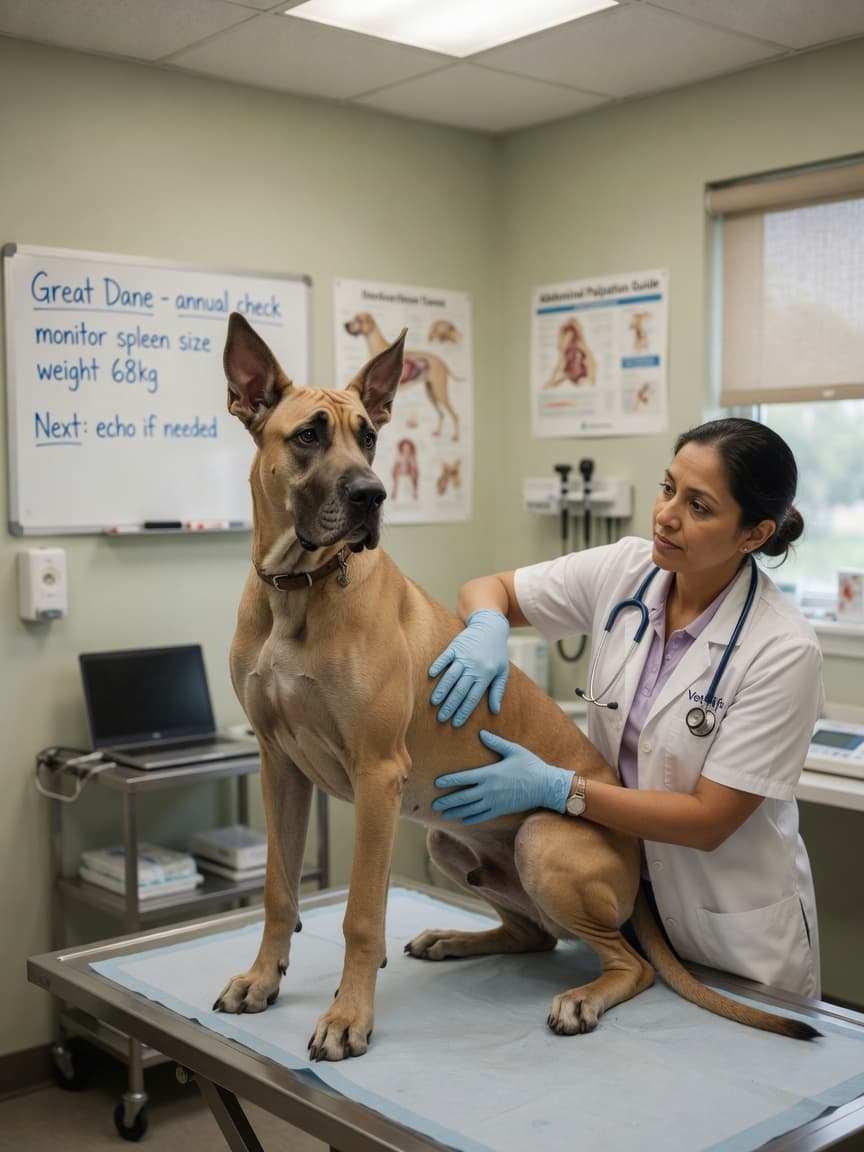
Great Danes are one of the breeds most vulnerable to gastric dilatation-volvulus (GDV, commonly called "bloat"), a life-threatening emergency in which the stomach fills with gas and may twist upon itself. Their deep, narrow chest allows the stomach to swing and rotate more easily than in breeds with shallower chests, and this anatomical quirk, combined with their size, puts them firmly in the highest-risk category of any breed. The single most important thing every Great Dane owner must know is this: bloat is a race against time — if you suspect it, treat it as a genuine emergency and get to a vet immediately, because delay of even an hour or two can be fatal.
Why Great Danes Are So Prone to Bloat
GDV is strongly linked to chest conformation. Dogs with a deep, narrow thoracic cavity — where the chest is much deeper (top to bottom) than it is wide — have proportionally more space for the stomach to move, stretch, and rotate around its supporting ligaments. Great Danes have one of the deepest chest-to-width ratios of any breed, which is why veterinary research consistently places them at or near the top of breed-risk lists for this condition.
Genetics also plays a role independent of chest shape alone; dogs with a first-degree relative (parent or sibling) that has bloated appear to carry increased risk themselves, suggesting an inherited component to stomach ligament laxity or motility. Other contributing factors that have been observed in large, deep-chested breeds include eating a single large meal quickly, exercising vigorously around mealtimes, and being underweight or having a nervous, anxious temperament. Age is also relevant: risk tends to increase as Great Danes move into middle age and beyond, though bloat can strike younger dogs too. For a broader picture of the breed's traits and health tendencies, see the Great Dane breed guide.
Early Signs and Symptoms to Watch For
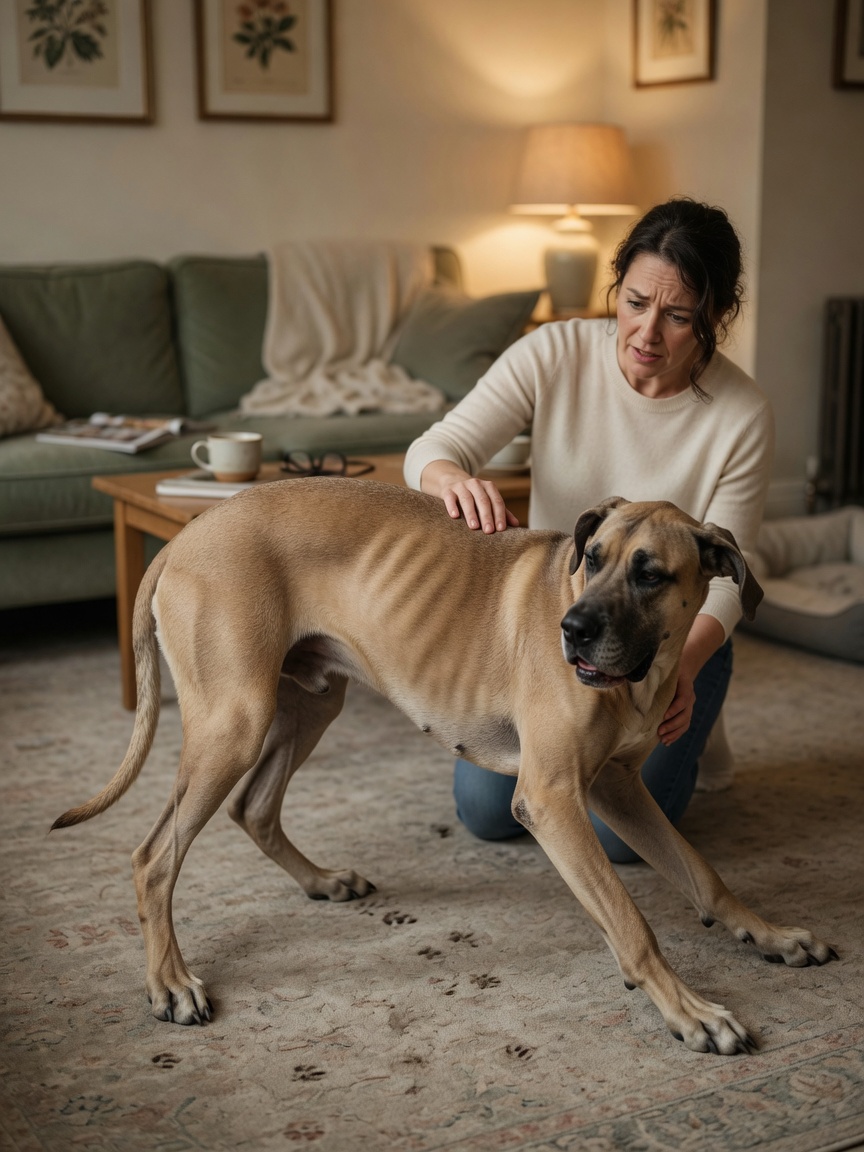
Bloat can escalate rapidly, so recognising the early signs matters enormously. Watch for:
- A visibly swollen, tight, or distended abdomen (though this is not always obvious in deep-chested dogs)
- Repeated unproductive retching — trying to vomit or bring up wind with little or nothing coming up
- Restlessness, pacing, or an inability to settle or lie comfortably
- Excessive drooling
- Standing with a hunched posture, or stretching repeatedly as if trying to relieve discomfort
- Rapid, shallow breathing
- Pale or discoloured gums
- Collapse or weakness in advanced cases
Not every dog shows all of these signs, and a swollen belly is not always the first or most obvious symptom — unproductive retching is often the most telling early clue in Great Danes.
When It's an Emergency
Bloat is always an emergency. There is no "wait and see" period that is safe. If your Great Dane is retching without producing vomit, appears distressed, has a tense or swollen abdomen, or is uncharacteristically restless after eating, contact an emergency vet immediately — do not wait until morning or for a routine appointment. Once the stomach twists (volvulus), blood supply to the stomach and spleen can be cut off, and shock can develop within a very short time. Every minute of delay reduces the chances of a good outcome, so err firmly on the side of caution and treat any suspicious combination of these signs as a genuine crisis.
Diagnosis
A vet will typically begin with a physical examination, checking for a distended, tympanic (drum-like) abdomen and signs of shock such as pale gums, rapid heart rate, and weak pulses. An abdominal X-ray is the key diagnostic tool, as it allows the vet to distinguish simple gastric dilatation (bloating without twisting) from full volvulus (bloating with rotation), which look different on imaging and require different levels of urgency in treatment. Blood tests are usually run alongside imaging to assess the dog's overall stability, check for signs of organ compromise, and guide fluid and medication decisions before and during any surgery.
Management and Treatment Options
Treatment for GDV is almost always immediate and intensive. Initial stabilisation typically involves intravenous fluids to counter shock, and decompression of the stomach — either by passing a tube or by inserting a needle through the body wall — to relieve pressure and gas build-up. Pain relief is given early, as GDV is extremely painful.
If the stomach has twisted, emergency surgery is required to untwist it and check the health of the stomach wall and spleen, removing any tissue that has been irreversibly damaged by loss of blood supply. During this same surgery, vets will almost always perform a procedure called gastropexy, which surgically tacks the stomach to the body wall to prevent future twisting. This does not prevent the stomach from bloating again, but it dramatically reduces the risk of it rotating, which is the truly life-threatening part of the condition.
Recovery involves hospitalisation for monitoring of heart rhythm (irregular heartbeats are common after GDV surgery), pain management, and a gradual reintroduction of food. Some dogs recover uneventfully; others need closer, longer-term monitoring depending on how much of the stomach or spleen was affected.
Prevention and Daily Care
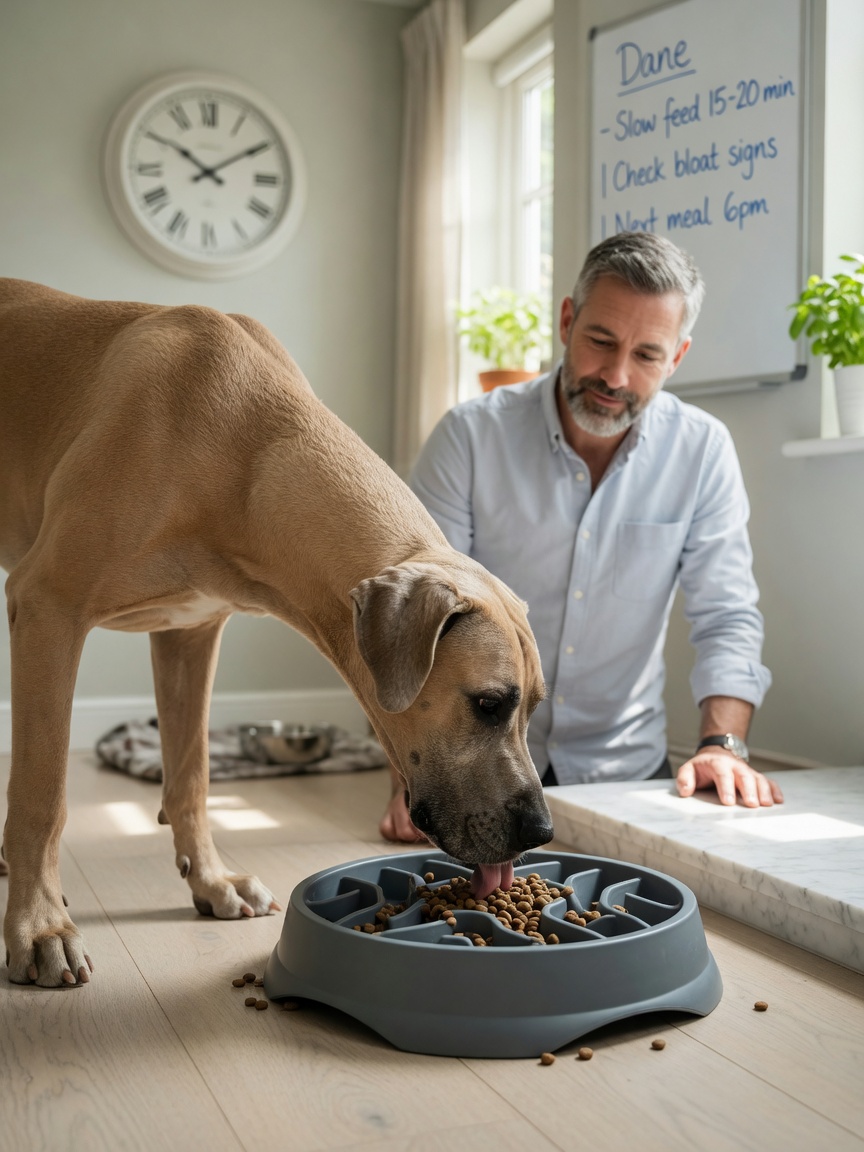
While no strategy eliminates the risk of bloat entirely, several evidence-supported measures can help lower it in Great Danes:
- Feed two or three smaller meals a day rather than one large meal
- Avoid vigorous exercise, excitement, or stress for a reasonable period before and after meals
- Use slow-feeder bowls if your dog tends to gulp food quickly
- Avoid elevated food bowls unless specifically advised by your vet, as raised feeders have been associated with increased risk in some studies
- Maintain a calm feeding environment, particularly for anxious or excitable dogs
- Discuss prophylactic (preventive) gastropexy with your vet — this is a surgery, sometimes done at the same time as neutering, that tacks the stomach in place before any bloat episode occurs, and is genuinely worth considering given how high-risk this breed is
- Know your dog's family history if possible, as a relative with a history of bloat raises your own dog's risk
Cost and Prognosis Realism
GDV treatment is genuinely expensive, involving emergency diagnostics, hospitalisation, surgery, and post-operative care, and costs can escalate quickly, particularly out of hours. It is worth discussing GDV cover specifically when choosing pet insurance for a Great Dane, given how common and costly this emergency is in the breed.
Prognosis depends heavily on how quickly treatment begins. Dogs treated promptly, before significant tissue damage or shock has set in, generally have a good chance of recovery. Dogs whose treatment is delayed, or who have significant damage to the stomach or spleen by the time surgery happens, face a more guarded outlook. This is precisely why swift recognition and immediate veterinary attention make such a profound difference to outcomes.
Can bloat happen even with a gastropexy?
Yes — a gastropexy prevents the stomach from twisting (volvulus), but the stomach can still fill with gas and distend (dilatation). This is far less dangerous than a full twist, but it can still cause discomfort and, in rare cases, may still need veterinary attention, so owners of gastropexied dogs should still watch for symptoms.
Is it safe to let my Great Dane exercise right after eating?
It's sensible to avoid strenuous exercise, excitement, or play for a period after meals, and to let your dog settle rather than racing around straight after eating or drinking large amounts of water. This is a precaution based on general risk-reduction advice rather than a guaranteed preventive measure.
Should every Great Dane have a preventive gastropexy?
Many vets recommend discussing prophylactic gastropexy for Great Danes specifically, given how disproportionately high their risk of GDV is compared to most other breeds. It's a decision worth making individually with your vet, weighing your dog's health, temperament, and family history.
This article is for general informational purposes only and does not replace professional veterinary advice. Always consult your vet promptly for diagnosis and treatment if you suspect your Great Dane may be experiencing bloat.