

Dog Food Ingredients to Avoid: The Red Flag List
Reading a dog food label can feel like decoding a chemistry textbook. Most ingredients are benign or even beneficial — but a subset of additives, preservatives, and filler materials have accumulated enough safety concern, regulatory scrutiny, or documented adverse effects to warrant scrutiny. Here is a plain-language breakdown of the ingredients most worth paying attention to, and why.
BHA and BHT (Synthetic Antioxidant Preservatives)
Butylated hydroxyanisole (BHA) and butylated hydroxytoluene (BHT) are synthetic antioxidants used to prevent fat oxidation in pet foods. They are effective preservatives and have been used in both human and pet food for decades. However, their safety profile has attracted increasing regulatory attention.
The U.S. National Toxicology Program has listed BHA as "reasonably anticipated to be a human carcinogen" based on studies showing carcinogenicity in animals at high doses. BHT has shown mixed results — some studies indicate liver and thyroid effects at elevated doses in rodents. The key qualifier is always dose: the concentrations used in pet food are substantially lower than those used in animal toxicity studies.
That said, natural alternatives — mixed tocopherols (vitamin E), rosemary extract, and ascorbic acid (vitamin C) — are readily available and widely used by premium manufacturers. When a brand still uses BHA or BHT, the question worth asking is why. The FDA's pet food labeling guidance requires these preservatives to be declared on the label, so they are identifiable.
Ethoxyquin: The Additive With a Complicated History
Ethoxyquin is a synthetic antioxidant originally developed as a pesticide and rubber stabilizer. In pet food, it has been used primarily to preserve fish meal. It is considerably more potent than BHA or BHT as a preservative, which is why it found a niche in fat-heavy ingredients like fish meal that are prone to rapid oxidation.
Ethoxyquin was the subject of a 1997 FDA investigation after reports of adverse health effects in dogs — including liver problems, skin conditions, and reproductive issues — though a causal link was never definitively established. The FDA requested that manufacturers voluntarily reduce ethoxyquin levels in dog food, and usage has declined significantly since. Many manufacturers now specifically advertise "ethoxyquin-free" fish meal.
The complicating factor is that ethoxyquin added to fish meal at the processing facility does not always appear on the final pet food label, because by law it only needs to be declared if the pet food manufacturer adds it directly. If the fish meal arrives already preserved, it may not appear in the ingredient list. If ethoxyquin is a concern for you, contacting the manufacturer directly to ask about their fish meal sourcing is more reliable than reading the label alone.
Carrageenan: Under Review in Wet Foods
Carrageenan is a natural polysaccharide derived from red seaweed, used as a thickener and gelling agent in wet dog and cat foods. "Natural" origin does not automatically mean safe, and carrageenan has been the subject of ongoing regulatory and scientific debate.
Research — including studies reviewed on PubMed (PMID: 22100933) — has linked carrageenan (particularly degraded carrageenan, also called poligeenan) to intestinal inflammation, ulceration, and potential promotion of colorectal cancer in animal models. The concentrations and forms used in food-grade applications differ from those in laboratory studies, but the National Organic Standards Board removed carrageenan from its approved list for organic foods in 2016, citing safety concerns — a signal worth noting.
For dogs with inflammatory bowel disease (IBD), colitis, or other gastrointestinal sensitivities, avoiding carrageenan in wet food is a reasonable precaution that many veterinary gastroenterologists recommend, even in the absence of definitive proof of harm at label doses.
Artificial Dyes (Red 40, Yellow 5, Yellow 6, Blue 2)
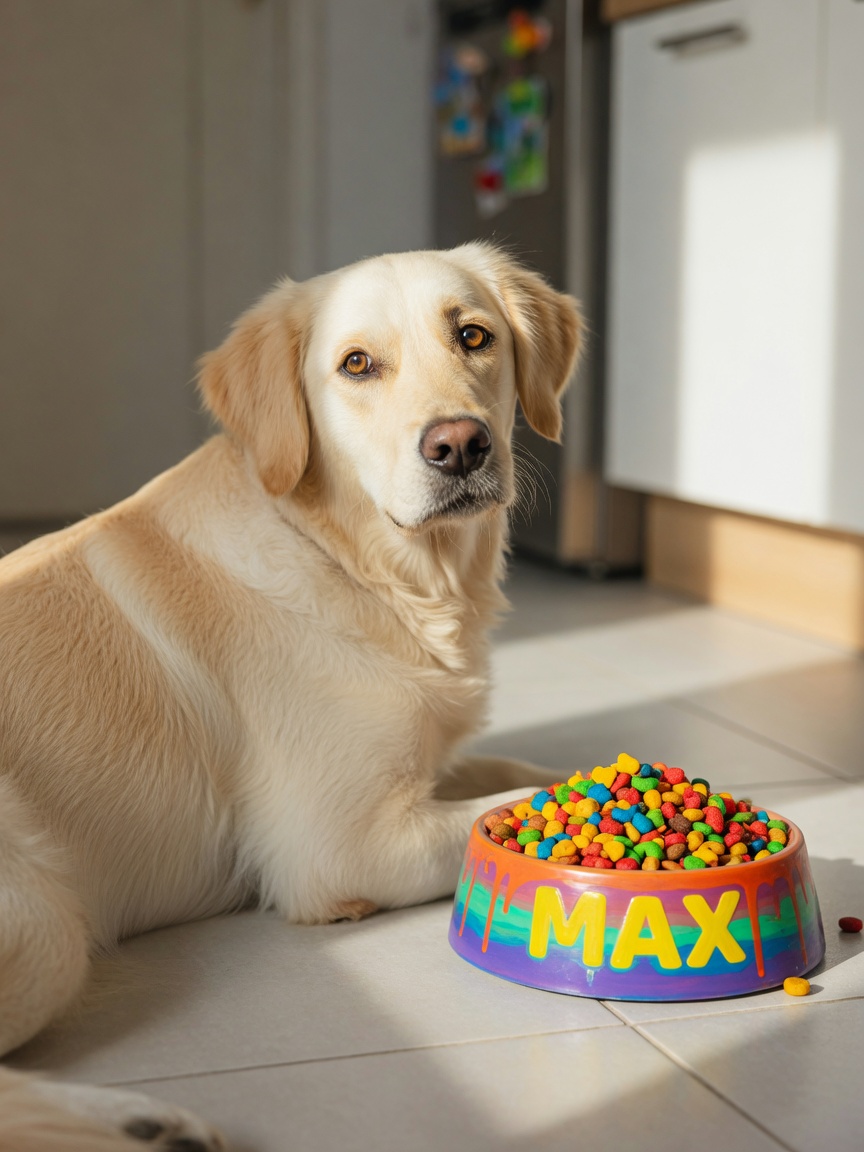
Artificial food dyes in pet food serve a single purpose: to make the product look more appealing to the human buyer. Dogs have dichromatic vision — they cannot perceive the full spectrum of colors that artificial dyes are designed to display. There is no nutritional function whatsoever.
The safety concerns around artificial dyes in pet food parallel those in human food. The ASPCA Animal Poison Control Center and several veterinary dermatologists have noted that artificial dyes may contribute to adverse food reactions in sensitive animals, though they are not among the most common triggers. Blue 2 dye has been associated with brain tumor development in male rats in long-term studies, though the applicability to dogs at food-level doses is unclear.
The practical case against artificial dyes is straightforward: they provide no benefit to the animal, carry at least some level of theoretical risk, and their presence signals that a manufacturer is prioritizing shelf appearance over nutritional philosophy. A food that needs artificial coloring to look appealing is likely relying on visual marketing rather than ingredient quality.
Propylene Glycol: Banned in Cat Food, Questionable in Dog Food
Propylene glycol is a synthetic compound used as a humectant (moisture-retaining agent) in semi-moist dog treats and food. It keeps soft textures soft without refrigeration. The FDA has banned its use in cat food because it causes Heinz body anemia in cats. For dogs, it remains permitted at low concentrations.
However, dogs with underlying sensitivity to oxidative stress — including certain breeds predisposed to hemolytic anemia — may be more susceptible to propylene glycol's effects. Beyond the health angle, propylene glycol is one of those ingredients that signals a highly processed product designed for extended shelf life rather than nutritional density. Better-quality semi-moist foods achieve texture through moisture management and refrigeration rather than chemical humectants.
Rendered Meals From Unspecified Sources
This is one of the most practically important items on this list. "Meat meal," "bone meal," "poultry meal," and "animal fat" without a named species are generic rendered ingredients whose source material is unverifiable by the consumer. Rendering is the process of cooking animal tissue at high temperature to remove moisture and fat, producing a shelf-stable, concentrated protein powder.
The issue with unspecified meals is not primarily safety — rendered meals are legally required to meet AAFCO composition standards. The issue is quality consistency and ingredient transparency. Generic animal meals may include material from multiple species, varying tissue types, and — in some cases documented by investigative reports — materials from diseased animals, roadkill, or euthanized shelter animals. This is technically legal under current FDA regulations for pet food, though it is not universal practice.
Named meals — "chicken meal," "salmon meal," "lamb meal" — are traceable to a single species and generally reflect higher quality control. The AKC's guide to reading dog food labels recommends looking for specifically named proteins in the first three ingredients.
Research published on PubMed (PMID: 30285295) on pet food quality and labeling transparency found significant discrepancies between labeled and actual ingredients in some commercial products, underscoring the importance of species-specific ingredient naming and third-party testing.
Want dog food with fully transparent ingredient lists? Zooplus carries a curated range of premium brands that use named protein meals, natural preservatives, and no artificial dyes. Explore clean-ingredient dog foods on Zooplus.
How to Read a Label More Effectively
Beyond individual ingredients, a few label-reading habits reduce your exposure to these red flags:
- Look at ingredient order: Ingredients are listed by weight before processing. A named meat or meal in the first two positions is a good sign; if the first protein is a generic "meat" or "poultry," investigate further.
- Check the preservative system: Natural preservatives (mixed tocopherols, ascorbic acid, rosemary) are preferable to BHA, BHT, or ethoxyquin. Look for them in the last quarter of the ingredient list where preservatives typically appear.
- Question the color: Bright red kibble or unnaturally orange wet food has been artificially colored. Natural meat-based foods are shades of brown and grey.
- Contact the manufacturer: For questions about ethoxyquin in fish meal or sourcing of rendered meals, a reputable company will answer directly and promptly. Vague or defensive responses are informative.
Considering a CBD supplement alongside a cleaner diet? HolistaPet offers pet-specific hemp extract products formulated without artificial additives. View HolistaPet's dog wellness range.
Key Takeaways
- BHA and BHT are synthetic preservatives with some carcinogenicity signals in animal studies — natural alternatives (mixed tocopherols, vitamin C) are widely available and preferable.
- Ethoxyquin used to preserve fish meal may not appear on the final pet food label — contact the manufacturer directly if this is a concern.
- Carrageenan has been linked to intestinal inflammation in animal models; worth avoiding in dogs with GI sensitivities.
- Artificial dyes (Red 40, Yellow 5, Blue 2) serve no nutritional purpose in pet food and their presence often signals a cosmetically-driven formulation.
- Propylene glycol is banned in cat food and is a signal of heavy processing in dog food — particularly in semi-moist products.
- Generic rendered meals ("meat meal," "animal fat") without a named species are legally permissible but reflect poor ingredient transparency — always prefer species-named proteins.
References
- Tobacman JK. "Review of harmful gastrointestinal effects of carrageenan in animal experiments." Environmental Health Perspectives. 2001. PMID: 22100933
- Okuma TA, Hellberg RS. "Identification of meat species in pet foods using a real-time polymerase chain reaction (PCR) assay." Food Control. 2015. PMID: 30285295