
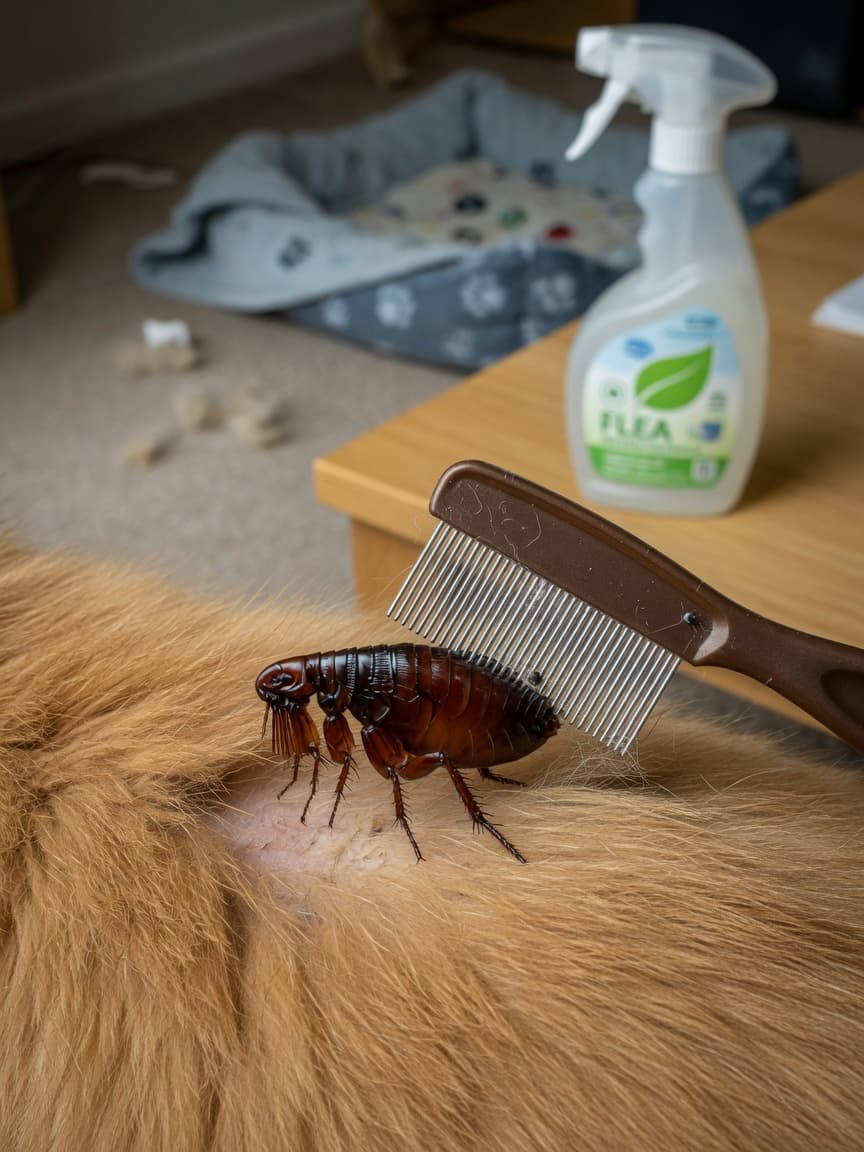
Understanding the Flea Lifecycle
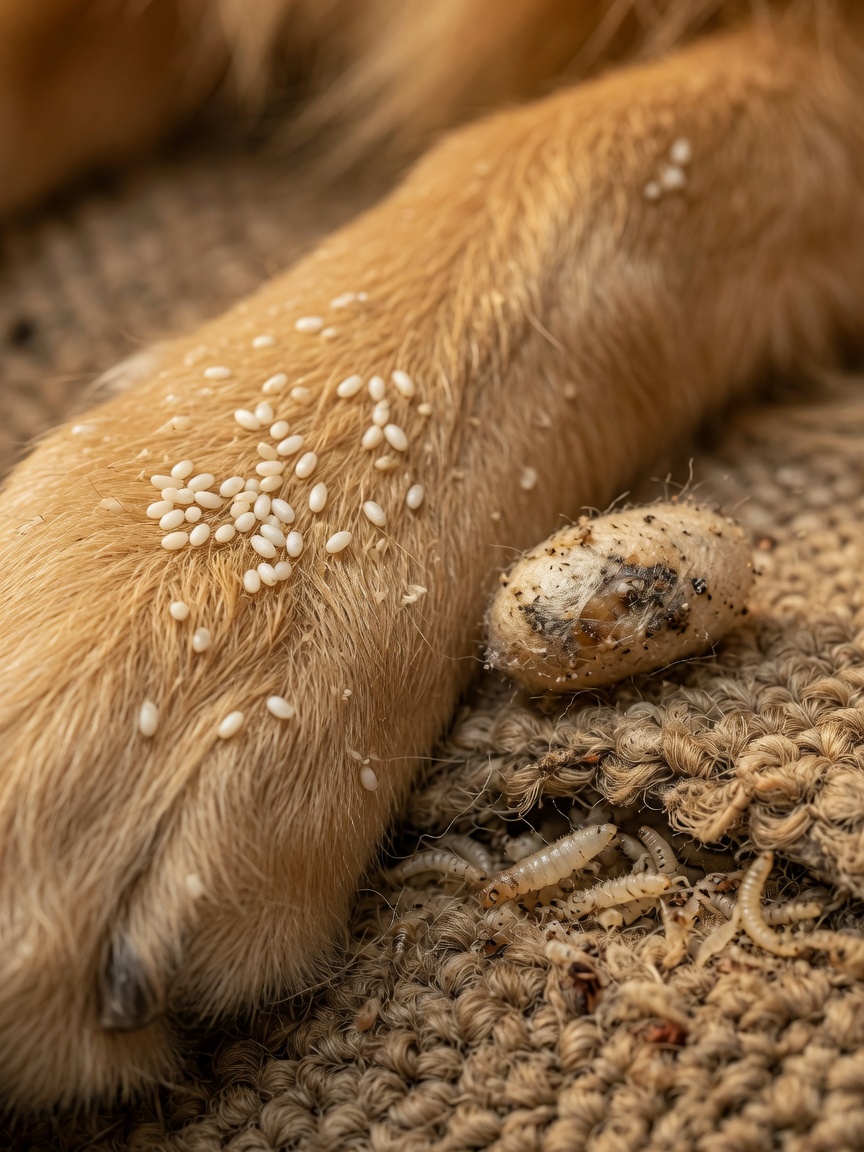
The single biggest mistake pet owners make when dealing with fleas is focusing entirely on the animal while ignoring the home. This misunderstanding stems from not knowing how fleas actually live. Of the total flea population associated with an infestation, only around 5% of fleas are actually on your pet at any given time. The remaining 95% exist in your home as eggs, larvae, and pupae, hidden in carpets, bedding, sofa cushions, skirting boards, and floorboard crevices.
Adult fleas lay eggs on the host animal, but those eggs are not sticky — they fall off your pet as it moves around the house. A single female flea can lay up to 50 eggs per day. Those eggs hatch into larvae within one to ten days, and the larvae actively avoid light, burrowing deep into carpet fibres and soft furnishings. After feeding on organic debris, larvae spin cocoons and enter the pupal stage. Pupae can remain dormant for up to a year, protected inside their cocoons, waiting for vibration, warmth, or carbon dioxide — signals that a host is nearby — before emerging as adults.
This dormancy explains why flea infestations can seem to appear from nowhere after you return from holiday or move into a new home. The environment itself is the reservoir of infestation, and treating your pet alone will never resolve it.
Why You Must Treat All Pets and the Environment Together
If you have multiple pets and only treat one, the untreated animals will continue to support adult fleas and the cycle continues. If you treat all pets but leave the environment untreated, emerging adult fleas will simply re-infest your treated pets within days or weeks. Effective flea control requires a simultaneous, coordinated approach: every pet in the household treated on the same day, and the home treated at the same time.
This is not a one-off task during an active infestation. Because of the pupal dormancy stage, you should expect to see some fleas for up to three months after beginning treatment, even if you are doing everything correctly. New adults will continue to emerge from cocoons. The key is that they jump onto a treated pet, pick up the insecticide, and die before they can lay more eggs, gradually collapsing the population.
Modern Flea Treatments for Pets — Isoxazolines
The most effective class of flea treatment currently available is the isoxazolines. These are systemic oral insecticides that work from the inside out — the drug circulates in the pet's blood, and when a flea bites, it ingests the compound and dies rapidly. Products in this class include fluralaner (Bravecto), afoxolaner (NexGard), and sarolaner (Simparica), among others.
Isoxazolines have several significant advantages over older treatments. They are not washed off by bathing or swimming. They kill fleas quickly — often within hours of the flea biting — which means fleas are killed before they can lay eggs on the pet. Bravecto for dogs provides three months of protection from a single chew, while monthly products like NexGard and Simparica are given once a month. They are available on prescription from your vet and are among the most reliable options for breaking the flea lifecycle on the animal.
It is important to note that some isoxazolines are not licensed for cats and that certain products have restrictions in animals with a history of seizures. Always consult your vet before starting any new parasiticide.
Spot-On Treatments
Older spot-on treatments — applied to the skin at the back of the neck — remain widely used. Products containing fipronil (Frontline), imidacloprid (Advantage), or selamectin (Stronghold) can be effective, though resistance to fipronil has been reported in UK flea populations, meaning some spot-ons are less reliable than they once were. Your vet can advise on which products are showing good efficacy in your area.
Treating the Home Environment
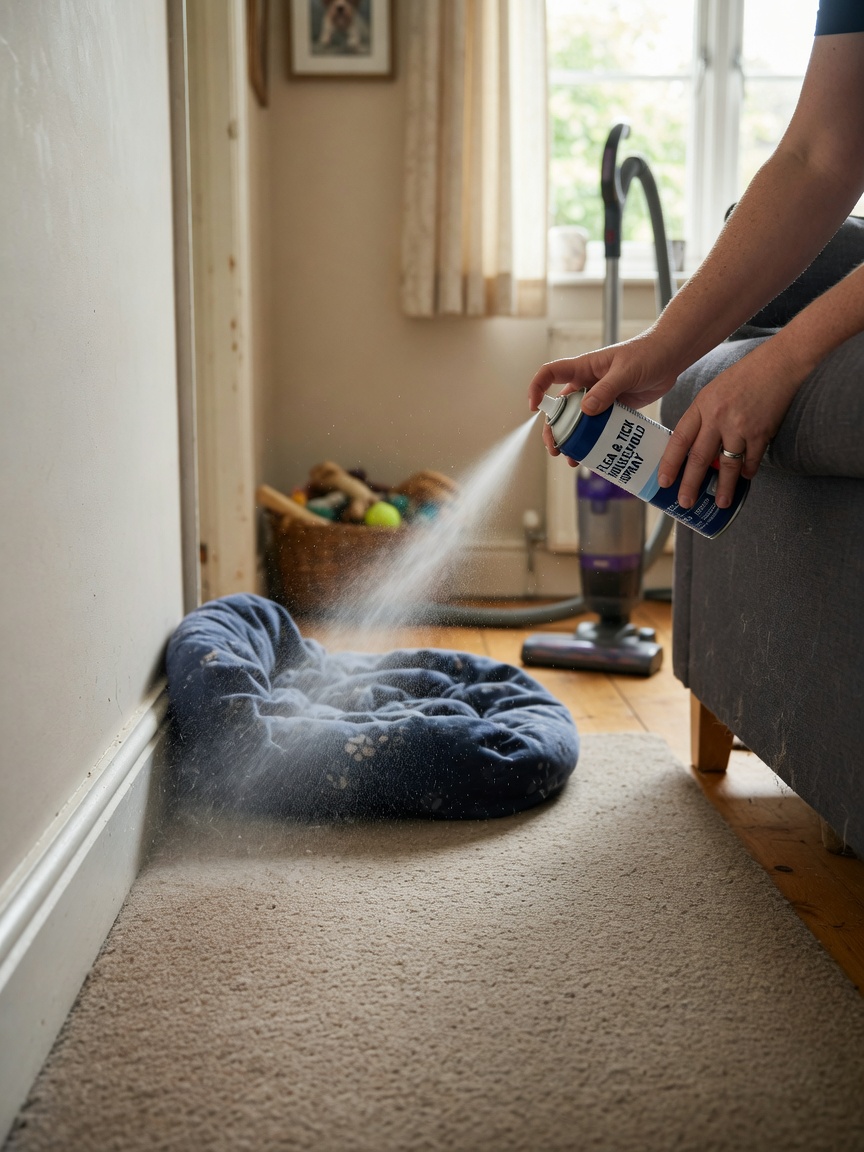
Household flea sprays are essential for addressing the 95% of fleas living off the pet. The most effective products contain an insect growth regulator (IGR) alongside an adulticide. IGRs — compounds such as methoprene or pyriproxyfen — mimic juvenile hormones in insects, preventing larvae from developing into reproducing adults. They do not kill existing adults but break the reproductive cycle in the environment.
Products widely used in the UK include Indorex Defence Household Flea Spray and RIP Fleas Total Home Flea Treatment, both of which contain an IGR and provide several months of residual activity. Indorex, for example, claims up to 12 months of protection against re-infestation when used correctly.
How to Apply a Household Flea Spray
- Vacuum thoroughly before spraying — this removes eggs, larvae, and debris, and the vibration encourages dormant pupae to hatch, making them vulnerable to the insecticide
- Dispose of the vacuum bag or empty the canister outside immediately after vacuuming
- Remove or cover fish tanks and bird cages before spraying
- Spray all carpeted areas, soft furnishings, skirting boards, under furniture, and pet bedding areas
- Allow the product to dry completely and ventilate the room before allowing pets and people back in
- Wash pet bedding at 60 degrees Celsius
Continue vacuuming regularly after spraying — this stimulates more pupae to emerge and encounter the treated surfaces.
Treating All Year Round
Many owners think of fleas as a summer problem and stop treatment over winter. This is a significant error. Central heating maintains indoor temperatures warm enough for fleas to remain active and reproduce throughout the year. Modern homes rarely get cold enough to break the flea lifecycle, meaning year-round prevention is necessary for most UK households.
Keeping your pet on a monthly or quarterly treatment schedule regardless of season is the most reliable approach. Many owners find it helpful to set a reminder rather than relying on memory.
Natural Flea Repellents — Do They Work?
There is a persistent belief that certain natural substances can repel or kill fleas. The most commonly promoted include garlic, tea tree oil, lavender, eucalyptus oil, and cedar. It is important to be direct on this point: none of these have been shown in clinical evidence to provide meaningful flea control.
Garlic and onion products are toxic to dogs and cats and should never be used. Many essential oils, including tea tree oil, are toxic to cats in particular — their livers cannot metabolise certain compounds found in these oils, and even small amounts applied to the skin can cause serious poisoning. Using essential oil sprays on a cat in the belief that they are providing flea protection is both ineffective and potentially harmful.
If you prefer a minimal-chemical approach, the most important thing you can do is use a licenced veterinary product on your pet and combine it with regular vacuuming and environmental treatment. There is no safe, effective natural alternative to approved veterinary parasiticides for managing an active infestation.
When to See Your Vet
If you are struggling to get an infestation under control despite treating all pets and the environment, speak to your vet. They can advise on whether the products you are using are appropriate for the flea populations in your area and may prescribe prescription-only treatments with higher efficacy. Pets that are allergic to flea saliva — a condition called flea allergy dermatitis — can develop severe skin reactions even from occasional bites and need particularly robust preventative care.
Fleas can also transmit tapeworm and, in rare cases of heavy infestation, cause anaemia in small or young animals. Treating fleas promptly and consistently protects not just your pet's comfort but their wider health.