
Flea Life Cycle: Why You Must Treat the Home, Not Just the Pet
By Julia Wrenfield, Pet Wellness Researcher
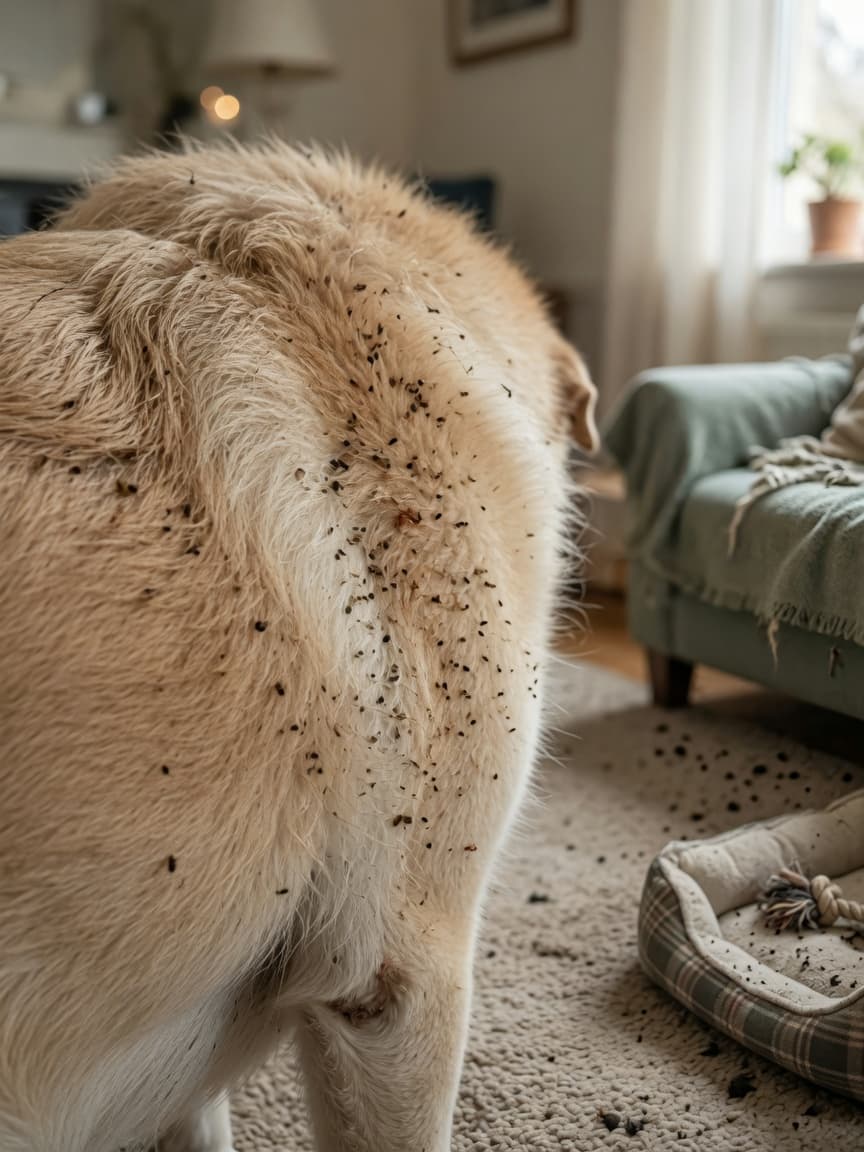
At any given time in a flea-infested home, only approximately 5% of the flea population is living on your pet. The other 95% — eggs, larvae, and pupae — are embedded in your carpets, furniture, bedding, and flooring. Treating your pet without treating the home is one of the most common reasons flea infestations persist for months despite regular product use.
If you've been applying flea treatments to your pet every month and still finding fleas, you are almost certainly failing to address the bulk of the infestation. Understanding the flea life cycle is the single most important thing you can do to finally break the cycle and achieve lasting flea control. It requires a more comprehensive approach than most pet owners realise — but once you understand the biology, the strategy becomes clear.
The Four-Stage Flea Life Cycle
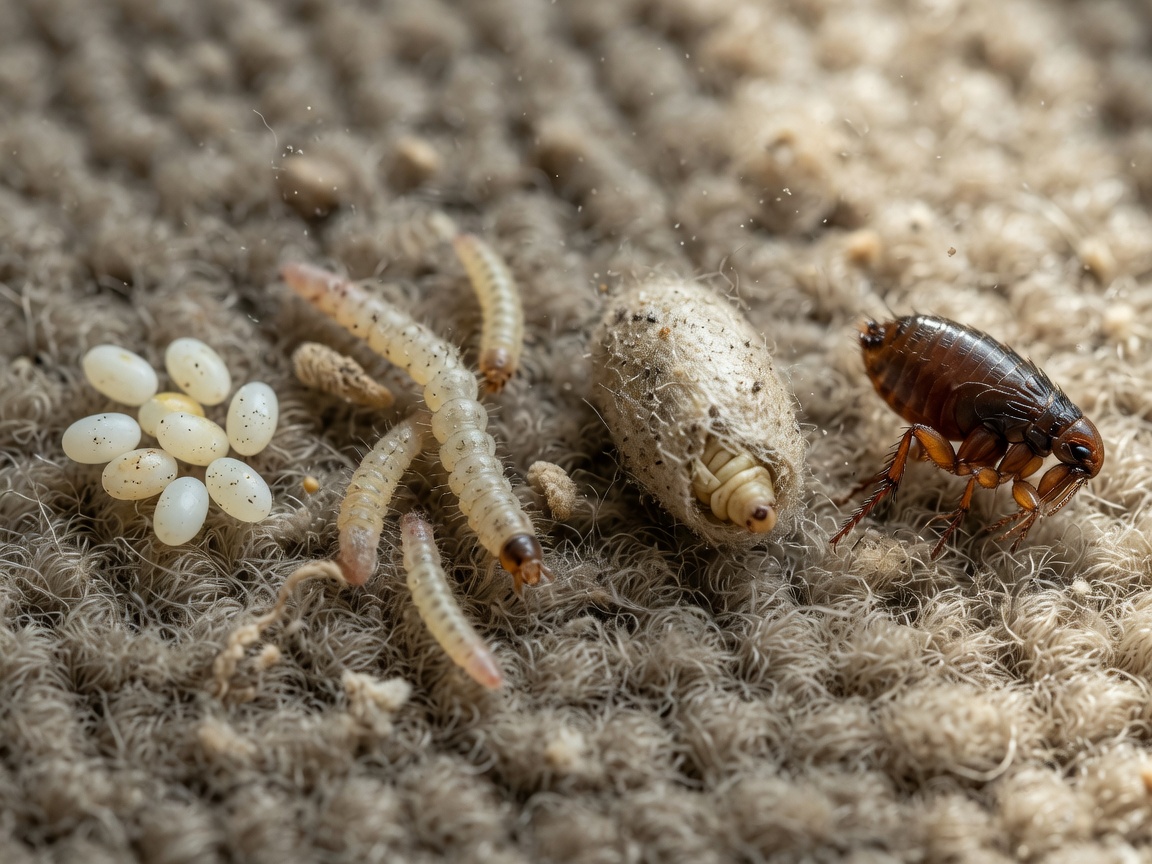
The cat flea — Ctenocephalides felis — is responsible for the vast majority of infestations on both dogs and cats. It develops through four distinct life stages, each requiring different conditions and responding differently to treatment.
Stage 1 — Eggs. After feeding on your pet's blood, an adult female flea begins laying eggs within 24–48 hours. She can lay up to 50 eggs per day and up to 2,000 over her lifetime. Flea eggs are tiny, white, and non-sticky. They fall off the pet's coat wherever it spends time — beds, sofas, carpets, and gaps in floorboards — and hatch within two to fourteen days depending on temperature and humidity. Warmer, more humid conditions accelerate hatching; this is why flea problems peak in late summer and early autumn.
Stage 2 — Larvae. Larvae are blind, legless, and worm-like. They avoid light, burrowing deep into carpet fibres, bedding fabric, and floor crevices. They feed on organic debris, including — crucially — the dried blood-rich faeces of adult fleas (sometimes called "flea dirt"). This is why flea larvae concentrate in the same areas where adult fleas spend most of their time: wherever your pet sleeps and rests. Larvae moult twice over one to two weeks before spinning a cocoon.
Stage 3 — Pupae. The pupal stage is the most dangerous phase from a control standpoint. Pupae are encased in a sticky cocoon that picks up carpet fibres, dust, and debris, making them almost impossible to vacuum out or reach with insecticides. The cocoon is remarkably protective — it can shield the developing flea from pesticides, temperature extremes, and desiccation. A flea can remain in the pupal stage for five days to over a year, waiting for the right signal to emerge: warmth, vibration, and carbon dioxide — the signs of a nearby host.
This explains the notorious "empty house" phenomenon: you move into a previously flea-infested home, and within days you are being bitten, even though no pets are present. Your footsteps and body heat trigger mass emergence from pupae that have been dormant for months.
Stage 4 — Adults. Once emerged, an adult flea must feed within a few days. It jumps onto a passing host, begins feeding immediately, and starts breeding within 24–48 hours. Adults comprise only about 5% of the total flea population in an infested environment. This is the crucial number: when you treat your pet, you are only addressing 5% of the infestation.
Why Treating the Pet Alone Fails
When you apply a topical spot-on or give an oral flea tablet, you kill or prevent adult fleas from reproducing on your pet. This is important — but fleas jump off dying pets, pupae in the environment continue developing, and any eggs laid before treatment continue to hatch. Your pet keeps encountering newly emerged adults from the environmental reservoir and the cycle continues. Most pet owners, seeing continued flea activity after applying a product, assume the product isn't working. In reality, the product is often working perfectly — but the home hasn't been treated.
How to Treat the Home Effectively
The most effective approach combines adult insecticides with insect growth regulators (IGRs). IGRs — compounds such as (s)-methoprene or pyriproxyfen — mimic juvenile insect hormones and prevent larvae from developing into adults. They do not kill adults or eggs directly, but they break the cycle by sterilising the pre-adult stages. The combination of an adulticide and an IGR in a home spray provides the most comprehensive coverage.
Before spraying, vacuum every surface your pet uses — carpets, rugs, sofas, under furniture cushions, and along skirting boards. Vacuuming stimulates pupal emergence, making newly hatched adults vulnerable to the subsequent spray treatment. Seal and dispose of the vacuum bag immediately after. Then apply a household flea spray — following label instructions — to all surfaces, paying particular attention to the areas where your pet rests. Allow to dry before allowing pets or children back into treated areas.
Find pet flea treatments and home flea control sprays on ZooplusThe Treatment Timeline
Even after effective treatment, you may continue to see adult fleas for two to eight weeks. This is normal — it is newly emerged adults from pupae that the treatment cannot penetrate. Keep your pet on their regular treatment and resist the urge to retreat the home immediately. The IGR will prevent these stragglers from reproducing. By week six to eight, the population should collapse entirely. Retreating too early or too frantically is rarely necessary and adds unnecessary chemical load to the environment.
Timing and Year-Round Prevention
The flea life cycle speeds up in warm conditions — at 30°C, eggs hatch in two days and the full cycle completes in just over two weeks. In cooler conditions, development slows dramatically. Central heating means many homes maintain flea-friendly temperatures year-round. Year-round prevention with a veterinary-grade flea product — rather than treating reactively only when fleas are seen — is the most cost-effective and pet-comfortable approach.
Key Takeaways
- The flea life cycle has four stages — egg, larva, pupa, adult. Only adults live on your pet; the other 95% are in the environment.
- The pupal stage is resistant to all insecticides and can remain dormant for up to a year.
- Effective control requires treating the home with an IGR-containing spray as well as the pet with a veterinary product.
- Vacuum before spraying to stimulate pupal emergence and improve treatment efficacy.
- Expect continued flea activity for up to eight weeks after treatment — this is normal and does not mean the treatment has failed.
References
- Rust MK, Dryden MW. "The biology, ecology, and management of the cat flea." Annu Rev Entomol. 1997;42:451-473. PMID: 15012320
- Blagburn BL, Dryden MW. "Biology, treatment, and control of flea and tick infestations." Vet Clin North Am Small Anim Pract. 2009;39(6):1173-1200. PMID: 19932363
Written by Julia Wrenfield, Pet Wellness Researcher. This article is for informational purposes only and does not substitute professional veterinary advice.