
Why Dog Owners Are Turning to Turmeric
Walk into any pet shop or scroll through an online forum and turmeric supplements for dogs are everywhere. The appeal is understandable: turmeric is a natural spice with thousands of years of use in Ayurvedic medicine, and its active compound, curcumin, has generated genuine scientific interest. But interest is not the same as proof, and when it comes to giving supplements to your dog, the distinction matters enormously.
This guide looks at what the evidence actually says, where it falls short, and what you need to know before adding turmeric to your dog's routine.
What is Curcumin and How Might it Work?
Turmeric (Curcuma longa) is a root spice that gets its yellow colour from a group of compounds called curcuminoids. Curcumin is the most abundant and most studied of these. In laboratory settings, curcumin has shown a range of interesting biological activities.
The most discussed mechanism is COX-2 inhibition. COX-2 is an enzyme involved in producing prostaglandins, which are inflammatory signalling molecules. By inhibiting COX-2, curcumin may reduce inflammation in a way that is conceptually similar to non-steroidal anti-inflammatory drugs (NSAIDs), though far less potent. Curcumin also appears to act as an antioxidant, neutralising free radicals and potentially protecting cells from oxidative damage.
These mechanisms sound promising. The problem is where the research has been conducted.
The Evidence: Mostly in Test Tubes and Rodents
The majority of curcumin research has been carried out in vitro (in cell cultures) or in rodent models. These studies have produced exciting results, but they do not translate directly to dogs. Canine physiology differs from both rodents and humans in meaningful ways, and a compound that works in a petri dish may behave very differently inside a living animal.
There are some canine studies worth noting. A small number of clinical trials in dogs with osteoarthritis have shown modest positive results for pain and mobility scores when curcumin was included in a supplement blend. However, most of these trials used combination products, making it difficult to isolate curcumin's specific contribution. The evidence base for dogs remains limited, and no major veterinary body has yet issued a strong endorsement of turmeric as a standalone treatment for any canine condition.
The Bioavailability Problem

Even if curcumin had stronger clinical trial evidence, there is a significant practical hurdle: dogs metabolise curcumin rapidly and poorly. When consumed in plain turmeric, curcumin is absorbed in very small amounts, broken down quickly by the liver, and excreted before it can reach meaningful concentrations in tissue. In other words, most of what you give your dog passes through without doing much at all.
This is where black pepper enters the conversation. Piperine, the active compound in black pepper, inhibits certain liver enzymes that break down curcumin. Some studies in humans and animals suggest that combining curcumin with piperine can increase curcumin bioavailability by up to 20 times. This has led to the popular concept of golden paste, a mixture of turmeric, black pepper and a fat source (usually coconut oil, which itself aids absorption of fat-soluble compounds like curcumin).
However, piperine is not without its own concerns. It affects drug metabolism pathways in the liver, specifically cytochrome P450 enzymes, and could potentially alter the way other medications are processed. If your dog takes any prescription drugs, this interaction is something a vet must assess before you introduce piperine.
Golden Paste: The Concept
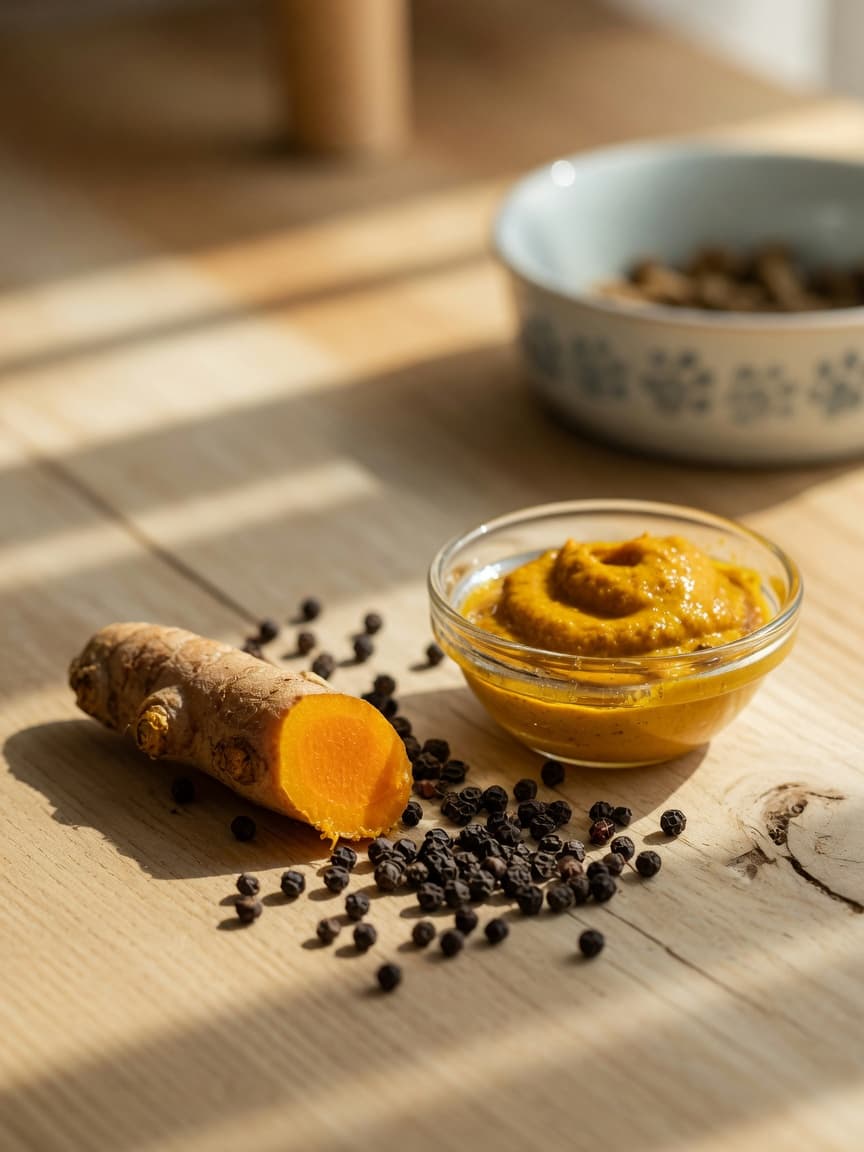
Golden paste typically combines turmeric powder, freshly ground black pepper and a fat source, cooked briefly into a thick paste. Small amounts are then mixed into food. The idea is to address the bioavailability problem while keeping the dose manageable.
The concept is sound in theory. In practice, there are no standardised formulations, no agreed doses for dogs of different sizes, and no large-scale canine clinical trials specifically using golden paste. Recipes circulating online vary considerably in turmeric-to-pepper ratios, and some use far more than would be considered cautious for a small or medium-sized dog.
If you wish to try golden paste, the most important steps are starting with the smallest possible amount, introducing it gradually, and doing so under veterinary guidance.
Safety Concerns and Real Risks

Turmeric is often described as completely safe because it is natural. This is not accurate. Several risks are associated with curcumin supplementation in dogs, particularly at higher doses.
- Liver toxicity: High doses of curcumin have been linked to liver stress in some studies. Dogs with existing liver conditions should avoid turmeric entirely unless a vet specifically advises otherwise.
- Blood thinning: Curcumin has anticoagulant properties. If your dog takes blood-thinning medications, or is scheduled for surgery, turmeric should be stopped well in advance. Combining it with drugs like warfarin or heparin could increase bleeding risk.
- Diabetes medication interactions: Curcumin may affect blood glucose levels and could interact with insulin or other diabetes medications, potentially causing hypoglycaemia.
- Gastrointestinal irritation: Even at modest doses, some dogs experience loose stools, nausea or stomach discomfort, particularly when turmeric is introduced too quickly.
- Pre- and post-surgery: Due to its effects on clotting and drug metabolism, turmeric should be avoided in the period before and after any surgical procedure.
When Might Turmeric Be Worth Considering?
Given the limitations of the evidence and the genuine risks, turmeric is not a supplement to add casually. However, some vets do consider it as a complementary option for dogs with mild osteoarthritis who are not on medications that interact with curcumin or piperine. In these cases, low doses combined with a bioavailability enhancer may offer some anti-inflammatory support alongside a broader joint health plan.
It is not a replacement for veterinary pain management. For dogs with significant arthritis or chronic pain, prescription NSAIDs remain far better evidenced and more reliably effective. Supplements like omega-3 fatty acids also have stronger clinical trial support for joint inflammation in dogs.
The Verdict
Turmeric is a genuinely interesting compound with plausible mechanisms of action and some early positive signals in canine research. It is not, however, a proven treatment for any condition in dogs, and it carries real risks that are often underplayed in online discussions.
If you are considering turmeric for your dog, speak to your vet first, particularly if your dog is on any medication, has liver or digestive issues, or is approaching a surgical procedure. Low doses, proper bioavailability support, and veterinary oversight represent the most cautious and sensible approach.
Natural does not mean risk-free. With turmeric, as with any supplement, evidence-based caution is the most caring choice you can make for your dog.