
Fish Swim Bladder Disease: Causes, Treatment & the Fasting Method
By Julia Wrenfield, Pet Wellness Researcher
What the Swim Bladder Actually Does
The swim bladder — also called the gas bladder or air bladder — is an internal gas-filled organ that functions as a buoyancy control device, allowing bony fish to maintain their position in the water column without constant muscular effort. By adjusting the volume and composition of gas within the bladder, fish can hover, ascend, and descend with minimal energy expenditure.
The organ is also involved in sound detection in some species and plays a role in respiration in primitive fish like lungfish. In aquarium fish, it is the organ most frequently damaged by husbandry errors — and the symptoms are impossible to miss.
Recognizing Swim Bladder Disorder
A fish with swim bladder dysfunction will show one or more of these signs:
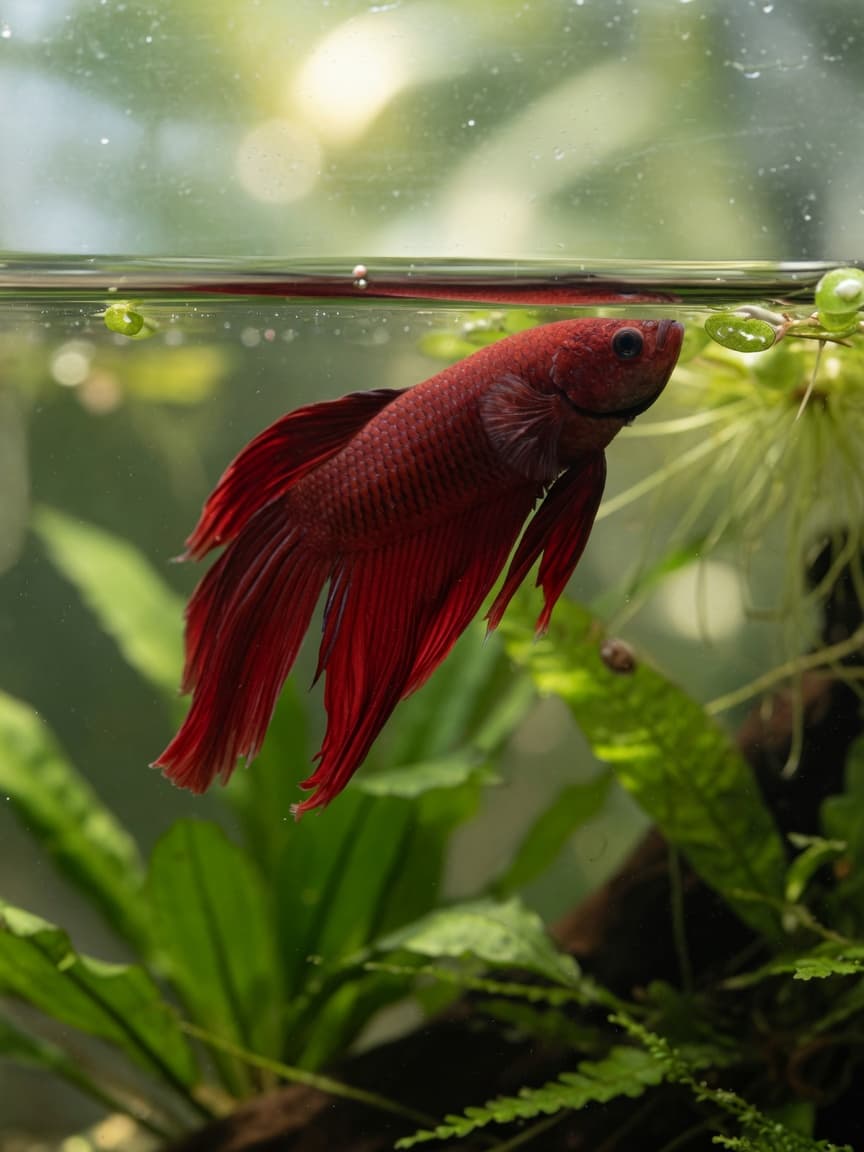
- Floating at the surface — the fish cannot dive and stays pinned near the top, often on one side
- Sinking to the bottom — the fish rests on the substrate and struggles to rise, swimming in short bursts before sinking again
- Listing or rolling — the fish swims at an angle, belly-up, or corkscrewing through the water
- Distended abdomen — visible swelling, particularly on one side
- Curved spine during swimming — the body curves in an S or C shape
It is important to distinguish swim bladder disorder from velvet, ich, or dropsy — the latter causes scale protrusion ("pineconing") and is a separate, more systemic condition.
Cause 1: Overfeeding and Constipation (Most Common)
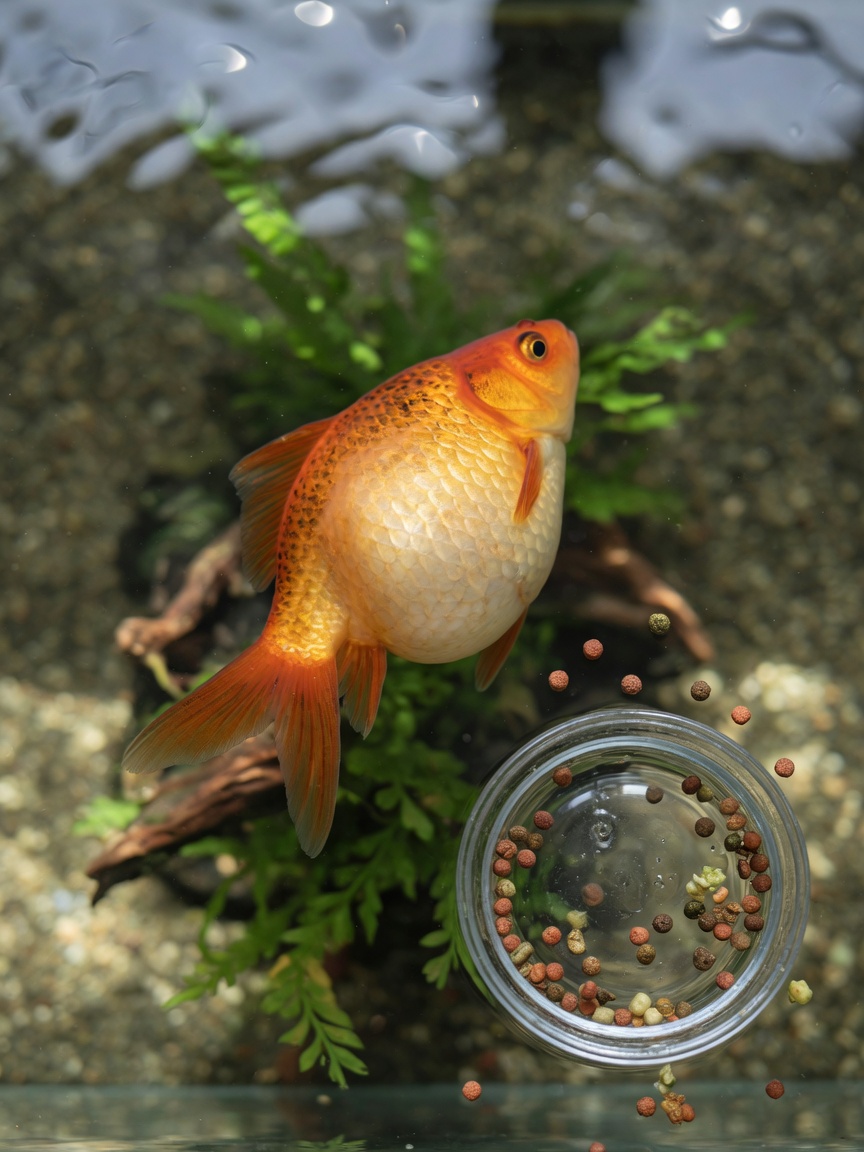
The most frequent cause of swim bladder disorder in bettas, goldfish, and other aquarium fish is overfeeding leading to constipation. The digestive tract of a fish lies in close proximity to the swim bladder. When the gut is packed with undigested food — especially freeze-dried foods that expand in the stomach — it physically compresses the bladder, displacing it and disrupting its normal function.
This is entirely reversible. Fish on freeze-dried bloodworms or pellet-heavy diets with no variety are at highest risk. The fix is dietary intervention, described below.
Cause 2: Gulping Air at the Surface
Some fish — particularly bettas, which use a labyrinth organ to breathe atmospheric air — will gulp air aggressively if water oxygen levels are low or during excited feeding. Swallowed air can temporarily enter the digestive tract and press against the swim bladder. This usually resolves on its own within hours. Ensuring surface agitation and not feeding in a way that causes frantic surface-breaking behavior reduces this risk.
Cause 3: Bacterial or Parasitic Infection
Internal bacterial infections — particularly from Aeromonas and Pseudomonas species — can infect the swim bladder directly, causing inflammation, fluid accumulation, or organ damage. This is a more serious cause and does not respond to dietary intervention. Signs that point toward infection rather than constipation: the fish has been eating normally without apparent overfeeding, the distension is asymmetric or rapidly worsening, and there may be other signs such as lethargy, color loss, or external lesions.
Bacterial swim bladder infections require antibiotic treatment and ideally veterinary input. In many cases, even with treatment, the prognosis is guarded.
Cause 4: Anatomical Deformity in Fancy Goldfish
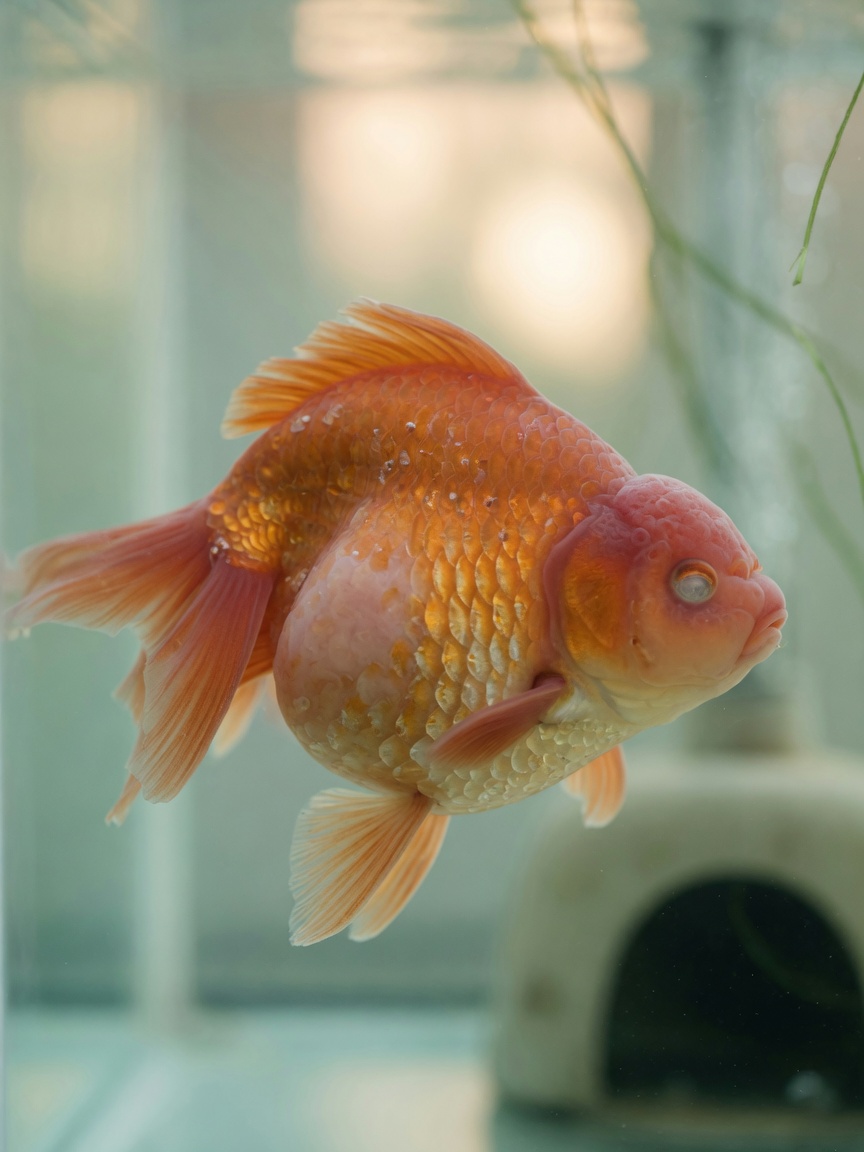
Fancy goldfish varieties — orandas, ryukins, ranchus, telescopes — have been selectively bred into rounded, compressed body shapes that leave very little space for internal organs. The swim bladder in these fish is anatomically compressed from birth and becomes progressively more compromised as the fish grows. Environmental factors (cold water, poor diet) worsen the condition, but the underlying cause is genetic.
Many fancy goldfish develop chronic swim bladder disorder that cannot be cured. Management, not treatment, is the realistic goal: shallow water depth (under 25 cm) to reduce the effort required to maintain position, a sinking pellet diet to avoid gulped air, and a consistent temperature of 20–22°C.
The 3-Day Fasting Method
For swim bladder disorder caused by overfeeding or constipation — the most common scenario — the standard first response is a 72-hour fast. Remove all food entirely for three days. During this time, the digestive system clears, the gut decompresses, and the swim bladder returns to its normal position in many cases.
Maintain normal water temperature and quality during the fast. Do not add salt unless the fish shows secondary stress signs. After 72 hours, observe the fish's posture before feeding again.
The Pea Treatment for Constipation
If the fast alone does not resolve the issue — or as the first meal after a fast — a single, small piece of cooked, skinned garden pea is the traditional remedy for constipation-linked swim bladder disorder. The high fiber content of peas acts as a gentle laxative, stimulating gut motility and helping clear impacted material.
Preparation: take a frozen pea, thaw it, remove the outer skin (it can be a choking hazard for small fish), and offer a piece no larger than the fish's eye. One pea section per feeding, once per day, for two to three days. This is appropriate for goldfish and bettas; bettas are carnivores and should not receive peas regularly — only therapeutically and in tiny amounts.
After the pea treatment, resume a varied diet with emphasis on moisture-rich foods (frozen daphnia, frozen bloodworms) and reduce freeze-dried food to occasional use only.
When Swim Bladder Disorder Is Incurable
Not every case is fixable. Consider the condition chronic and incurable when:
- The fish is a fancy goldfish variety with no response after weeks of management
- The condition has persisted more than four weeks without improvement despite dietary intervention
- The fish cannot right itself at all and shows signs of distress (rapid opercular movement, scale loss, refusal to eat)
- Secondary infection is established and antibiotic treatment has failed
In these situations, quality of life must be assessed honestly. A fish permanently unable to control its buoyancy is physiologically stressed and at high risk of secondary infections. Shallow tank setup, reduced flow, and accessible feeding spots can extend comfortable life, but euthanasia with clove oil (eugenol) is the humane option when suffering is ongoing.
Prevention Over Treatment
Swim bladder disorder is largely preventable. The key practices: avoid freeze-dried food as a dietary staple; pre-soak pellets before feeding; maintain a weekly fasting day (especially for bettas and goldfish); feed twice daily in small amounts rather than once in a large amount; and ensure dietary variety including moisture-rich frozen foods.
- Swim bladder disorder is a symptom with multiple causes — identify the cause before treating
- Most common cause: overfeeding and constipation compressing the bladder from gut distension
- First response: 72-hour fast with no food
- Follow with: pea treatment (cooked, skinned, small piece) to relieve constipation
- Fancy goldfish often have anatomical SBD that cannot be cured — management only
- Bacterial infection-caused SBD requires antibiotics and veterinary guidance
- Prevention: avoid freeze-dried staples, pre-soak pellets, fast weekly, feed varied moisture-rich foods
- Euthanasia with clove oil is the humane choice when suffering is unmanageable
References
- Ortega C, et al. "Aeromonas hydrophila infection associated with swim bladder inflammation in ornamental fish." Journal of Fish Diseases. 2002;25(7):441–444. PMID: 12190793
- Poynton SL, Whitaker BR, Heinrich AB. "A novel mudfish-like microsporidian in the swim bladder of ornamental fish." Diseases of Aquatic Organisms. 2004;58(1):29–38. PMID: 15146993