

- Ferrets are obligate carnivores — meat only, no plant matter
- Protein requirement: minimum 30–35% of diet
- Fat requirement: 15–20% of diet
- Fiber: extremely low — ferrets cannot digest plant fiber
- Ideal: high-protein ferret kibble or raw prey diet
- Never feed: fruit, vegetables, grains, sugary treats, dairy
- Multiple small meals preferred (4–8 per day ideally)
- Requires exotic animal specialist vet for healthcare
Ferret Diet: Why They're Obligate Carnivores & What to Feed
By Julia Wrenfield, Pet Wellness Researcher
Feeding a ferret is not complicated once you understand one fundamental fact: ferrets are obligate carnivores. This is not a dietary preference or a guideline to aim for — it is a hard biological reality. Ferrets must eat meat. They cannot survive, let alone thrive, on anything else. Understanding why this is true will help you make the right feeding decisions and protect your ferret from one of the most common and devastating diseases caused by inappropriate diet: insulinoma.
The Biology of an Obligate Carnivore
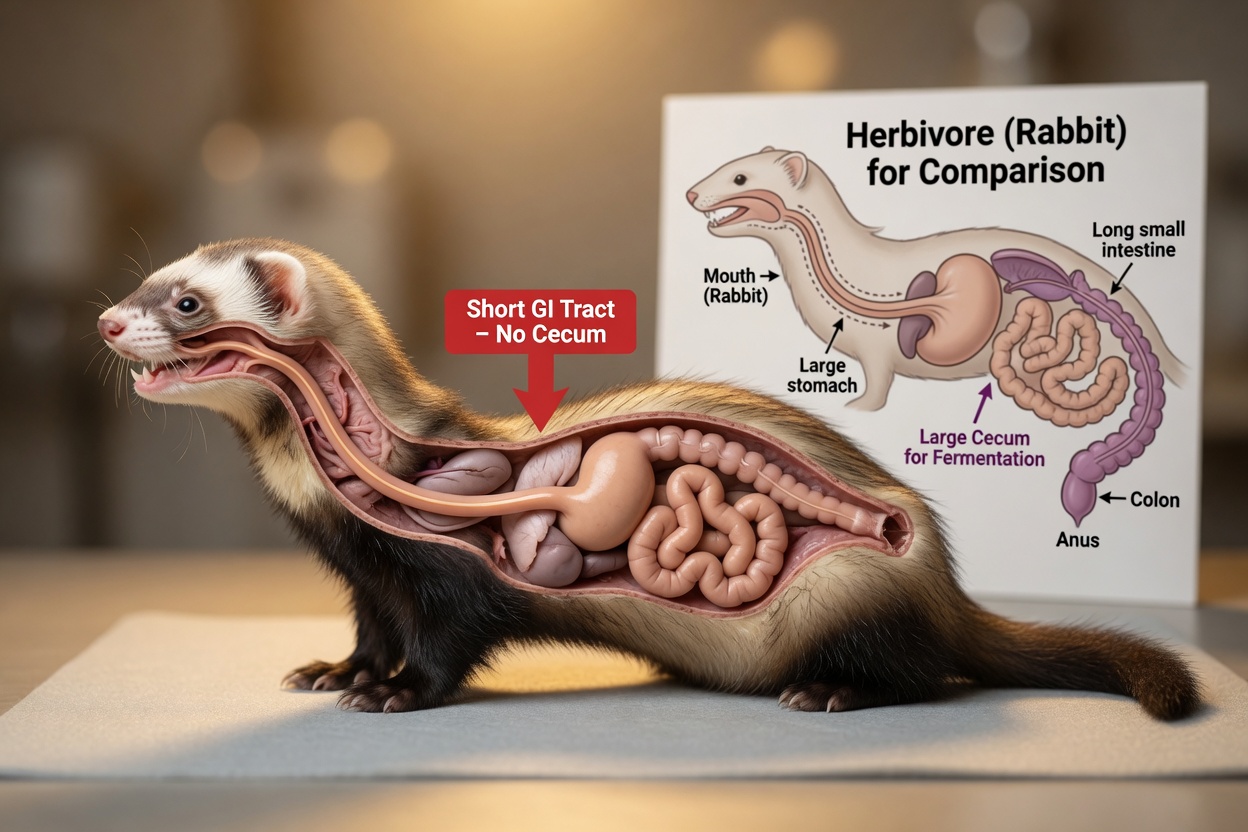
Ferrets evolved as dedicated predators. Their entire digestive system reflects this evolutionary history. The ferret gastrointestinal tract is short — roughly 182–198 cm from mouth to anus — and food passes through in approximately 3–4 hours. This rapid transit time, combined with a gut designed to extract nutrients from animal tissue, means ferrets have almost no capacity to ferment or absorb nutrients from plant material.
They lack the cecum (the fermentation chamber where herbivores and omnivores break down plant fiber). Their intestinal enzyme profile is optimized for protein and fat digestion, not carbohydrate metabolism. They have minimal amylase activity — the enzyme that begins carbohydrate breakdown — both in their saliva and pancreas. In practical terms, this means grains, vegetables, fruits, and other plant-based foods pass through a ferret with minimal nutritional absorption while simultaneously imposing a metabolic cost that damages health over time.
Why Carbohydrates and Sugar Are Dangerous for Ferrets
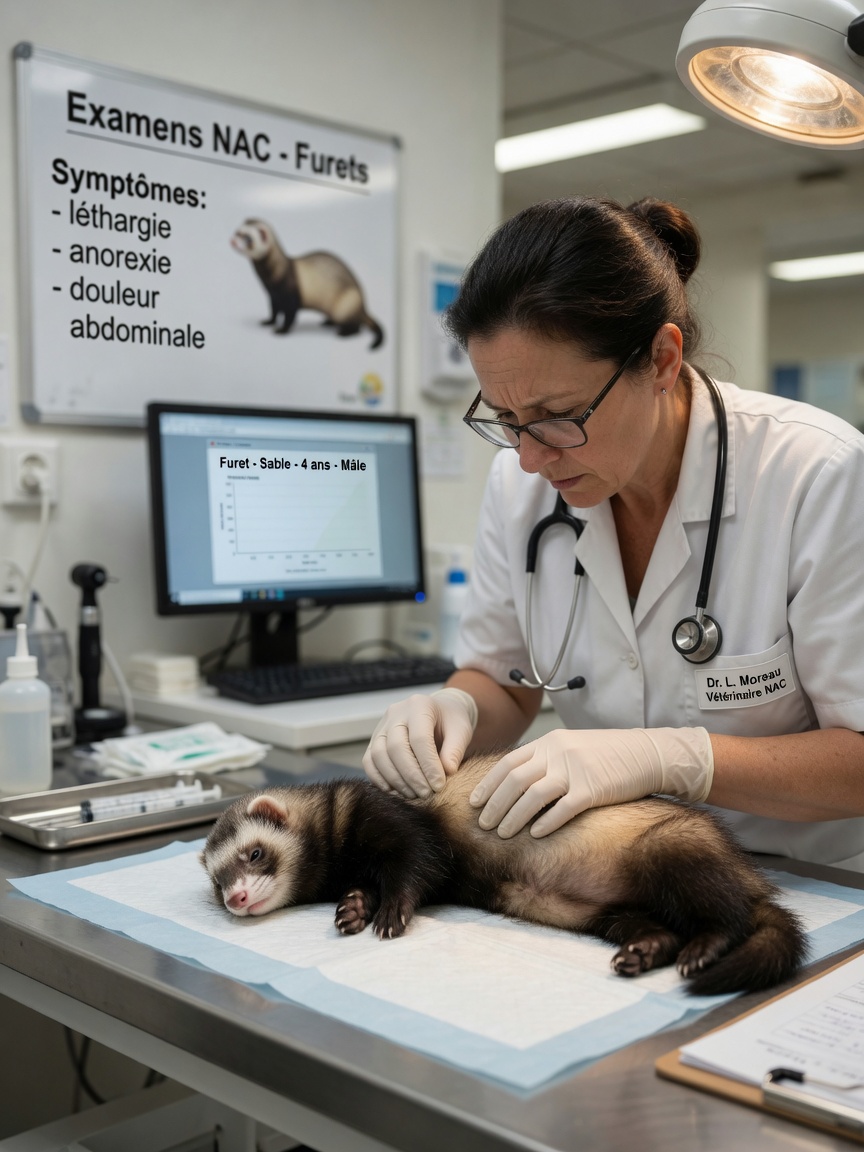
The most important reason to eliminate carbohydrates and sugar from a ferret's diet is insulinoma — a cancer of the insulin-producing beta cells of the pancreas. Insulinoma is tragically common in domestic ferrets, particularly in the United States and other countries where ferrets have historically been fed diets higher in carbohydrates (often via grain-based cat and dog foods).
Chronic dietary carbohydrate and sugar stimulates repeated insulin secretion. Over years, this persistent overstimulation appears to promote the abnormal proliferation of insulin-secreting cells, leading to the development of insulinoma tumors. These tumors secrete insulin continuously, causing life-threatening hypoglycemia (dangerously low blood sugar). A ferret with insulinoma may collapse, seize, and die without warning.
Diets high in animal protein and fat — with minimal to zero carbohydrate — significantly reduce the metabolic drive that predisposes ferrets to this condition. This is not theoretical: populations of ferrets fed traditional meat-based diets have substantially lower rates of insulinoma than those fed grain-heavy kibble.
The Raw Diet: Closest to Nature
Many experienced ferret owners and breeders advocate for a raw, whole-prey diet as the gold standard for ferret nutrition. In the wild, ferrets (specifically polecats and their domesticated descendants) eat whole small animals — rabbits, mice, voles, birds. The whole prey model provides the ideal nutrient ratios: high protein from muscle meat, appropriate fat from organs and skin, bone content for calcium and phosphorus, and organ meat for micronutrients.
Practical raw feeding for pet ferrets typically involves:
- Whole prey items — day-old chicks (widely available frozen), pinky mice, small quail, or whole rabbit pieces
- Raw chicken — wings, necks, thighs, backs; bone-in pieces that the ferret can gnaw appropriately
- Raw turkey — similar to chicken, a good protein variety
- Rabbit — excellent lean protein, highly digestible
- Organ meat — liver, kidney, heart; essential micronutrient sources but should not exceed 10–15% of the diet to avoid vitamin A toxicity
Raw feeding requires freezing meat for at least 3 days before serving to kill parasites. Bacterial contamination (Salmonella, Campylobacter) is a consideration — both for the ferret and for human handlers. Thaw meals in the refrigerator, not at room temperature, and clean all surfaces and feeding bowls thoroughly.
High-Quality Commercial Kibble: The Practical Alternative
For owners who cannot manage a raw diet, high-quality commercial kibble formulated for ferrets is a reasonable alternative — provided it meets strict criteria. Look for:
- Minimum 30–35% crude protein from a named animal source (chicken, turkey, salmon) as the first ingredient
- Minimum 15–20% fat — ferrets need high dietary fat for energy
- Maximum 3% fiber — more than this is inappropriate for an obligate carnivore's digestive system
- No grains as primary ingredients — avoid kibbles listing corn, wheat, rice, or soy in the first four ingredients
- No added sugar or fruit
Some high-quality grain-free cat foods (kitten formulas particularly, for their higher protein and fat) can be used as part of a ferret's diet when specifically formulated ferret kibble is unavailable. However, they should not be the sole food indefinitely as they may not meet ferret-specific nutritional parameters.
Feeding Frequency: Multiple Small Meals
Because of their rapid gastric transit, ferrets are natural frequent feeders. In the wild, a ferret might make multiple kills per day, eating small amounts many times. Ideally, ferrets should have access to food multiple times throughout the day — 4 to 8 small meals, or free-choice access to kibble with regular fresh protein supplements.
Free-choice kibble (dry food available at all times) is commonly used and works reasonably well for most ferrets. The issue with free-choice raw is that it spoils quickly — raw meals should be offered and removed within 30–60 minutes if not consumed.
What to Never Feed a Ferret
The following foods are inappropriate or dangerous for ferrets and must be avoided entirely:
- All fruits — natural sugars still pose insulinoma risk; raisins are particularly dangerous
- All vegetables — cannot be digested and may cause intestinal obstruction; high-fiber vegetables are especially harmful
- All grains — corn, wheat, rice, oats; major insulinoma risk and poor digestibility
- Dairy products — ferrets are lactose intolerant; dairy causes diarrhea and digestive upset
- Sugary treats — including commercial ferret "treats" that contain honey, molasses, or fruit; read ingredient labels carefully
- Onion and garlic — cause hemolytic anemia in ferrets as in other small animals
- Cooked bones — splinter dangerously; raw bones are appropriate, cooked bones are not
- Processed human food — chips, crackers, bread, sweets; all inappropriate
Browse high-protein ferret food at Zooplus →
Grain-free, high-protein ferret kibble and raw feeding options from trusted brands.
Key Takeaways
- Ferrets are obligate carnivores — their entire physiology requires a meat-based diet with essentially zero plant matter.
- Minimum dietary requirements: 30–35% protein, 15–20% fat, less than 3% fiber.
- Carbohydrates and sugar are linked to insulinoma, a common and fatal pancreatic cancer in ferrets.
- Best diet: raw whole prey or high-quality grain-free ferret/kitten kibble with named meat as first ingredient.
- Never feed: fruit, vegetables, grains, dairy, sugary treats, or any plant-based food.
- Ferrets are natural frequent feeders — multiple small meals or free-choice kibble access is preferred.
- Always use an exotic animal specialist vet for ferret healthcare — regular vets may lack the necessary training.
References
- Fox JG, Marini RP. Biology and Diseases of the Ferret. 3rd ed. Wiley-Blackwell; 2014. [Comprehensive reference on ferret physiology, nutritional requirements, and disease; foundational text for obligate carnivore dietary guidelines.]
- Antinoff N, Williams BH. "Neoplasia." In: Quesenberry KE, Carpenter JW, eds. Ferrets, Rabbits, and Rodents: Clinical Medicine and Surgery. 3rd ed. Saunders Elsevier; 2012. PMID context: insulinoma epidemiology chapter. [Documents the high prevalence of insulinoma in ferrets fed high-carbohydrate diets and the dietary risk factors associated with pancreatic beta-cell neoplasia.]