
What Ringworm Actually Is
Despite the name, ringworm has nothing to do with worms. Dermatophytosis is a fungal infection caused by a group of organisms called dermatophytes, which feed on keratin — the structural protein found in skin, hair, and nails. In dogs, the most common culprit is Microsporum canis, though Trichophyton mentagrophytes and Microsporum gypseum are also encountered. The "ring" in the common name refers to the circular lesion that often appears in human cases; in dogs, presentation is rarely so tidy.
What makes dermatophytosis particularly significant is not just its effect on the dog — it is one of the most commonly transmitted zoonotic skin conditions, meaning it spreads readily from animals to people. Managing it properly therefore involves treating the dog, treating the environment, and protecting human household members simultaneously.
How Dogs Get Ringworm
Dermatophytes spread through direct contact with infected animals, contaminated soil, or fomites — objects that carry fungal spores. Brushes, bedding, collars, and carpeting can all harbour viable spores for months. Dogs that visit kennels, dog shows, or rescue environments are at higher exposure risk.
Young dogs, elderly dogs, and those with compromised immune systems are most vulnerable to developing active infection after exposure. Healthy adult dogs often carry dermatophytes asymptomatically, meaning they can transmit the infection to susceptible individuals without showing signs themselves. This carrier status is particularly relevant in multi-pet households and rescue settings.
Recognising the Signs
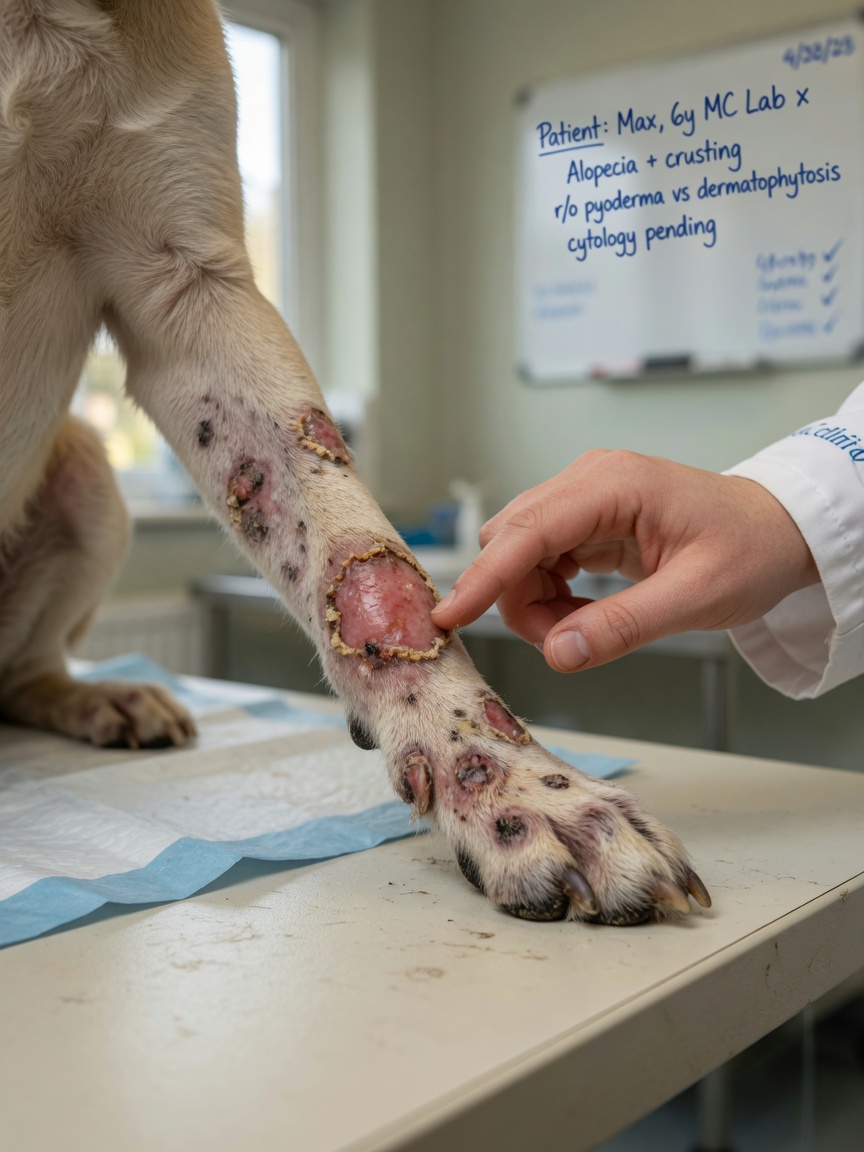
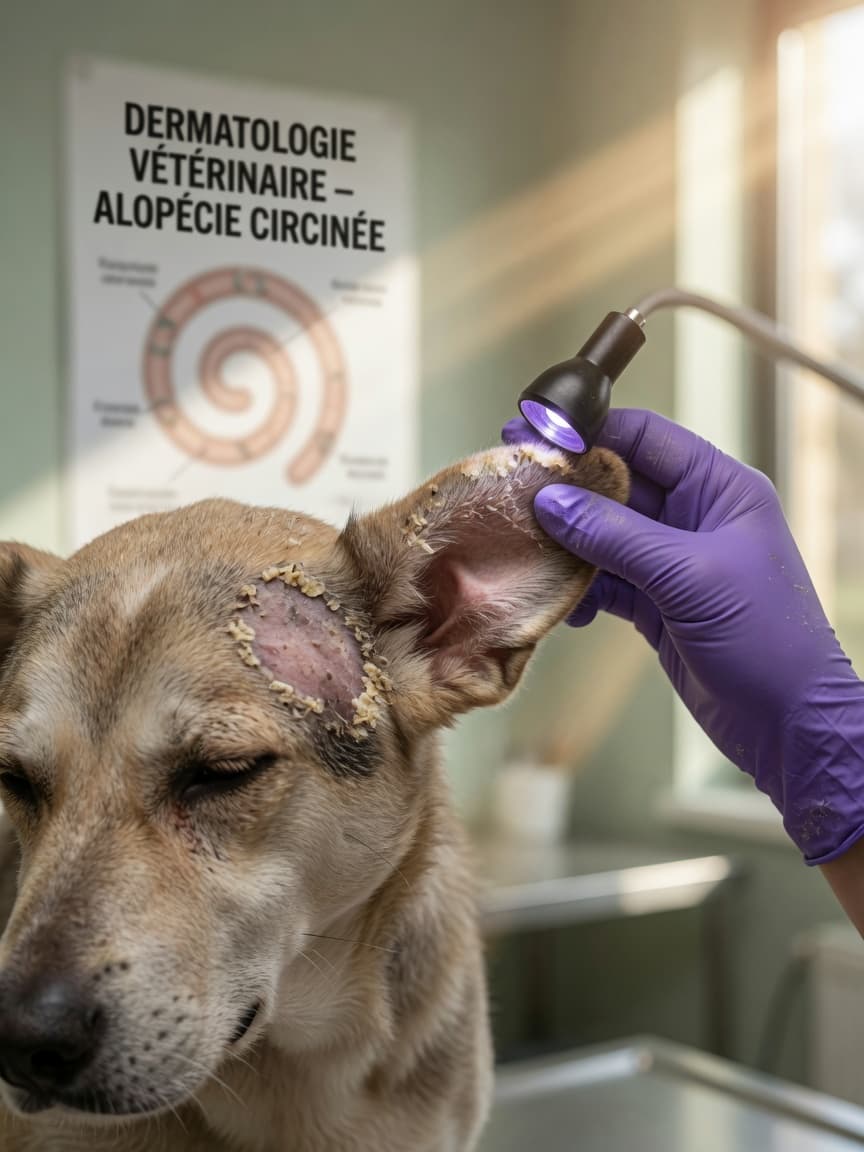
Classical lesions in dogs appear as roughly circular areas of hair loss with scaling or crusting at the edges. The skin may be red, inflamed, and itchy, though some dogs show surprisingly little discomfort. Lesions most commonly appear on the head, ears, forelimbs, and paws, though generalised infection can occur in immunocompromised individuals.
Onychomycosis — fungal infection of the nails — is a less common manifestation but causes brittle, misshapen, and painful claws. Some dogs develop kerion reactions, which are raised, boggy nodular lesions representing an intense inflammatory response to the fungus. These can look alarming and are sometimes confused with abscesses or tumours.
Diagnosis
Wood's lamp examination is a useful screening tool — certain strains of Microsporum canis fluoresce apple-green under ultraviolet light. However, not all strains fluoresce, and false positives from other substances are possible, so this test is best used as an initial screen rather than a definitive answer.
Fungal culture remains the gold standard. Hair and scale samples are collected from the edges of lesions and plated on a specialised medium. Results typically take seven to fourteen days, though a colour change in the medium can provide a preliminary indication earlier. PCR testing offers faster turnaround and is available through specialist laboratories. Microscopic examination of hair shafts (trichoscopy) can also be informative in experienced hands.
Treatment Protocols
Topical Treatment
Topical antifungal therapy forms the cornerstone of treatment for localised infections and should always accompany systemic therapy in widespread cases. Miconazole and chlorhexidine shampoos, used twice weekly, are well-evidenced and help reduce environmental contamination by removing spores from the coat. Lime sulphur dips are highly effective but have a strong odour and can stain surfaces. Localised lesions may also be treated with antifungal creams containing clotrimazole or miconazole, though clipping the hair around lesions makes application more effective and reduces contamination.
Systemic Treatment
Systemic antifungal medication is generally recommended for dogs with multiple lesions, long or dense coats, or those that have failed topical-only treatment. Itraconazole is currently the drug of choice in most canine cases, offering good efficacy with a relatively favourable safety profile. Terbinafine is an alternative with good tissue penetration. Griseofulvin, historically used, is now less commonly prescribed due to potential side effects including teratogenicity — it should never be used in pregnant animals or handled by pregnant women. Treatment duration is typically a minimum of six weeks and should always continue for two negative fungal cultures taken one week apart.
Environmental Decontamination
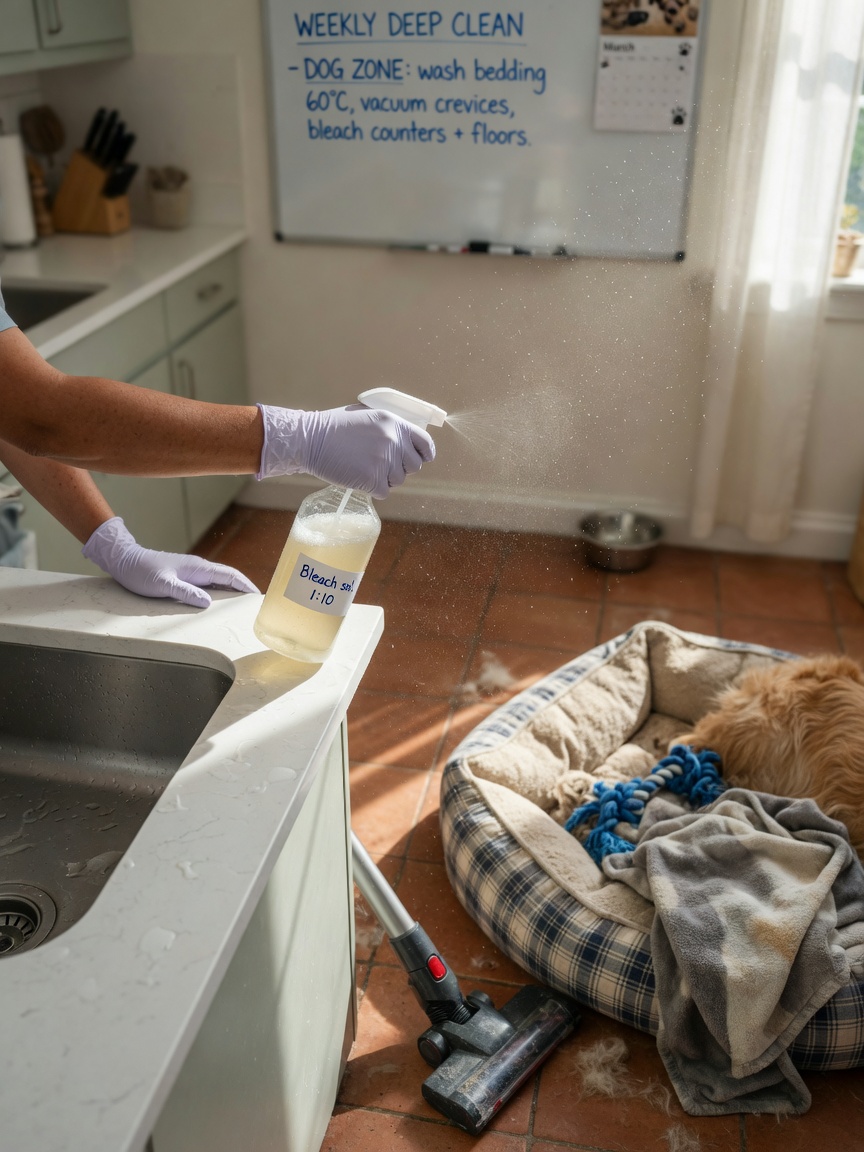
This step is often underestimated, and it is the reason many cases persist or recur. Dermatophyte spores are remarkably hardy. Thorough cleaning of all surfaces the dog contacts is essential, using a dilute bleach solution (1:10 in water) on hard surfaces. Soft furnishings should be laundered at high temperature or, where this is not possible, discarded. Vacuuming should be performed daily — the vacuum bag or canister contents should be disposed of immediately. All grooming equipment must be disinfected or replaced. In households with multiple pets, all animals should be cultured even if asymptomatic.
Protecting People
Human household members — particularly children, elderly people, and immunocompromised individuals — are at meaningful risk. Ringworm in people appears as red, itchy, scaly circular patches. Anyone who develops such lesions whilst a pet in the household is under treatment should consult a GP or dermatologist promptly. Wearing gloves when applying topical treatments to the dog and washing hands thoroughly after handling are sensible precautions throughout the treatment period.
How Long Until Resolution?
Owners should be prepared for treatment lasting two to four months in straightforward cases. More complex or generalised infections may take longer. The endpoint for stopping treatment is always guided by negative cultures, not by the disappearance of visible lesions, as the skin can look clear well before the fungal infection is truly resolved. Cutting treatment short is one of the most common reasons for relapse.