
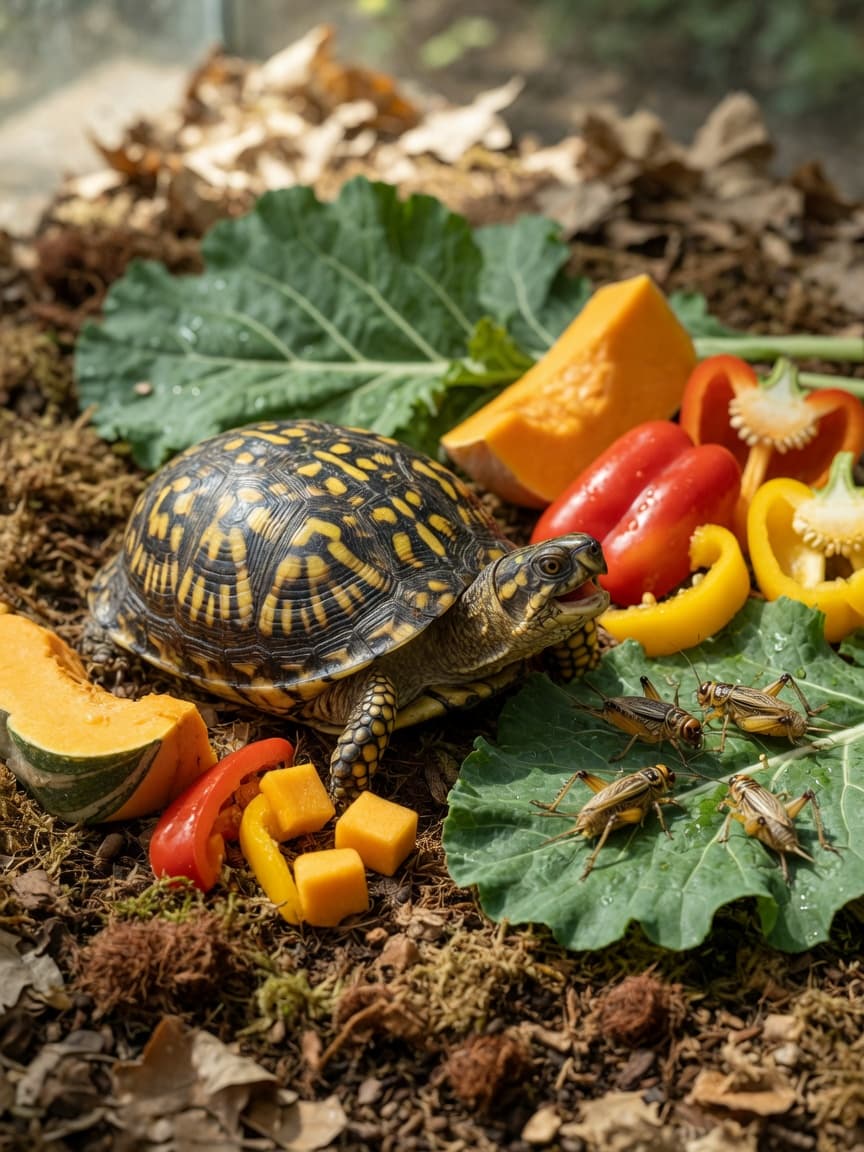
Box turtles are fascinating reptile pets that require a well-balanced diet to thrive in captivity. Whether you're considering adopting a box turtle or already care for one, understanding their nutritional needs is essential for ensuring longevity and good health. These omnivorous creatures have specific dietary requirements that change throughout their lives, and providing the right foods in proper proportions can make the difference between a thriving pet and one plagued by nutritional deficiencies.
The Omnivorous Diet of Box Turtles
Box turtles are opportunistic omnivores, meaning they eat both plant matter and animal protein. In the wild, their diet varies seasonally and depends on food availability in their habitat. As a pet owner, you'll need to replicate this natural variety to keep your turtle healthy and mentally stimulated.
Young box turtles tend to be more carnivorous, requiring approximately 50-60% animal protein and 40-50% vegetables. As they mature, this ratio shifts, and adult box turtles become more herbivorous, typically requiring 40-50% protein and 50-60% plant-based foods. This dietary shift is important to understand when caring for turtles of different ages.
Protein Sources for Your Box Turtle
Box turtles require high-quality protein sources to maintain muscle mass and support vital bodily functions. The best options include:
- Insects: Crickets, grasshoppers, mealworms, and dubia roaches are excellent choices. These should be gut-loaded (fed nutritious foods) before offering to your turtle to maximise nutritional value.
- Earthworms: A natural food source that provides good protein and helps replicate their wild diet.
- Snails: These offer calcium-rich shells that support bone and shell health.
- Small fish: Occasional offerings of small, whole fish can provide variety and essential nutrients.
- Commercial reptile food: High-quality pellets designed for omnivorous reptiles can form part of a balanced diet.
Vegetables and Leafy Greens
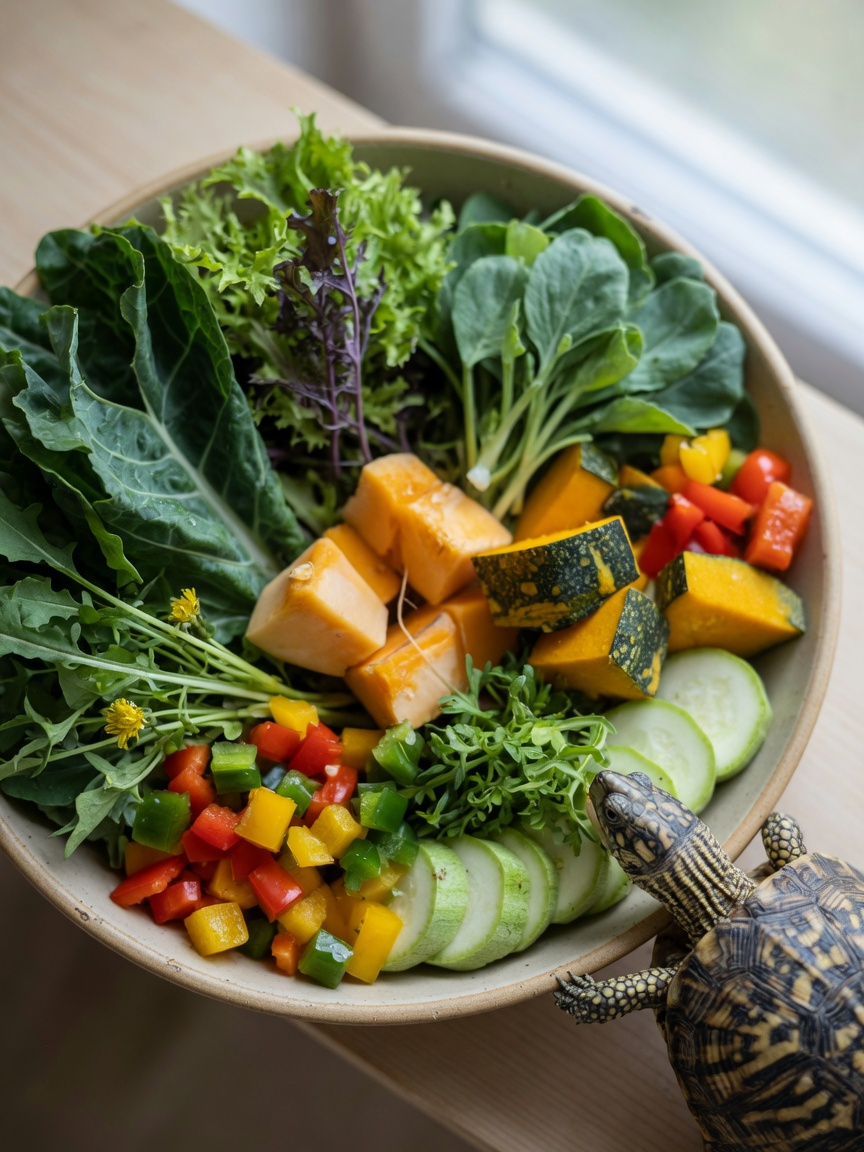
Plant matter should comprise a significant portion of your adult box turtle's diet. Focus on nutrient-dense, calcium-rich vegetables, particularly leafy greens:
- Collard greens (high in calcium)
- Mustard greens
- Dandelion greens (wild or cultivated)
- Turnip greens
- Butternut squash
- Pumpkin
- Bell peppers
- Courgettes
Aim to provide a varied selection, rotating vegetables regularly to prevent nutritional imbalances. Avoid iceberg lettuce and spinach, as these contain oxalates that can inhibit calcium absorption.
Fruits and Occasional Treats
Whilst box turtles enjoy fruits, these should be offered sparingly due to their sugar content. Suitable options include strawberries, raspberries, melon, and apple (without seeds). Offer fruit treats no more than once weekly, and ensure they never comprise more than 5% of your turtle's overall diet.
Calcium and Vitamin Supplementation
Proper supplementation is crucial for preventing metabolic bone disease, a common condition in captive reptiles. Dust insects and vegetables with a calcium supplement (without phosphorus) two to three times weekly. Additionally, provide a multivitamin supplement designed for reptiles once weekly. Ensure your turtle receives adequate UVB lighting, as this enables vitamin D3 synthesis, which is essential for calcium absorption.
Feeding Frequency and Portions
Young box turtles (under 5 years) should be fed daily, whilst adults thrive on feeding schedules of 3-4 times weekly. Portion sizes should be appropriate to your turtle's size—generally, offer foods equivalent to the size of their head in a single feeding. Monitor your turtle's weight and adjust portions accordingly.
Key Takeaways for Box Turtle Nutrition
Feeding your box turtle a varied, balanced diet is one of the most important aspects of responsible pet ownership. Prioritise gut-loaded insects, calcium-rich vegetables, and appropriate supplementation. Remember that dietary needs change with age, so adjust ratios as your turtle matures. When in doubt, consult a reptile veterinarian to ensure your specific turtle's nutritional needs are being met. A well-fed box turtle is a healthy, active companion that can live 50-100 years in your care.