
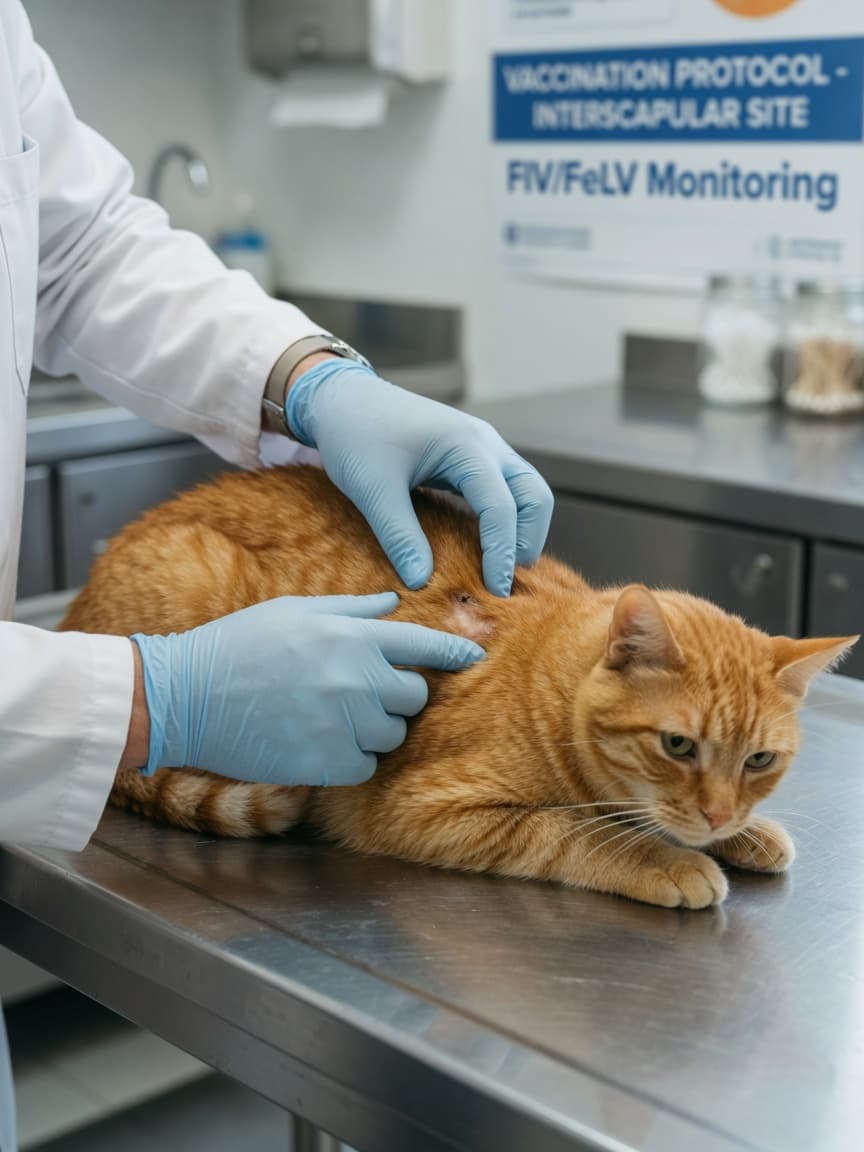
Feline Injection-Site Sarcoma: What Causes It and How Serious Is It
Feline injection-site sarcoma, often abbreviated to FISS and historically called feline vaccine-associated sarcoma, is one of the most challenging cancers encountered in veterinary medicine. It is locally invasive, prone to recurrence, and capable of spreading to distant sites. While it is relatively uncommon — estimated to occur in roughly 1 in 10,000 to 1 in 30,000 injections — the consequences when it does occur are serious. Understanding what it is, what causes it, and what treatment involves helps owners make informed decisions about their cat's care.
What Is Injection-Site Sarcoma
FISS is a malignant soft tissue tumour arising from mesenchymal cells — the connective tissue cells that give rise to muscle, fat, and fibrous tissue. The majority of these tumours are fibrosarcomas, though other types including osteosarcoma, rhabdomyosarcoma, and chondrosarcoma can occur at injection sites. What unites them is their location — between the shoulder blades, on the lateral trunk, or in the hindlimb, all common injection sites in cats — and their aggressive behaviour.
What Causes It
The link between injections and sarcoma development in cats was first reported in the early 1990s, following observations that sarcomas in cats were increasingly appearing at sites used for vaccination. Pathological analysis of these tumours revealed patterns of inflammation consistent with a foreign body-type reaction within the tumour tissue.
Current evidence suggests that chronic, persistent inflammation at an injection site is the key driver. The adjuvants used in certain vaccines — compounds added to enhance immune response — are the most commonly implicated agents, particularly aluminium-containing adjuvants used in some killed-virus vaccines, including those for rabies and feline leukaemia virus. However, it is now clear that FISS is not a vaccine-only phenomenon. Non-vaccine injections including microchips, long-acting medications such as corticosteroids and penicillin preparations, and even subcutaneous fluids have been associated with sarcoma development in rare cases.
The prevailing hypothesis involves a genetically susceptible subset of cats in whom inflammation triggers dysregulated cellular proliferation, ultimately leading to malignant transformation. Why some cats are susceptible while the vast majority are not remains poorly understood.
How to Recognise It
FISS most commonly presents as a firm, rapidly growing mass at a previous injection site. A key clinical guideline often cited by veterinary oncologists is the 3-2-1 rule:
- A lump that persists for more than 3 months after injection
- A lump larger than 2 centimetres in diameter
- A lump that is increasing in size 1 month after injection
Any lump meeting one or more of these criteria warrants prompt veterinary assessment and biopsy rather than watchful waiting. In practice, any new, persistent swelling at an injection site that does not resolve within four to eight weeks should be taken seriously.
The tumours are typically firm, poorly defined in their margins, and may be fixed to underlying tissue. They can grow rapidly over weeks and may ulcerate the overlying skin as they expand.
Diagnosis
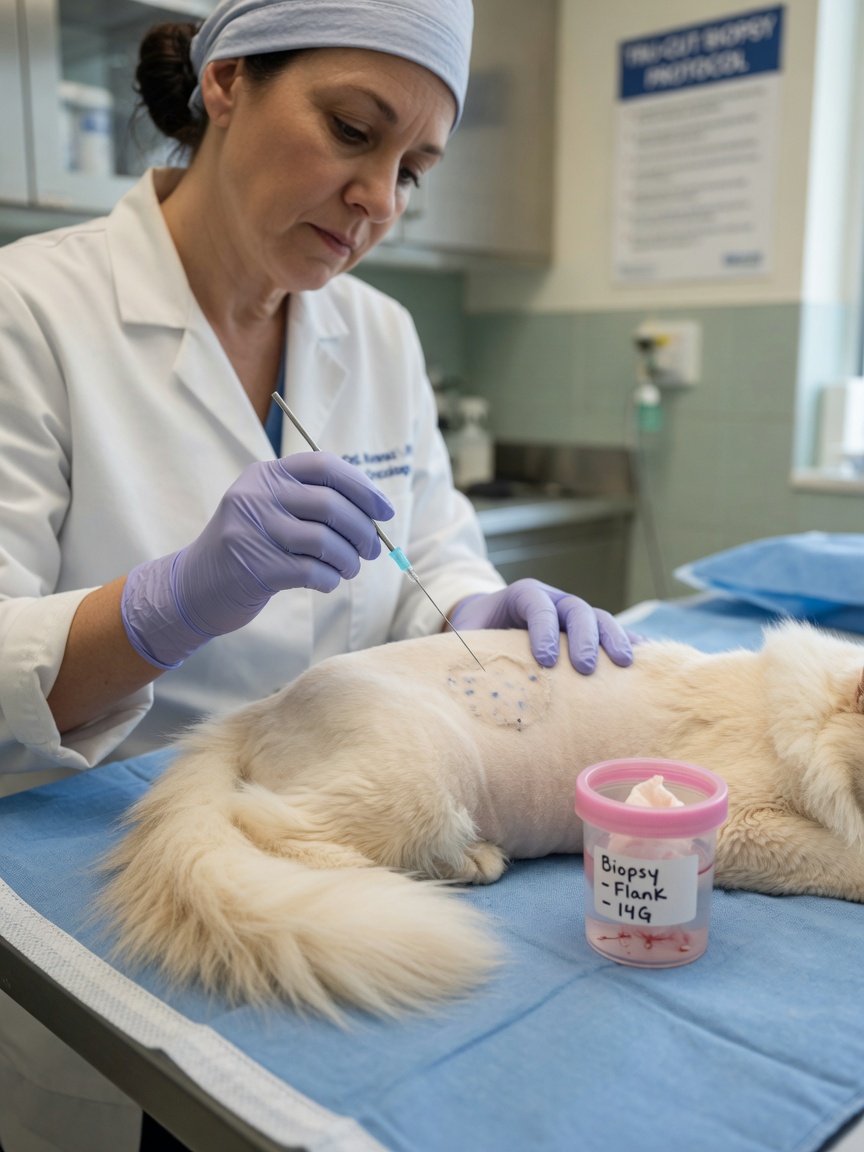
Incisional biopsy — taking a tissue sample without attempting to remove the entire mass — is the preferred diagnostic approach. It provides a definitive histopathological diagnosis, allows tumour grading, and preserves the overlying skin and tissue planes for subsequent surgery. Fine needle aspiration is less reliable for FISS because these tumours can be heterogeneous and cytology may not capture the full picture.
Staging is essential before treatment planning. Thoracic radiographs are taken to assess for pulmonary metastases, which are present at diagnosis in approximately 20 to 25 per cent of cats. Advanced imaging — CT scanning — is strongly recommended to evaluate the true extent of the local tumour and its relationship to surrounding structures. CT is notably more accurate than physical palpation alone; these tumours frequently extend far beyond what can be appreciated on examination.
How Serious Is It
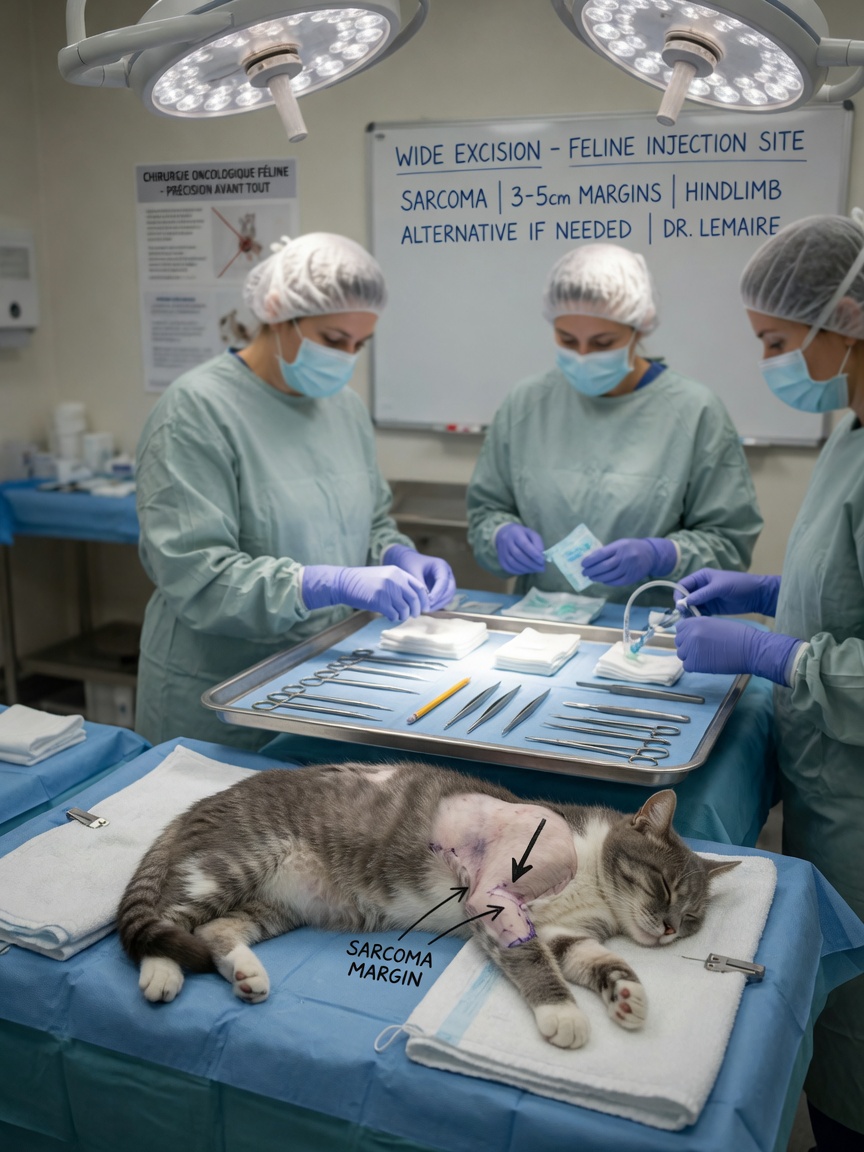
FISS is a genuinely serious cancer. Local recurrence after surgery is common — reported in 50 to 75 per cent of cases after surgery alone — because of the infiltrative nature of the tumour. Wide surgical margins of at least three centimetres in all planes, including one fascial plane deep to the tumour, are considered necessary for the best chance of local control. This is technically demanding surgery, often involving removal of muscle groups, portions of the scapula, or in hindlimb cases, limb amputation.
Distant metastasis, most commonly to the lungs and lymph nodes, occurs in approximately 20 to 25 per cent of cases overall and more frequently as the disease progresses. Median survival times vary considerably depending on treatment intensity, but surgery alone typically yields median survival of around six months. Combined surgery, radiotherapy, and chemotherapy can extend this, with some studies reporting median survival times of approximately 600 to 900 days in cats treated aggressively at referral centres.
Treatment Approach
Surgery
Aggressive, wide surgical excision remains the cornerstone of treatment and the single most important determinant of outcome. The goal is clean histological margins. Achieving this for interscapular tumours is particularly challenging because the relatively confined anatomy of this region limits the amount of normal tissue that can be removed around the tumour.
Radiotherapy
Radiation therapy is used both before surgery (to shrink the tumour and improve the likelihood of clean margins) and after surgery (to treat microscopic residual disease). Post-operative radiotherapy is most commonly employed and has been shown in multiple studies to reduce local recurrence rates.
Chemotherapy
Chemotherapy, typically doxorubicin-based protocols, is used to address the risk of systemic metastasis. It may be combined with surgery and radiotherapy in multimodal protocols at specialist centres. The evidence base for chemotherapy in FISS is still developing, but most oncologists recommend it as part of a comprehensive treatment approach.
Changing Vaccination Practices
In response to the association between injections and sarcoma development, vaccination guidelines have evolved. Many veterinary bodies now recommend using non-adjuvanted vaccines where available, particularly for rabies and FeLV, and administering vaccines in sites — such as the distal limb — where aggressive surgery, including amputation if necessary, is feasible. Some practices document injection sites at every visit. These changes reflect a commitment to balancing the genuine benefits of vaccination against a rare but serious risk.