

Understanding Chronic Bronchitis in Cats
When a cat has been coughing for more than two months and all other causes have been ruled out, the diagnosis is likely chronic bronchitis. This is a condition characterised by persistent inflammation of the airways — specifically the bronchi, the larger passages that carry air into the lungs — without a reversible or infectious cause. It is distinct from asthma, although the two conditions are often confused and can occasionally occur together in the same animal.
Feline chronic bronchitis is less commonly discussed than asthma, but it is a clinically significant condition that, if left unmanaged, can lead to permanent structural changes in the airways and a progressive decline in respiratory function.
How Chronic Bronchitis Develops
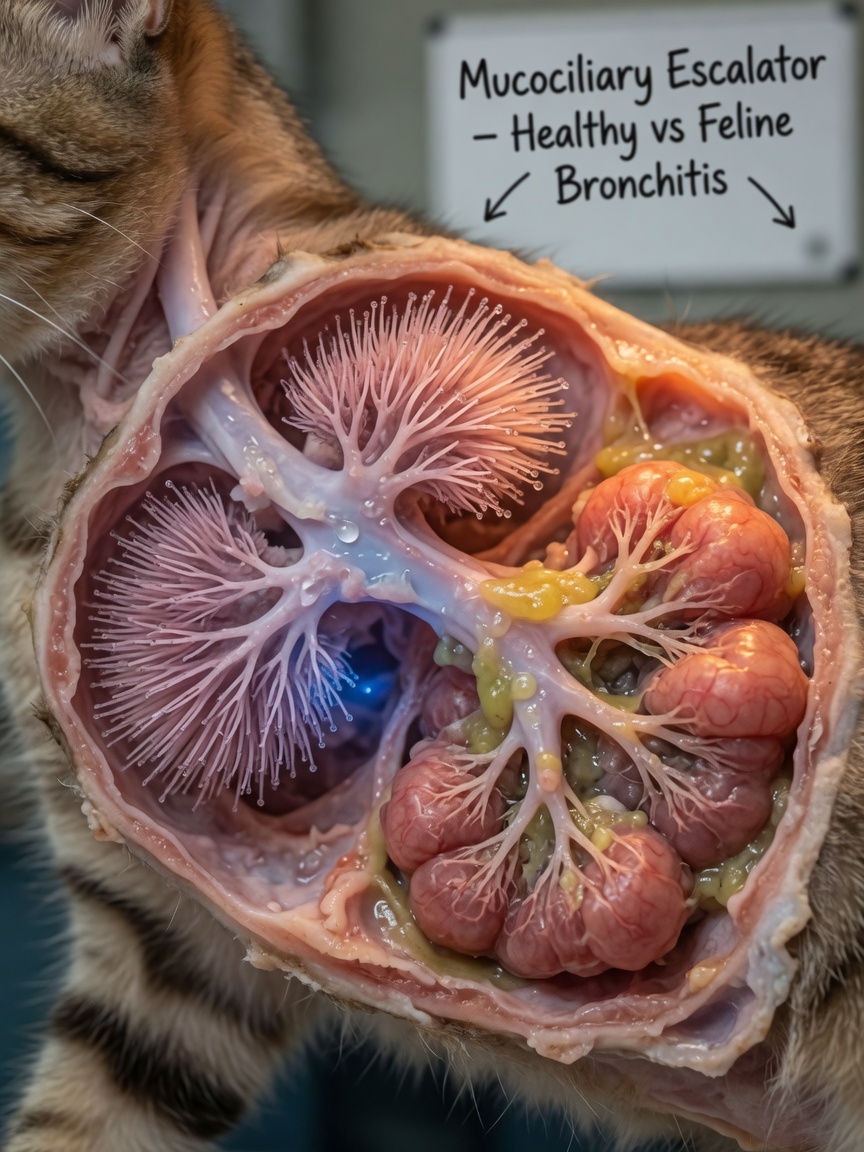
The bronchial lining in a healthy cat is designed to trap particles, pathogens, and debris and move them out of the airway through mucociliary clearance — a process where tiny hair-like structures called cilia sweep a layer of mucus up and out of the lungs. When chronic inflammation develops, this system becomes dysregulated. The lining thickens, mucus production increases, and cilia function may be impaired.
The exact cause is often unclear. In some cats, chronic bronchitis appears to develop following repeated respiratory infections. In others, long-term exposure to inhaled irritants — tobacco smoke being particularly well documented — appears to play a significant role. Airway inflammation, if persistent, eventually causes fibrosis and irreversible airway remodelling that limits how much the condition can respond to treatment.
How Feline Bronchitis Differs From Asthma
This distinction matters clinically because the two conditions are managed somewhat differently, and understanding the difference helps owners understand what to expect.
The Key Differences
- Asthma involves a hypersensitivity or allergic component — the airway responds to specific triggers with bronchoconstriction, meaning the airways actively narrow in response to a stimulus. Bronchitis involves chronic inflammation without necessarily having a reversible bronchoconstriction component
- Cats with asthma often have episodic signs — periods of coughing or wheezing interspersed with normal breathing. Cats with chronic bronchitis tend to have a persistent, daily cough that does not dramatically fluctuate
- Asthma attacks can come on suddenly and become severe rapidly. Chronic bronchitis is more consistently present but typically less prone to acute crises
- The response to bronchodilator medication differs: asthmatic cats often show a rapid and clear response to bronchodilators because their airways are in active spasm. Cats with pure bronchitis show less dramatic responses
- On bronchoalveolar lavage, asthma is characterised by elevated eosinophils (immune cells associated with allergic responses), while chronic bronchitis typically shows elevated neutrophils (cells associated with non-allergic inflammation)
It is worth noting that these distinctions are not always clean-cut in practice. Some cats have features of both conditions, and the distinction sometimes only becomes clear after thorough investigation.
Symptoms to Watch For
The hallmark of feline bronchitis is a chronic, productive or non-productive cough. Because cats are not natural coughers — unlike dogs or humans — any cough that persists beyond a few weeks warrants veterinary investigation.
- A daily cough that has been present for two months or more
- Coughing that often sounds like a retching or gagging motion — owners sometimes mistake this for a hairball attempt, but no hairball is produced
- Mildly increased respiratory rate at rest
- Some degree of exercise intolerance in more severely affected cats
- Occasional wheezing, though this is more pronounced in asthma
- Gradual weight loss or reduced appetite in cats with significant disease
Unlike asthma, cats with chronic bronchitis are less likely to have acute episodes of severe respiratory distress, though this can occur if a secondary infection develops or if the cat has an asthmatic component alongside the bronchitis.
Diagnosing Chronic Bronchitis

Because chronic bronchitis is partly a diagnosis of exclusion, the diagnostic process involves ruling out other causes of chronic cough before arriving at this conclusion. Conditions that must be considered include lungworm infection, heartworm-associated respiratory disease, bacterial or fungal pneumonia, nasal disease causing post-nasal drip, and thoracic masses.
Chest X-rays in cats with chronic bronchitis often show a characteristic bronchial pattern — a thickening of the airway walls that appears as increased density around the bronchi, sometimes described as ring shadows or tramlines. Overinflation of the lungs (hyperinflation) may also be apparent.
Bronchoalveolar lavage provides the most definitive information about the nature of airway inflammation. Fluid is instilled into the lower airways via a bronchoscope or blind technique under anaesthesia, then collected and examined. The cellular profile of this fluid helps distinguish bronchitis from asthma and rules out infection. Bacterial culture is also performed to ensure antibiotics are used only when there is evidence of infection.
Management of Feline Chronic Bronchitis
Because the airway inflammation in chronic bronchitis does not have an allergic or bronchoconstriction component as its primary driver, management focuses on reducing inflammation and protecting the airways from further damage rather than on identifying and avoiding specific triggers as with asthma.
Anti-Inflammatory Medication
Corticosteroids remain central to managing feline bronchitis, as they are in asthma. They reduce the underlying inflammatory response that drives ongoing airway damage. Oral prednisolone is frequently used, often starting at a higher dose before being tapered to the lowest effective maintenance dose. Inhaled steroids can be used as in asthma management, though some cats respond better to systemic steroids.
Antibiotics
Antibiotics are not routinely used in feline chronic bronchitis unless there is evidence of secondary bacterial infection from culture results. Inappropriate antibiotic use contributes to antimicrobial resistance and does not address the inflammatory nature of the condition. However, when bacteria are identified, a targeted antibiotic course based on culture and sensitivity is appropriate.
Environmental Measures
- Remove all sources of inhaled irritants from the home, particularly tobacco smoke
- Use low-dust cat litter
- Avoid aerosol products
- Ensure good ventilation in the home
- Consider a HEPA air purifier
Long-Term Expectations
Feline chronic bronchitis cannot be cured, but it can often be managed well enough that affected cats maintain a good quality of life for years. The condition does have a tendency to progress slowly over time, which is why ongoing monitoring and periodic reassessment with your vet are important. Some cats require gradual increases in medication as airway changes accumulate. Catching secondary infections early and treating them promptly helps prevent acute deterioration. With consistent management, many cats with chronic bronchitis live comfortably for a long time.