
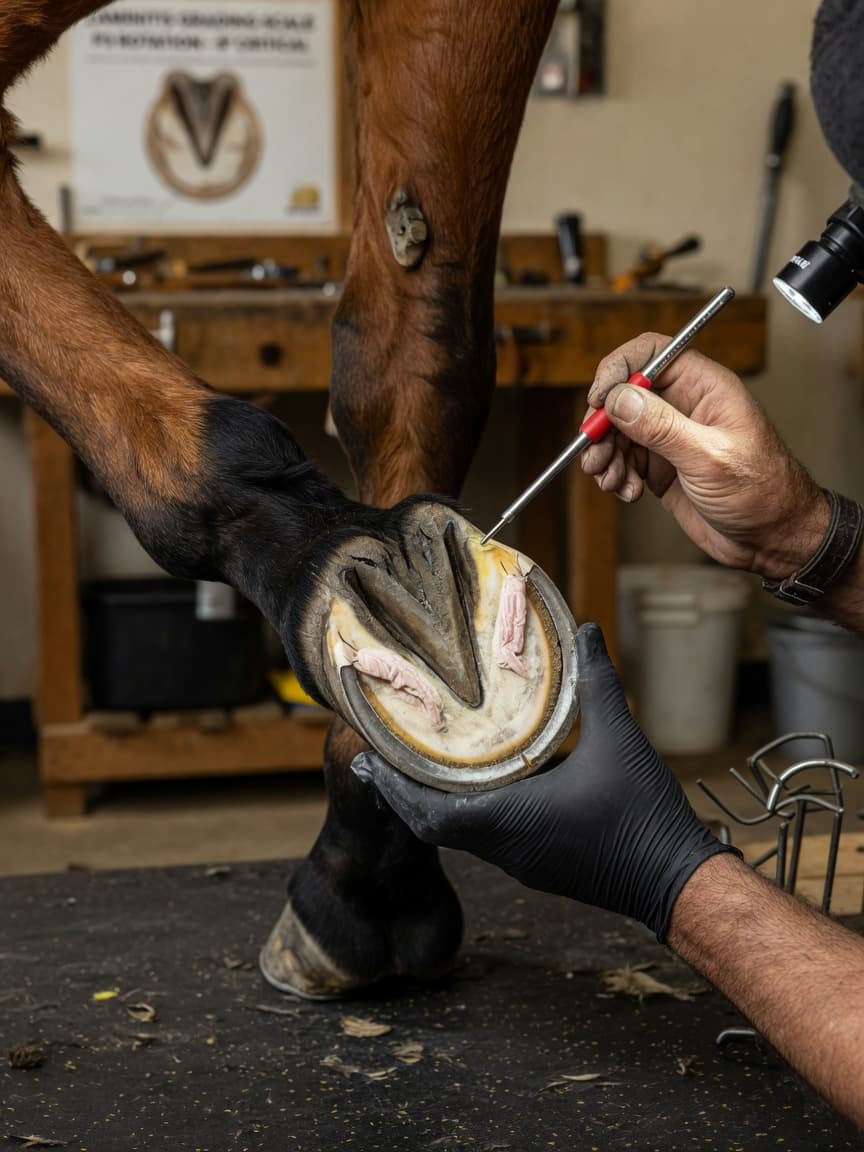
The Condition That Never Truly Goes Away
Ask any horse owner who has managed a laminitic horse and they will tell you the same thing: nothing quite prepares you for the long haul. Laminitis is one of the most painful and debilitating conditions in equine medicine, affecting an estimated one in ten horses and ponies in the UK at some point in their lives. Yet despite how common it is, it remains frequently misunderstood — managed too late, or not managed rigorously enough to prevent recurrence.
What Actually Happens in the Hoof
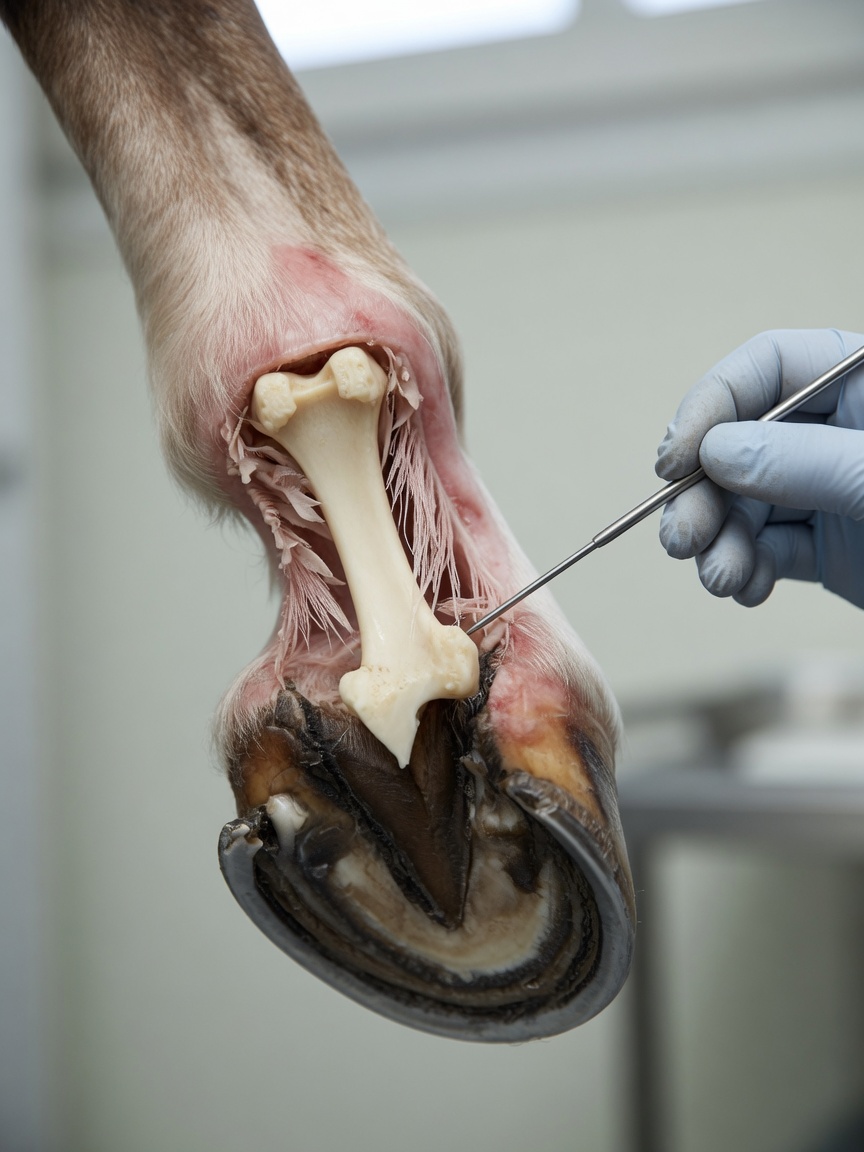
The hoof capsule is suspended around the pedal bone (coffin bone) by an intricate system of interlocking tissues called laminae. Sensitive laminae attach to the pedal bone; insensitive laminae attach to the inner hoof wall. In laminitis, blood flow to these tissues is disrupted, causing inflammation and cellular breakdown. As the laminar connection fails, the pedal bone loses its support and can begin to rotate downward — or in severe cases, sink vertically — under the horse's weight. In the most extreme presentations, the tip of the pedal bone can penetrate the sole. This is rotation, and it represents a significant escalation in both severity and prognosis.
The Main Causes
Endocrine Laminitis
The majority of laminitis cases in the UK are now attributed to underlying endocrine disease, principally Equine Metabolic Syndrome (EMS) and Pituitary Pars Intermedia Dysfunction (PPID, commonly called Cushing's disease). Both conditions result in elevated insulin levels, which directly damage lamellar tissue. EMS typically affects native breeds and good-doers; PPID is more common in older horses and ponies. Testing for both is straightforward and should be a first step in any laminitis workup.
Dietary and Pasture-Associated Laminitis
High non-structural carbohydrate intake — particularly fructans found in rapidly growing grass — has long been associated with laminitis. Spring and autumn flushes of grass growth represent peak risk periods. However, current evidence suggests that in horses with underlying insulin dysregulation, even moderate pasture exposure can trigger an episode.
Supporting Limb Laminitis
When a horse bears excessive weight on one limb due to a painful injury in the opposite leg, the overloaded limb can develop laminitis. This is a particular concern in horses recovering from fractures or severe soft tissue injuries and requires active preventative management.
Assessing Severity and Rotation
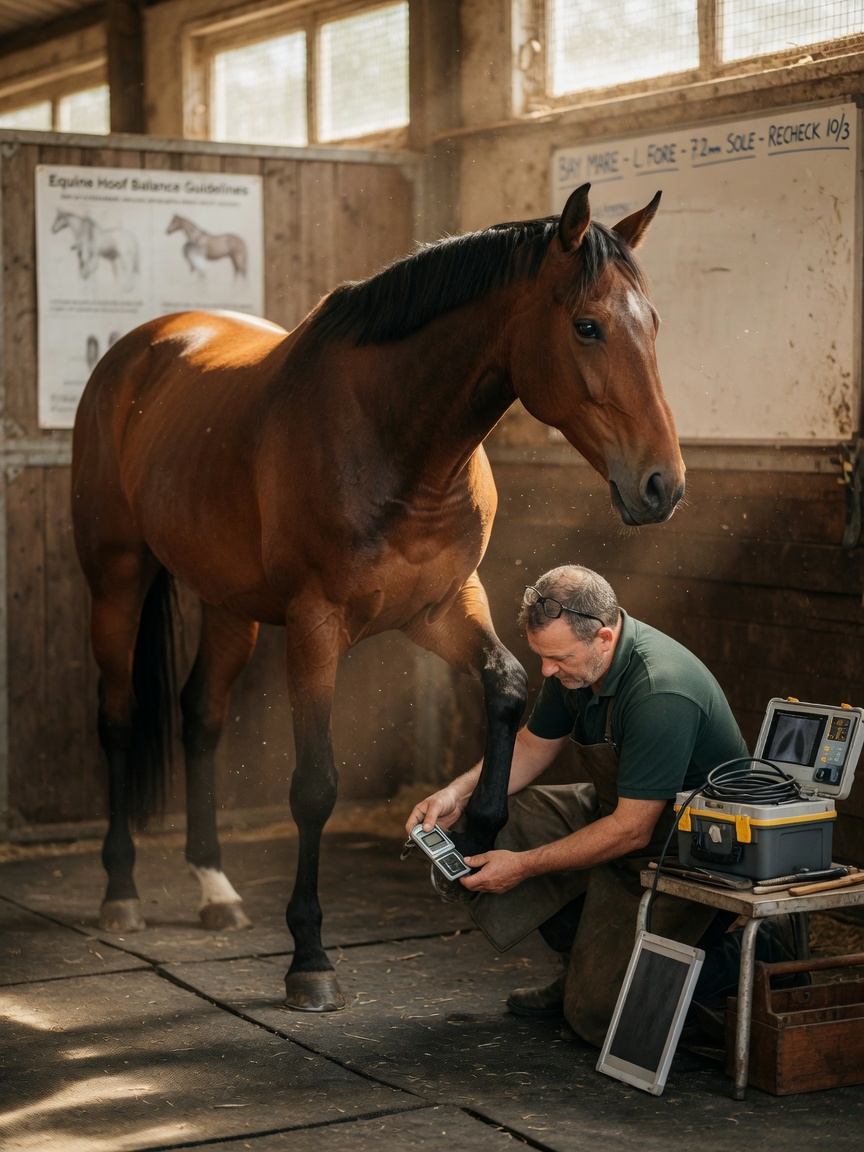
Clinical signs include a characteristic pottery gait, reluctance to move, weight shifting between feet, increased digital pulse, and warmth in the hooves. A horse may adopt a camped-out stance to shift weight onto the heels. Severity is often graded using the Obel scale, from mild discomfort (Grade 1) to inability to lift a foot without distress (Grade 4). Radiography is essential for assessing rotation or sinking of the pedal bone and guides trimming and support strategies. Your vet and farrier should work together closely during acute and rehabilitation phases.
The Long Road to Management
There is no quick fix for laminitis, and horses with a history of the condition are at lifelong elevated risk. Acute management focuses on pain relief, deep bedding or supportive frog pads, strict box rest, and emergency farriery. Dietary restriction — typically removal from pasture entirely and provision of low-sugar, soaked hay — is implemented immediately.
Long-term management depends on addressing the underlying cause. Horses diagnosed with EMS benefit from a reduced calorie diet, appropriate exercise as the feet allow, and weight loss monitoring. PPID is managed medically with pergolide, prescribed by your vet. Corrective shoeing and regular skilled farriery remain cornerstones of ongoing hoof care.
Owners should not underestimate the mental load of managing a laminitic horse. Grazing muzzles, strip grazing, hay analysis, and seasonal grass monitoring become part of daily life. The reward is a horse that remains comfortable and functional — but it requires consistent effort.
Practical Steps to Reduce Risk
- Test for EMS and PPID if laminitis has occurred, particularly in native breeds and older animals
- Monitor body condition score monthly and maintain a lean, healthy weight
- Restrict or eliminate access to rich pasture during high-risk seasons
- Soak hay (thirty to sixty minutes) to reduce water-soluble carbohydrate content
- Avoid high-sugar feeds, treats, and lush cuttings
- Work closely with your farrier and vet to establish a regular trimming schedule
- Know the early signs — digital pulse and stance changes — so you can act before severe damage occurs