
When a Horse Goes Down: Understanding Colic
Colic kills more horses than any other condition. It accounts for approximately 28% of equine deaths and sends hundreds of thousands of horses to veterinary clinics every year across the UK and Europe. The word itself is not a diagnosis — it is an umbrella term for abdominal pain, and what lies beneath that pain ranges from a minor gas episode to a life-threatening intestinal displacement. Knowing the difference, and knowing when to call your vet immediately, can save your horse's life.
The Main Types of Colic
Spasmodic and Gas Colic
These are the most common and generally the least serious. Increased gut motility causes painful spasms, often triggered by a change in feed, sudden weather shifts, or stress. Gas accumulates in the large intestine, causing distension and discomfort. Most cases resolve quickly with veterinary treatment, including antispasmodics and pain relief.
Impaction Colic
An impaction occurs when feed material — most commonly at the pelvic flexure of the large colon — becomes compacted and blocks normal gut passage. Sand ingestion, inadequate water intake, and poor-quality forage are frequent causes. Treatment involves oral fluids, laxatives, and pain management, though severe impactions may require hospitalisation and intravenous fluids.
Displacement and Torsion
In a displacement, a section of the large colon moves out of its normal position. A nephrosplenic entrapment, where the colon becomes trapped over the spleen and kidney, is one recognised example. Torsion, or twisted gut, is far more dangerous. When the intestine rotates on its axis, blood supply is cut off rapidly. This is a surgical emergency with a narrow window for intervention.
Small Intestinal Obstruction
Strangulating lesions of the small intestine — including pedunculated lipomas in older horses and inguinal hernias in stallions — cut off circulation to segments of bowel. These cases deteriorate quickly and almost always require surgery.
Recognising the Signs
Clinical signs vary in intensity depending on cause and individual pain tolerance. Common indicators include pawing at the ground, repeatedly looking at the flank, lying down and rising frequently, rolling — particularly violently — refusing food, sweating, elevated heart rate above 48 beats per minute, and reduced or absent gut sounds on auscultation. A horse in severe, unrelenting pain with a heart rate above 60 warrants an emergency call without delay.
Emergency Response Before the Vet Arrives
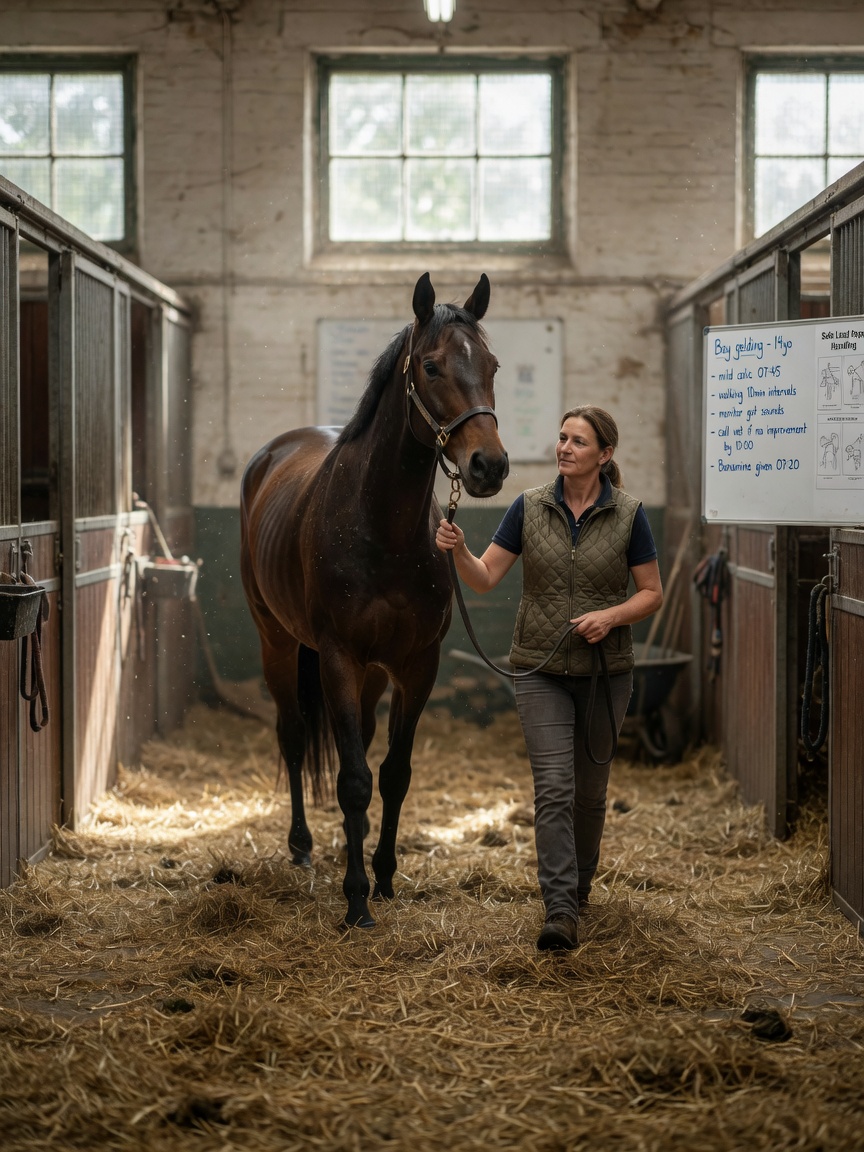
Call your vet at the first sign of colic rather than waiting to see if it resolves. While waiting, keep the horse in a safe, well-bedded area. Walking in hand can help with mild gas colic, but do not force an exhausted or severely painful horse to walk continuously — rest is equally valid. Remove access to feed. Do not administer bute or other pain relief without veterinary advice, as masking pain can obscure clinical assessment. Monitor heart rate, respiratory rate, mucous membrane colour and gut sounds where possible, and relay this information to your vet.
The Decision for Surgery
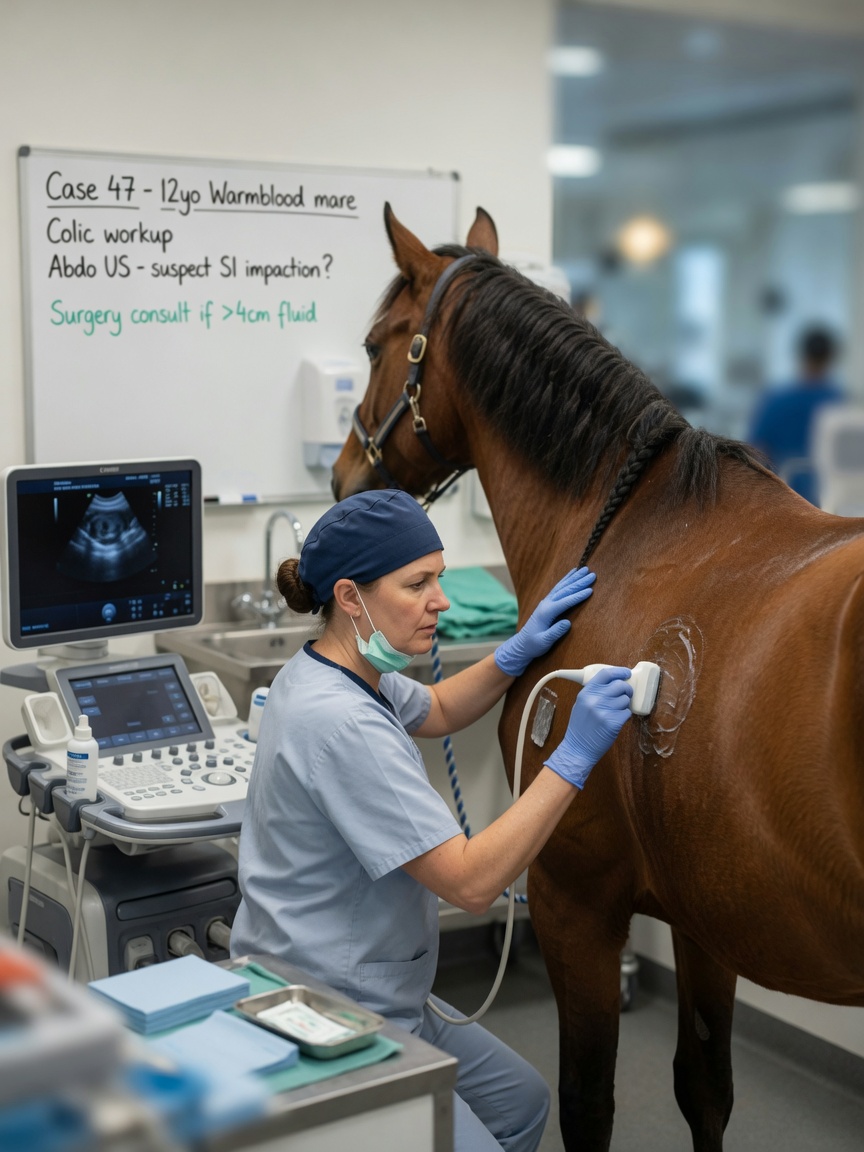
Referral to a veterinary hospital may be recommended when pain cannot be controlled medically, when rectal examination or ultrasound reveals a concerning lesion, or when gut sounds are absent and the horse is deteriorating. Equine colic surgery carries genuine risks, including a mortality rate that varies widely — from around 10% in straightforward cases to over 50% in horses with severe large colon torsion presenting late. Age, fitness, time elapsed since onset, and the specific lesion all influence outcome.
Post-surgical recovery is demanding and expensive, often requiring weeks of box rest and a carefully managed return to work. Decisions must balance realistic prognosis against welfare and financial considerations, and should always be made in direct consultation with your vet and a referral surgeon where indicated.
Reducing the Risk
- Provide constant access to fresh, clean water
- Make any feed changes gradually over ten to fourteen days
- Feed high-quality forage as the dietary foundation
- Avoid feeding from sandy ground to reduce sand accumulation
- Maintain a regular dental and parasite management programme
- Monitor gut sounds and manure output as part of daily checks
- Ensure adequate daily turnout and movement
No management strategy eliminates colic risk entirely, but these steps meaningfully reduce its frequency. Horses with a history of colic benefit from a tailored management plan developed alongside their vet.